
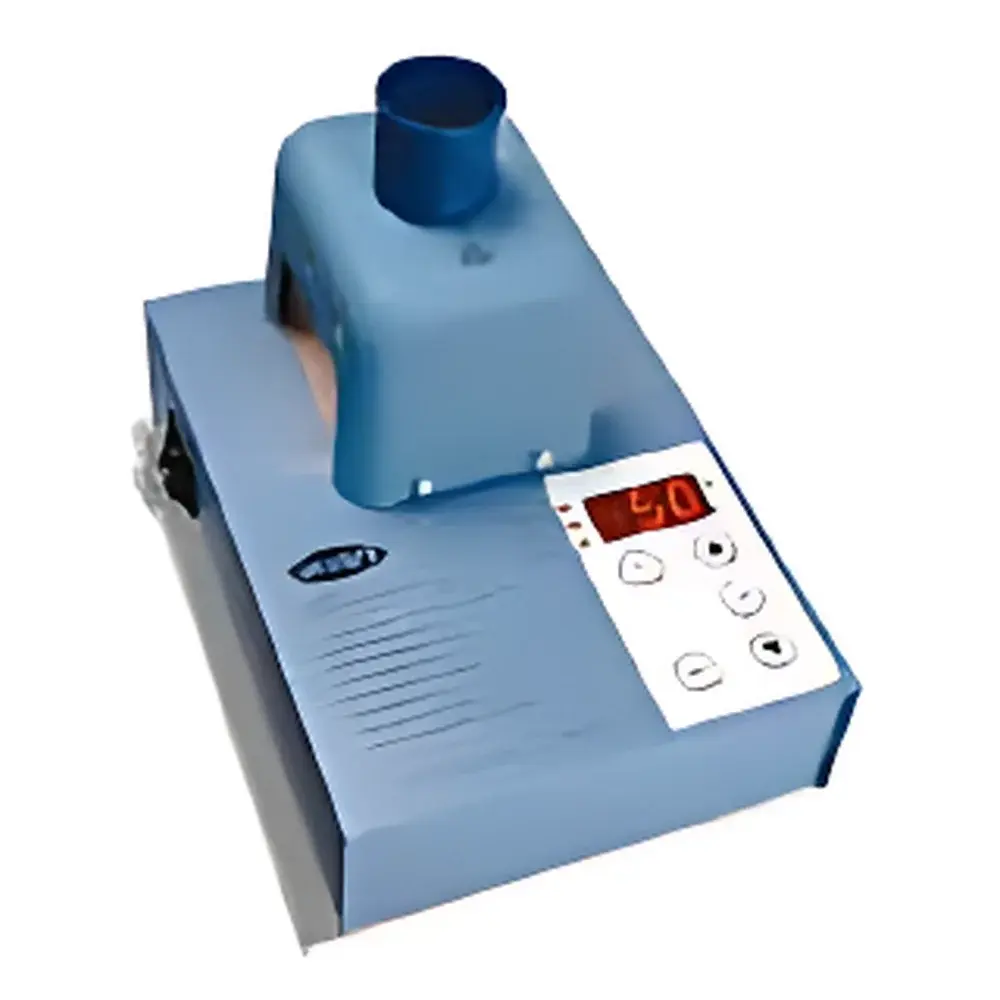
Buchi SMP10 Digital Melting Point Apparatus
| Origin | UK |
|---|---|
| Manufacturer Type | Authorized Distributor |
| Origin Category | Imported |
| Model | SMP10 |
| Pricing | Available Upon Request |
Overview
The Buchi SMP10 Digital Melting Point Apparatus is a precision thermal analysis instrument engineered for reliable, repeatable determination of solid-phase transition temperatures in organic and pharmaceutical compounds. It operates on the principle of controlled linear heating combined with real-time visual observation through an integrated optical system—enabling direct correlation between temperature progression and physical state change (solid-to-liquid transition). Designed specifically for academic laboratories and routine quality control environments, the SMP10 complies with fundamental requirements of pharmacopoeial methods including USP , EP 2.2.14, and JP 2.60, where visual endpoint detection remains the reference standard for melting point verification. Its compact benchtop architecture integrates a calibrated PT100 platinum resistance thermometer, LED-based backlighting, and an adjustable magnifying eyepiece to ensure consistent operator alignment and reduced inter-observer variability.
Key Features
- Dual-sample capacity enables sequential or comparative analysis without manual reconfiguration—ideal for student training and method validation protocols.
- Three-digit LED display with 0.1 °C resolution provides immediate readout of current temperature and setpoint; no external calibration thermometer required.
- Two-stage heating profile: rapid preheating at 20 °C/min up to user-defined start temperature, followed by precise slow ramping at 2 °C/min during actual melt observation—minimizing thermal overshoot and improving endpoint accuracy.
- Optical system includes an extendable eyepiece tube and built-in illumination, allowing ergonomic adjustment for optimal crystal morphology observation under 10× magnification.
- Surface-treated with BioCote® antimicrobial technology (silver-ion based), certified to ISO 22196, reducing microbial adhesion on frequently contacted surfaces—critical in shared teaching labs and GLP-compliant environments.
- Full accessibility for cleaning: sample chamber, heating block, and optical path components are designed for solvent-compatible decontamination without disassembly.
Sample Compatibility & Compliance
The SMP10 accommodates standard capillary tubes (1.3 mm ID, 1.9 mm OD, 100 mm length) filled with crystalline solids in quantities of 1–3 mg. Compatible formats include open-end, sealed-end, and single-sealed capillaries—supplied as SMP1/4, SMP2/1, and SMP10/1 respectively. The instrument’s temperature accuracy (±0.5 °C at 20 °C; ±2.5 °C at 300 °C) meets ASTM E324 specifications for melting point apparatus performance verification. It supports traceability via included NIST-traceable calibration certificate, fulfilling documentation requirements for ISO/IEC 17025-accredited laboratories and FDA-regulated QC workflows requiring audit-ready records.
Software & Data Management
While the SMP10 operates as a standalone hardware platform without embedded data logging, its design aligns with 21 CFR Part 11 readiness when paired with external validated systems. Temperature setpoints, start/stop timestamps, and observed melt endpoints are manually recorded—supporting paper-based or LIMS-integrated reporting workflows. The unit’s electrical safety certification conforms to IEC 61010-1:2010 for laboratory equipment, and its 70 W power consumption ensures stable operation on standard 230 V/50 Hz circuits without voltage regulation.
Applications
- Pharmaceutical education: Teaching polymorphism, eutectic behavior, and purity assessment using mixed-melting-point techniques.
- Raw material identity testing per ICH Q5C guidelines, where melting point serves as a primary physicochemical identifier.
- Quality assurance of synthetic intermediates and final APIs in non-GMP pilot-scale production.
- Forensic chemistry labs verifying compound identity in seized substance analysis.
- Polymer additive screening where thermal stability onset correlates with functional group integrity.
FAQ
What calibration standards are recommended for routine verification?
NIST-traceable reference materials such as pure caffeine (137 °C), urea (133 °C), and indomethacin (161 °C) are routinely used; calibration should be performed at least daily in regulated environments.
Can the SMP10 be used for decomposition point determination?
No—the instrument is optimized for sharp melting transitions only; decomposition involves irreversible chemical change and requires TGA or DSC instrumentation.
Is the heating block interchangeable or serviceable in-field?
The aluminum heating block is permanently mounted and not user-replaceable; field service requires authorized Buchi technical support.
Does the device support automatic endpoint detection?
No—visual detection remains the core methodology per pharmacopoeial standards; automated image analysis is not implemented in this model.
What maintenance intervals are specified for optical components?
Lens cleaning with lint-free cloth and isopropanol is recommended after each use; annual inspection of LED intensity and eyepiece alignment is advised for long-term reproducibility.



