
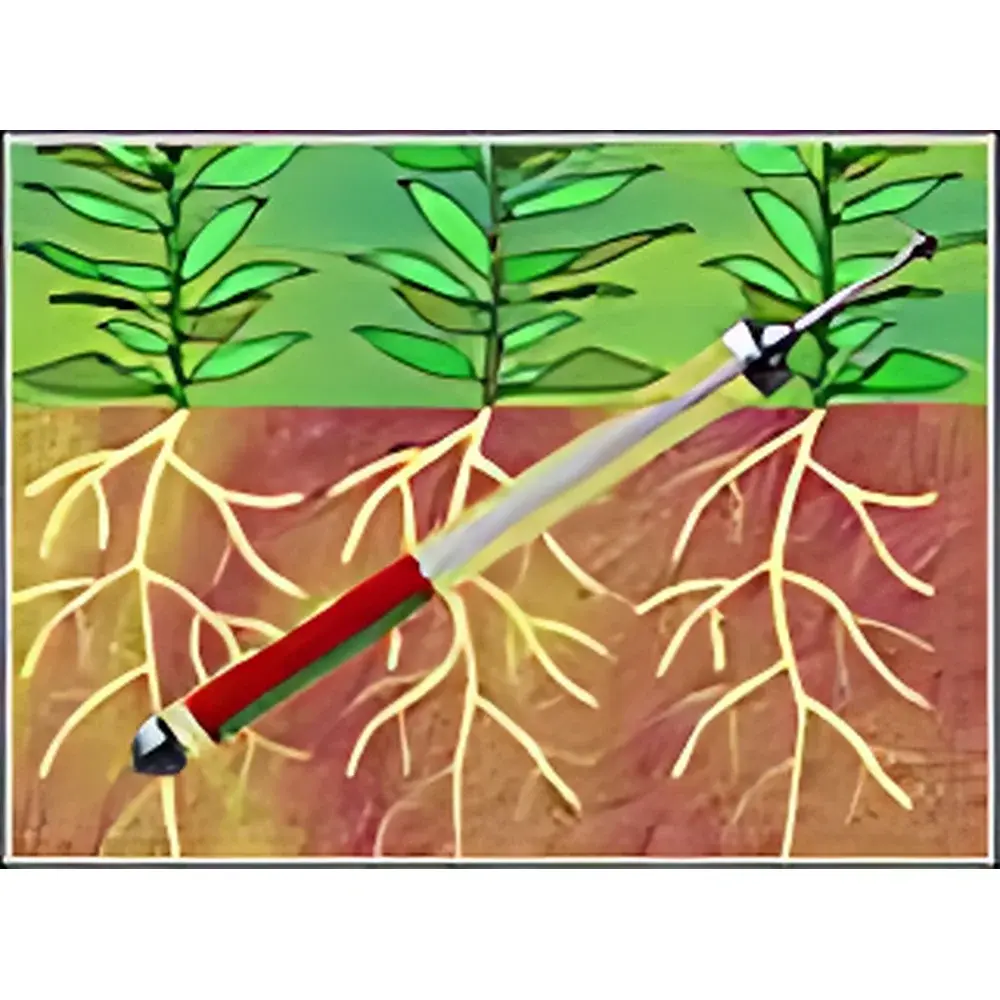
CI-600 In Situ 360° Rotational Root Imaging System with CI-690 RootSnap Root Analysis Software
| Origin | USA |
|---|---|
| Manufacturer Type | Authorized Distributor |
| Origin Category | Imported |
| Model | CI-600 |
| Pricing | Available Upon Request |
Overview
The CI-600 In Situ 360° Rotational Root Imaging System is an engineered field-deployable instrumentation platform designed for non-destructive, longitudinal monitoring of live root architecture and dynamics within undisturbed soil profiles. Developed in alignment with protocols used by the U.S. National Ecological Observatory Network (NEON), it represents the first commercially deployed system utilizing a vertically oriented, rotationally scanned optical imaging approach to capture high-fidelity, distortion-free cross-sectional imagery of roots inside transparent access tubes. The system operates on the principle of linear photodiode array scanning combined with precise 360° rotational positioning—enabling quantitative capture of root morphology across multiple soil depths and seasonal timepoints without excavation or physical disturbance. It supports both qualitative assessment (e.g., root coloration, necrosis progression, mycorrhizal colonization patterns, pathogen presence) and quantitative analysis (e.g., elongation rates, branching frequency, fine-root turnover, decomposition kinetics) under natural pedological and hydrological conditions.
Key Features
- Columnar 360° rotational imaging probe with linear photodiode coupling ensures geometrically accurate, non-distorted image acquisition across full cylindrical field-of-view
- Modular probe design (343 mm length × 64 mm diameter) compatible with standard 64 mm inner-diameter acrylic or quartz observation tubes (1000 mm or 2000 mm lengths)
- High-resolution imaging capability up to 1200 dpi with single-scan image dimensions of 215.9 mm × 195.7 mm
- Field-portable operation: powered via integrated battery (2–4 hours continuous use) or AC adapter; data stored directly to onboard touchscreen terminal
- Scan acquisition time optimized at 5–15 seconds per depth layer, configurable via terminal interface
- Lightweight probe assembly (750 g) enables rapid deployment and repositioning in diverse field settings including forests, grasslands, agroecosystems, and restoration sites
Sample Compatibility & Compliance
The CI-600 is validated for use across a broad range of soil textures (sand to clay loam), moisture regimes (0–100% RH, non-condensing), and ambient temperature ranges (0–50°C). Its non-invasive methodology complies with internationally recognized standards for belowground ecological monitoring, including ISO 21526:2020 (soil biological activity assessment) and ASTM D7928-22 (standard test method for particle-size distribution of soils via laser diffraction—used contextually for root-soil interface characterization). While not a regulated medical device, its data output supports GLP-aligned experimental workflows when paired with audit-trail-enabled software configurations. The system is routinely employed in studies referenced under USDA-NRCS Technical Note No. 29 and NEON Standard Operating Procedure SOP-011-001.
Software & Data Management
The CI-600 integrates natively with the CI-690 RootSnap software suite installed on a dedicated 21.5″ HD touchscreen terminal (Intel Core processor, Wi-Fi 802.11b/g/n, Gigabit Ethernet). RootSnap implements touch-optimized root tracing algorithms that allow manual root selection via finger swipe or mouse click, followed by automatic spline-based trajectory fitting—including curvature adjustment, angular orientation calculation, and dynamic zoom control. Quantitative outputs include total root length, mean diameter, surface area, volume, tip count, and projected area. For advanced temporal analysis, users may export TIFF or PNG image stacks to WinRHIZO Tron MF (Regent Instruments), which provides additional metrics such as root diameter class distribution, topological indices, and spatiotemporal heatmaps aligned to depth and date metadata. All raw and processed data are timestamped, geotagged (when GPS-enabled), and exportable in CSV, XML, or HDF5 formats for integration into R, Python, or MATLAB-based modeling pipelines.
Applications
- Long-term phenotyping of root architectural plasticity in response to drought, nutrient limitation, or elevated CO₂
- Quantification of fine-root turnover and decomposition dynamics in carbon cycling models
- Evaluation of mycorrhizal symbiosis establishment and spatial extent within rhizosphere zones
- Assessment of root responses to soil compaction, tillage practices, or biochar amendments
- Validation of root growth simulations in functional-structural plant models (FSPMs)
- Monitoring invasive species root expansion patterns in riparian and forest understory ecosystems
- Supporting trait-based breeding programs through high-throughput root phenotyping in controlled field trials
FAQ
What soil tube specifications are required for CI-600 deployment?
Standard installation requires clear acrylic or fused quartz access tubes with 64 mm inner diameter and wall thickness ≥ 4 mm; lengths of 1000 mm or 2000 mm are supported.
Can the CI-600 operate in saturated or flooded soils?
Yes—the probe housing is IP67-rated and designed for continuous operation in high-humidity environments, though prolonged submersion beyond 30 minutes is not recommended without optional waterproofing upgrades.
Is RootSnap software compliant with FDA 21 CFR Part 11 requirements?
RootSnap does not include electronic signature or audit-trail modules by default; however, it can be deployed within validated laboratory information management systems (LIMS) that provide Part 11-compliant infrastructure for regulated research.
How frequently can scans be scheduled in remote monitoring mode (CI-601 configuration)?
With CI-601 upgrade, programmable scan intervals range from hourly to bi-weekly, subject to power availability and wireless connectivity stability at the site.
Does the system support automated root segmentation using AI or machine learning?
RootSnap uses deterministic edge-detection and spline interpolation; AI-assisted segmentation is not embedded but third-party Python-based CNN models (e.g., RootPainter, DeepRoot) can be applied post-acquisition to exported image stacks.




