
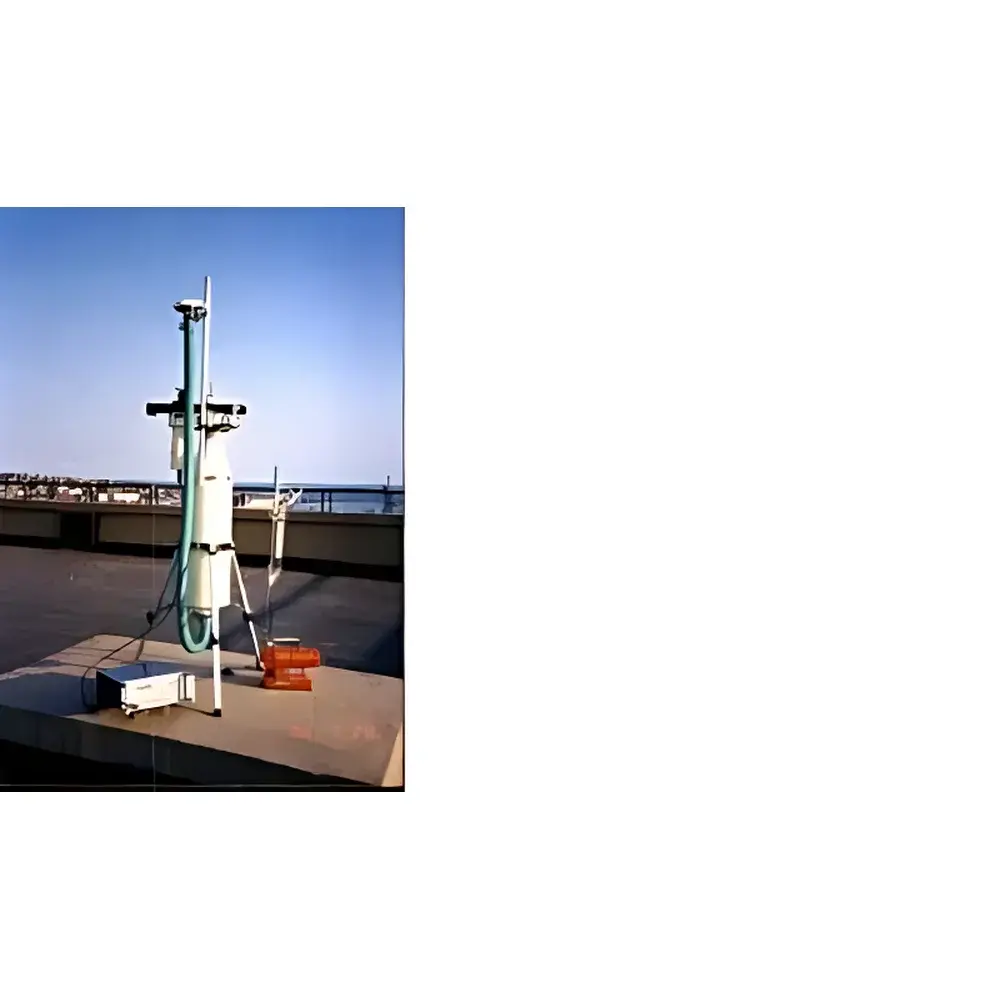
FT648 Portable Radon and Radon Progeny Monitor
| Origin | Beijing, China |
|---|---|
| Manufacturer Type | Authorized Distributor |
| Origin Category | Domestic (PRC) |
| Model | FT648 |
| Pricing | Available Upon Request |
| Sensitivity | 3.3 Bq/m³ (radon, 95% confidence level) |
| Intrinsic Error | <30% (typical) |
| Background Count Rate | ≤25 cph |
| Power Supply | Sampling Pump Battery: 18 V Ni–Cd |
| Main Unit Battery | 12 V Ni–Cd |
| Operating Temperature | 0–40 °C |
| Detector | Ø65 mm ZnS(Ag) Scintillation Detector |
| Sampling Pump Flow Rate | 30–40 L/min |
| Decay Chamber Volume | 14.8 L |
| Dimensions | Ø170 mm × 800 mm |
| Weight | 18 kg |
Overview
The FT648 Portable Radon and Radon Progeny Monitor is a field-deployable, dual-channel radiation measurement instrument engineered for simultaneous, quantitative assessment of airborne radon gas (²²²Rn) and its short-lived decay progeny (e.g., ²¹⁸Po, ²¹⁴Po) under non-equilibrium conditions. It operates on the validated dual-filter methodology—specifically, the “two-filter” or “dual-emanation” technique—wherein radon is collected on a primary filter while its progeny are selectively captured on a secondary (and optionally tertiary) filter downstream of a calibrated decay chamber. This design decouples radon and progeny measurements, eliminating reliance on assumed radioactive equilibrium—a critical limitation of single-filter or passive alpha-track methods. The instrument employs a Ø65 mm ZnS(Ag) scintillation detector coupled with pulse-height discrimination to resolve alpha emissions from radon and its progeny isotopes, enabling direct activity concentration calculation without factory calibration traceability to reference standards. Its architecture conforms to the technical principles outlined in ISO 11665-2:2021 (Measurement of radioactivity in air — Part 2: Protocols for radon-222) and aligns with U.S. EPA Protocol for Radon and Radon Progeny Measurements (EPA 402-R-92-002).
Key Features
- Simultaneous radon gas and radon progeny quantification via triple-filter sampling configuration (primary radon filter, secondary progeny filter, tertiary guard filter)
- No routine calibration required—absolute sensitivity established through geometric efficiency characterization and known alpha emission energies (5.49 MeV for ²²²Rn, 6.00 MeV for ²¹⁸Po, 7.69 MeV for ²¹⁴Po)
- Integrated 14.8 L decay chamber enabling controlled progeny ingrowth and separation prior to detection
- High-flow sampling pump (30–40 L/min) supporting rapid survey cycles and low detection limits (3.3 Bq/m³ for radon at 95% confidence)
- Robust mechanical design: aluminum alloy housing, sealed membrane filtration path, manual continuous sampling interface
- Low-background operation (≤25 counts per hour) achieved via shielded detector assembly and pulse-shape discrimination
- Field-portable form factor (Ø170 mm × 800 mm; 18 kg) with dual independent battery systems (18 V for pump, 12 V for electronics)
Sample Compatibility & Compliance
The FT648 is optimized for unfiltered ambient air, indoor air, soil gas (when interfaced with probe tubing), and ventilation duct streams. It accommodates standard 47 mm or 50 mm circular filters (cellulose ester or mixed cellulose ester). The instrument satisfies functional requirements for Class II environmental monitoring per IAEA Safety Standards Series No. RS-G-1.7 (Application of the Concepts of Exclusion, Exemption and Clearance) and supports data collection in accordance with national radon action plans aligned with WHO Handbook on Indoor Radon (2009). While not certified to IEC 61526 for personal dosimetry, its measurement protocol is referenced in ASTM D6914-22 (Standard Test Method for Determining Radon in Soil Gas Using Alpha Scintillation Cells) as an acceptable active sampling alternative.
Software & Data Management
Data acquisition is performed via embedded microcontroller with real-time alpha pulse counting and energy windowing. Raw counts, flow rate, temperature, and sampling duration are logged internally (non-volatile memory, ≥1000 records). Export is supported via RS-232 serial interface to Windows-based desktop software (supplied), which performs decay-corrected activity calculations using ICRP Publication 137 decay chains and outputs CSV-compatible reports. Audit trails include operator ID entry, time-stamped start/stop events, and battery voltage history—supporting GLP-compliant documentation where electronic records are permitted under local regulatory frameworks (e.g., FDA 21 CFR Part 11 if validated in conjunction with site-specific SOPs).
Applications
- Indoor radon screening and diagnostic surveys in residential, educational, and healthcare buildings
- Geological and seismic precursor studies involving anomalous radon exhalation from fault zones
- Post-mitigation verification following installation of sub-slab depressurization or active ventilation systems
- Radiological safety monitoring in uranium mining support facilities, nuclear medicine departments, and decommissioning sites
- Atmospheric boundary layer research correlating radon flux with meteorological parameters (PBL height, turbulence intensity)
- Defense infrastructure health physics assessments—including hardened command bunkers and mobile CBRN response units
FAQ
Does the FT648 require annual recalibration against a radon standard?
No. Its measurement principle is based on absolute alpha spectrometry and geometric detection efficiency; routine calibration is not necessary. However, annual verification of pump flow rate (using a calibrated rotameter or bubble meter) and background count rate is recommended.
Can the instrument distinguish between radon-222 and thoron (radon-220)?
No. The FT648 is optimized for ²²²Rn and its progeny. Thoron’s 55.6 s half-life precludes meaningful accumulation in the 14.8 L decay chamber; cross-sensitivity is negligible under standard sampling durations (>30 min).
Is the detector sensitive to gamma radiation interference?
The ZnS(Ag) scintillator exhibits minimal gamma response due to low atomic number and thin active layer. Pulse-height discrimination further suppresses gamma-induced events; typical gamma rejection ratio exceeds 10⁴:1 for ¹³⁷Cs (662 keV).
What maintenance intervals are specified for field operation?
Filter replacement after each sample cycle; pump diaphragm inspection every 500 operating hours; battery capacity validation every 6 months; detector window cleaning only if visibly contaminated.







