
TSE Systems Nanotechnology Inhalation Exposure System for Nanoparticle Toxicology Studies
| Brand | TSE Systems |
|---|---|
| Origin | Germany |
| Model | Nanotechnology Inhalation Exposure System |
| Particle Generation Technology | Electrospray |
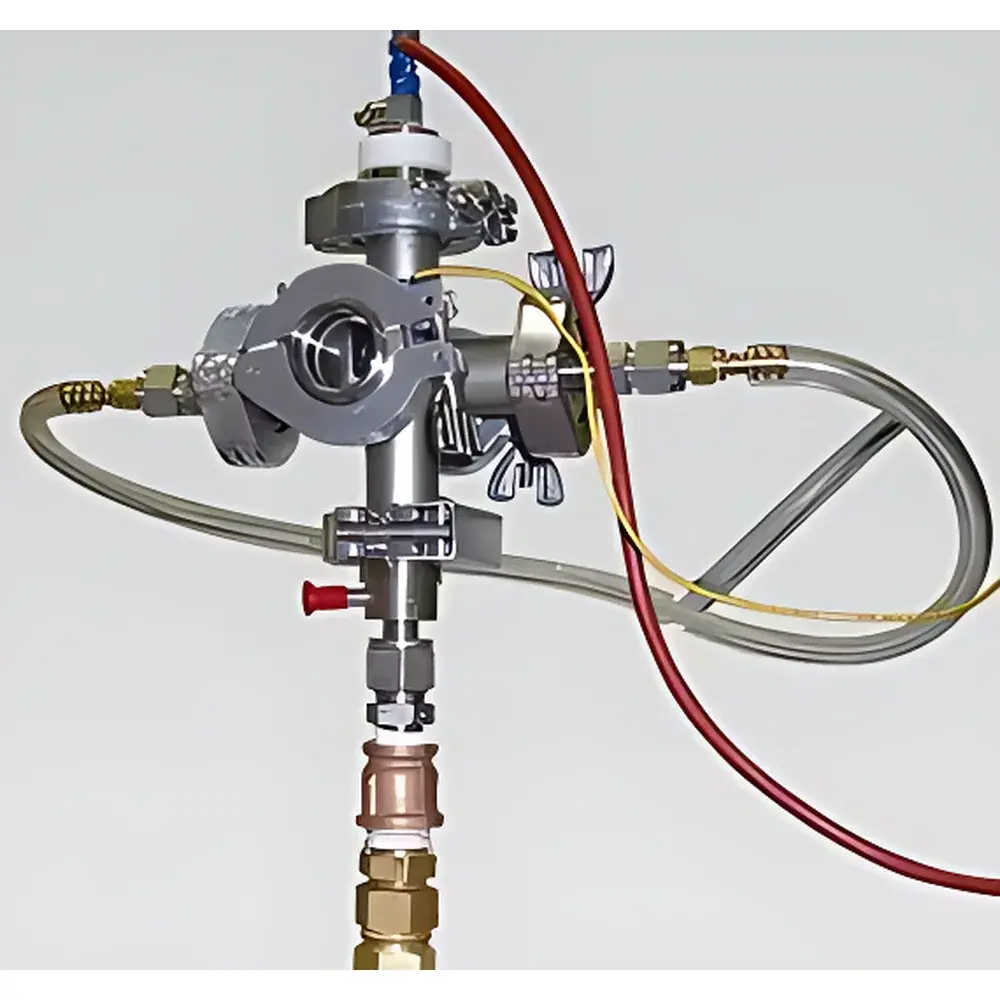
| Nozzle Configurations | Single-cone (uniform deposition) or Multi-nozzle (high-throughput exposure) |
| Detection Limit | 4.5 nm (via CPC) |
| Particle Classification | Differential Mobility Analysis (DMA) |
| System Architecture | Custom-configurable modular platform |
| Compliance Framework | Designed for GLP-compliant inhalation toxicology studies |
Overview
The TSE Systems Nanotechnology Inhalation Exposure System is a purpose-engineered platform for controlled, quantitative delivery of engineered nanomaterials to laboratory animals or in vitro air–liquid interface (ALI) cultures. It operates on the principle of electrospray aerosol generation—where liquid suspensions of nanoparticles are atomized under high-voltage electric fields to produce monodisperse, charge-stabilized aerosols with minimal agglomeration. This method ensures physicochemically representative exposure conditions critical for inhalation toxicology, pharmacokinetic modeling, and nanomaterial safety assessment. Unlike thermal or mechanical nebulization, electrospray preserves nanoparticle surface chemistry, crystallinity, and colloidal stability—enabling reproducible dose–response evaluation across repeated exposures. The system is designed for integration into certified animal biosafety level-2 (BSL-2) laboratories and conforms to OECD Test Guideline 412 (Subacute Inhalation Toxicity) and ISO/IEC 17025-accredited testing environments.
Key Features
- Electrospray-based nanoparticle generator delivering stable, low-agglomeration aerosols from aqueous or organic suspensions (e.g., TiO₂, SiO₂, Ag, carbon nanotubes, lipid nanoparticles)
- Modular nozzle architecture: single-cone configuration for precise, spatially uniform deposition in nose-only or whole-body chambers; multi-nozzle array for parallelized exposure of multiple animals or ALI cultures
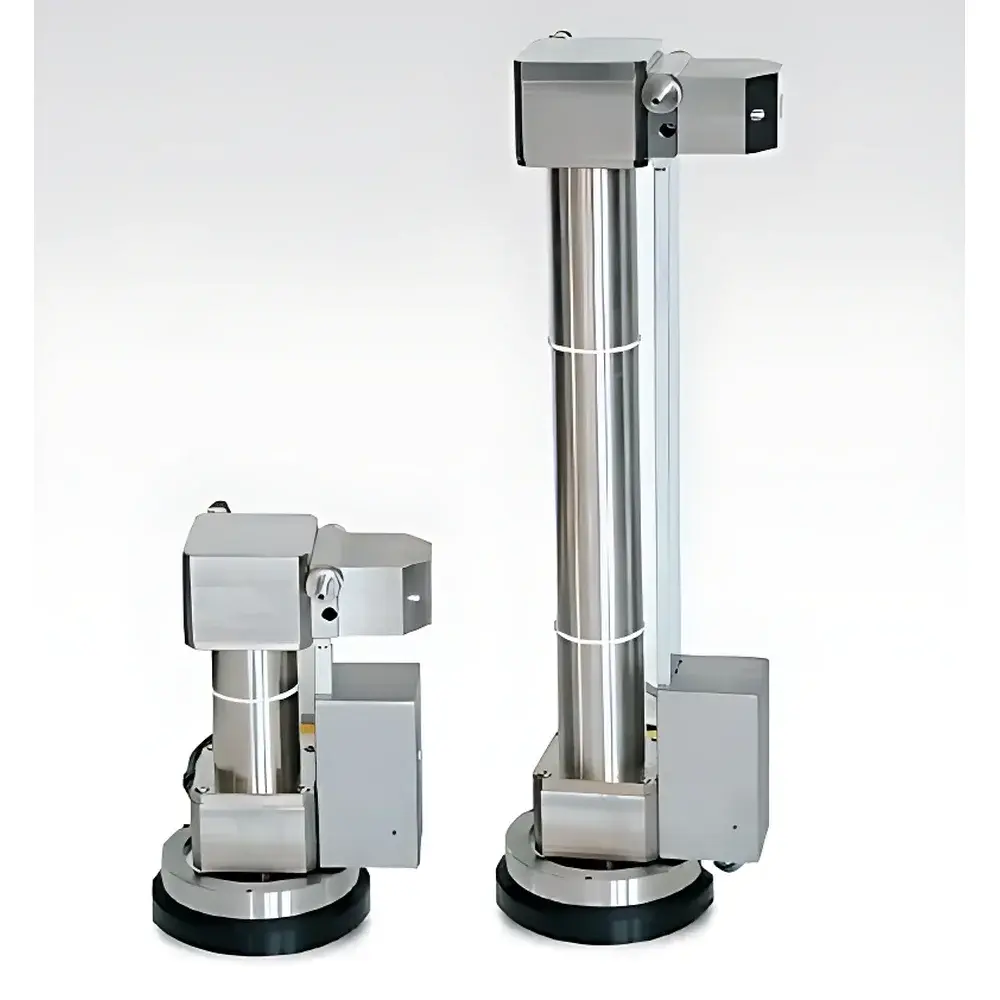
- Real-time aerosol characterization via integrated Condensation Particle Counter (CPC) with 4.5 nm lower detection limit and Differential Mobility Analyzer (DMA) for size-resolved classification (mobility diameter range: 5–500 nm)
- Customizable chamber geometry and flow dynamics—supporting ISO-standard exposure volumes (e.g., 30 L whole-body, 0.5 L nose-only), laminar airflow control, and temperature/humidity stabilization (±0.5 °C, ±3% RH)
- Robust architecture compliant with IEC 61000-6-3 (EMC) and UL 61010-1 (electrical safety); all wetted parts constructed from electropolished 316L stainless steel or PTFE-lined components to prevent adsorption or catalytic degradation
Sample Compatibility & Compliance
The system accommodates a broad spectrum of nanomaterials—including metal oxides, quantum dots, polymeric nanoparticles, and protein-coated liposomes—provided they are dispersible in low-conductivity solvents compatible with electrospray operation (e.g., isopropanol, ethanol/water mixtures, propylene glycol). Aerosol output is validated per ASTM E2931-23 (Standard Guide for Characterizing Nanoparticle Size Distribution in Aerosols) and supports traceable mass concentration calibration using gravimetric filter sampling (NIOSH Method 5040). All exposure protocols are fully documentable for GLP audits, with hardware timestamps, sensor logs, and operator metadata retained for full 21 CFR Part 11 compliance when paired with TSE’s optional SecureLog software module.
Software & Data Management
Control and monitoring are executed via TSE’s ExposureControl Suite—a Windows-based application supporting real-time visualization of aerosol number concentration, size distribution histograms, chamber pressure differentials, and flow rates (mass flow controllers calibrated to ±1% FS). Raw DMA voltage scans and CPC pulse counts are exported in HDF5 format for third-party analysis (e.g., MATLAB, Python pandas). Audit trails record all parameter changes, user logins, and system alarms with SHA-256 hashing. Optional integration with Laboratory Information Management Systems (LIMS) enables automated study assignment, sample tracking, and regulatory submission packaging aligned with FDA eCTD requirements.
Applications
- In vivo pulmonary toxicity screening of novel nanotherapeutics under OECD TG 413 (Subchronic Inhalation Toxicity)
- In vitro ALI exposure studies using human primary bronchial epithelial cells or macrophage co-cultures
- Nanoparticle translocation kinetics across alveolar–capillary barriers (quantified via ICP-MS tissue digestion)
- Development and validation of computational dosimetry models (e.g., MPPD v3.04)
- Regulatory submission support for REACH dossiers, EPA TSCA pre-manufacture notices, and EMA nanomedicine guidelines
FAQ
Can this system generate aerosols from dry powder nanomaterials?
No—electrospray requires stable liquid-phase dispersions. Dry powders must first be sonicated and stabilized in low-conductivity media prior to introduction.
Is ozone generation a concern during electrospray operation?
Electrospray voltages are optimized to remain below corona threshold; ozone production is consistently below 5 ppb (measured per ISO 16000-25), well within occupational exposure limits.
How is particle loss minimized in the exposure tubing and chamber?
All transport lines use conductive silicone with grounded shielding; chamber walls feature anti-static coating and optimized Reynolds numbers (<2000) to suppress turbulent deposition.
Does TSE provide validation reports for GMP/GLP studies?
Yes—IQ/OQ/PQ documentation packages, including as-installed sensor calibrations and aerosol uniformity mapping reports, are available upon request.
Can the system be retrofitted for simultaneous multi-analyte detection (e.g., coupled to SMPS or APS)?
The modular port architecture supports OEM integration of scanning mobility particle sizers (SMPS) or aerodynamic particle sizers (APS) via standardized 1/4″ Swagelok fittings and synchronized trigger outputs.





