
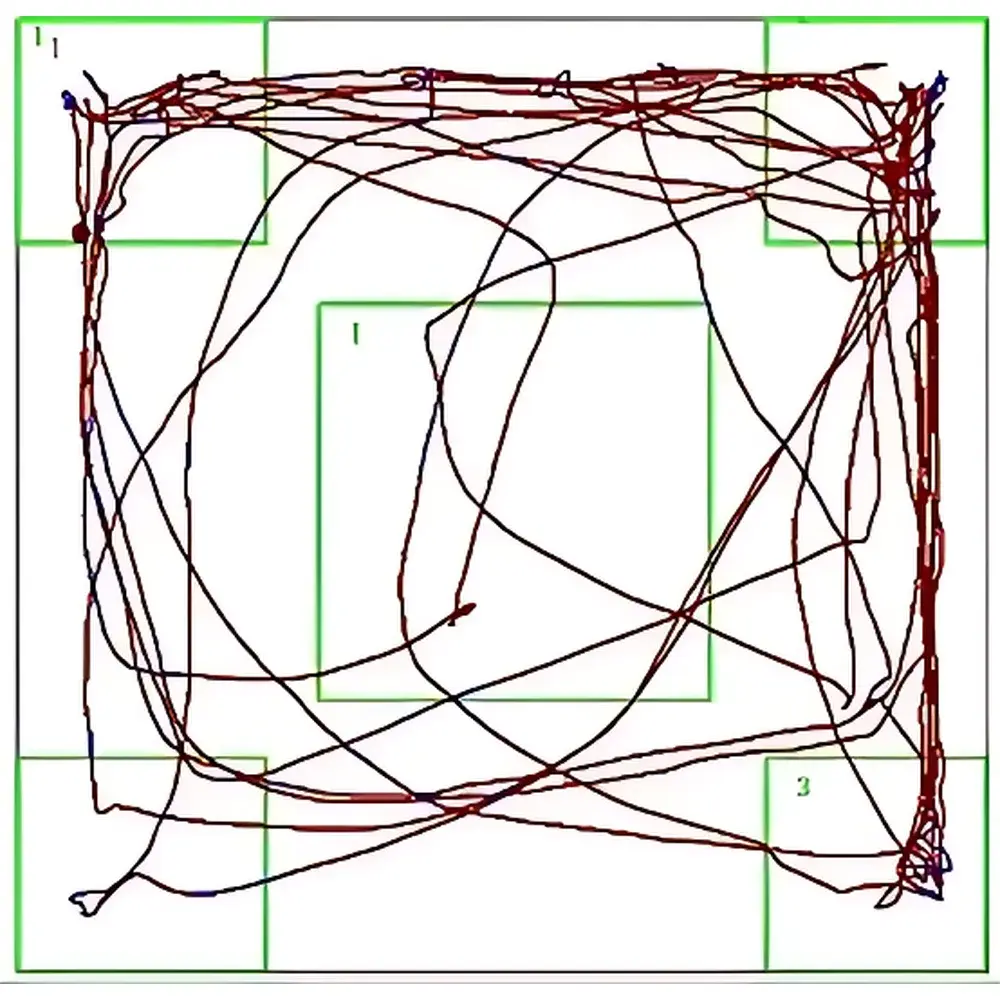
VideoMot2 by TSE Systems – Advanced Multi-Region Video Tracking System for Preclinical Behavioral Phenotyping
| Brand | TSE Systems |
|---|---|
| Origin | Germany |
| Model | VideoMot2 |
| Camera Input | Single high-resolution monochrome or color camera (configurable) |
| ROI Support | Unlimited user-defined regions of interest (ROIs) |
| Animal Detection | Contrast-based segmentation with adaptive thresholding |
| Tracking Method | Three-point centroid tracking (nose, center, tail base) |
| 3D Capability | Compatible with optional beam-break frame for vertical posture detection (rearing analysis) |
| Behavioral Event Logging | External programmable event keyboard (10 customizable keys) |
| Data Output | ASCII text files (tab-delimited), bitmap trajectory exports, raw coordinate time-series (.csv) |
| Software Architecture | Windows-based client application with audit trail logging |
| Compliance | Designed to support GLP-compliant workflows |
| Remote Operation | Wired or wireless remote start/stop via dedicated control interface |
Overview
The VideoMot2 by TSE Systems is a rigorously engineered video tracking platform designed for quantitative behavioral phenotyping in preclinical neuroscience, pharmacology, and translational research. Operating on the principle of real-time pixel-based motion segmentation and centroid kinematic modeling, VideoMot2 captures high-fidelity spatial-temporal trajectories of rodents and other small laboratory animals within standardized test arenas—including open fields, elevated plus mazes, Y-mazes, Morris water mazes, light-dark boxes, and novel object recognition setups. Its core architecture supports both monochrome and color imaging modalities, enabling robust animal discrimination through either luminance contrast adaptation or chromatic tagging—critical for longitudinal multi-animal cohort studies where individual identification must remain consistent across sessions without physical marking. The system’s single-camera multi-zone acquisition capability eliminates inter-camera calibration drift while maintaining synchronized temporal resolution across all monitored areas—a key advantage for high-throughput behavioral screening facilities.
Key Features
- Three-point kinematic tracking: Simultaneous detection and interpolation of nose, body center, and tail base coordinates—enabling precise gait analysis, head-direction estimation, and orientation-dependent behavioral classification.
- Unlimited ROI definition: Geometrically flexible polygonal or rectangular regions can be drawn, resized, and nested arbitrarily; ROIs support dynamic masking, dwell-time quantification, entry/exit counting, and velocity-gated event triggering.
- Integrated rearing detection: When paired with an optional infrared beam-break frame, VideoMot2 computes true vertical displacement metrics—including frequency, duration, and height distribution of rearing episodes—providing objective quantification of exploratory posture behavior.
- Remote experimental control: Hardware-triggered start/stop functionality allows experimenters to initiate trials from outside the testing room, minimizing experimenter-induced stress artifacts and supporting blinded protocols.
- Dedicated behavioral event annotation: A programmable external keyboard enables real-time manual coding of ethologically relevant events (e.g., grooming, freezing, rearing, sniffing) with millisecond timestamp accuracy, synchronized to the tracking stream.
- Post-hoc reanalysis engine: Raw coordinate data (.csv) is preserved in full temporal resolution; users may reapply detection parameters, adjust ROI boundaries, or recompute derived metrics without reacquiring video—ensuring methodological transparency and reproducibility.
Sample Compatibility & Compliance
VideoMot2 is validated for use with mice (C57BL/6, BALB/c, CD-1), rats (Sprague-Dawley, Wistar), and other small mammals up to ~500 g. It accommodates standard behavioral apparatus dimensions—from 30 × 30 cm open fields to 120 cm diameter water maze pools—and integrates seamlessly with third-party hardware such as environmental controllers, tone generators, and optogenetic stimulation interfaces. The software adheres to Good Laboratory Practice (GLP) documentation standards: all processing steps are logged with timestamps, operator IDs, and parameter sets; raw data files are write-protected upon export; and configuration changes require dual-user authorization. While not certified as a medical device, its data management framework satisfies foundational requirements for FDA 21 CFR Part 11 compliance—including electronic signature support, audit trail generation, and role-based access control—making it suitable for regulated toxicology and CNS drug development programs.
Software & Data Management
The VideoMot2 software suite runs natively on Windows 10/11 (64-bit) and employs a modular architecture with separate acquisition, analysis, and reporting modules. All processed outputs—including summary statistics (total distance, velocity histograms, zone transitions), time-binned activity profiles, and annotated trajectory bitmaps—are exported in ASCII tab-delimited format for direct import into R, Python (pandas), SPSS, or GraphPad Prism. Raw coordinate datasets retain full millisecond-synchronized x/y/t metadata, permitting custom algorithm development or integration with machine learning pipelines for unsupervised behavioral clustering. Data storage follows hierarchical project-folder conventions with automatic versioning; encrypted backups and network share synchronization are supported. Optional laptop configurations include ruggedized mobile workstations preloaded with validated software builds and calibrated camera modules—ideal for field-deployable behavioral phenotyping.
Applications
VideoMot2 delivers standardized, objective metrics for a broad spectrum of behavioral domains: locomotor activity and habituation (open field), anxiety-related decision-making (elevated plus maze, light-dark box), spatial learning and memory (Morris water maze, radial arm maze), working memory and cognitive flexibility (Y-maze spontaneous alternation, T-maze reversal), and recognition memory (novel object/place recognition). Its three-point tracking model supports advanced derivations such as thigmotaxis indices, meander ratio, path efficiency, and angular velocity profiling—enabling detection of subtle neurobehavioral phenotypes in transgenic models or after subthreshold pharmacological intervention. The system is widely cited in peer-reviewed literature for studies involving neurodegenerative disease models (e.g., APP/PS1 mice), psychiatric endophenotypes (e.g., chronic social defeat stress), and developmental neurotoxicity assessments.
FAQ
Can VideoMot2 track multiple animals simultaneously in the same arena?
Yes—using color-based identification with calibrated RGB filters or differential contrast thresholds, provided animals are visually distinguishable and movement does not result in prolonged occlusion.
Is calibration required before each experiment?
A one-time spatial calibration per camera setup is sufficient; the software stores lens distortion profiles and scale factors, automatically applying corrections during analysis.
Does VideoMot2 support integration with electrophysiology or calcium imaging systems?
Yes—via TTL pulse synchronization inputs and timestamp-aligned data export, enabling precise alignment of behavioral epochs with neural activity recordings.
What is the minimum recommended frame rate for reliable tracking?
25 fps is standard for rodent locomotion; higher rates (50–100 fps) are advised for fine motor analysis or high-speed behaviors such as escape jumps.
Are software updates and technical support included post-purchase?
TSE Systems provides 12 months of complimentary software maintenance and remote support; extended service agreements are available upon request.





