
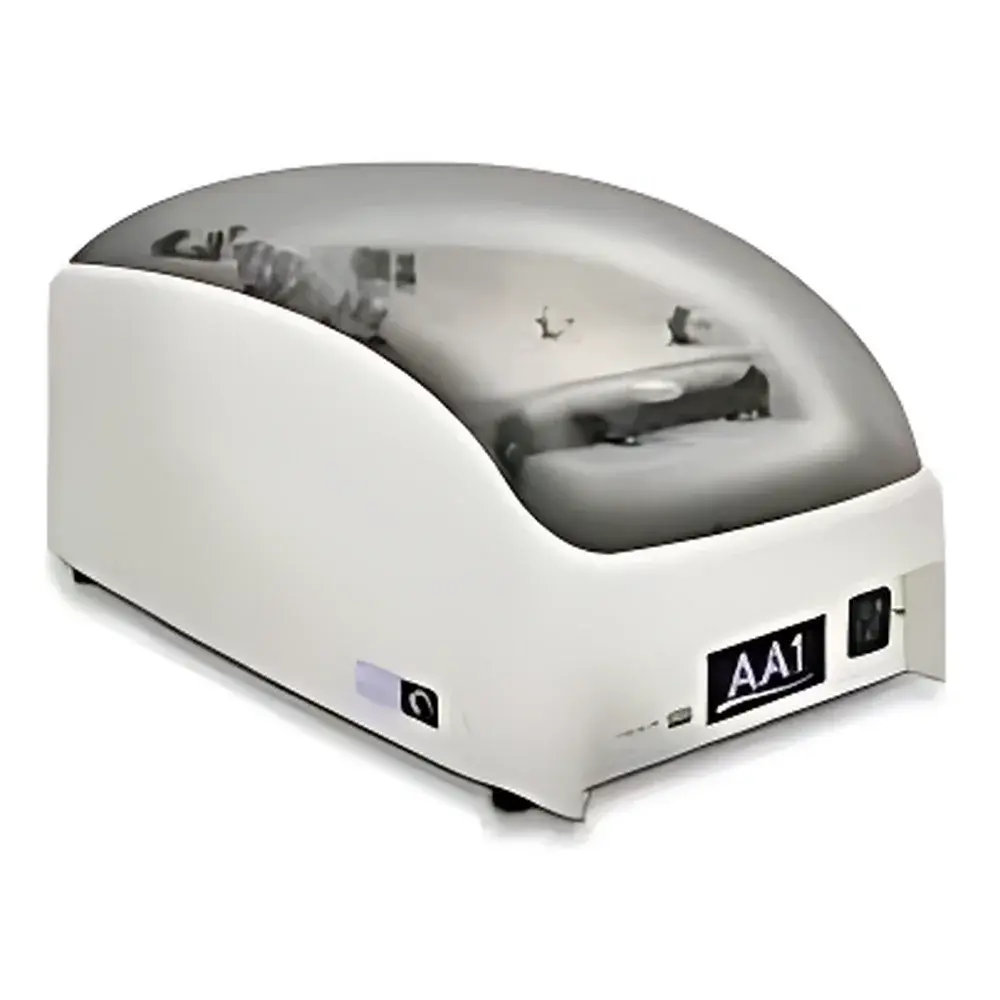
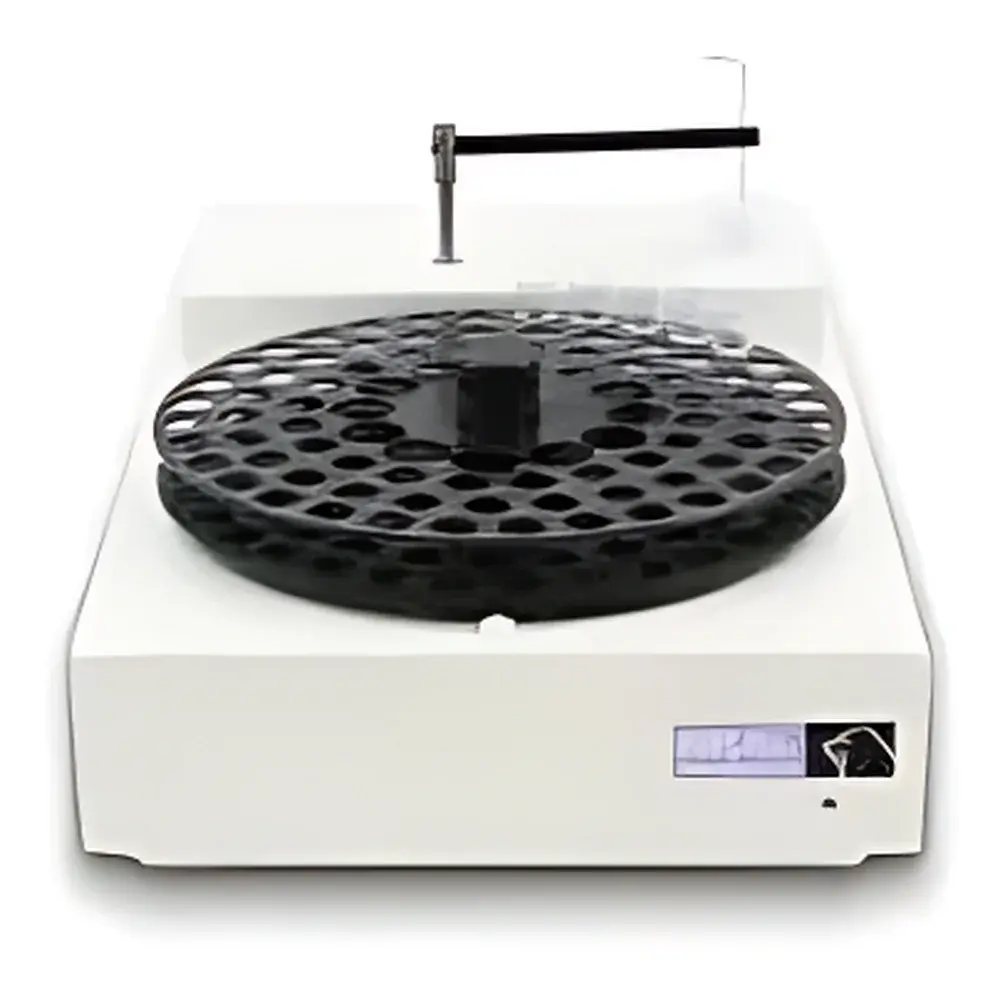
SEAL AA100 Continuous Flow Analyzer
| Brand | SEAL |
|---|---|
| Origin | Germany |
| Model | AA100 |
| Product Type | Continuous Flow Analyzer |
| Wavelength Range | 340–880 nm |
| Sample Capacity | 180 positions / 120 cups |
| Reagent Positions | 17 |
| Flow Cell Path Length | 10–50 mm |
| Light Source | LED |
Overview
The SEAL AA100 Continuous Flow Analyzer is a compact, integrated benchtop system engineered for high-precision, standardized wet-chemistry analysis in environmental, regulatory, and quality control laboratories. Based on classical continuous flow analysis (CFA) principles—first established by Skeggs in the 1950s—the AA100 employs segmented flow methodology: air bubbles are introduced into the carrier stream to physically isolate discrete reaction segments, enabling reproducible mixing, controlled reaction timing, and steady-state photometric detection. Unlike flow injection analysis (FIA), CFA ensures complete chemical reaction development prior to measurement, delivering superior precision (RSD < 1.5% typical), low detection limits (sub-ppb for key analytes), and robust inter-laboratory comparability. Designed and assembled in Germany, the AA100 integrates all core modules—autosampler, multi-channel peristaltic pump, thermostatically controlled reaction manifold, digital photometer, and dedicated AACE software—into a single, space-efficient architecture optimized for routine compliance testing.
Key Features
- Integrated modular design: Pump, reaction manifold, detector, and autosampler co-located within a single chassis—reducing footprint by >30% versus legacy AA3 systems.
- High-stability digital photometer with LED light source (340–880 nm), offering drift 10,000 h).
- Adjustable flow cell path length (10–50 mm) for optimized sensitivity across diverse analyte concentration ranges without hardware changeover.
- 17-position reagent carousel with independent temperature control (ambient to 60 °C) for thermally sensitive chemistries (e.g., phenol-hypochlorite for ammonia).
- Robust 180-position/120-cup rotating disk autosampler with real-time sample addition capability—no method interruption required.
- Multi-speed peristaltic pump with precision-calibrated tubing sets (0.5–2.5 mm ID) supporting flow rates from 0.2 to 4.0 mL/min with < ±0.5% volumetric accuracy.
- Onboard heating zones with PID-controlled thermal regulation (±0.2 °C) across digestion, colorimetric, and distillation modules.
Sample Compatibility & Compliance
The AA100 is validated for aqueous matrices including raw and treated wastewater, drinking water, surface and groundwater, soil extracts (EPA Method 3050B leachates), and plant tissue digests. Its methodology conforms to over 40 internationally recognized standard methods—including EPA 353.2, EPA 365.3, ISO 15681-1/2 (phosphate, nitrate), ASTM D1253 (residual chlorine), and ISO 11905-1 (total nitrogen)—ensuring data admissibility in regulatory submissions. All hardware and software components meet CE marking requirements. The AACE software supports full 21 CFR Part 11 compliance via electronic signatures, audit trails, user role-based access control, and immutable data archiving—enabling GLP and GMP-aligned operation.
Software & Data Management
AACE (Advanced Analytical Control Environment) is a Windows-based, instrument-dedicated platform providing end-to-end workflow management: method setup, real-time monitoring, calibration curve generation (linear, quadratic, spline), QC flagging (Westgard rules), and automated report export (PDF, CSV, XML). Raw absorbance/time profiles are retained with timestamped metadata (pump speed, temperature, reagent lot, operator ID). Data integrity is enforced through dual-layer backup (local SSD + network share), encrypted database storage, and configurable retention policies aligned with ISO/IEC 17025 documentation requirements. Remote diagnostics and firmware updates are supported via secure HTTPS channel.
Applications
The AA100 delivers validated performance for routine nutrient and anion analysis in environmental labs: ammonium (indophenol blue), orthophosphate (molybdenum blue), nitrate/nitrite (cadmium reduction + diazotization), total phosphorus (persulfate digestion), total Kjeldahl nitrogen (alkaline persulfate oxidation), chloride (mercuric thiocyanate), silica (molybdate blue), and sulfate (turbidimetric barium sulfate). It is widely deployed in municipal water utilities, EPA-certified labs, ISO 17025-accredited testing facilities, and university research centers conducting long-term environmental monitoring programs requiring traceable, auditable results.
FAQ
What standards does the AA100 support out-of-the-box?
Pre-configured methods for EPA, ISO, ASTM, and DIN standards are included; custom method development is supported via editable reaction parameters and calibration templates.
Can the AA100 perform digestion steps inline?
Yes—integrated UV/persulfate and alkaline digestion modules enable fully automated total phosphorus and total nitrogen determination without manual intervention.
Is method transfer from older SEAL systems straightforward?
AACE includes backward-compatible method import tools; physical tubing layouts and reagent routing maps maintain direct equivalence with AA3 and QuikChem platforms.
How is calibration verification handled during unattended runs?
Built-in calibration verification standards (CVS) are injected at user-defined intervals (e.g., every 10th sample); deviations beyond ±5% trigger automatic alert and optional re-calibration.
What maintenance is required for long-term reliability?
Daily: tubing inspection and waste line flush. Quarterly: photometer baseline validation and pump roller recalibration. Annual: full optical alignment and thermal sensor certification—documented in AACE’s preventive maintenance scheduler.
Related Products






