
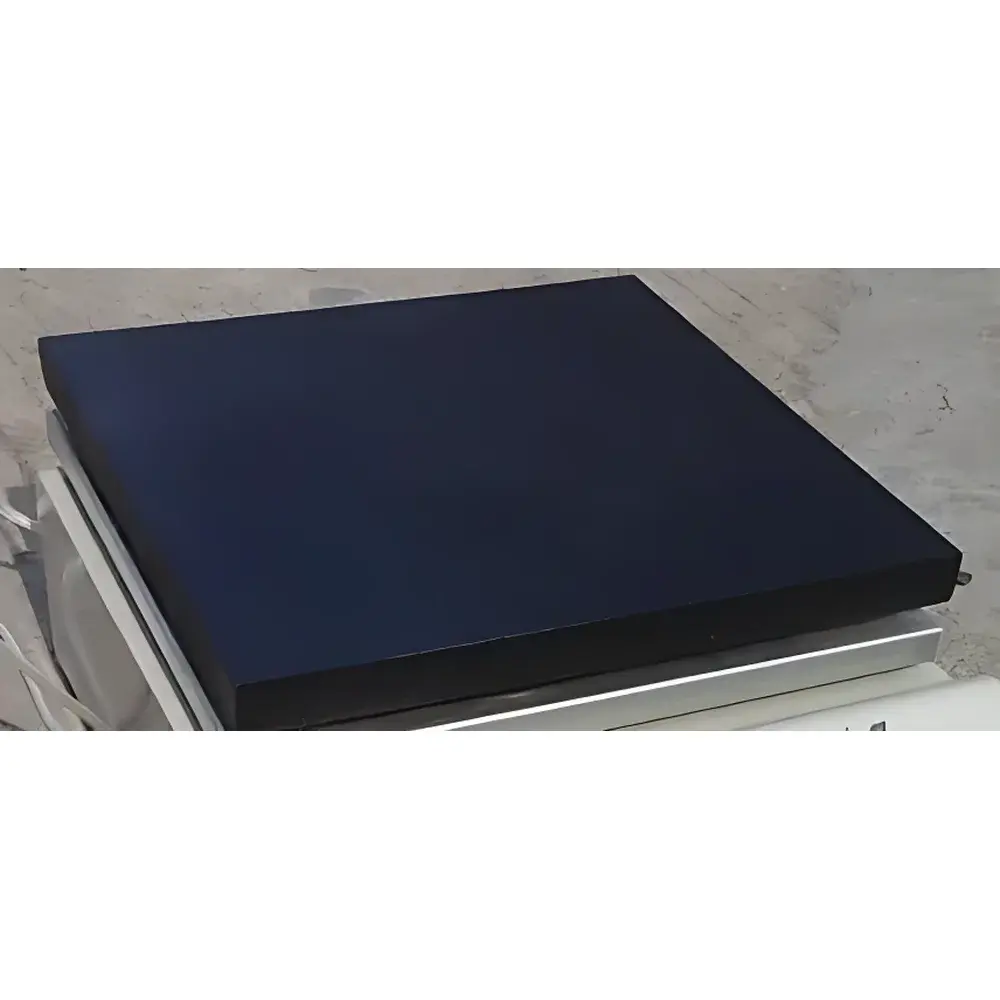
DB-B1 Benchtop Slide Warmer by Langbo Instruments
| Brand | Langbo Instruments |
|---|---|
| Model | DB-B1 |
| Temperature Range | Ambient to 70 °C |
| Control Accuracy | ±1 °C |
| Power Supply | 220 V, 50 Hz |
| Weight | 3.5 kg |
Overview
The DB-B1 Benchtop Slide Warmer is a compact, precision-engineered thermal platform designed for consistent and uniform heating of microscope slides, tissue sections, cytology preparations, and other thin-sample substrates in histopathology, clinical diagnostics, and research laboratories. Operating on resistive heating with PID-controlled feedback regulation, the device maintains stable surface temperature across its aluminum alloy heating plate—ensuring reproducible antigen retrieval, paraffin melting, reagent pre-warming, and slide drying without thermal gradients or hotspots. Its low-mass thermal architecture enables rapid stabilization (<5 minutes from ambient to 70 °C) and minimal power consumption (≤150 W), making it suitable for continuous operation in high-throughput lab environments where spatial efficiency and energy reliability are critical.
Key Features
- PID-regulated temperature control with digital LED display for real-time monitoring and setpoint adjustment in 1 °C increments
- Uniform heating surface (120 × 100 mm) fabricated from anodized aluminum alloy for corrosion resistance and thermal homogeneity (±0.8 °C across plate at 60 °C)
- Over-temperature safety cutoff with independent mechanical thermostat (trip point: 75 °C) compliant with IEC 61010-1 Class II requirements
- Compact footprint (145 × 125 × 85 mm) and lightweight design (3.5 kg) optimized for benchtop integration alongside staining stations, microtomes, and imaging workstations
- No moving parts or consumables—maintenance-free operation with >50,000 hours of expected heater element service life under normal laboratory conditions
Sample Compatibility & Compliance
The DB-B1 accommodates standard glass microscope slides (75 × 25 mm), frosted-end slides, charged slides, and polymer-based diagnostic substrates. It supports protocols aligned with CAP-accredited histology workflows, including heat-induced epitope retrieval (HIER) prior to immunohistochemistry (IHC), controlled dewaxing of paraffin-embedded sections, and enzymatic pretreatment incubation. The unit conforms to ISO 13485–2016 for medical device-related support equipment and meets electromagnetic compatibility (EMC) requirements per EN 61326-1:2013. While not a medical device itself, its thermal performance is validated per ASTM E2251–22 (Standard Practice for Calibration of Thermometers Used in Laboratory Applications) using traceable NIST-certified reference thermometers.
Software & Data Management
As a standalone analog-digital hybrid instrument, the DB-B1 operates without embedded firmware or network connectivity. Temperature setpoints and real-time readings are managed exclusively via front-panel controls and LED display—eliminating cybersecurity vulnerabilities, software validation overhead, and regulatory burden associated with computerized systems. This architecture ensures compliance with FDA 21 CFR Part 11 when used in GLP/GMP environments where audit trails are not required for auxiliary thermal devices. For labs requiring documentation, optional external data loggers (e.g., Omega OM-DAQPRO-5300) may be interfaced via K-type thermocouple output (available upon request) to record time-stamped temperature profiles for SOP adherence and quality records.
Applications
- Antigen unmasking in formalin-fixed, paraffin-embedded (FFPE) tissue sections prior to primary antibody binding
- Controlled melting of paraffin films during slide preparation to prevent section distortion or chatter
- Pre-warming of hybridization buffers, enzyme solutions, and mounting media to minimize condensation and improve reaction kinetics
- Drying of aqueous-mounted cytology specimens prior to coverslipping to reduce artifact formation
- Stabilization of temperature-sensitive reagents (e.g., alkaline phosphatase conjugates) during multi-step immunoassays
FAQ
Is the DB-B1 suitable for use in ISO 17025-accredited testing laboratories?
Yes—the device’s thermal stability, repeatability, and calibration traceability support its use as ancillary equipment in accredited conformity assessment labs, provided temperature verification is performed per internal SOPs using certified reference standards.
Can the heating plate accommodate multiple slides simultaneously?
Yes—up to 12 standard 75 × 25 mm glass slides can be arranged in a single layer without overlap; optimal thermal uniformity is maintained when slides are placed centrally and spaced ≥5 mm apart.
Does the unit include a calibration certificate?
No factory-issued certificate is included, but users may perform in-house calibration using a NIST-traceable surface probe thermometer; procedure details are provided in the operator manual (Revision 3.1, 2024).
What is the recommended cleaning protocol for the heating surface?
Wipe with lint-free cloth dampened with 70% ethanol or isopropyl alcohol; avoid abrasive cleaners, steam sterilization, or immersion—surface anodization provides chemical resistance to common histological solvents.
Related Products



