
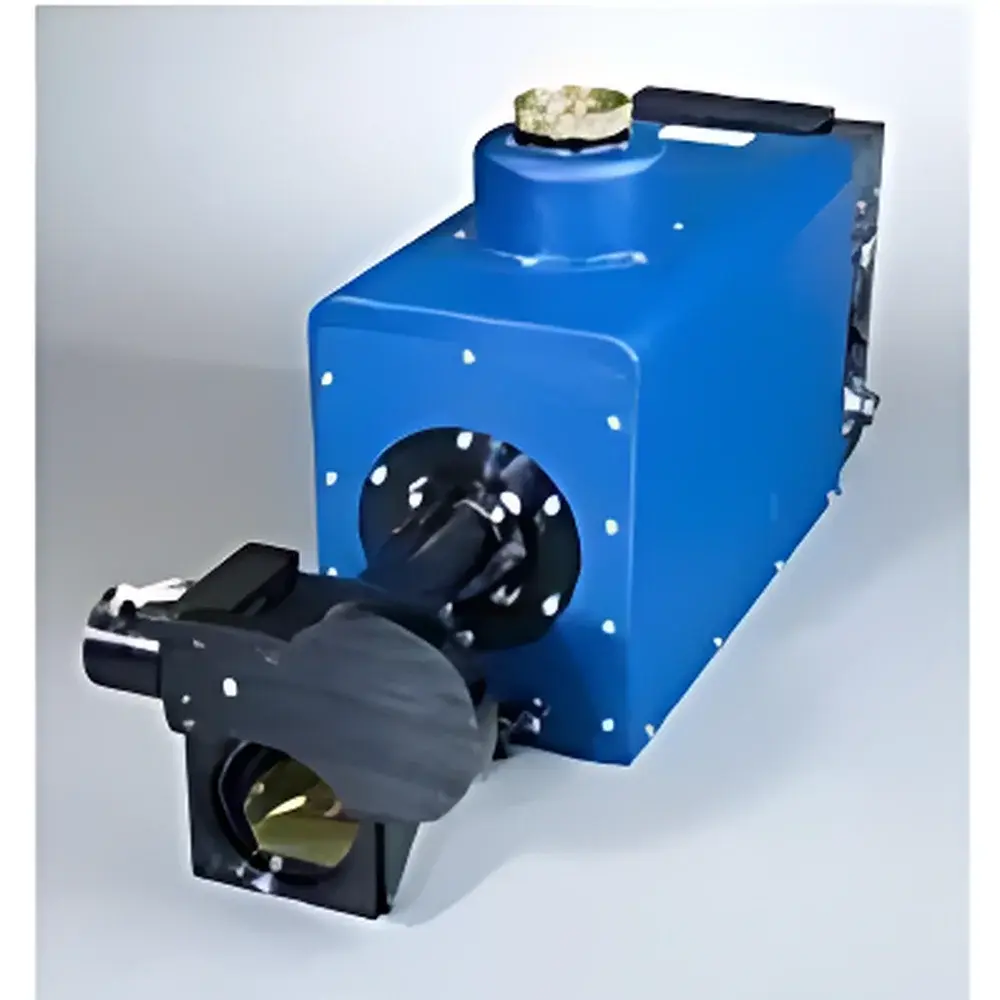
SurfaceOptics SOC750-HB/HS/HR Staring MWIR Hyperspectral Imaging Spectrometer Series
| Brand | SurfaceOptics |
|---|---|
| Origin | USA |
| Manufacturer Type | Authorized Distributor |
| Origin Category | Imported |
| Model | SOC750 |
| Pricing | Upon Request |
| Spectral Range | 2–5 µm |
| Spectral Resolution | 48–97 nm |
| Frame Rate | Up to 15 hyperspectral cubes/s |
| Spatial Resolution Options | 256×240, 256×256, or 512×512 pixels |
| Bit Depth | 14-bit |
| Data Cube Size | 5.25 MB (HB), 4 MB (HS), 32 MB (HR) |
| Software | HSAnalysis3 v3.x |
Overview
The SurfaceOptics SOC750-HB/HS/HR is a staring, video-rate, mid-wave infrared (MWIR) hyperspectral imaging spectrometer series engineered for real-time spectral analysis in the 2–5 µm atmospheric transmission window. Unlike scanning-based systems, the SOC750 employs a focal plane array (FPA)-integrated dispersive spectrometer architecture with no moving parts—enabling true snapshot acquisition of full hyperspectral data cubes at video frame rates. This architecture leverages cooled HgCdTe detector technology optimized for high quantum efficiency and low dark current across the MWIR band. The system operates on the principle of spatial-spectral image slicing via reflective grating dispersion coupled with on-chip pixel binning and vectorized spectral reconstruction. Designed for integration into industrial inspection lines, defense reconnaissance platforms, and laboratory-grade material identification workflows, the SOC750 delivers calibrated radiometric and spectral data traceable to NIST standards—supporting quantitative chemical mapping, emissivity characterization, and thermal contrast enhancement without temporal interpolation artifacts.
Key Features
- Staring FPA architecture enabling true real-time hyperspectral imaging—no push-broom or whisk-broom motion required
- Three configurable variants: SOC750-HB (high bandwidth), SOC750-HS (high speed), and SOC750-HR (high resolution), each optimized for distinct operational trade-offs between spatial fidelity, spectral fidelity, and temporal throughput
- Cooled 640×512 or 320×256 HgCdTe detector arrays with 14-bit digitization and programmable integration time (10 µs to 100 ms)
- Fixed-grating spectrograph with aberration-corrected optics, delivering spectral sampling intervals from 48 nm (HR) to 97 nm (HS) across the 2–5 µm range
- Onboard vector processor for real-time cube generation, radiometric correction, and spectral library matching (e.g., ASTM E1677 mineral reference spectra, USP polymer identification libraries)
- GigE Vision and Camera Link interface options supporting deterministic latency and synchronized multi-sensor triggering
Sample Compatibility & Compliance
The SOC750 series is compatible with both emissive and reflective targets across ambient to elevated temperature regimes (−40 °C to +500 °C surface temperature, depending on optical configuration and calibration protocol). It supports non-contact, standoff measurements at working distances from 0.3 m to >10 m using interchangeable f/2.0–f/4.0 MWIR lenses. The system conforms to IEC 61000-6-3 (EMC emissions) and IEC 61000-6-2 (immunity), and its firmware implements audit-trail logging per FDA 21 CFR Part 11 requirements when operated under validated HSAnalysis3 configurations. Calibration certificates include NIST-traceable blackbody source verification at 300 K, 500 K, and 800 K—validating radiometric accuracy within ±2% absolute and spectral axis stability better than ±0.5 nm over 8-hour thermal soak.
Software & Data Management
HSAnalysis3 v3.x provides a modular, scriptable environment for acquisition control, spectral preprocessing (dark current subtraction, non-uniformity correction, bad-pixel replacement), and chemometric analysis (PCA, MCR-ALS, spectral angle mapper, matched filter detection). Raw data is stored in ENVI-compatible .hdr/.dat format with embedded geotags (when GPS-enabled), radiometric metadata, and sensor configuration logs. The software supports automated report generation compliant with ISO/IEC 17025 documentation requirements—including uncertainty propagation for spectral band ratioing and detection limit estimation per ISO 11929. All processing pipelines are exportable as Python-compatible JSON profiles, enabling integration into LabVIEW, MATLAB, or custom CI/CD validation frameworks.
Applications
- Industrial process monitoring: Real-time detection of hydrocarbon leaks, polymer degradation, and coating thickness uniformity in continuous manufacturing
- Defense & security: Camouflage detection, explosive residue identification, and vehicle exhaust plume analysis under day/night conditions
- Materials science: Phase mapping of thermoelectric alloys, oxidation state quantification in transition metal oxides, and grain boundary chemistry profiling
- Environmental remote sensing: Volcanic SO₂ flux estimation, wildfire hotspot discrimination, and methane point-source localization from airborne platforms
- Pharmaceutical QA: Blending homogeneity assessment of API-excipient mixtures and counterfeit drug tablet screening via spectral fingerprinting
FAQ
What spectral calibration standards are supported by the SOC750?
The system ships with factory calibration against NIST-traceable blackbody sources at three temperatures; users may perform field recalibration using optional MWIR reference lamps compliant with ASTM E2758.
Can the SOC750 be integrated into a GMP-compliant production line?
Yes—when deployed with HSAnalysis3 in validated mode, it supports electronic signatures, change control logs, and 21 CFR Part 11–compliant audit trails for regulated environments.
Is spectral data export compatible with third-party chemometrics tools?
All native data cubes are saved in open ENVI format with full wavelength and radiance metadata; spectral libraries can be exported as CSV or JCAMP-DX for import into Unscrambler, Pirouette, or R packages such as hyperSpec.
What is the typical warm-up time before radiometric stability is achieved?
Detector stabilization requires ≤15 minutes after cold start; spectral axis drift remains below 0.3 nm over 4 hours with ambient temperature fluctuations of ±2 °C.
Does the system support real-time spectral anomaly detection?
Yes—the onboard vector processor executes user-defined spectral filters and threshold-based alarms at full frame rate, with latency <12 ms from photon arrival to trigger output.




