
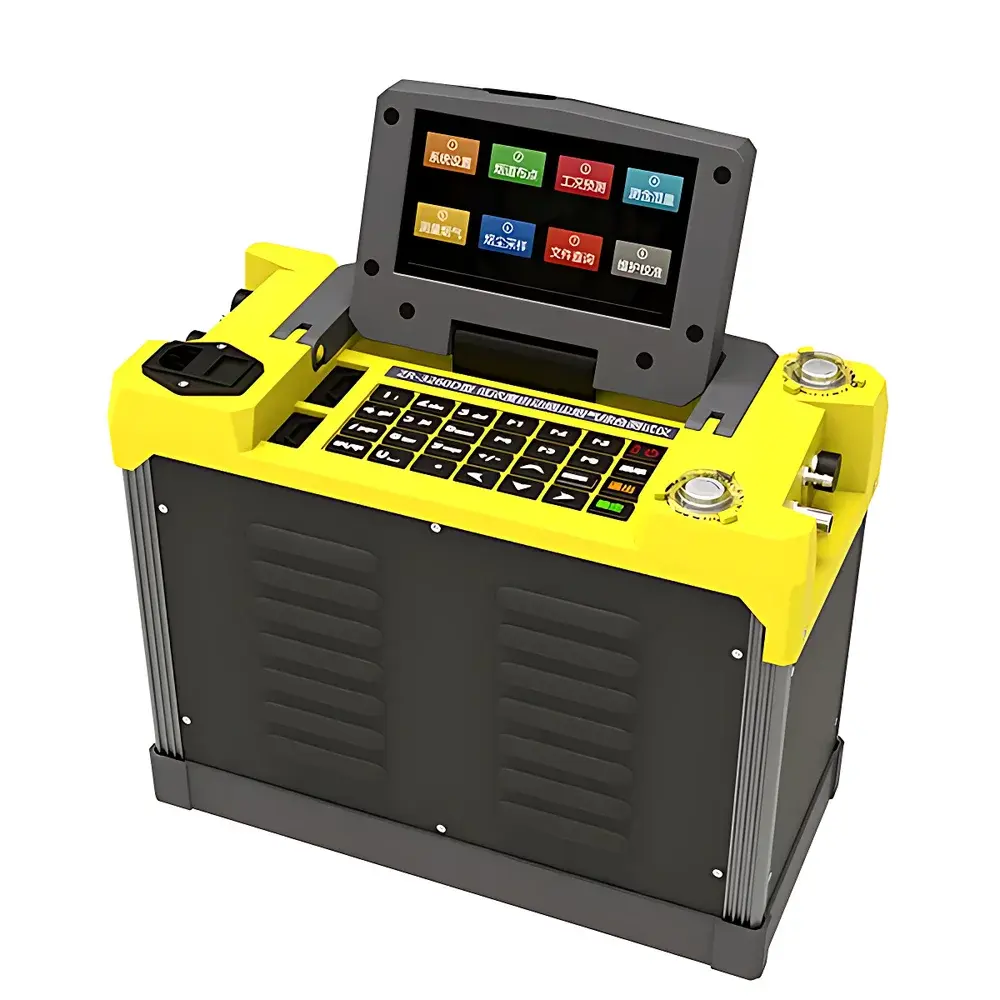
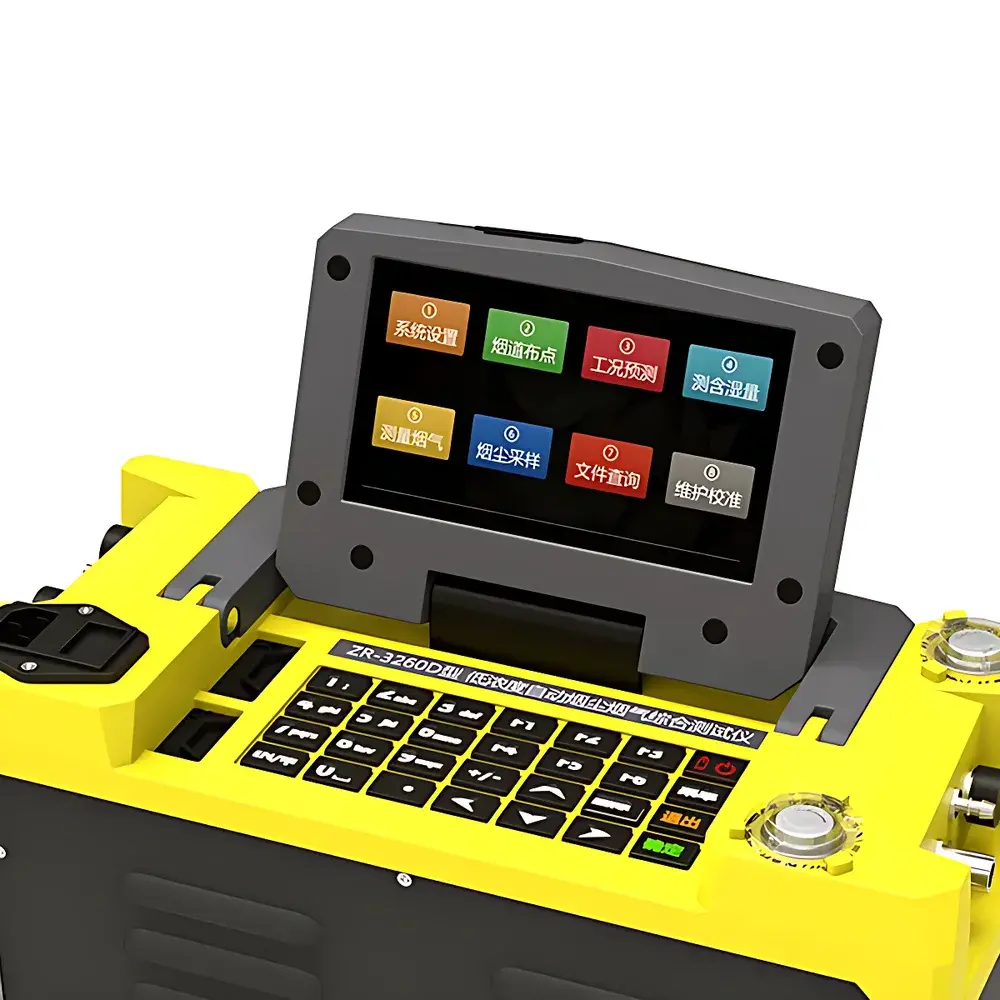
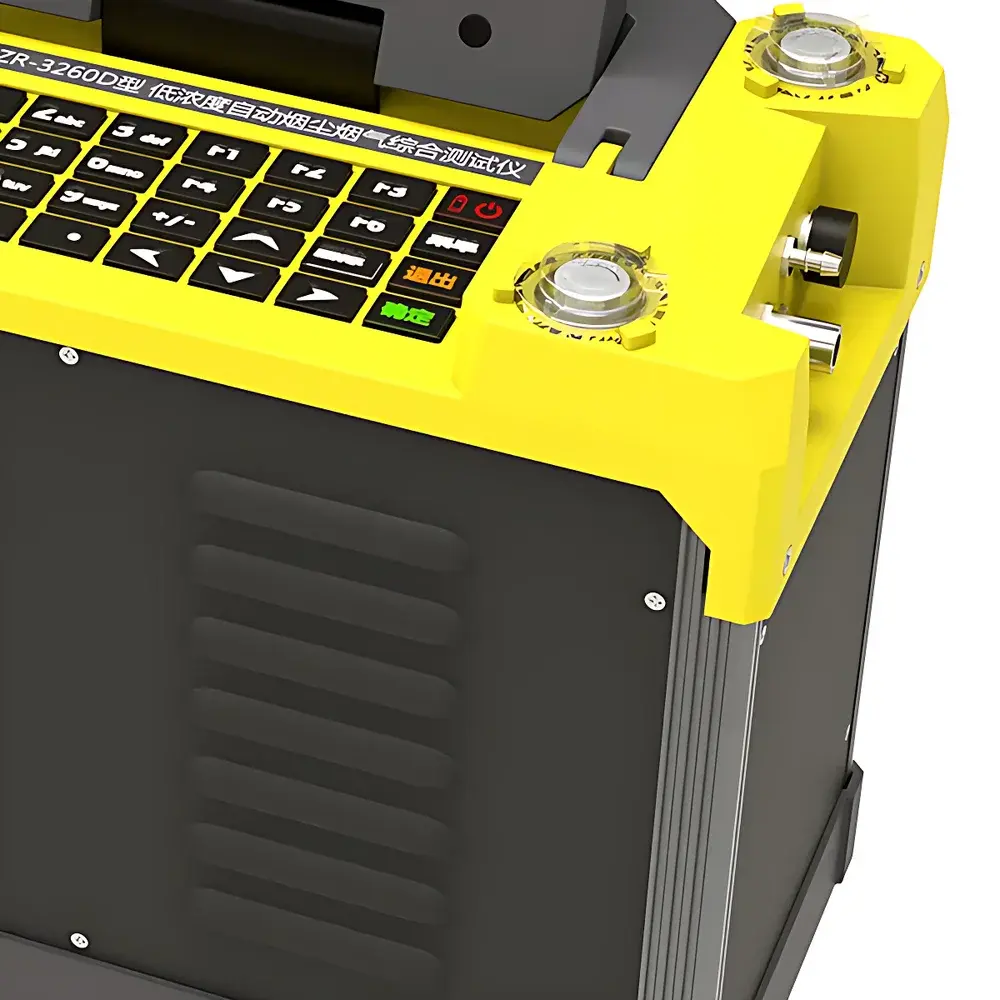
Junray ZR-3260D Automatic Flue Gas and Particulate Matter Analyzer (HJ 836–2017 Compliant, Low-Concentration PM Determination by Gravimetric Method)
| Brand | Junray |
|---|---|
| Origin | Shandong, China |
| Manufacturer Type | OEM Manufacturer |
| Product Category | Domestic |
| Model | ZR-3260D |
| Instrument Type | Flue Gas and Particulate Sampler |
| Sampled Gases | SO₂, NO, NO₂, NOₓ, CO, CO₂, H₂S, O₂ |
| Sampling Flow Rate | Up to 80 L/min |
| Flow Accuracy | ±2% FS (typical for integrated electronic mass flow control) |
| Flue Gas Velocity Range | 1–30 m/s (with S-type Pitot tube) |
| Moisture Content Measurement | Integrated capacitive humidity sensor or optional resistive-capacitive (RHC) probe |
Overview
The Junray ZR-3260D Automatic Flue Gas and Particulate Matter Analyzer is a field-deployable, regulatory-compliant instrument engineered for simultaneous gravimetric determination of low-concentration particulate matter (PM) and real-time measurement of gaseous pollutants in industrial flue gas streams. Designed in strict accordance with China’s HJ 836–2017 standard for “Determination of Low-Concentration Particulate Matter in Exhaust Gas from Stationary Sources—Gravimetric Method,” the system implements isokinetic sampling principles using temperature- and velocity-compensated filter-based collection. Particulate mass concentration is derived from pre- and post-sampling gravimetric analysis of quartz or glass-fiber filter media, while gaseous species—including O₂, SO₂, NOₓ, CO, CO₂, H₂S—are quantified via electrochemical (EC) and non-dispersive infrared (NDIR) sensors calibrated per ISO 12039 and EN 15267 requirements. Integrated Pitot tube, thermocouple, and static/dynamic pressure transducers enable concurrent measurement of flue gas velocity, temperature, moisture content, and stack differential pressure—supporting calculation of dry-standard-cubic-meter (dscm) volumetric flow and emission rate normalization.
Key Features
- Isokinetic Sampling Control: Microprocessor-driven automatic flow regulation maintains isokinetic conditions across variable flue velocities (1–30 m/s), minimizing particle inertia bias and ensuring representative PM capture per HJ 836–2017 Annex A.
- CO-Interference Correction for SO₂: Programmable CO-dependent correction algorithm compensates for electrochemical cross-sensitivity between CO and SO₂ sensors; correction coefficients are user-configurable following interference validation per GB/T 30431–2013.
- Integrated Condensate Management: Onboard diaphragm condensate pump continuously evacuates moisture from the sampling line, eliminating manual drainage and enabling stable operation under high-humidity conditions (>90% RH).
- High-Capacity Sampling Pump: Brushless DC vacuum pump delivers up to 80 L/min at ≤−30 kPa, sustaining required flow rates even with loaded filters or extended heated sampling lines.
- Multi-Interface Data Handling: Internal 8 GB flash memory stores >100,000 data records; export via SD card, USB 2.0, or Bluetooth 5.0 to mobile devices running proprietary Android/iOS application for remote monitoring and report generation.
- Robust Human-Machine Interface: 7-inch wide-temperature TFT-LCD with multi-angle flip mount, IP65-rated membrane keypad, and on-screen guided workflow reduce operator error during field deployment.
Sample Compatibility & Compliance
The ZR-3260D supports standardized sampling configurations for diverse emission sources: coal-fired boilers, cement kilns, waste incinerators, and metallurgical furnaces. It accommodates interchangeable sampling probes—including stainless-steel S-type Pitot tubes (ASTM D2513), heated Teflon-lined sampling nozzles (for volatile organic compound preservation), and optional oil mist or asphalt fume sampling kits (per HJ/T 64.1–2001). All gas sensors meet long-term stability specifications outlined in EPA Method 6C and EN 14181 (QAL1/QAL2 certified). The gravimetric PM module complies with ISO 9096:2003 for particulate sampling and is compatible with laboratory balance protocols traceable to NIST SRM 2877 (filter media certification).
Software & Data Management
Firmware includes embedded audit-trail functionality compliant with GLP principles: every calibration event, sensor replacement, and configuration change is timestamped and logged with operator ID. Data files adhere to XML-based structure conforming to China’s Environmental Monitoring Data Transmission Standard (HJ 212–2017), enabling seamless integration into provincial environmental information platforms. Optional PC software provides statistical analysis (e.g., 95% confidence intervals for PM concentration), emission factor derivation, and automated report generation aligned with national discharge permit requirements. Bluetooth-enabled printing supports on-site hardcopy output via certified thermal printers (no ink or toner dependency).
Applications
- Regulatory compliance monitoring of PM2.5/PM10 and gaseous pollutants from stationary sources under China’s GB 13223–2011 and GB 16297–1996.
- Performance evaluation of electrostatic precipitators (ESPs), fabric filters, and wet scrubbers via inlet/outlet dual-point sampling.
- Stack testing for environmental impact assessments (EIA) and periodic verification of continuous emission monitoring systems (CEMS).
- Field validation of optical scattering or beta attenuation monitors (BAMs) using gravimetric reference methodology.
- Research-grade characterization of combustion aerosols, including hygroscopic growth behavior and elemental composition correlation studies.
FAQ
Does the ZR-3260D support traceable calibration against national standards?
Yes. All gas sensors are factory-calibrated using NIST-traceable standard gases (SO₂, NO, CO, O₂), and flow meters are verified per JJG 640–2001. Calibration certificates include uncertainty budgets and are valid for 12 months under normal use.
Can the instrument operate unattended for extended periods?
It supports scheduled sampling sequences with auto-start/stop triggers based on time, temperature, or pressure thresholds—but requires periodic filter replacement and condensate tank emptying per HJ 836–2017 Section 7.3.
Is firmware upgrade possible in the field?
Yes. Updates are delivered via encrypted USB stick or over-the-air (OTA) through the mobile app, with version rollback capability and integrity checksum verification.
What maintenance intervals are recommended for sensor modules?
Electrochemical sensors require zero/span verification every 7 days and full recalibration every 90 days; NDIR CO₂ and O₂ modules require annual optical alignment verification per manufacturer service bulletin ZR-SV-2023-04.
How is data integrity ensured during power interruption?
The unit features supercapacitor-backed RAM that preserves active sampling state and timestamps for ≥120 seconds during mains loss, allowing seamless resumption upon recovery without data gap or re-initialization.
Related Products







