
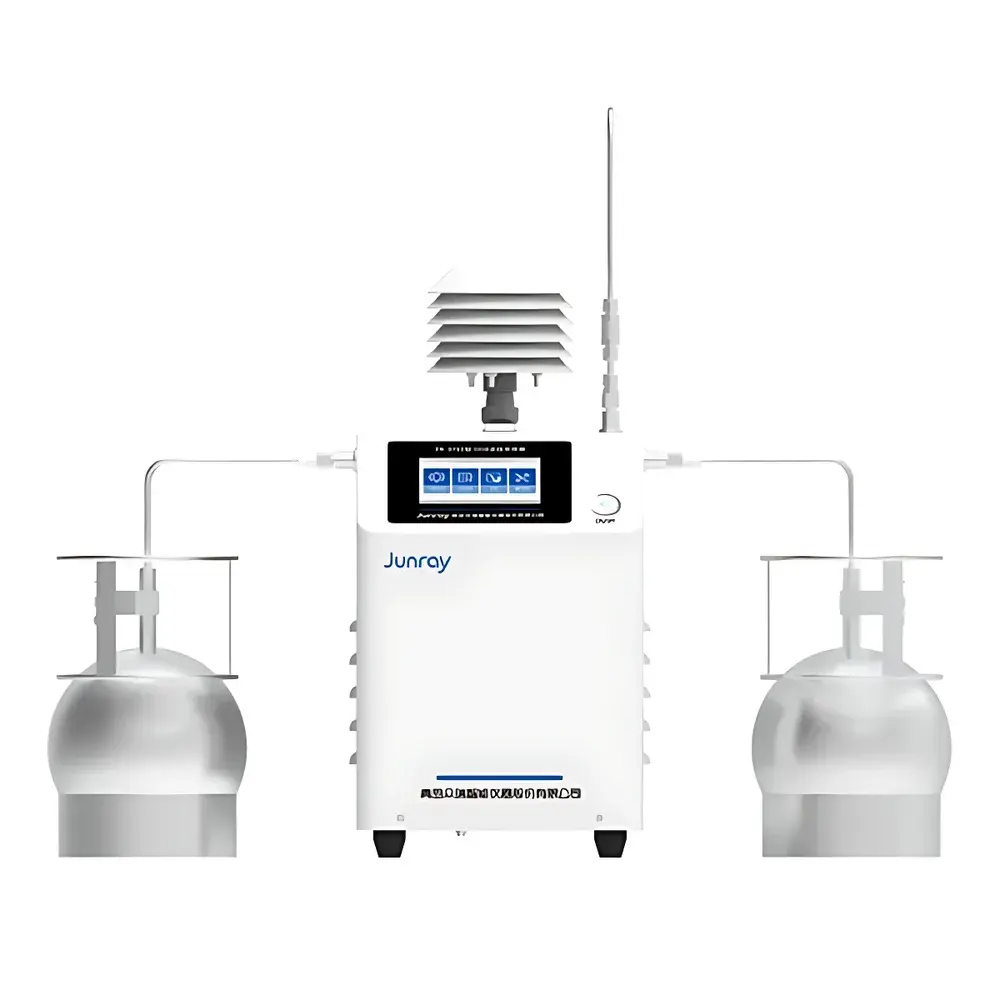
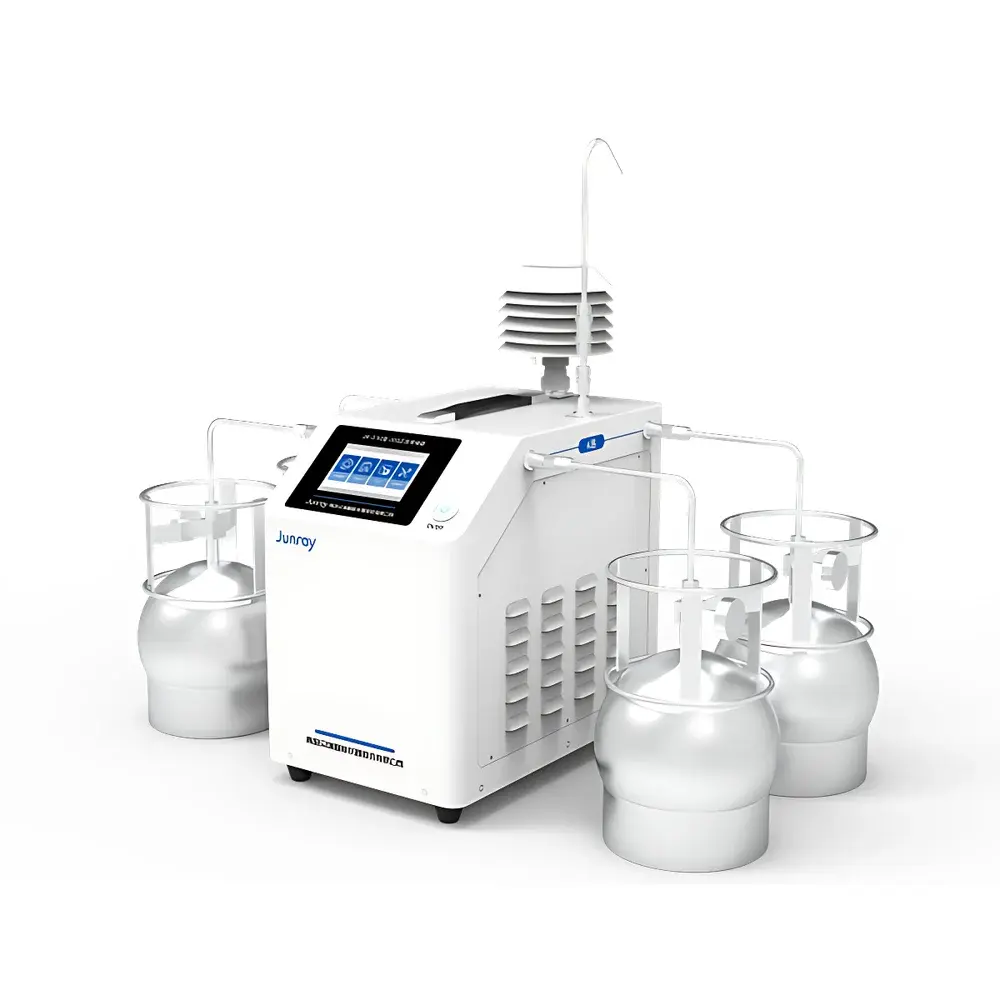
Junray ZR-3752 ODS Positive-Pressure Gas Sampler
| Brand | Junray |
|---|---|
| Origin | Shandong, China |
| Manufacturer Type | Manufacturer |
| Country of Origin | Domestic (China) |
| Model | ZR-3752 |
| Instrument Type | Conventional Dual-Channel Gas Sampler |
| Sampling Configuration | Dual-Channel Positive-Pressure Sampler with Negative-Pressure Purge Function |
| Flow Rate Range | 10–2000 mL/min |
| Maximum Backpressure Capability | 0–250 kPa |
| Operating Temperature | −20 to 40 °C |
| Power Supply | AC 220 V ± 10%, 50 Hz ± 2% |
| Power Consumption | < 200 W |
| Net Weight | ≤ 10 kg |
| Sample Path Surface Treatment | Silanized Internal Tubing (Adsorption-Free) |
| Compliance | HJ 759–2015, Technical Specification for Manual Monitoring of Ozone-Depleting Substances (ODS) and Fluorinated Greenhouse Gases in Ambient Air |
Overview
The Junray ZR-3752 ODS Positive-Pressure Gas Sampler is an engineered solution for the quantitative collection of ozone-depleting substances (ODS)—including chlorofluorocarbons (CFCs), hydrochlorofluorocarbons (HCFCs), halons, carbon tetrachloride, and methyl chloroform—from ambient air using pressurized canister-based sampling. Unlike conventional vacuum-driven samplers, the ZR-3752 employs a positive-pressure delivery mechanism that actively pushes sample gas into pre-evacuated electropolished stainless-steel or fused-silica-lined sampling canisters at precisely controlled flow rates. This design eliminates reliance on ambient pressure differentials and ensures consistent volumetric transfer even under variable environmental conditions or high-resistance sampling configurations (e.g., when sampling through diffusion scrubbers or sorbent traps). Integrated negative-pressure purge functionality enables automated line conditioning between sampling events, minimizing carryover and ensuring analytical integrity for trace-level VOC and halogenated compound analysis via GC-MS per HJ 759–2015.
Key Features
- Dual independent sampling channels—each configurable for series or parallel connection of two sampling canisters, enabling up to four simultaneous or sequential canister fills per operational cycle.
- Adjustable flow control across three calibrated regimes: instantaneous (burst-mode), medium-rate (100–1000 mL/min), and low-flow (10–100 mL/min), supporting diverse method requirements including EPA TO-14A, TO-15, and China’s HJ 759–2015.
- Silanized internal fluid path—stainless-steel tubing and fittings treated with dimethyldichlorosilane to suppress adsorption of polar and reactive ODS compounds, preserving sample integrity during transfer and storage.
- Modular, split-system architecture separates the main sampling unit from canister mounting hardware, enhancing field portability and enabling flexible deployment on tripods, vehicle mounts, or fixed monitoring stations.
- Real-time remote telemetry interface supporting Ethernet and optional 4G LTE connectivity—enables continuous monitoring of flow rate, elapsed time, backpressure, system temperature, and fault status with configurable SMS/email alerts.
- Remote start/stop command capability via secure web-based interface or RS-485 protocol, compliant with centralized air quality network management systems.
Sample Compatibility & Compliance
The ZR-3752 is validated for use with standard 6-L and 11-L SUMMA®-type electropolished canisters, as well as alternative inert-coated alternatives meeting ASTM D5466 and ISO 16000-22 specifications. Its positive-pressure architecture maintains stable flow profiles across a wide range of backpressures (up to 250 kPa), accommodating both passive and active sampling configurations involving thermal desorption tubes, denuders, or particulate filters. The instrument conforms to the methodological and performance criteria outlined in HJ 759–2015 and the Ministry of Ecology and Environment’s “Technical Specification for Manual Monitoring of ODS and Fluorinated Greenhouse Gases.” All firmware and data logging functions support audit-ready timestamping and user-access logging, aligning with GLP principles for environmental monitoring laboratories.
Software & Data Management
The embedded firmware supports local SD-card data logging with 1-second resolution for flow, pressure, temperature, and operational state. Optional Junray SmartMonitor™ software provides desktop and mobile dashboards for real-time parameter visualization, historical trend analysis, and export of CSV/NetCDF-formatted datasets compatible with EPA Compendium Method data reduction workflows. All configuration changes and sampling events are recorded with immutable timestamps and operator ID tagging. The system optionally supports 21 CFR Part 11-compliant electronic signatures and audit trails when deployed in regulated QA/QC environments requiring full data provenance.
Applications
- Regulatory monitoring of ambient ODS concentrations near refrigerant recycling facilities, foam manufacturing plants, and aerospace maintenance depots.
- Source attribution studies using isotopic or chiral analysis of CFC-11/CFC-12 ratios in urban and regional background air networks.
- Calibration verification of continuous ODS analyzers (e.g., GC-ECD or GC-MS systems) via reference canister spiking and recovery assessment.
- Long-term trend analysis of atmospheric halocarbon decline in compliance with the Montreal Protocol and Kigali Amendment reporting obligations.
- Field validation of dispersion modeling inputs where spatially resolved, time-integrated concentration data are required.
FAQ
Does the ZR-3752 support automatic calibration verification?
Yes—the instrument includes built-in zero/gas check routines compatible with certified permeation tube standards and dynamic dilution systems.
Can it operate unattended for extended periods?
Yes—designed for continuous operation up to 30 days with external power and thermal management; battery backup module available as optional accessory.
Is the silanized surface certified per ASTM E1592?
Surface treatment performance is verified per internal protocol aligned with ASTM E1592 Annex A1 for inertness testing using tracer compounds such as Freon-113 and methyl bromide.
What communication protocols are supported for integration into SCADA or AQMS platforms?
Modbus RTU (RS-485), TCP/IP, and MQTT v3.1.1 are natively supported; custom API endpoints available upon request.
How is traceability maintained for field-collected samples?
Each sampling event generates a unique QR-coded metadata label (printed onsite) containing canister ID, start/stop time, flow profile, ambient T/P, and operator credentials—integrated with LIMS-compatible export formats.







