
Junray ZR-7220 Portable Methane and Non-Methane Hydrocarbons (NMHC) Analyzer with GC-FID
| Brand | Junray |
|---|---|
| Origin | Shandong, China |
| Manufacturer Type | Direct Manufacturer |
| Product Origin | Domestic (China) |
| Model | ZR-7220 (Optional Benzene Homologues Expansion) |
| Instrument Type | Portable |
| Detection Principle | Gas Chromatography with Flame Ionization Detection (GC-FID) |
| Measured Parameters | Total Hydrocarbons (THC), Methane (CH₄), Non-Methane Hydrocarbons (NMHC) |
| Measurement Range | Customizable per application requirements |
| Repeatability | Compliant with HJ 1332–2023 and GB 37822–2019 performance criteria |
Overview
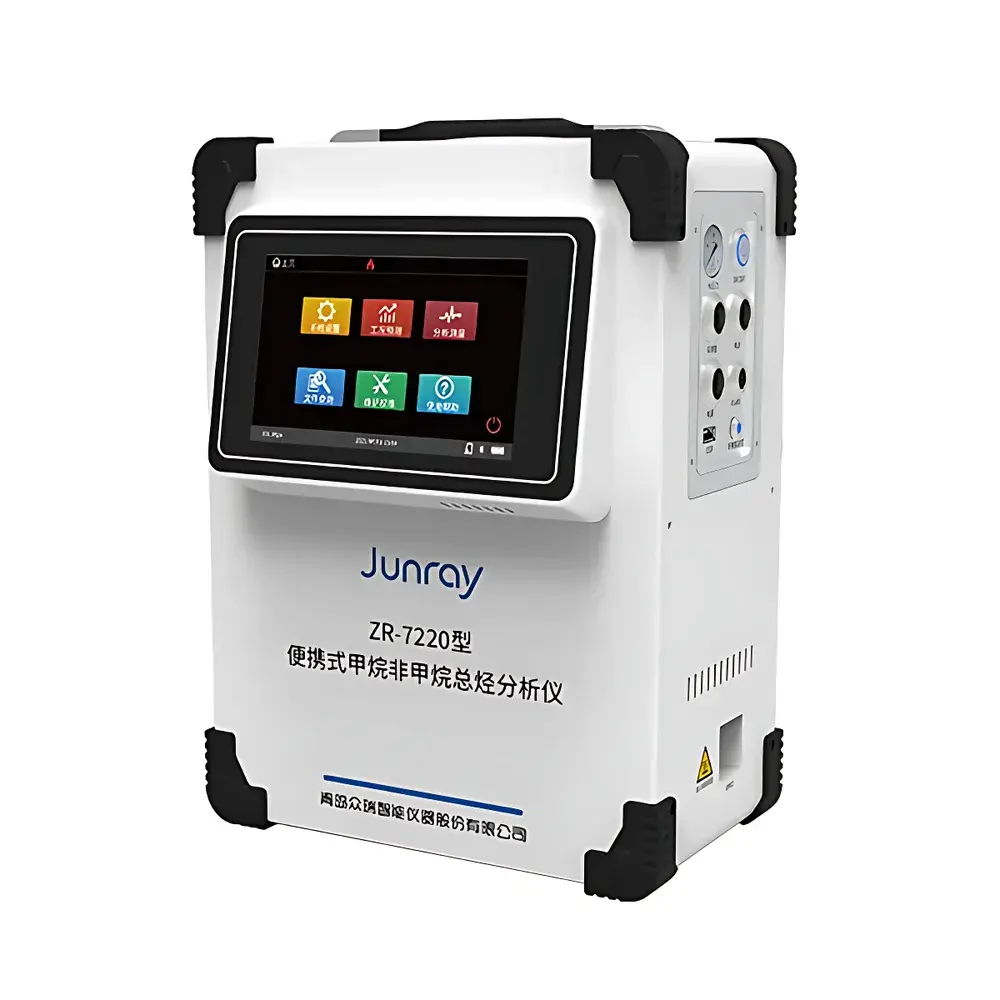
The Junray ZR-7220 is a field-deployable, GC-FID–based analyzer engineered for on-site quantification of total hydrocarbons (THC), methane (CH₄), and non-methane hydrocarbons (NMHC) in ambient air and stack emissions. It implements a robust gas chromatographic separation protocol coupled with flame ionization detection—a reference-grade technique specified in HJ 38–2017, HJ 604–2017, and HJ 1332–2023. Unlike laboratory-based GC systems, the ZR-7220 integrates a heated sampling line (up to 180 °C), particulate filtration, and moisture management to preserve sample integrity under high-humidity or particulate-laden conditions typical of industrial exhaust streams. Its design directly addresses the analytical latency and compositional degradation associated with canister or Tedlar® bag sampling followed by off-site analysis—enabling real-time compliance verification against GB 37822–2019, the national standard governing unorganized VOC emissions control.
Key Features
- Integrated heated sampling pathway (120–180 °C) with sintered stainless-steel filter and coalescing moisture trap to prevent condensation and particle interference
- Dual-column GC configuration optimized for CH₄/NMHC speciation: one column for methane retention and elution, another for NMHC group separation (C₂–C₁₀)
- Hydrogen-air FID with linear dynamic range of 10⁶ and detection limit ≤0.05 ppm C₁ (as propane equivalent) per HJ 1332–2023
- Onboard calibration capability using certified CH₄/NMHC standard gases; supports multi-point calibration verification
- Ruggedized chassis with IP54-rated enclosure, shock-absorbing mounting, and internal battery (≥4 h operation) for true portability in field deployments
- Real-time data logging at 1-second intervals; timestamped, GPS-tagged results stored in CSV/Excel-compatible format
Sample Compatibility & Compliance
The ZR-7220 is validated for direct analysis of gaseous samples from fixed emission sources (e.g., stack ducts, process vents) and ambient air matrices. It accommodates inlet concentrations ranging from sub-ppm to 10,000 ppm C₁-equivalent THC without dilution—subject to customized column and detector tuning. The system meets all functional and performance requirements outlined in HJ 1332–2023 (Method for Determination of THC, CH₄, and NMHC in Stationary Source Exhaust Using Portable GC-FID), HJ 38–2017 (for stack testing), and HJ 604–2017 (for ambient air). Its measurement uncertainty aligns with ISO 5725–2 (repeatability and reproducibility) and supports audit-ready documentation for GLP-compliant environmental monitoring programs. Optional benzene homologue expansion (benzene, toluene, ethylbenzene, xylenes, styrene, cumene) follows HJ 1012–2018 technical specifications.
Software & Data Management
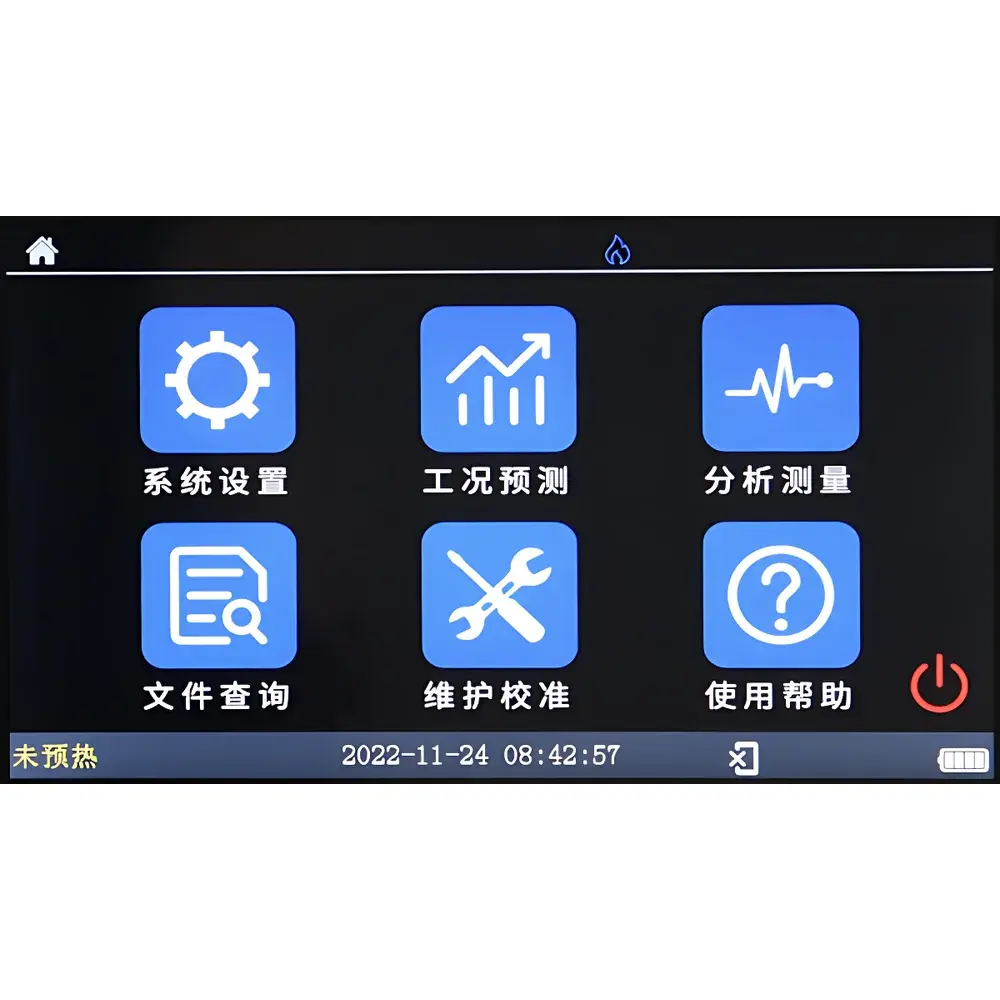
The embedded firmware provides intuitive touchscreen operation with guided method setup, automatic peak integration, and real-time chromatogram visualization. Data export complies with ASTM D6348–22 (standard practice for GC data reporting) and includes raw signal traces, calibrated concentration tables, and QC flags (e.g., baseline drift >5 mV, retention time shift >0.1 min). All measurement records include operator ID, instrument serial number, calibration history, and environmental metadata (temperature, pressure, humidity). Audit trails are immutable and timestamped, satisfying FDA 21 CFR Part 11 requirements for electronic records when configured with user authentication and digital signature modules.
Applications
- Compliance monitoring of VOC emissions from coating operations (automotive OEMs, furniture finishing lines)
- Leak detection and repair (LDAR) surveys in petrochemical and organic chemical manufacturing facilities
- Verification of abatement device efficiency (e.g., RTO, carbon adsorption units) via inlet/outlet NMHC differentials
- Source apportionment studies requiring spatially resolved NMHC profiles across industrial zones
- Reference validation of continuous emission monitoring systems (CEMS) per GB 37822–2019 Annex D protocols
- Field screening of fugitive emissions in pharmaceutical cleanroom exhaust and printing facility ductwork
FAQ
What regulatory standards does the ZR-7220 specifically support?
It is designed and verified to meet HJ 1332–2023, HJ 38–2017, HJ 604–2017, HJ 1012–2018, and GB 37822–2019 for NMHC and THC measurements.
Can the ZR-7220 operate continuously during extended field campaigns?
Yes—its dual-battery architecture supports ≥4 hours of uninterrupted operation; external 12–24 V DC input enables indefinite runtime when connected to vehicle power or solar chargers.
Is method validation documentation available for regulatory submissions?
Junray provides full IEC 61000-4 EMC test reports, factory calibration certificates traceable to NIM (China National Institute of Metrology), and HJ 1332–2023 verification data packages upon request.
How is system performance verified in the field?
Built-in zero/span checks use certified CH₄/NMHC standards; retention time stability and FID response linearity are logged automatically before and after each sampling sequence.
Does the analyzer require carrier gas cylinders on site?
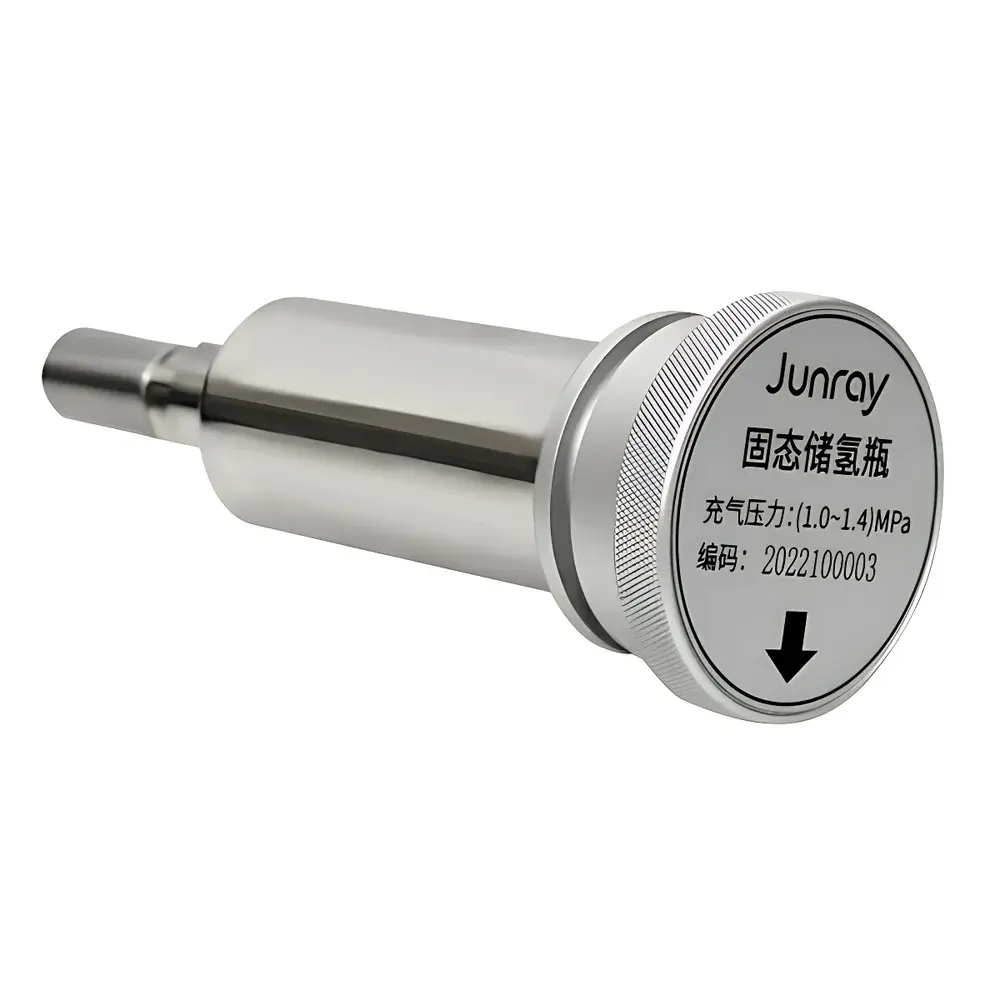
Yes—high-purity nitrogen (99.999%) is used as carrier gas; hydrogen (99.999%) and synthetic air (for FID) are also required. Optional integrated gas generators are available for extended deployments.







