
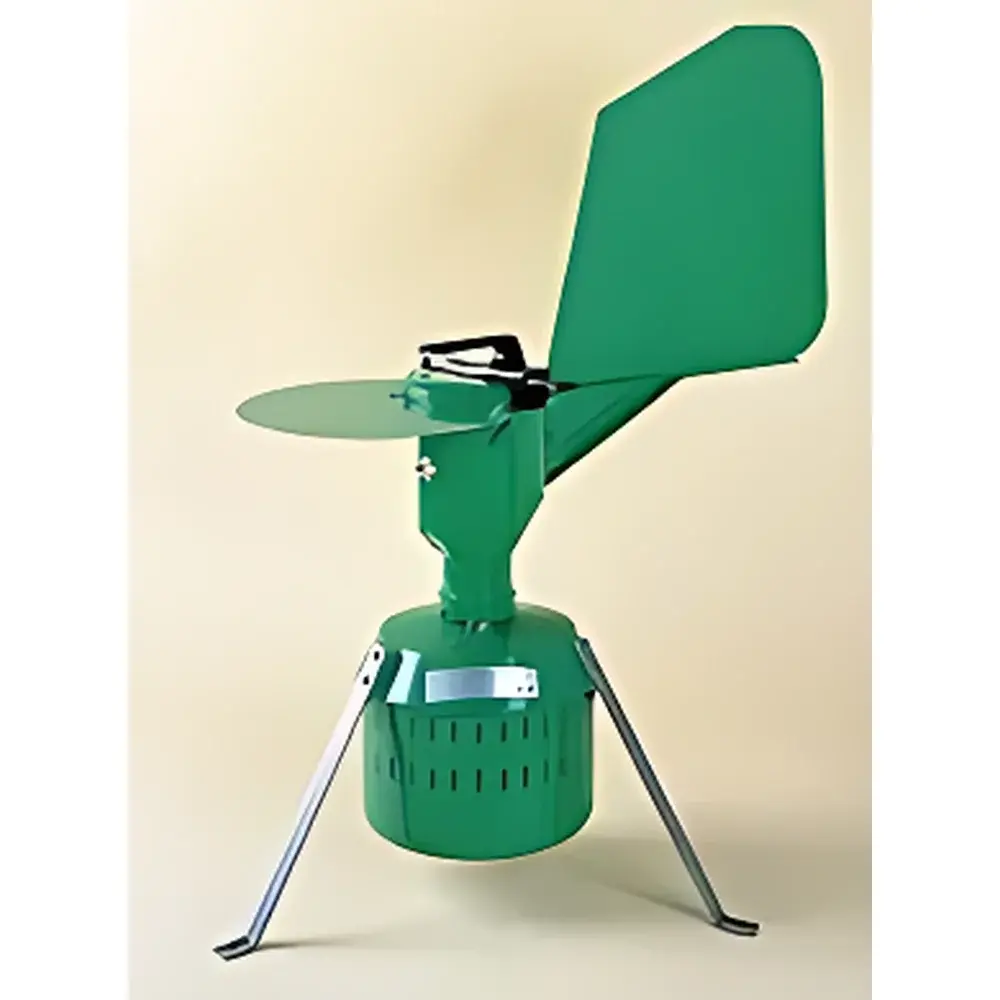
Burkard HIRST Spore Trap
| Brand | Burkard |
|---|---|
| Origin | United Kingdom |
| Model | HIRST |
| Sampling Duration | Up to 7 days |
| Power Options | AC Mains or 12 V DC Battery |
| Airflow Rate | 10 L/min (adjustable via rotameter or needle valve) |
| Sampling Orifice | 2 mm × 14 mm |
| Drum Advancement Speed | 2 mm/h |
| Collection Substrate | Transparent polyester adhesive tape (standard) or optional glass microscope slides |
| Tape Collection Area | 0.882 m² (at radius 53 cm) |
| Dimensions (W×D×H) | 60 × 70 × 80 cm |
| Height (total) | 94 cm |
| Net Weight | 16 kg |
| Solar Panel Compatibility | Optional 55 W, 330 × 1300 × 35 mm |
Overview
The Burkard HIRST Spore Trap is a precision-engineered, long-term atmospheric particulate sampler designed for continuous, quantitative monitoring of airborne biological particles—primarily fungal spores, pollen, and other bioaerosols in the 1–10 µm aerodynamic diameter range. Based on the classic Hirst volumetric sampling principle, it draws ambient air through a calibrated rectangular orifice at a constant flow rate (up to 10 L/min), directing particles onto a moving adhesive surface via inertial impaction. The instrument’s core mechanism relies on a high-accuracy, low-drift 7-jewel clockwork motor that advances the collection tape at a precisely controlled linear speed of 2 mm/h—enabling time-resolved, spatially resolved analysis across up to seven consecutive days without manual intervention. Its robust aluminum chassis, enamel- or anodized-aluminum-coated components, and weather-resistant construction ensure operational integrity in unattended outdoor deployments—including rooftop, pole-mounted, or ground-based configurations.
Key Features
- Continuous 7-day autonomous sampling cycle using transparent polyester adhesive tape; optional 24-hour glass slide configuration available for microscopy-ready preparation
- Integrated vacuum pump with dual power options: mains-powered (AC) or 12 V DC battery operation—ideal for remote or off-grid locations
- Precision 7-jewel clockwork drive system ensures consistent drum rotation and tape advancement (2 mm/h) with minimal mechanical drift over extended periods
- Calibrated 2 mm × 14 mm sampling orifice optimized for enhanced capture efficiency of 1–10 µm bioaerosols per ISO 21501-4 and EN 13725 guidance
- Adjustable airflow control via rotameter or fine-tuning needle valve, supporting validation against reference flow standards
- Optional integrated solar power system: compact 55 W photovoltaic panel (330 × 1300 × 35 mm) with charge controller enabling true 24/7 operation—energy storage powers overnight sampling without grid dependency
- Lightweight (16 kg), portable aluminum frame with corrosion-resistant anodized or vitreous enamel finish for durability in humid, saline, or polluted environments
Sample Compatibility & Compliance
The HIRST Spore Trap is validated for standardized collection of viable and non-viable airborne spores, pollen grains, and fragmented hyphal debris. Its orifice geometry and airflow profile align with methodologies referenced in ISO 21501-4 (particle size distribution by light scattering), EN 13725 (odour concentration measurement), and UK DEFRA and US EPA ambient bioaerosol monitoring protocols. When used with sterile adhesive tape and subsequent staining (e.g., Calcofluor White or Melzer’s reagent), samples comply with GLP-aligned laboratory workflows for morphological identification under light or fluorescence microscopy. Optional glass slide kits support direct mounting for scanning electron microscopy (SEM) or PCR-based molecular analysis. All mechanical and electrical components meet CE marking requirements for outdoor instrumentation (EMC Directive 2014/30/EU, Low Voltage Directive 2014/35/EU).
Software & Data Management
While the HIRST Spore Trap operates as a standalone analog sampler, its time-stamped tape output enables rigorous temporal data mapping when paired with digital imaging systems (e.g., automated slide scanners or high-resolution stereo microscopes). Time-correlated sample segments—each representing one hour of exposure (given 2 mm/h tape speed)—facilitate diurnal pattern analysis, source attribution modeling, and correlation with meteorological datasets (wind direction, RH, temperature). Laboratories implementing LIMS or ELN platforms may integrate image metadata (timestamp, location, calibration ID) using standard DICOM or TIFF-based annotation frameworks. For regulatory submissions requiring audit trails, tape change logs, pump runtime records, and environmental condition annotations can be maintained manually or via optional Bluetooth-enabled flow logging modules (third-party compatible).
Applications
- Agricultural epidemiology: Early detection and spatio-temporal tracking of plant-pathogenic fungi (e.g., Puccinia, Alternaria, Cladosporium) to inform fungicide scheduling and crop protection strategies
- Public health surveillance: Monitoring allergenic pollen (e.g., Quercus, Artemisia, grasses) and opportunistic molds (Aspergillus, Penicillium) in urban and clinical environments
- Environmental impact assessment: Pre- and post-construction bioaerosol baselines near composting facilities, wastewater treatment plants, or biomass energy sites
- Climatology and aerobiology research: Multi-year trend analysis of spore phenology in relation to climate variables and land-use change
- Indoor air quality (IAQ) investigations: Source identification in buildings with suspected mold contamination or HVAC-related microbial amplification
FAQ
What is the recommended maintenance interval for the 7-jewel clockwork mechanism?
The clockwork motor requires no routine lubrication and is rated for >10,000 hours of continuous operation; annual visual inspection and cleaning of gear train dust accumulation are advised.
Can the HIRST Spore Trap be calibrated for traceable volumetric flow?
Yes—calibration is performed using a primary standard dry gas meter or critical orifice flow calibrator compliant with ISO 5167; certificate documentation supports ISO/IEC 17025-accredited laboratories.
Is the adhesive tape substrate compatible with DNA extraction and qPCR?
Standard polyester tape supports efficient nucleic acid recovery when processed with commercial bead-beating lysis kits; validation studies confirm ≥85% recovery of Aspergillus fumigatus conidia DNA after 7-day ambient storage.
Does the solar power option include battery backup capacity?
The integrated controller manages charge/discharge cycles for a sealed lead-acid or LiFePO₄ battery (user-supplied); typical configuration sustains 48 hours of operation during prolonged overcast conditions.
Are replacement parts—such as orifices or tape rolls—available with NIST-traceable certification?
Orifice plates are supplied with dimensional certification (±0.02 mm tolerance); adhesive tapes are manufactured under ISO 9001-controlled conditions with lot-specific sterility and adhesion testing reports.



