
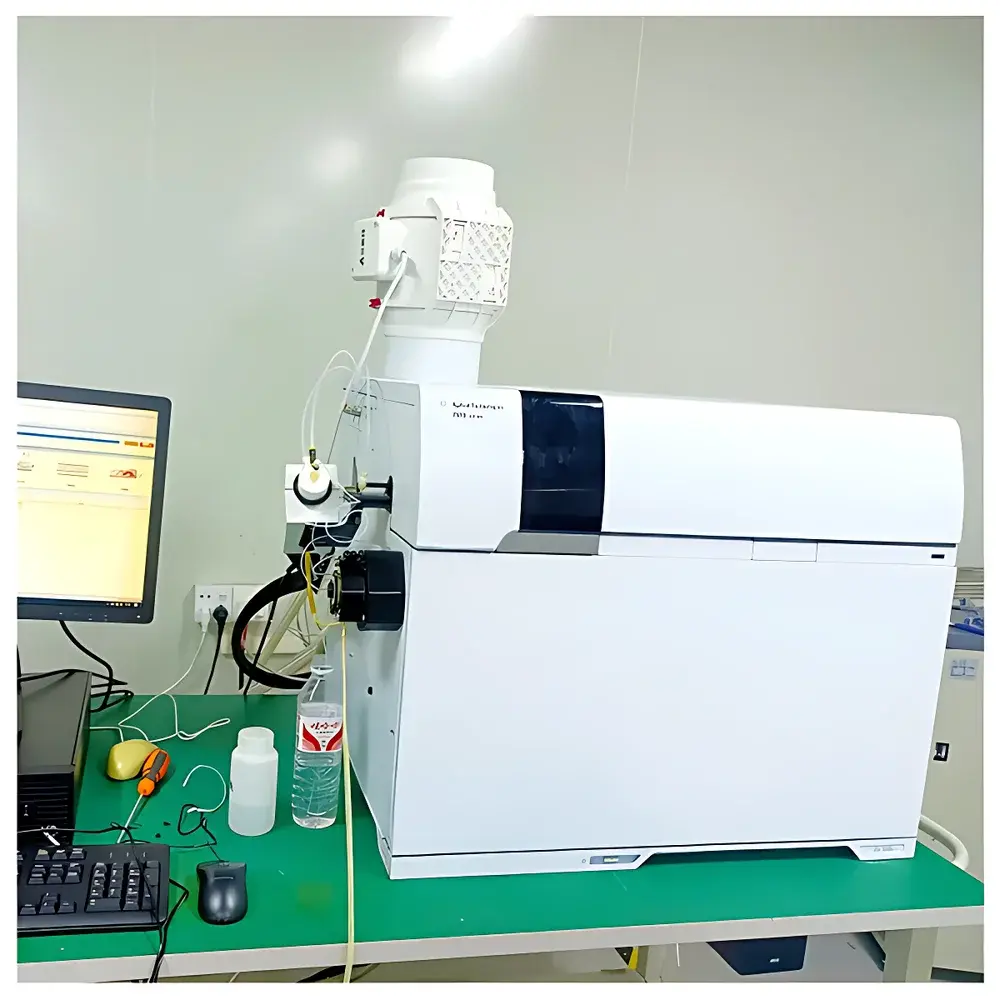
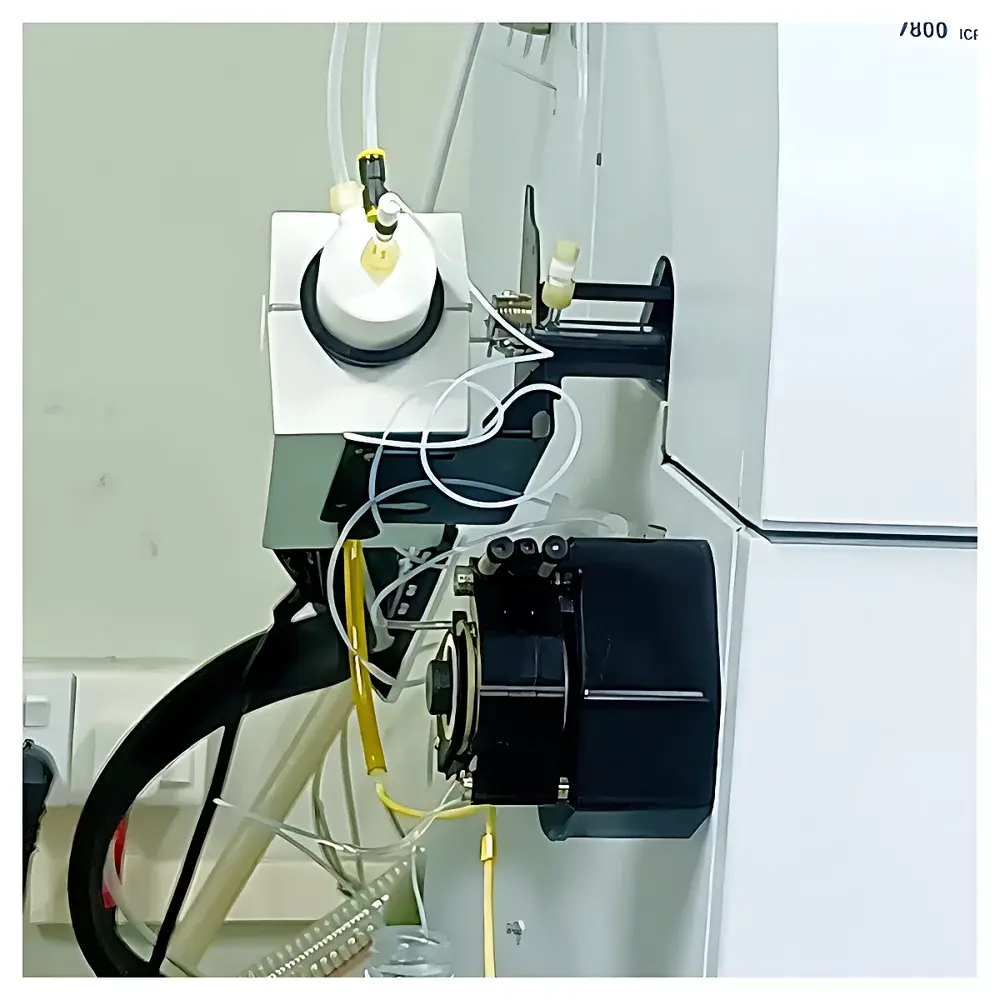
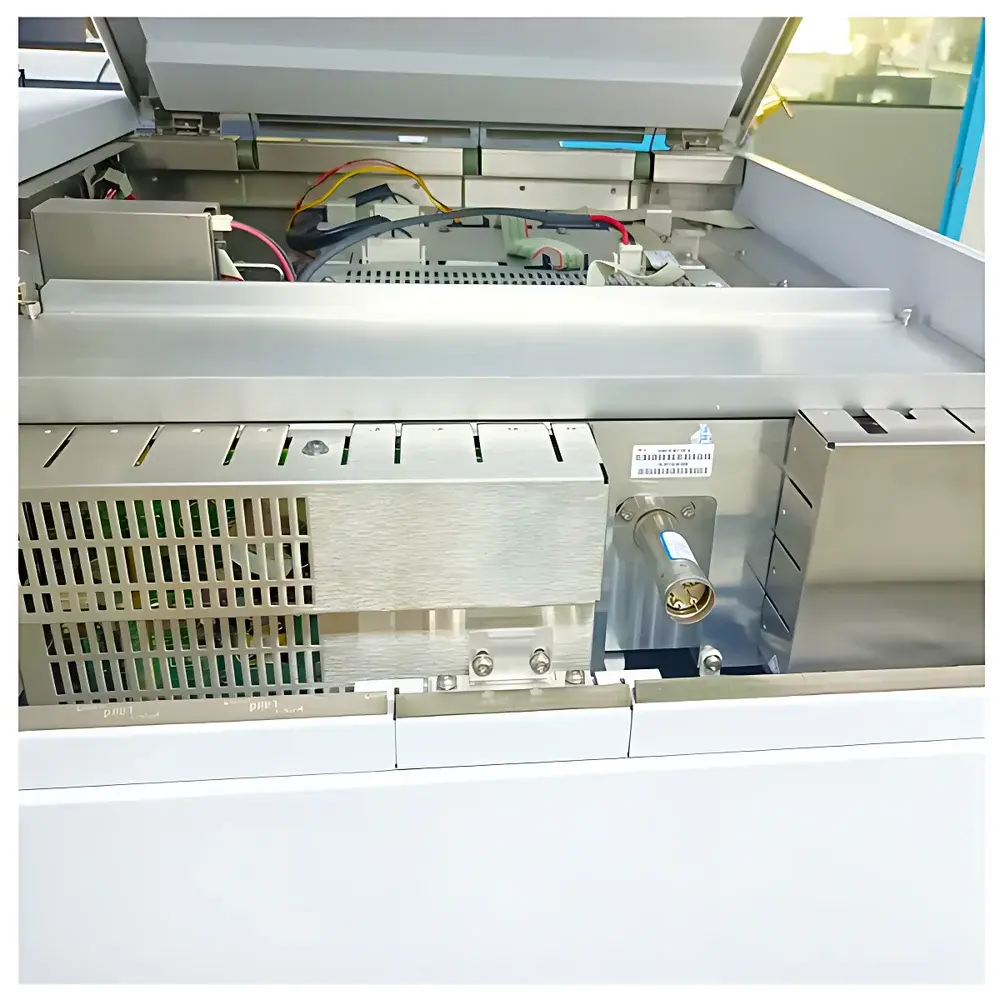
Agilent 7800 ICP-MS
| Brand | Agilent Technologies |
|---|---|
| Origin | USA |
| Manufacturer Type | Authorized Distributor |
| Origin Category | Imported |
| Model | 7800 |
| Instrument Type | Quadrupole Mass Spectrometer |
| Application Environment | Laboratory |
| Mass Range (amu) | 100 |
| Unit Mass Resolution (amu) | 0.8 |
| Detection Limit (ng·L⁻¹) | 10 |
| Sensitivity (Mcps / mg·L⁻¹) | 10 |
| Short-Term Stability (RSD %) | 3 |
| Long-Term Stability (RSD %) | 5 |
Overview
The Agilent 7800 ICP-MS is a high-performance, quadrupole-based inductively coupled plasma mass spectrometer engineered for robust routine elemental analysis in regulated and high-throughput laboratory environments. It operates on the fundamental principle of ionizing sample atoms in a high-temperature argon plasma (~7,000–10,000 K), followed by mass separation via a radiofrequency-driven quadrupole mass filter and detection using an orthogonal detector system (ODS). This architecture delivers exceptional signal stability, wide linear dynamic range, and reliable interference mitigation—critical for trace metal quantification in complex matrices such as environmental waters, pharmaceutical excipients, clinical biofluids, and food digests. Designed for operational simplicity without compromising analytical rigor, the 7800 integrates hardware reliability with intelligent software automation to reduce method development time, minimize operator dependency, and support compliance with GLP, GMP, and ISO/IEC 17025 requirements.
Key Features
- High Matrix Tolerance: Equipped with High Matrix Introduction (HMI) technology, enabling direct analysis of samples with up to 3% total dissolved solids (TDS) without dilution or offline matrix removal—reducing contamination risk and improving throughput.
- Universal Interference Control: Helium collision mode (He-CCT) eliminates polyatomic interferences (e.g., 40Ar16O+, 40Ar40Ar+) across the entire mass range under a single, non-tuned gas flow condition—eliminating the need for analyte-specific reaction gases or matrix-matched tuning.
- Wide Dynamic Range ODS Detector: Orthogonal detector system provides linear response from sub-ppt to >1,000 ppm in a single acquisition—enabling simultaneous quantification of major, minor, and trace elements without re-injection or dilution.
- Automated Method Development: MassHunter Software includes application-specific method wizards, pre-validated SOPs, and auto-optimization routines for plasma conditions, dwell times, and internal standard correction—accelerating validation and reducing human error.
- Integrated Sample Introduction: Compatible with Agilent’s SPS 4 autosampler and ISIS 3 integrated sample introduction system for unattended operation, precise timing control, and minimized memory effects—ideal for batch analysis in contract and quality control labs.
Sample Compatibility & Compliance
The 7800 ICP-MS is validated for use with aqueous acid digests (e.g., EPA Methods 200.8, 6020B), organic solvents (with optional microflow nebulization), and high-salt biological matrices. Its HMI interface supports direct analysis of seawater, brines, soil extracts, and pharmaceutical formulations containing excipients such as mannitol or lactose. The system meets key regulatory expectations for data integrity: full audit trail logging in MassHunter, electronic signatures compliant with FDA 21 CFR Part 11, and instrument qualification documentation aligned with ASTM D5673 and ISO 17294-2. Routine performance verification follows Agilent’s ICP-MS Performance Check standards, ensuring reproducibility across laboratories and over time.
Software & Data Management
MassHunter Workstation Software (v10.2 or later) serves as the unified platform for acquisition, processing, reporting, and data archiving. It includes pre-configured application packages for drinking water (US EPA 1638), environmental waste (SW-846 Method 6020B), and elemental impurities in pharmaceuticals (ICH Q3D). Each package contains validated calibration curves, QC templates, batch processing workflows, and customizable report layouts exportable to PDF, Excel, or LIMS-compatible formats. All raw data files are stored in vendor-neutral .d format with embedded metadata—including instrument parameters, sequence logs, and user actions—ensuring full traceability during regulatory inspections. Optional MassHunter Quantitative Data Review module supports retrospective reprocessing and statistical outlier detection per ISO 13528 guidelines.
Applications
- Regulatory testing of elemental impurities in APIs and drug products per ICH Q3D and USP <232>/<233>
- Ultra-trace metal analysis in ultrapure water (UPW), semiconductor process chemicals, and photovoltaic-grade silicon feedstock
- Multi-element profiling in geological digests (e.g., rock, sediment, ore) using certified reference materials (CRMs) such as NIST SRM 2711a
- Food safety screening for toxic elements (As, Cd, Pb, Hg) and essential nutrients (Se, Zn, Fe) in infant formula, cereals, and dietary supplements
- Environmental monitoring of heavy metals in wastewater, landfill leachate, and airborne particulate matter (PM2.5/PM10) following ISO 17294-2 protocols
FAQ
What is the typical detection limit for arsenic (⁷⁵As) in 2% HNO₃ matrix?
The instrument achieves a method detection limit (MDL) of ≤10 ng·L⁻¹ for As under standard He-CCT conditions with 1-second dwell time and 100 µL injection volume—verified using EPA 200.8 protocol.
Does the 7800 support hyphenated techniques such as HPLC-ICP-MS?
Yes—its fast transient response (<100 ms dwell capability) and low dispersion interface allow seamless coupling with HPLC, GC, and CE systems for speciation analysis (e.g., As(III)/As(V), Cr(III)/Cr(VI)).
Is the system compatible with isotopic ratio measurements?
While optimized for concentration analysis, the 7800 supports semi-quantitative isotope ratio assessment (e.g., ²⁰⁸Pb/²⁰⁶Pb) with RSD <5% over 8-hour runs; high-precision ratios require magnetic sector or multi-collector instruments.
How does the HMI system differ from conventional desolvation?
HMI employs a dual-stage spray chamber with controlled temperature and gas flow to physically separate solvent vapor from analyte aerosol—preserving sensitivity while rejecting >95% of matrix salts—unlike membrane desolvators that may cause analyte loss or memory effects.
Can MassHunter be configured for 21 CFR Part 11 compliance in pharmaceutical QA/QC?
Yes—when deployed with Agilent’s Security Pack and network-authenticated user roles, MassHunter provides full electronic signature enforcement, audit trail review, and secure data archiving required for FDA and EMA submissions.







