
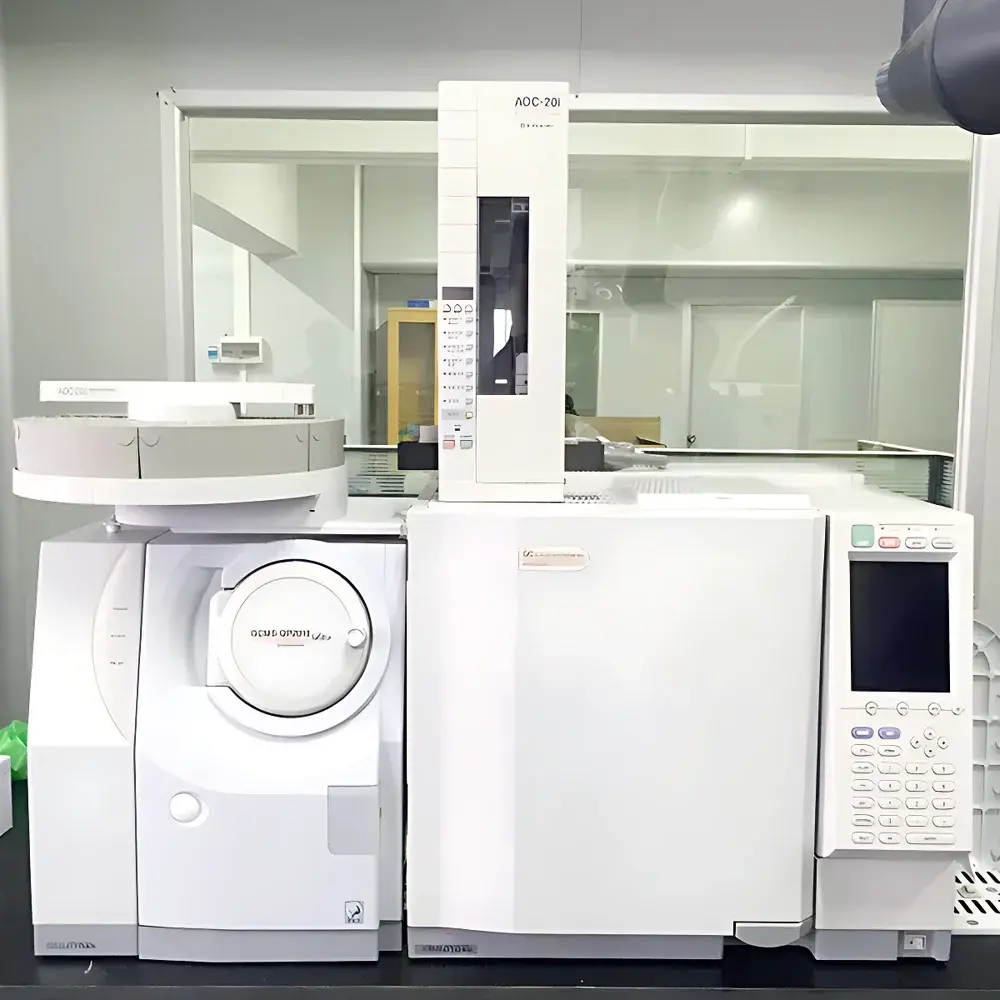
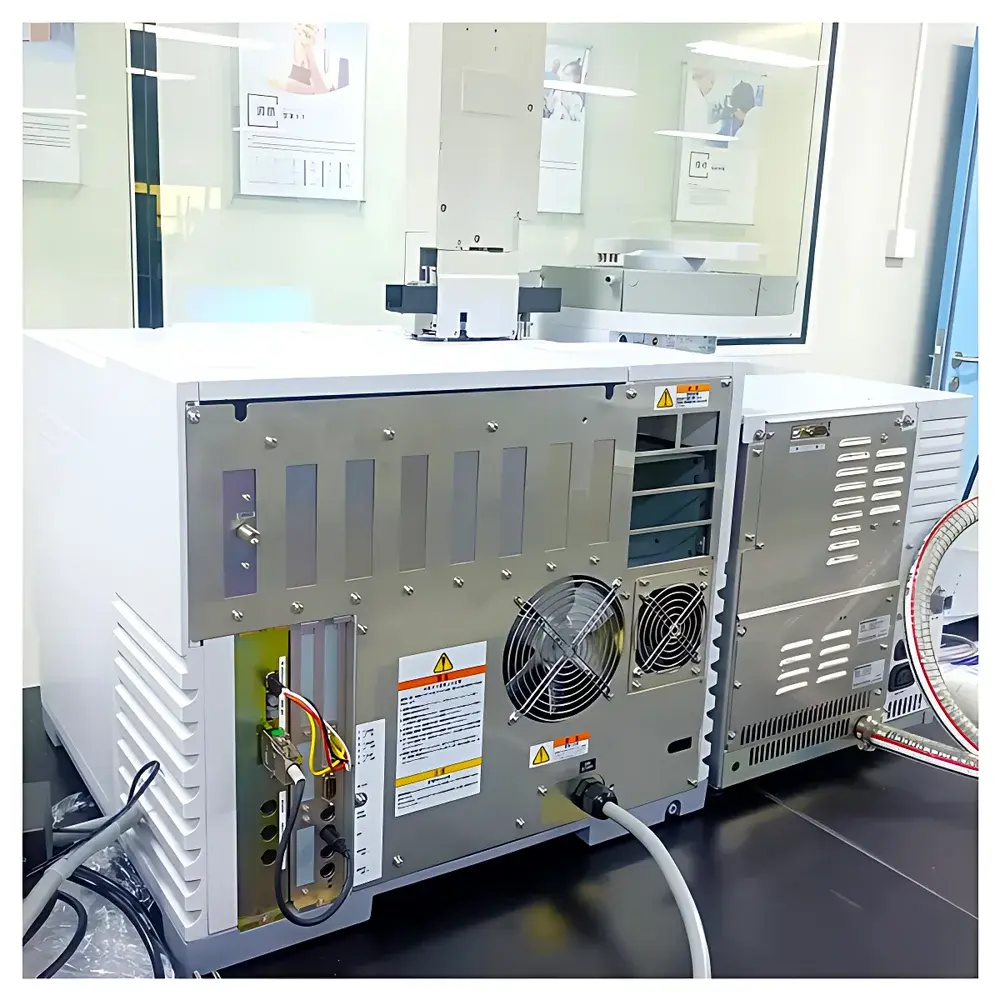
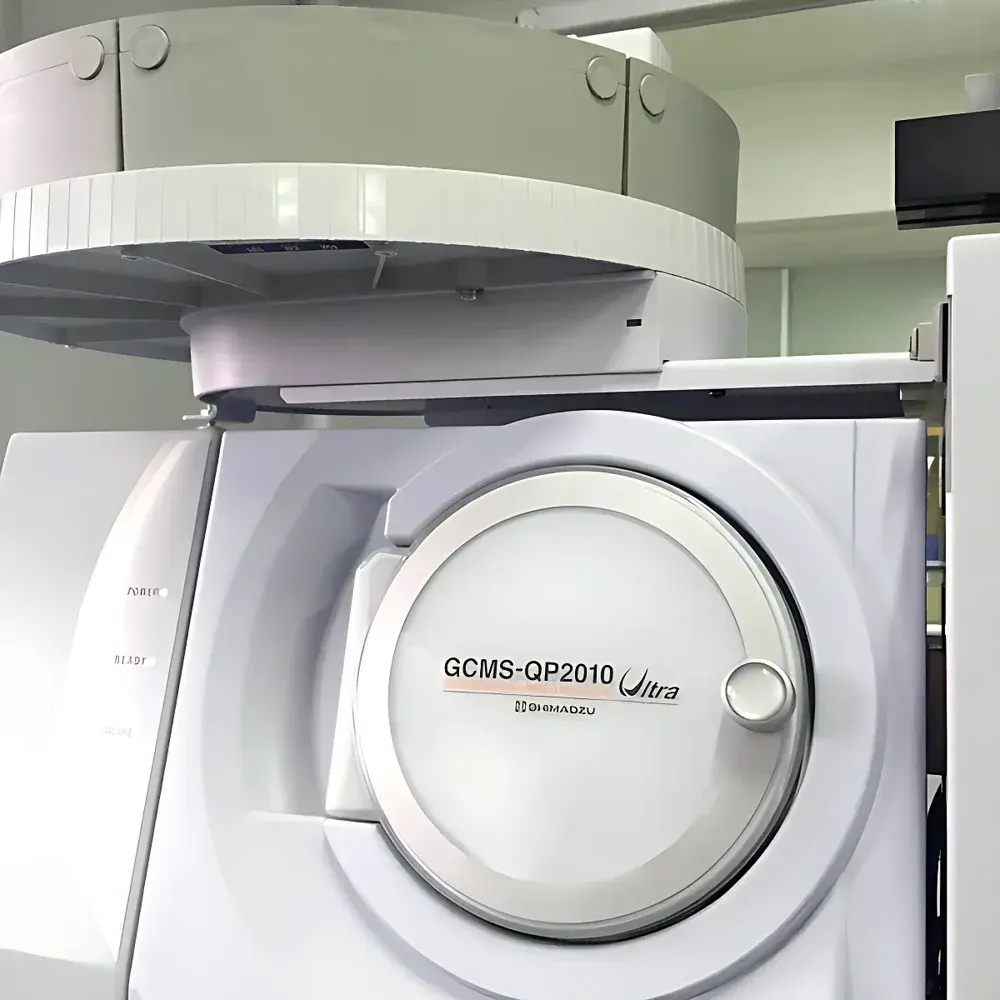
Shimadzu GCMS-2010ULTRA Single Quadrupole Gas Chromatography Mass Spectrometer
| Brand | Shimadzu |
|---|---|
| Origin | Japan |
| Model | GCMS-2010ULTRA |
| Instrument Type | Single Quadrupole Mass Spectrometer |
| GC Configuration | Conventional Gas Chromatography Interface |
| Mass Range | 1.5–1090 u |
| Resolution | Unit Mass Resolution (R ≥ 2,000 at FWHM) |
| Sensitivity | S/N > 500:1 for 1 pg OFN (m/z 272, EI full scan) |
| Scan Speed | 20,000 u/sec |
| Mass Accuracy | ±0.1 u over 48 h |
| Oven Ramp Rate | Up to 125 °C/min |
| Pressure Control Precision | ±0.001 kPa |
| Detector | Dual-stage Electron Multiplier with ZL Deflection Lens and Conversion Dynode |
| Vacuum System | Dual-inlet Turbo-Molecular Pumps (179 L/s + 185 L/s for He), Rotary Vane Backing Pump |
Overview
The Shimadzu GCMS-2010ULTRA is a high-performance single quadrupole gas chromatography mass spectrometer engineered for robust, reproducible qualitative and quantitative analysis of volatile and semi-volatile organic compounds. It integrates a precision capillary gas chromatograph with a high-transmission electron ionization (EI) and optional chemical ionization (CI) mass spectrometer, operating on the principle of mass-to-charge (m/z) separation via radiofrequency (RF) and direct current (DC) voltage scanning across a metal molybdenum quadrupole mass filter. The system employs a differential vacuum architecture—featuring dual high-speed turbo-molecular pumps—to maintain stable ion transmission under rapid scan conditions. Designed for routine laboratory environments in environmental monitoring, food safety, forensic toxicology, and pharmaceutical impurity profiling, the GCMS-2010ULTRA delivers trace-level detection capability without compromising analytical throughput or spectral fidelity.
Key Features
- High-efficiency ion source with dual filament configuration, uniform temperature distribution (100–300 °C), and adjustable emission current (5–250 μA) for optimized ion yield across diverse compound classes.
- Advanced Scanning Speed Processor (ASSP™) enabling real-time data acquisition at up to 20,000 u/sec while preserving signal-to-noise ratio and mass accuracy.
- FAST (Full Scan/SIM Simultaneous Acquisition) mode: acquires both full-scan and selected-ion monitoring (SIM) data in a single run—supporting method validation, retrospective analysis, and multi-analyte quantification without re-injection.
- EASYSTOP functionality: permits inlet maintenance—including septum replacement and liner cleaning—without venting the mass spectrometer vacuum chamber, reducing instrument downtime by >70% versus conventional protocols.
- Dual-column interface (optional): accommodates two narrow-bore capillary columns connected in parallel to the MS, allowing rapid method switching between polar/non-polar phases without hardware reconfiguration.
- Integrated electronic pressure control (EPC) with digital flow management: supports precise, programmable control of carrier gas pressure (0–970 kPa), linear velocity, and split ratio across all GC oven temperature programs.
Sample Compatibility & Compliance
The GCMS-2010ULTRA is validated for use with helium as the primary carrier gas (max. 15 mL/min) and compatible with standard 0.18–0.32 mm ID fused-silica capillary columns. Its EI/PCI/NCI ionization options enable broad analyte coverage—from halogenated pesticides (e.g., OFN at 100 fg NCI-SIM) to thermally labile pharmaceuticals and metabolites. The system complies with key regulatory frameworks including EPA Methods 502.2, 625.1, and 8270D; ISO 17025-accredited laboratories routinely deploy it for GLP-compliant residue testing. Data integrity is supported through audit-trail-enabled GCMSSolution software, aligned with FDA 21 CFR Part 11 requirements for electronic records and signatures when configured with appropriate user access controls and electronic signature modules.
Software & Data Management
GCMSSolution v2.6 or later provides a unified platform for instrument control, data acquisition, processing, and reporting. Core capabilities include automated calibration, peak deconvolution (AIA/AMDIS-compatible), library search against NIST/EPA/WHO mass spectral databases, and customizable report templates compliant with ISO/IEC 17025 documentation standards. All raw data files are stored in vendor-neutral ANDI format (.cdf), ensuring long-term archival stability and third-party software interoperability. Audit trails log user actions—including method edits, integration parameter changes, and result approvals—with time-stamped, non-erasable entries. Optional add-ons support automated QC checks, batch processing workflows, and LIMS integration via ASTM E1384-compliant interfaces.
Applications
- Environmental analysis: PAHs, PCBs, organochlorine pesticides, and VOCs in water, soil, and air matrices per US EPA and EU WFD directives.
- Food and beverage testing: mycotoxins, flavor compounds, packaging migrants, and pesticide residues in compliance with EU MRL regulations and China GB standards.
- Pharmaceutical quality control: residual solvents (ICH Q3C), genotoxic impurities, and extractables/leachables from primary packaging materials.
- Forensic toxicology: screening and confirmation of drugs of abuse, metabolites, and novel psychoactive substances (NPS) in biological fluids.
- Academic research: reaction monitoring, metabolite identification, and natural product profiling requiring high scan speed and reliable spectral reproducibility.
FAQ
What ionization modes are supported, and how are they configured?
The system ships standard with electron ionization (EI) and supports optional positive/negative chemical ionization (PCI/NCI) via interchangeable ion source inserts and dedicated CI gas inlets. Voltage and emission current are software-controlled and independently optimized per mode.
Is the GCMS-2010ULTRA suitable for regulated GLP/GMP environments?
Yes—when deployed with GCMSSolution’s 21 CFR Part 11-compliant configuration (including role-based access, electronic signatures, and full audit trail), it meets ALCOA+ data integrity principles required for FDA, EMA, and PMDA submissions.
How does the dual-column interface improve workflow efficiency?
It eliminates column changeover time and associated requalification steps, enabling concurrent method development and routine analysis on complementary stationary phases—e.g., DB-5ms for general screening and DB-WAX for polar analytes—within a single instrument platform.
What vacuum performance specifications ensure long-term stability?
The dual turbo-molecular pump system maintains <1×10⁻⁵ Pa base pressure in the analyzer region, with mass stability of ±0.1 u over 48 hours and automatic pressure compensation during GC temperature ramping.
Can FAST mode be used for quantitative applications?
Yes—FAST enables simultaneous acquisition of full-scan spectra (for unknown identification) and high-sensitivity SIM channels (for targeted quantitation), with identical retention time alignment and integrated calibration curve generation in post-run processing.
Related Products




