
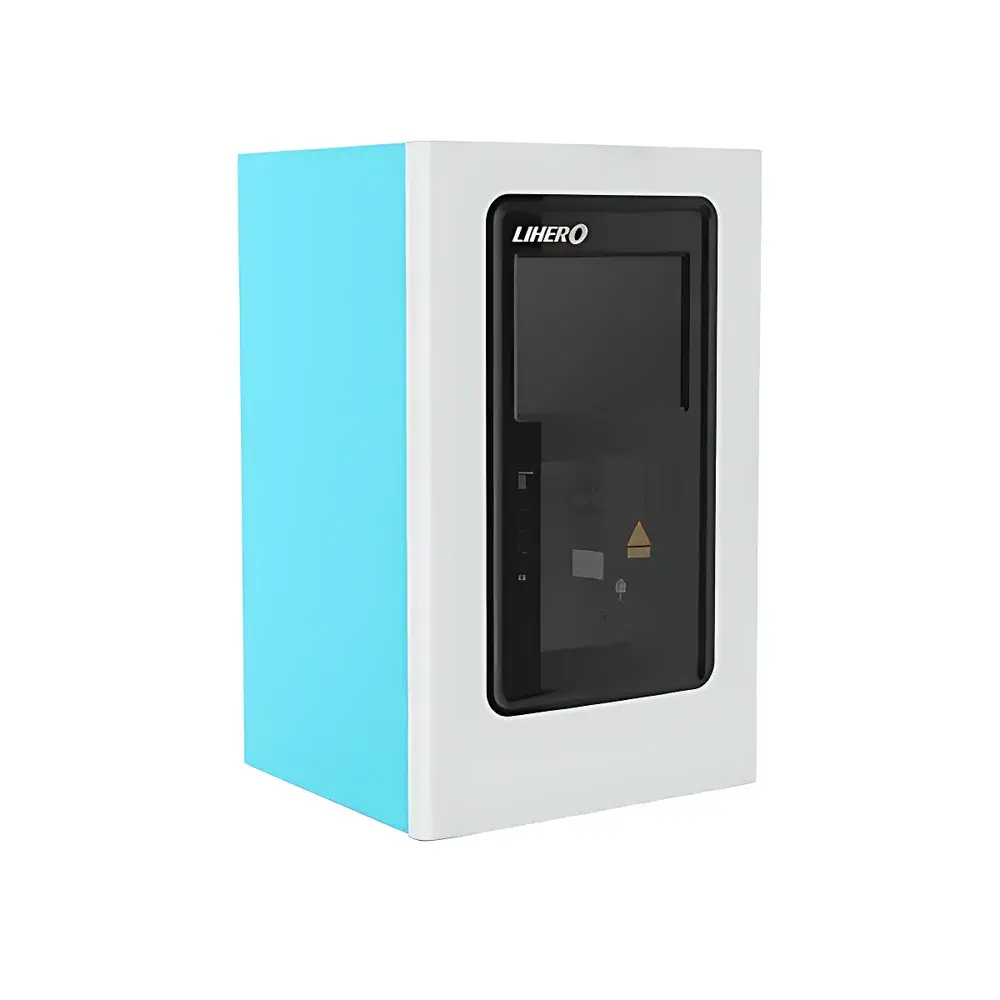
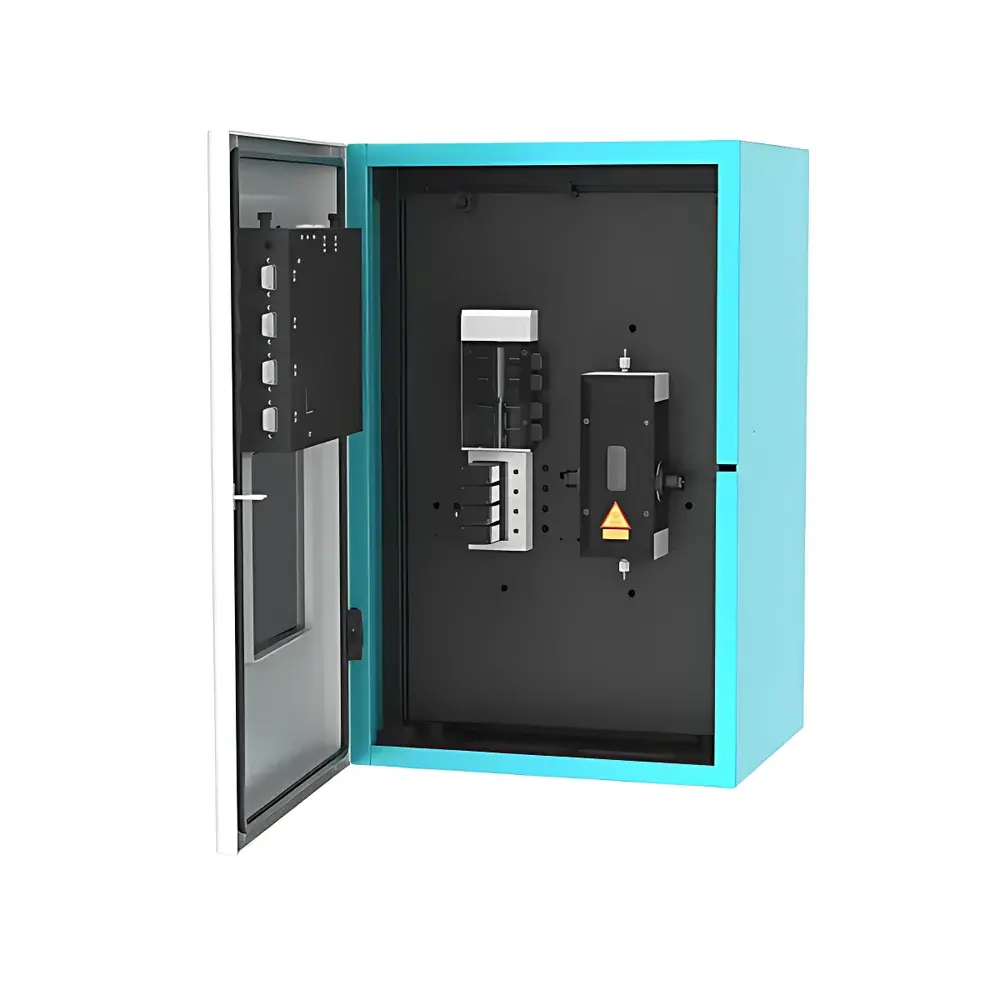
Lihero LFS-2002 Online Chemical Oxygen Demand (COD) Analyzer
| Brand | Lihero |
|---|---|
| Model | LFS-2002 (COD) |
| Type | Online Analyzer |
| Measurement Principle | Dichromate Oxidation with UV-Vis Photometry |
| Digestion Method | High-Temperature, High-Pressure Acidic Digestion (H₂SO₄ + K₂Cr₂O₇ + Ag₂SO₄ + HgSO₄) |
| Digestion Time | ≤10 min |
| Cycle Time | ~25 min per sample |
| Detection | Dual-Beam Photometric Detection at 600 nm |
| Chloride Interference Mitigation | HgSO₄ Masking |
| Auto-Cleaning | Integrated Post-Analysis Tubing & Digestion Chamber Rinse |
| Self-Diagnostic Sensors | Yes |
| Heating System | Programmable Electric Heating Module |
| Compliance Context | Designed for continuous compliance monitoring per ISO 6060, ASTM D1252, and China HJ/T 399–2007 |
Overview
The Lihero LFS-2002 Online Chemical Oxygen Demand (COD) Analyzer is an industrial-grade, fully automated water quality monitoring system engineered for continuous, unattended operation in municipal wastewater treatment plants, industrial effluent discharge points, and environmental surveillance stations. It implements the standardized dichromate oxidation method—recognized internationally under ISO 6060 and ASTM D1252—as its core analytical principle. In a sealed, high-pressure digestion chamber, samples undergo rapid oxidative decomposition using potassium dichromate (K₂Cr₂O₇) as the primary oxidant, sulfuric acid (H₂SO₄) as the reaction medium, silver sulfate (Ag₂SO₄) as a catalyst, and mercury sulfate (HgSO₄) to selectively complex chloride ions and suppress interference. Following digestion, the reduction of Cr⁶⁺ to Cr³⁺ produces a colorimetric change proportional to organic load; absorbance is measured photometrically at 600 nm using a dual-beam optical path to ensure baseline stability and long-term signal fidelity. The analyzer delivers quantitative COD results (expressed in mg/L O₂) without manual intervention, supporting real-time process control and regulatory reporting.
Key Features
- Programmable high-efficiency electric heating module enabling precise temperature control (up to 165 °C) and adjustable digestion duration (5–20 min), optimized for variable matrix complexity.
- Dual-beam photometric detection architecture with synchronized reference and sample channel monitoring—minimizing drift from lamp aging, ambient light, or optical fouling.
- Integrated automatic cleaning sequence post-analysis: reagent lines, peristaltic pump tubing, digestion chamber, and flow cell are flushed with deionized water and air-purged to prevent cross-contamination and biofilm accumulation.
- Onboard sensor self-diagnostic routines continuously verify operational status of temperature sensors, pressure transducers, photodiode response, and fluidic integrity—logging fault codes for predictive maintenance.
- Chloride tolerance up to 2,000 mg/L via stoichiometric HgSO₄ addition, validated per HJ/T 399–2007 methodology, ensuring robustness in saline or mixed industrial influents.
- Modular design compliant with IP65 enclosure rating, suitable for installation in wet, corrosive, or vibration-prone environments typical of pump stations and plant perimeters.
Sample Compatibility & Compliance
The LFS-2002 accepts raw or clarified wastewater, surface water, and treated effluent within pH 2–10 and suspended solids ≤150 mg/L. It accommodates inlet pressures from 0.1 to 0.6 bar and operates reliably across ambient temperatures of 5–40 °C. Its measurement range spans 0–500 mg/L COD (standard configuration), extendable to 0–5,000 mg/L via dilution module integration. Data output adheres to Modbus RTU/TCP and 4–20 mA analog protocols for seamless SCADA integration. The analyzer supports audit-trail-enabled data logging aligned with GLP principles and meets mechanical and electrical safety requirements per IEC 61000-6-2 (EMC) and IEC 60529 (ingress protection). While not certified under FDA 21 CFR Part 11, its event-logged calibration history, user-access controls, and immutable result timestamps facilitate GMP-aligned validation documentation.
Software & Data Management
Embedded firmware provides local touchscreen interface for method setup, calibration management, diagnostic review, and alarm configuration. Remote access is supported via secure HTTPS web interface or optional OPC UA server, enabling centralized fleet monitoring. All measurements, maintenance events, error logs, and calibration records are timestamped and stored onboard for ≥180 days. Export formats include CSV and PDF reports compatible with LIMS systems. Calibration verification follows multi-point standard addition (0, 50, 150, 300 mg/L COD) with automatic curve fitting (linear or quadratic) and R² validation ≥0.999. Firmware updates are performed via USB or OTA with cryptographic signature verification.
Applications
- Real-time COD trending at wastewater influent channels to optimize biological treatment loading and aeration energy use.
- Effluent compliance monitoring prior to discharge—supporting permit adherence under EU Urban Wastewater Treatment Directive or US EPA NPDES requirements.
- Industrial pretreatment verification for electroplating, food processing, and pharmaceutical facilities subject to local sewer authority limits.
- Process troubleshooting during shock loads or upstream chemical spills, where rapid (<30 min) COD quantification informs immediate operational response.
- Long-term performance evaluation of tertiary filtration or advanced oxidation units via paired inlet/outlet COD differentials.
FAQ
What digestion temperature and pressure does the LFS-2002 maintain during analysis?
The system operates at a controlled digestion temperature of 165 °C ± 2 °C under sealed autoclave conditions (~0.3 MPa gauge pressure), ensuring complete oxidation kinetics per ISO 6060.
Can the analyzer be integrated into an existing PLC-based SCADA system?
Yes—it supports native Modbus RTU over RS-485 and Modbus TCP/IP, with configurable register mapping for real-time COD values, status flags, and maintenance alerts.
How frequently must the instrument be calibrated?
Initial calibration is required after installation and following any major maintenance; routine verification is recommended every 7 days using certified COD standards traceable to NIM (China) or NIST SRM equivalents.
Is operator training provided with purchase?
Comprehensive on-site commissioning and two-day technical training—including method validation, troubleshooting workflows, and data export procedures—are included in standard delivery terms.
Does the system meet European CE marking requirements?
The LFS-2002 conforms to the EMC Directive 2014/30/EU and Low Voltage Directive 2014/35/EU; CE marking documentation is available upon request for import compliance verification.
Related Products







