
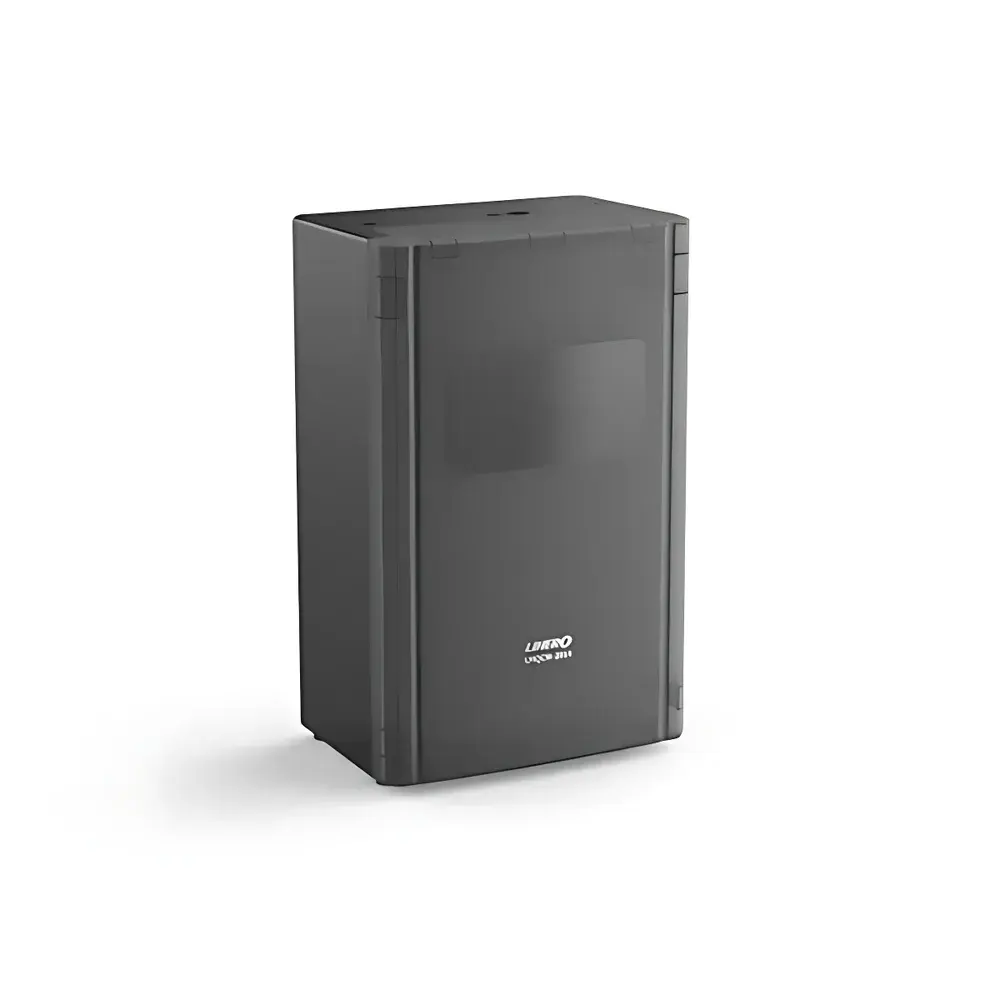
Quality Control Sample Preparation Module LHQCM-2014 by Lihero
| Brand | Lihero |
|---|---|
| Origin | Hunan, China |
| Manufacturer Type | Authorized Distributor |
| Origin Category | Domestic (China) |
| Model | LHQCM-2014 |
| Pricing | Available Upon Request |
Overview
The Lihero LHQCM-2014 Quality Control Sample Preparation Module is an engineered subsystem designed for integration into automated water quality online monitoring systems. It operates on the principle of programmable liquid handling and precise volumetric dispensing to generate reference samples—such as parallel duplicates, spike recovery standards, and dynamically encrypted blind samples—directly within the operational workflow of analytical instruments (e.g., UV-Vis spectrophotometers, ion-selective electrode analyzers, or colorimetric nutrient analyzers). Unlike manual QC preparation, this module eliminates operator variability and introduces traceable, time-stamped sample generation events. Its architecture supports scheduled, event-triggered, or remote-initiated QC routines—enabling continuous verification of instrument performance against established method validation criteria (e.g., EPA Method 1664, ISO 5667-3, or GB/T 5750.2–2023 for water quality testing).
Key Features
- Precision liquid handling with gravimetric or syringe-pump-based delivery, supporting configurable spike volumes from 0.1 mL to 5.0 mL per cycle with repeatability ≤ ±1.5% RSD under calibrated conditions.
- Integrated refrigerated reagent storage compartment (4–8 °C) with real-time temperature logging and alarm thresholds compliant with ISO/IEC 17025 clause 5.5.2 for reference material stability management.
- Standardized RS-485 and Modbus RTU communication interface, plus optional Ethernet/IP or OPC UA support, enabling bidirectional data exchange with SCADA platforms, LIMS, or centralized monitoring dashboards.
- Modular mechanical design with tool-free access to fluidic paths, calibration ports, and waste collection reservoirs—reducing mean time to repair (MTTR) and supporting field maintenance without specialized tools.
- Dynamic encryption logic for blind sample generation: assigns randomized alphanumeric identifiers and timestamps to spiked samples, ensuring analyst blinding in accordance with ISO/IEC 17025 clause 7.8.2 and GLP audit requirements.
Sample Compatibility & Compliance
The LHQCM-2014 accommodates aqueous matrices across pH 4–10 and total suspended solids (TSS) < 50 mg/L. It is validated for use with common standard stock solutions including nitrate-N (1000 mg/L), phosphate-P (100 mg/L), ammonia-N (500 mg/L), and heavy metal standards (e.g., Cr(VI), Cd, Pb at µg/L levels). All wetted components are constructed from chemically resistant materials—PTFE tubing, borosilicate glass vials, and PEEK manifolds—to prevent adsorption or leaching. The module complies with IEC 61326-1 (EMC for laboratory equipment), GB/T 18204.2–2014 (Chinese national standard for water quality analyzer QC procedures), and supports documentation generation required for ISO/IEC 17025 accreditation audits.
Software & Data Management
Embedded firmware provides local configuration via a web-based interface (HTTPS-enabled) accessible through standard browsers. Each QC event logs metadata—including timestamp, operator ID (if authenticated), spike concentration, dilution factor, target analyte, and system status flags—into a structured CSV or SQLite database. Audit trails are immutable and time-stamped using NTP-synchronized clocks; records meet FDA 21 CFR Part 11 requirements when deployed with digital signature and role-based access control (RBAC) enabled. Optional integration with third-party LIMS via RESTful API allows automatic ingestion of QC results alongside instrument raw data for trend analysis and control charting (e.g., Shewhart X-bar/R charts per ISO 8258).
Applications
- Routine verification of analyzer bias and precision in municipal wastewater treatment plant effluent monitoring.
- Supporting regulatory compliance reporting under China’s “HJ 353–2019” and “HJ 354–2019” technical specifications for online water quality monitoring systems.
- Enabling multi-point calibration verification without interrupting continuous sampling—critical for long-term unattended deployments in river basins or reservoir networks.
- Facilitating internal method validation studies, including limit of detection (LOD) assessment, matrix spike recovery evaluation, and inter-laboratory comparison exercises.
- Automating QC workflows in environmental monitoring stations accredited to CNAS-CL01 (equivalent to ISO/IEC 17025).
FAQ
Does the LHQCM-2014 support custom spike concentrations beyond factory presets?
Yes—users can define up to 32 unique spike protocols via the web interface, each specifying target analyte, stock concentration, dilution ratio, and volume delivered.
Is refrigeration mandatory for all standard solutions?
Refrigeration is recommended for organic standards (e.g., phenol, formaldehyde) and labile nutrients (e.g., nitrite); inorganic stock solutions may be stored at ambient temperature if used within 7 days.
Can the module operate independently without connection to a central monitoring platform?
Yes—it includes onboard scheduling and local event logging, though remote command and data export require network connectivity.
What maintenance intervals are recommended for fluidic components?
Tubing and filters should be inspected every 3 months; syringe seals and check valves are rated for ≥10,000 cycles and require replacement only upon performance drift confirmed by volumetric verification.
Is firmware update capability available over-the-air?
Yes—updates are delivered via secure HTTPS download and verified using SHA-256 checksums prior to installation.
Related Products



