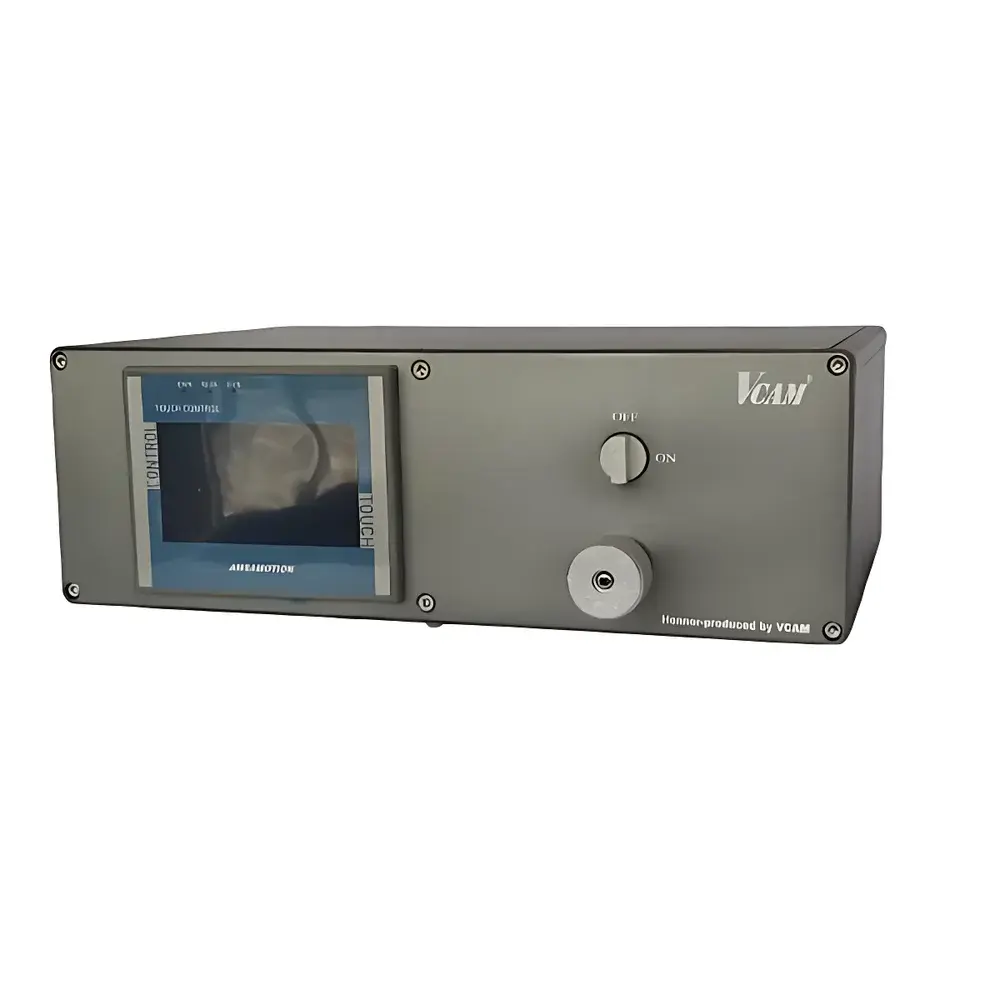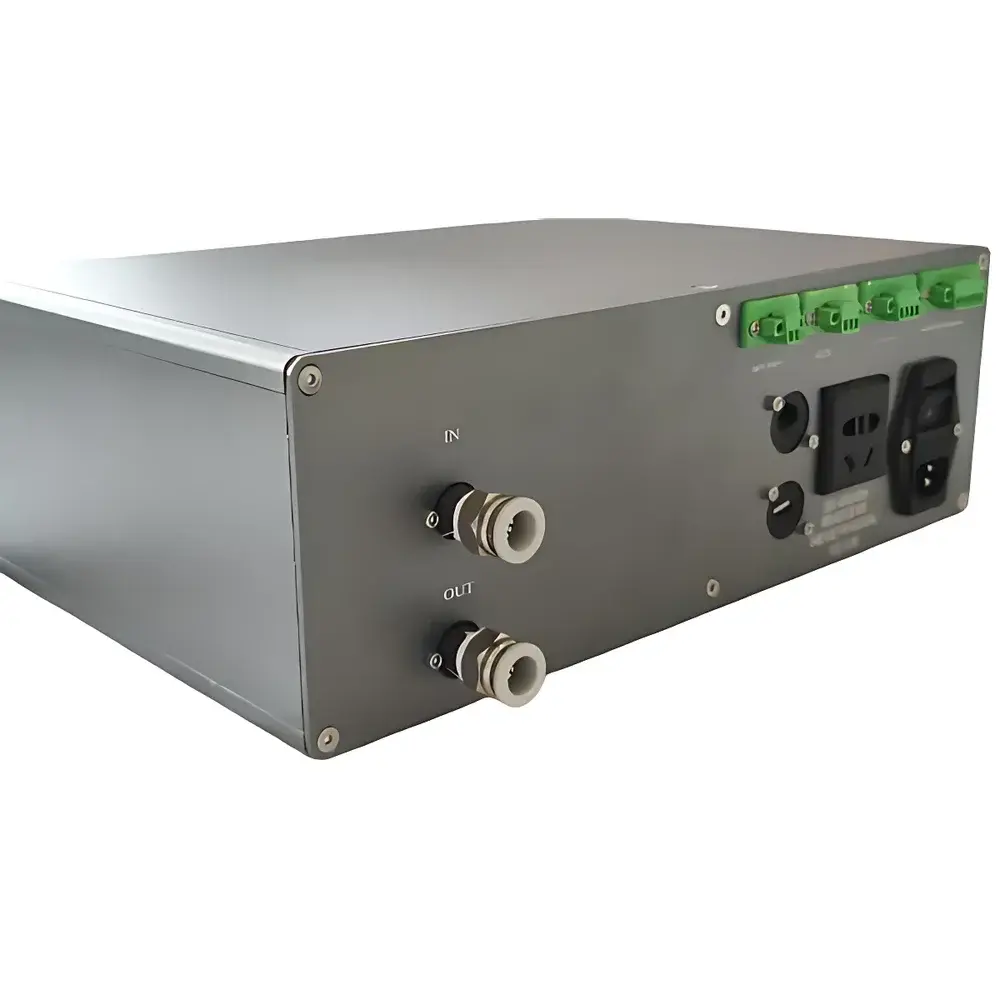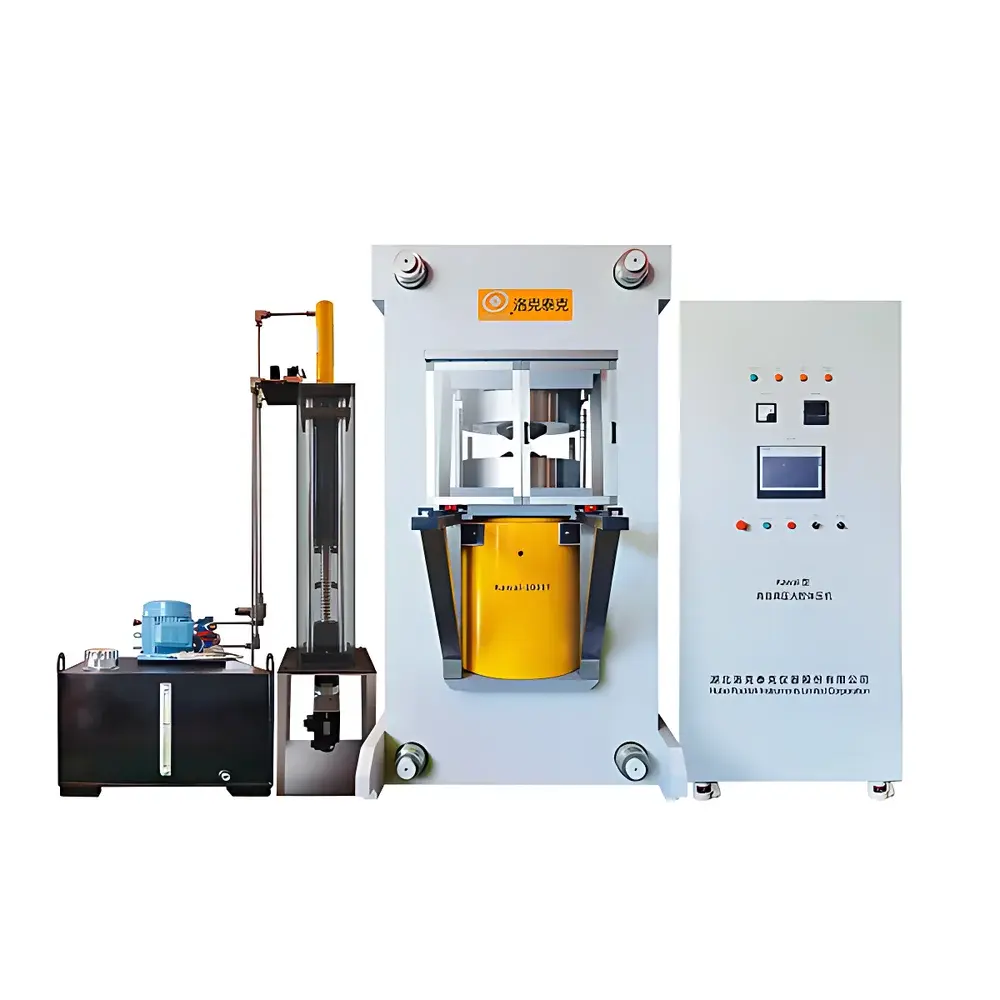
Rocktek Kawai-01 Walker-Type Large-Volume Press
| Brand | Rocktek |
|---|---|
| Model | Kawai-01 |
| Type | Walker-Type Multi-Anvil High-Pressure Apparatus |
| Maximum Pressure | >20 GPa |
| Maximum Temperature | >2000 °C |
| Press Capacity | 1000–2000 metric tons |
| Stroke | 50 mm |
| Pressure Control Accuracy | ±0.5 bar |
| Low-Pressure Drive | Hydraulic System |
| High-Pressure Fine Control | Servo Motor + PLC |
| Pressure Sensing | Digital Pressure Transducer |
| Communication Interface | Ethernet-based Industrial Protocol |
| Compliance | Designed for ISO/IEC 17025-aligned laboratory environments |
| Origin | Wuhan, Hubei, China |
| Manufacturer Role | Authorized Distributor |
Overview
The Rocktek Kawai-01 Walker-Type Large-Volume Press is a precision-engineered multi-anvil high-pressure apparatus designed for static compression experiments in geophysics, materials science, and condensed matter physics laboratories. Based on the Walker-type 6–8 anvil geometry—where six tungsten carbide (WC) second-stage anvils compress an octahedral sample assembly housed within a steel containment ring—the system achieves stable, reproducible pressures exceeding 20 GPa while maintaining temperatures above 2000 °C using resistively heated graphite or Mo–C heaters. Unlike diamond anvil cells (DACs), this large-volume press enables millimeter-scale sample volumes suitable for synchrotron X-ray diffraction (XRD), neutron scattering, electrical transport measurements, and quench recovery studies. Its dual-drive architecture—hydraulic actuation at low pressure (<1 GPa) for rapid positioning and servo-motor–PLC–controlled fine pressure regulation at high pressure—ensures both operational efficiency and sub-bar pressure stability under thermal load.
Key Features
- Walker-type 6–8 anvil configuration with WC second-stage anvils and hardened steel confinement ring, engineered for uniform stress distribution and long-term mechanical integrity.
- Dual-mode pressure actuation: high-flow hydraulic system for fast initial loading (0–1 GPa); closed-loop servo motor + PLC for high-resolution pressure modulation (>1 GPa) with ±0.5 bar accuracy.
- Digital pressure transduction integrated directly into the load train, delivering real-time pressure feedback with <10 ms response time to the control unit.
- Modular, segment-based pressure–time programming interface allowing up to 32 user-defined ramps, holds, and dwell steps—each independently specifying target pressure, ramp rate, duration, and safety thresholds.
- Industrial Ethernet (TCP/IP) communication protocol compliant with Modbus TCP and OPC UA frameworks, enabling seamless integration into LabVIEW, Python-based acquisition suites, or centralized SCADA systems.
- Acoustically optimized drive train; noise emission <55 dB(A) during high-pressure stabilization—critical for vibration-sensitive synchrotron or interferometric measurement setups.
- Passive thermal shielding and water-cooled outer housing maintain ambient cabinet temperature <35 °C even during extended 2000 °C operation.
Sample Compatibility & Compliance
The Kawai-01 accommodates standard octahedral assemblies (e.g., 14/8, 18/11, or 25/15 mm edge-length MgO cubes) and supports common pressure media (NaCl, KBr, borosilicate glass) and heater configurations (graphite, LaCrO₃, Mo–C). All structural components conform to ASTM E2928-22 (Standard Practice for High-Pressure Calibration of Multi-Anvil Devices) and are traceably certified per ISO 9001:2015 manufacturing protocols. The control firmware implements audit-trail logging per GLP requirements, recording timestamps, setpoints, actual values, operator IDs, and system alarms. While not FDA 21 CFR Part 11–certified out-of-the-box, the system supports electronic signature add-ons and encrypted data export for regulated environments upon configuration.
Software & Data Management
The embedded controller runs a deterministic real-time OS (VxWorks-based) managing PID loops, thermal compensation algorithms, and interlock logic. The host-side Rocktek PressControl Suite (v4.2+) provides GUI-based experiment sequencing, live pressure–temperature overlay plots, automated CSV/NetCDF export, and HDF5-compatible metadata tagging (including sample ID, calibration file hash, and transducer serial number). All datasets include embedded ISO 8601 timestamps and SI-unit–normalized variables. Raw sensor streams (1 kHz sampling) are buffered onboard and synchronized with external triggers (TTL or IEEE-1588 PTP), ensuring temporal coherence with XRD or Raman acquisition hardware.
Applications
- In situ high-P/T phase mapping of mantle minerals (e.g., bridgmanite, CaSiO₃-perovskite) via synchrotron XRD and EXAFS.
- Equation-of-state determination for transition metals and refractory ceramics under Earth’s lower-mantle conditions.
- High-pressure synthesis of metastable polymorphs (e.g., superhard BC₂N, post-spinel oxides) followed by ex situ TEM and XPS characterization.
- Calibration cross-validation against ruby fluorescence, Pt resistance, and Re–W thermocouple standards per ISO/IEC 17025 Clause 5.10.
- Thermo-mechanical testing of nuclear fuel cladding alloys (Zr–Nb, Fe–Cr–Al) under prototypic reactor transient conditions.
FAQ
What is the maximum recommended operating pressure for continuous use?
The Kawai-01 is rated for sustained operation up to 22 GPa at 2000 °C when using WC anvils and NaCl pressure medium; extended cycles beyond 25 GPa require pre-calibrated single-crystal diamond anvils and are subject to case-specific risk assessment.
Does the system support third-party temperature measurement integration?
Yes—standard analog (4–20 mA) and digital (RS-485 Modbus RTU) inputs accept signals from W5%Re/W26%Re, Pt/Pt–10%Rh, or optical pyrometers with user-configurable linearization tables.
Is remote monitoring possible without local PC presence?
The embedded web server (HTTPS-enabled) provides real-time pressure/temperature dashboards, alarm history, and firmware update capability via any modern browser—no client software required.
How is pressure calibration performed and documented?
Each unit ships with NIST-traceable calibration certificates for both primary load cell and secondary pressure transducer, including temperature-dependent correction polynomials and uncertainty budgets per ISO/IEC 17025 Annex A.
What maintenance intervals are recommended for hydraulic and servo subsystems?
Hydraulic oil replacement every 24 months; servo motor encoder recalibration annually; WC anvil inspection after every 50 high-P/T cycles or prior to critical experiments—full service logs are auto-generated and exportable.