
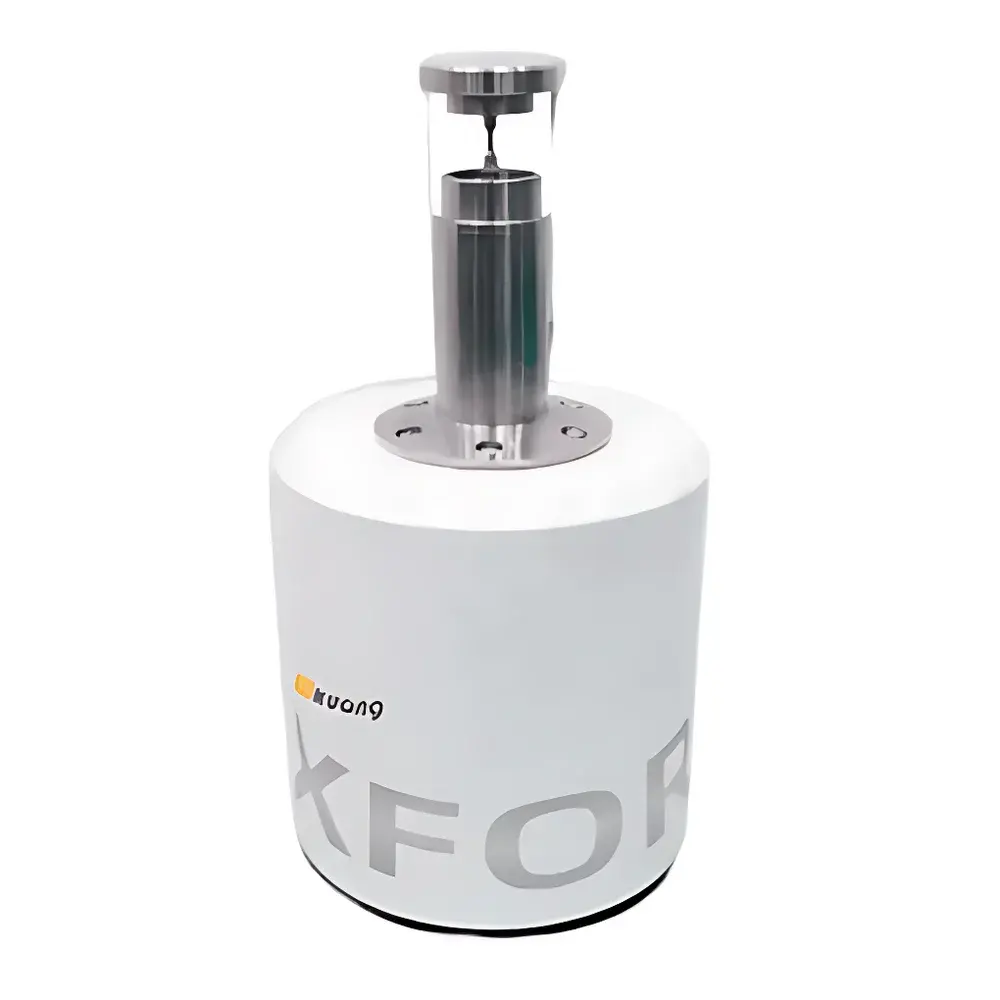
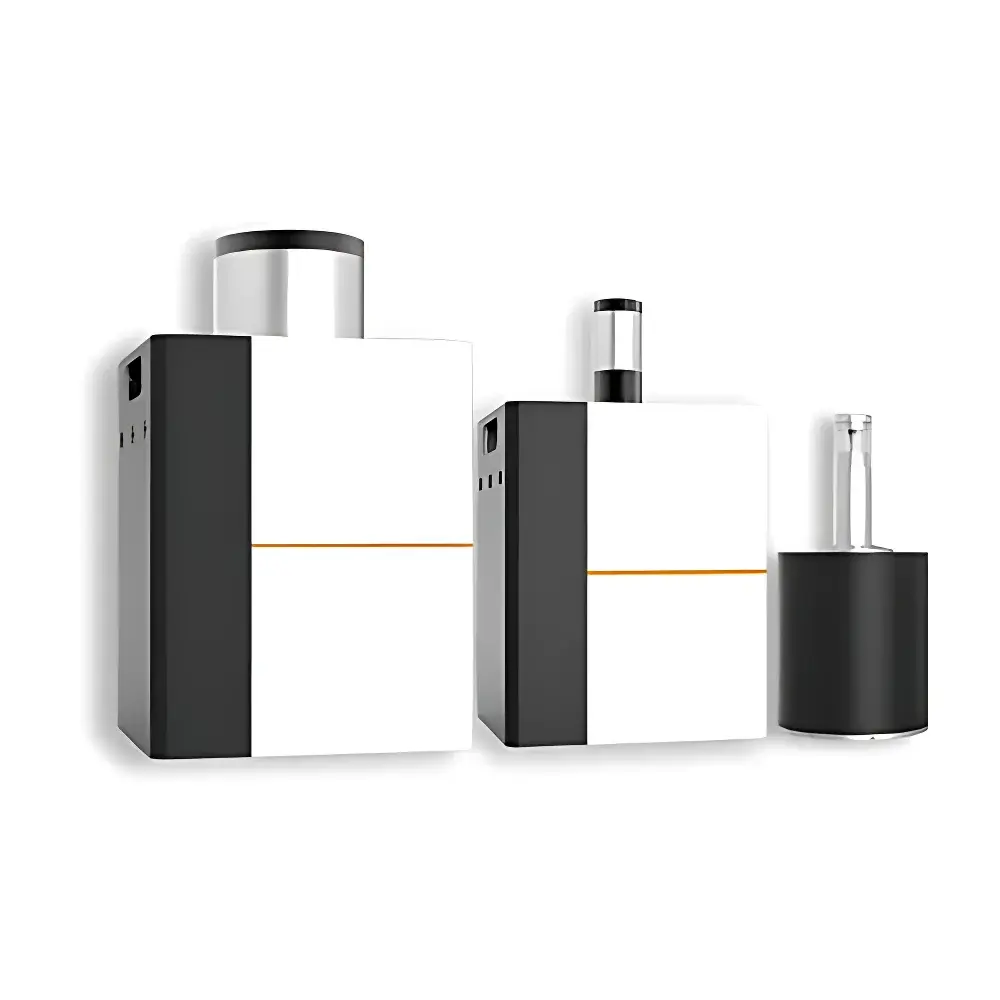
WKUANG WK-XFunct Series In Situ Tensile Testing Stage for Electron Microscopy
| Brand | WKUANG |
|---|---|
| Origin | Jiangsu, China |
| Manufacturer Type | Authorized Distributor |
| Origin Category | Domestic |
| Model | WK-XFunct Series |
| Quotation | Upon Request |
| Instrument Classification | In Situ Tensile Stage |
| Temperature Range | −180 °C to 1800 °C |
| Tensile Load Capacity | 20 kN |
| Tensile Strain Rate | 0.4–40 µm/s |
| Heating Method | Non-contact Laser Heating |
| Environmental Options | High Vacuum (<10⁻² Pa) or Controlled Atmosphere |
| Compatibility | Designed for Integration with Commercial TEM/SEM and Synchrotron X-ray CT Systems |
| Strain Resolution | Multi-scale, spanning three orders of magnitude |
Overview
The WKUANG WK-XFunct Series is an advanced in situ tensile testing stage engineered for real-time mechanical characterization inside high-resolution electron microscopes (TEM/SEM) and synchrotron-based X-ray computed tomography (CT) systems. It operates on the principle of controlled uniaxial loading under precisely regulated thermal conditions, enabling direct correlation between macroscopic mechanical response—captured as true stress–strain curves—and concurrent nanoscale structural evolution. The system integrates a high-stiffness piezoelectric or electromagnetic actuation module with ultra-stable thermal management, allowing synchronized acquisition of mechanical data and imaging at sub-micron spatial resolution. Its design conforms to standard specimen holder geometries (e.g., 3.5 mm OD for TEM, 5 mm OD for SEM), ensuring compatibility with widely deployed microscope platforms without requiring hardware modification.
Key Features
- Ultra-broad thermal operating range from −180 °C to 1800 °C, achieved via non-contact diode-pumped laser heating and cryogenic liquid nitrogen or closed-cycle refrigeration integration.
- High-fidelity load measurement up to 20 kN with integrated calibrated load cell, offering full-scale accuracy better than ±0.5% FS and long-term drift <0.1% FS/24 h.
- Programmable tensile displacement control across three decades: 0.4–40 µm/s, supporting both quasi-static deformation and dynamic creep/stress-relaxation protocols.
- Vacuum-compatible architecture rated for pressures down to 10⁻² Pa; optional gas inlet ports enable reactive or inert atmosphere experiments (Ar, He, H₂, N₂, O₂).
- Modular sample mounting interface accommodates specimens as small as 100 µm wide × 500 µm long, with precision alignment stages for tilt-free axial loading.
- Thermal uniformity <±5 °C over 100 µm field-of-view at 1500 °C, verified by in situ pyrometry and post-experiment calibration mapping.
Sample Compatibility & Compliance
The WK-XFunct stage supports a broad class of conductive and semi-conductive materials, including metallic alloys (Ti-6Al-4V, Ni-based superalloys), ceramic matrix composites (SiC/SiC), carbon fiber-reinforced polymers (CFRP), and intermetallics. Specimen geometry follows ASTM E8/E8M and ISO 6892-1 guidelines for miniature tensile coupons. All electrical feedthroughs and thermocouple interfaces comply with IEC 61000-4-3 (EMC immunity) and UL 61010-1 (electrical safety). Vacuum chamber components meet ASME BPVC Section VIII standards for pressure boundary integrity. Data acquisition logs include timestamped metadata required for GLP-compliant reporting and FDA 21 CFR Part 11 audit trails when paired with certified software modules.
Software & Data Management
Control and synchronization are managed through WKUANG’s proprietary XF-Controller Suite, a Windows-based application supporting real-time PID temperature regulation, closed-loop load/displacement feedback, and trigger-based image acquisition (via TTL or Ethernet). Raw sensor streams (load, displacement, temperature, camera trigger) are saved in HDF5 format with embedded SI-unit metadata and HDF-EOS compliant structure. Export options include CSV, MATLAB .mat, and MRC for EM image stacks. The software supports scripting via Python API (PyXF) for automated multi-step experiments and integrates with DigitalMicrograph (Gatan) and Velox (Thermo Fisher) via DM Scripting and Velox SDK extensions.
Applications
- In situ observation of dislocation nucleation and glide in single-crystal Ni-based turbine alloys at >1200 °C.
- Quantification of interfacial debonding kinetics in SiC fiber/titanium matrix composites under thermo-mechanical cycling.
- Real-time tracking of phase transformation (e.g., α↔β in Ti alloys) during simultaneous heating and straining.
- Mechanical property mapping across grain boundaries and precipitate networks using correlative EBSD + in situ load data.
- Validation of crystal plasticity finite element models (CPFEM) using experimentally derived local strain fields.
FAQ
What vacuum level is required for TEM integration?
The stage achieves stable operation at ≤10⁻² Pa; for high-resolution TEM, it is recommended to pre-bake the stage at 150 °C for 4 hours prior to insertion.
Can the system be used for compression testing?
Standard configuration is tensile-only; compression-capable variants (WK-XFunct-C) are available upon request with reversed actuator kinematics and reinforced buckling resistance.
Is laser heating compatible with EDS or EELS analysis?
Yes—the 1070 nm fiber-coupled laser exhibits minimal Bremsstrahlung background and does not interfere with characteristic X-ray or core-loss electron energy windows.
How is thermal drift compensated during long-duration experiments?
Active drift correction is implemented via dual-point optical encoder feedback and real-time thermal expansion modeling based on material-specific CTE databases.
Does the system support third-party microscope automation APIs?
Yes—native drivers are provided for FEI/TFS AutoScript, JEOL JSM-IT, and Zeiss Atlas 5, enabling fully scripted workflows across multiple instruments.






