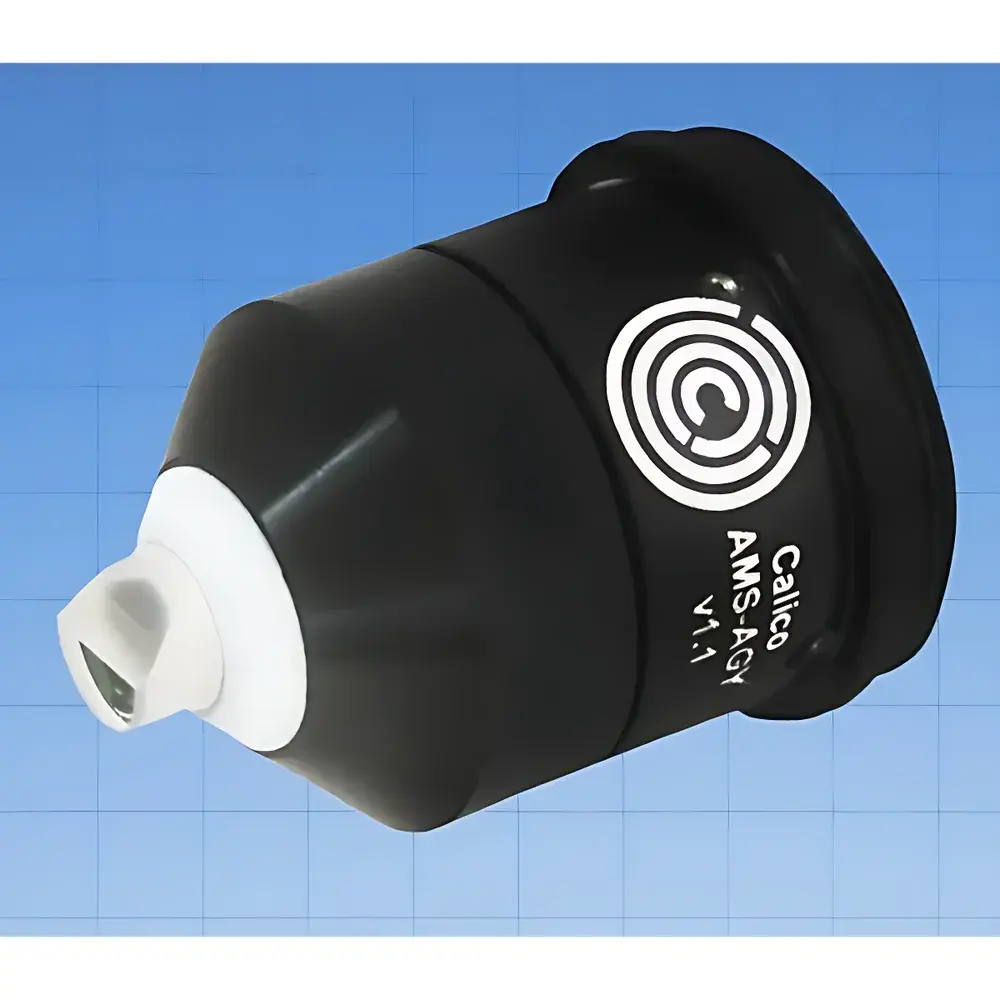
Auniontech AMS-AGY High-NA Single-Objective Light-Sheet Microscopy Objective
| Brand | Auniontech |
|---|---|
| Origin | Shanghai, China |
| Manufacturer Type | Authorized Distributor |
| Product Category | Domestic |
| Model | AMS-AGY Objective |
| Pricing | Available Upon Request |
| Numerical Aperture (NA) | 1.0 |
| Effective Focal Length | 5 mm (v1) / 9 mm (v2) |
| Working Distance | 0.0 mm |
| Chromatic Correction Range | 450–700 nm |
| Diffraction-Limited Field of View | Ø150 µm (v1) / Ø450 µm (v2) |
| Angular-Limiting Field of View | Ø250 µm (v1) / Ø750 µm (v2) |
Overview
The Auniontech AMS-AGY High-NA Single-Objective Light-Sheet Microscopy Objective is an engineered optical component designed to enable true single-objective light-sheet (SOLS) imaging on standard upright or inverted microscopes without compromising numerical aperture or resolution. Unlike conventional dual-objective light-sheet systems—where orthogonal illumination and detection paths impose strict mechanical constraints and limit compatibility with standard sample formats—the AMS-AGY objective implements a compact, relay-based optical architecture that recasts the 3D specimen into a tilted virtual image plane aligned with the back focal plane (BFP) of the primary objective. This configuration allows structured light-sheet illumination to be injected collinearly through the same high-NA objective used for fluorescence collection, thereby eliminating axial misalignment, reducing optical path complexity, and preserving full NA utilization (NA = 1.0). The system operates within the visible spectrum (450–700 nm), with apochromatic correction optimized for live-cell fluorophores including GFP, mCherry, and Alexa dyes. Its zero-working-distance design necessitates coverslip-contact mounting, ensuring minimal spherical aberration when imaging through standard #1.5 glass (170 µm thickness) in aqueous immersion.
Key Features
- Single-objective architecture enabling light-sheet illumination and detection through one high-NA (1.0) lens—no orthogonal alignment required
- Two standardized variants: v1 (5 mm EFL, Ø150 µm diffraction-limited FOV) and v2 (9 mm EFL, Ø450 µm diffraction-limited FOV), both with identical NA and chromatic correction
- Zero working distance optimized for direct coverslip contact; compatible with standard microscope slides, Petri dishes, and multi-well plates (e.g., 96-/384-well formats)
- Back focal plane (BFP)-referenced optical design supporting seamless integration with galvo-scanned or resonant mirror-based light-sheet scanning modules
- No measurable resolution loss relative to equivalent widefield or confocal modalities—validated via USAF 1951 resolution target imaging under 488 nm excitation
- Robust mechanical housing with SM2 (25.4 mm) threading and C-mount interface options for modular integration into custom SOLS platforms
Sample Compatibility & Compliance
The AMS-AGY objective is validated for use with biological specimens prepared on standard #1.5 cover glasses (170 ± 5 µm) immersed in aqueous media (refractive index ~1.33). It supports long-term time-lapse imaging of live cells, organoids, zebrafish embryos, and C. elegans larvae without inducing phototoxicity beyond intrinsic limits of fluorophore quantum yield. The optical design conforms to ISO 10110-1:2017 (surface form tolerances) and ISO 10110-7:2017 (coating specifications), with anti-reflection coatings meeting MIL-C-48497A Class II requirements for broadband transmission (>95% per surface from 450–700 nm). As a research-grade optical component—not a medical device—it is supplied exclusively to academic and non-profit institutions in compliance with export control regulations governing dual-use photonics hardware (EAR99 classification).
Software & Data Management
The AMS-AGY objective does not include embedded firmware or proprietary software. It functions as a passive optical element fully compatible with open-standard microscope control ecosystems, including Micro-Manager (v2.0+), Python-based PyMicroscope frameworks, and commercial platforms such as Nikon NIS-Elements, Zeiss ZEN Blue, and Leica LAS X. When integrated into a SOLS system, synchronization between light-sheet scanning mirrors and camera acquisition is managed via TTL-triggered hardware timing (e.g., National Instruments DAQ or Thorlabs Kinesis). Metadata embedding—including objective model, NA, EFL, and immersion medium—is supported through OME-TIFF and ND2 container formats. Audit-trail functionality for GLP/GMP-aligned workflows can be implemented using third-party extensions compliant with FDA 21 CFR Part 11 (e.g., Bitplane Imaris with validated electronic signature modules).
Applications
- High-speed volumetric imaging of dynamic subcellular processes (e.g., mitochondrial fission/fusion, vesicle trafficking) at ≤100 ms per z-plane
- Long-term developmental imaging of mammalian embryoid bodies and cerebral organoids with reduced photobleaching (<10% signal decay over 12 h at 1 Hz acquisition)
- Multi-position time-lapse screening in 384-well plates using motorized stage coordination and adaptive focus stabilization (e.g., FTP-2000 platform)
- Correlative light-electron microscopy (CLEM) workflows where minimal optical distortion and precise fiducial registration are critical
- Quantitative morphometric analysis of tissue explants using deconvolution-enhanced light-sheet datasets aligned to reference histology sections
FAQ
Is the AMS-AGY objective compatible with oil-immersion sample chambers?
No. The zero-working-distance design requires direct contact with aqueous or glycerol-based immersion media only. Oil immersion introduces refractive index mismatch and spherical aberration incompatible with the BFP-referenced relay geometry.
Can this objective be used on a confocal microscope without modification?
Yes—as a detection-only objective—but illumination must be decoupled via external light-sheet generation (e.g., cylindrical lens + scanning mirror) and coupled into the BFP using a dichroic-free relay path. Full SOLS functionality requires integration of the three-component relay system described in the optical schematic.
What is the maximum recommended laser power density at the BFP for continuous operation?
For 488 nm illumination, ≤100 mW total power incident on the BFP is advised to prevent thermal lensing in the cemented doublet elements. Power handling scales linearly with wavelength; up to 250 mW is permissible at 640 nm.
Does Auniontech provide optical design files or Zemax models?
Zemax-compatible sequential ray-trace files (ZOS-API format) and mechanical drawings (STEP/IGES) are available under signed NDA for qualified academic collaborators engaged in SOLS system development.