
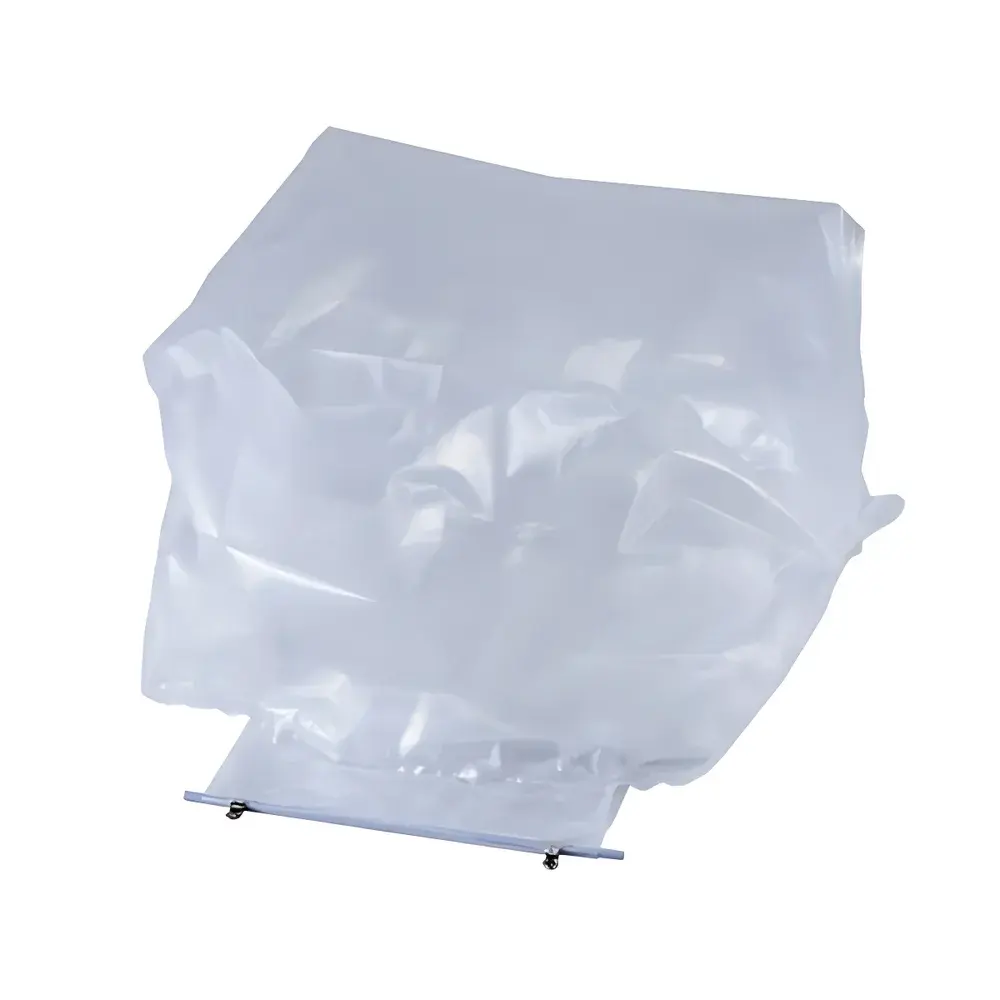
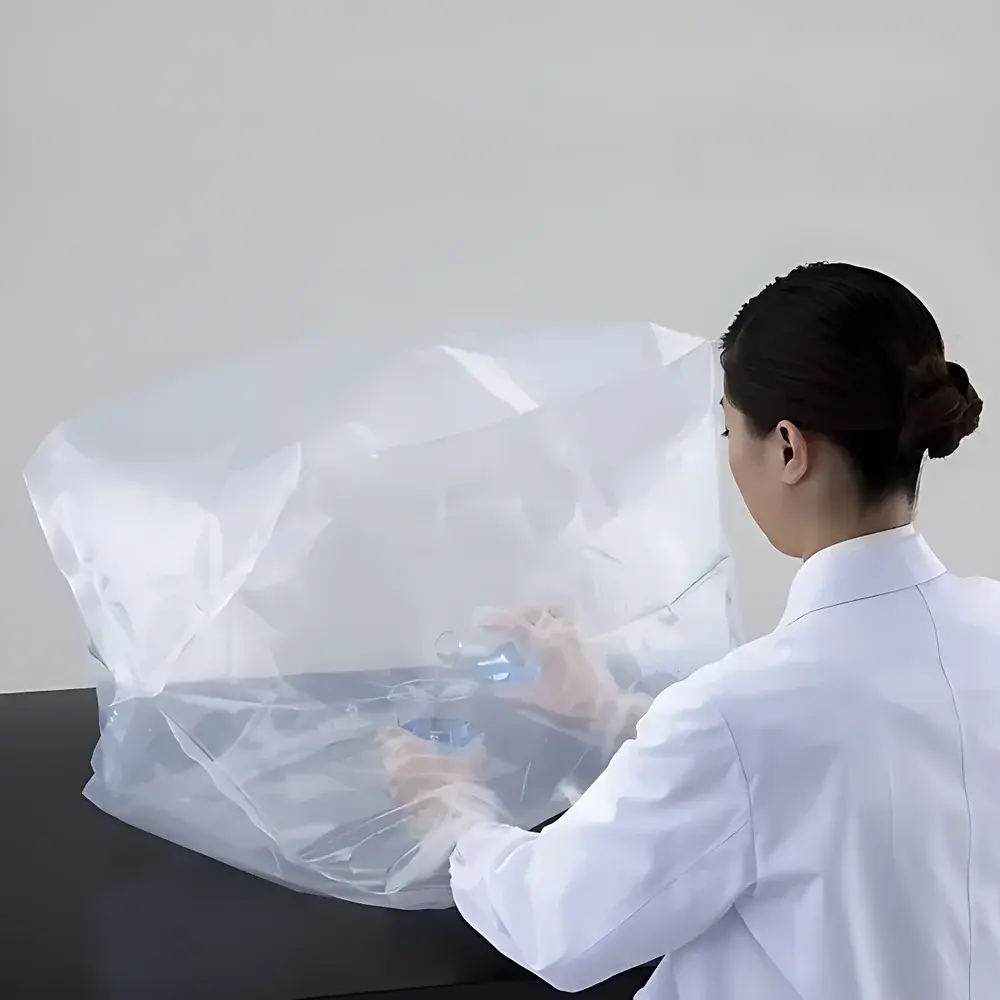
ASONE GBU-1N Compact Polyethylene Glove Box
| Brand | AS ONE |
|---|---|
| Origin | Shanghai, China |
| Manufacturer Type | Direct Manufacturer |
| Country of Origin | China |
| Model Number | 2-4120-11 |
| Instrument Category | Vacuum-Compatible Glove Box |
| Application Type | Research-Grade Inert Atmosphere Workstation |
| Chamber Material | Low-Density Polyethylene (LDPE) |
| External Dimensions (L×W×H) | 580 × 430 × 430 mm |
| Glove Ports | 2 |
| Gas Inlet Port Diameter | Ø8 mm |
| Sample Transfer Opening | 340 mm |
| Accessories | PVC Tubing (1 pc), Hose Clamps (2 pcs) |
| RoHS 2 Compliance | EU Directive 2015/863 |
Overview
The ASONE GBU-1N is a compact, entry-level polyethylene glove box engineered for controlled-atmosphere handling of air-sensitive samples in academic laboratories, materials science research groups, and small-scale R&D facilities. Unlike rigid stainless-steel or acrylic glove boxes requiring complex inert gas purging systems and vacuum interlocks, the GBU-1N leverages a flexible, lightweight LDPE chamber architecture designed for rapid manual or semi-automated gas exchange—primarily nitrogen or argon—via simple inlet/outlet ports. Its operational principle relies on positive-pressure displacement: inert gas is introduced through the Ø8 mm inlet port, displacing ambient air from the chamber interior; excess gas exits via the open sample transfer aperture or optional exhaust line, establishing a temporary low-oxygen (<100 ppm O₂ achievable with ≥3 volume exchanges) working environment. The unit is not rated for continuous ultra-high-purity operation or long-term hermetic sealing but serves effectively for short-duration manipulations such as electrode assembly, moisture-sensitive reagent weighing, or pre-characterization sample loading prior to transfer into high-integrity glove boxes or sealed reactors.
Key Features
- Compact footprint (580 × 430 × 430 mm external dimensions) optimized for benchtop integration in space-constrained labs.
- Two integrated LDPE glove ports with reinforced wrist cuffs for operator dexterity and tactile feedback during sample handling.
- 340 mm wide front-facing sample transfer opening enables insertion of standard Petri dishes, vials, crucibles, and small instrumentation components without disassembly.
- Chemically resistant low-density polyethylene (LDPE) chamber body—non-reactive toward common solvents, acids, and bases used in battery material synthesis, organometallic chemistry, and nanomaterial processing.
- RoHS 2-compliant construction (EU Directive 2015/863), confirming absence of restricted substances including lead, cadmium, mercury, hexavalent chromium, PBBs, and PBDEs.
- Includes essential accessories: one 1 m length of flexible PVC tubing (ID 6 mm, OD 10 mm) and two adjustable hose clamps for secure gas line connection and flow regulation.
Sample Compatibility & Compliance
The GBU-1N accommodates solid and powder samples up to ~300 mm in height and 320 mm in width, including lithium-ion cathode precursors, alkali metal foils, perovskite thin-film substrates, and hygroscopic catalysts. It supports manual glove-based manipulation under inert gas flow but does not provide built-in oxygen/moisture monitoring or automated purge cycle logging. While not certified to ISO 14644 cleanroom standards or ASTM E509-17 for glove box performance validation, its design aligns with GLP-aligned laboratory practices for preliminary sample staging. Users performing regulated work (e.g., pharmaceutical intermediate handling) must validate purge efficacy per internal SOPs and document gas exchange cycles per audit requirements.
Software & Data Management
The GBU-1N operates entirely manually—no embedded controller, firmware, or software interface is included. All gas flow control, timing, and environmental verification are performed externally using standard lab-grade mass flow controllers, pressure regulators, and handheld O₂/H₂O analyzers (e.g., Michell Instruments Easidew or Systech Illinois 7000 series). No data logging, electronic audit trail, or 21 CFR Part 11 compliance features are provided; users requiring traceable atmospheric records must integrate third-party sensors and compliant data acquisition platforms.
Applications
- Pre-assembly of lithium-metal or sodium-metal battery cells under nitrogen atmosphere.
- Weighing and dispensing of moisture-sensitive reagents (e.g., Grignard reagents, metal alkyls, LiAlH₄).
- Transfer and encapsulation of air-sensitive perovskite solar cell layers prior to spin-coating or thermal annealing.
- Handling of pyrophoric catalysts (e.g., Wilkinson’s catalyst, Ni(COD)₂) during homogeneous catalysis screening.
- Temporary isolation of biological samples requiring O₂-free conditions for anaerobic enzymatic assays.
- Training platform for undergraduate and graduate students learning inert-atmosphere technique fundamentals.
FAQ
Is the GBU-1N suitable for handling oxygen-sensitive materials requiring <1 ppm O₂?
No—the unit achieves typical residual O₂ levels of 50–200 ppm after 3–5 nitrogen volume exchanges; it is not engineered for ultra-low-oxygen applications requiring continuous monitoring or dynamic compensation.
Can the chamber be evacuated to create a vacuum environment?
No—LDPE is not vacuum-rated; attempting evacuation may cause catastrophic collapse of the chamber walls.
Are replacement gloves or LDPE chambers available from AS ONE?
Yes—AS ONE supplies spare LDPE chamber kits (Cat. No. 2-4120-12) and compatible glove inserts (Cat. No. 2-4120-13) for field replacement.
Does the unit include an O₂ sensor or purge timer?
No—these are external accessories; users must select and calibrate them independently based on application requirements.
What is the maximum operating temperature inside the chamber?
The LDPE chamber is rated for continuous use up to 60 °C; prolonged exposure above this threshold may induce creep deformation or seal degradation.



