
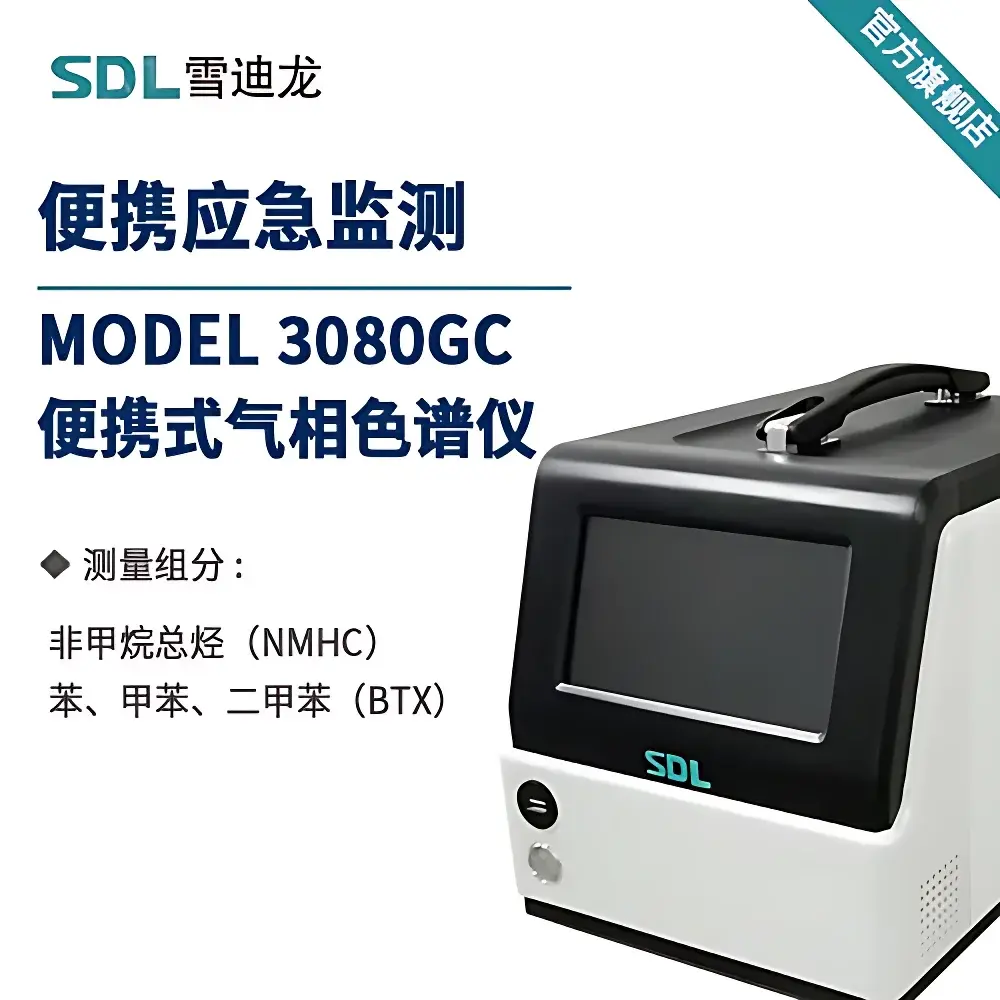
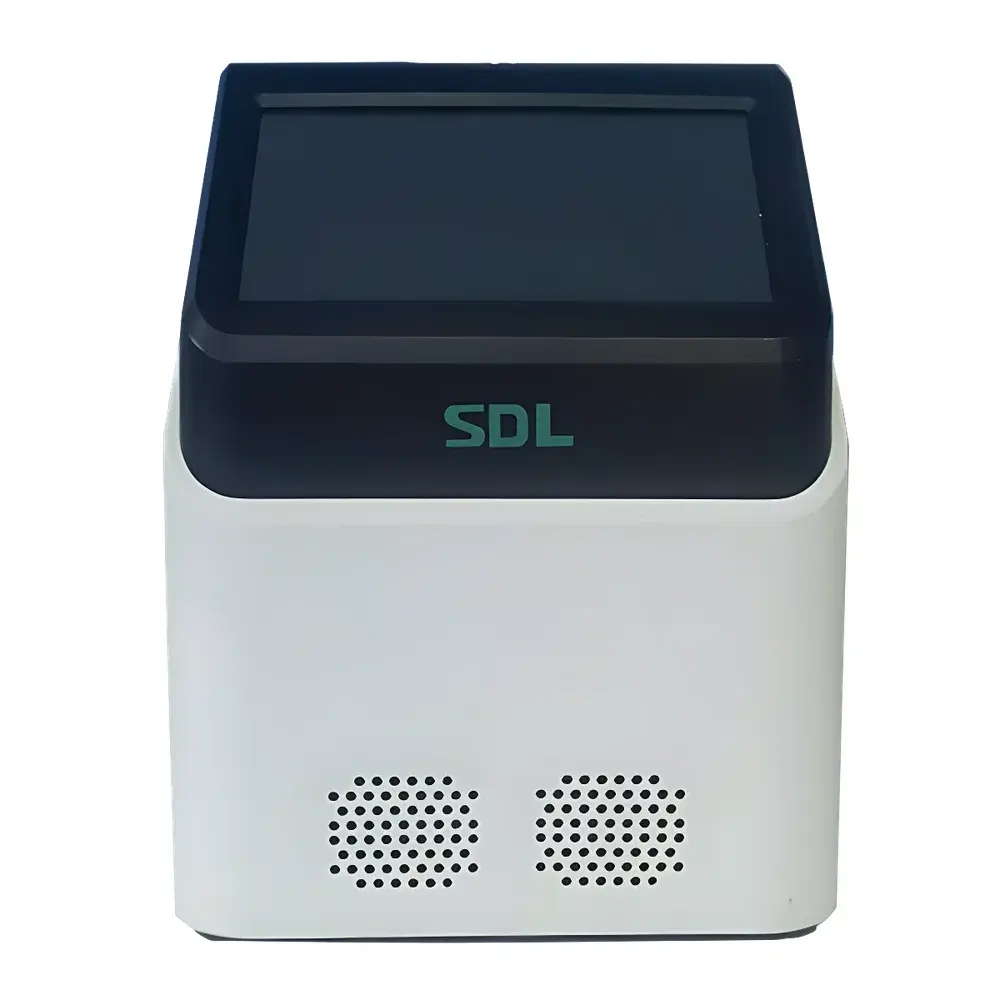
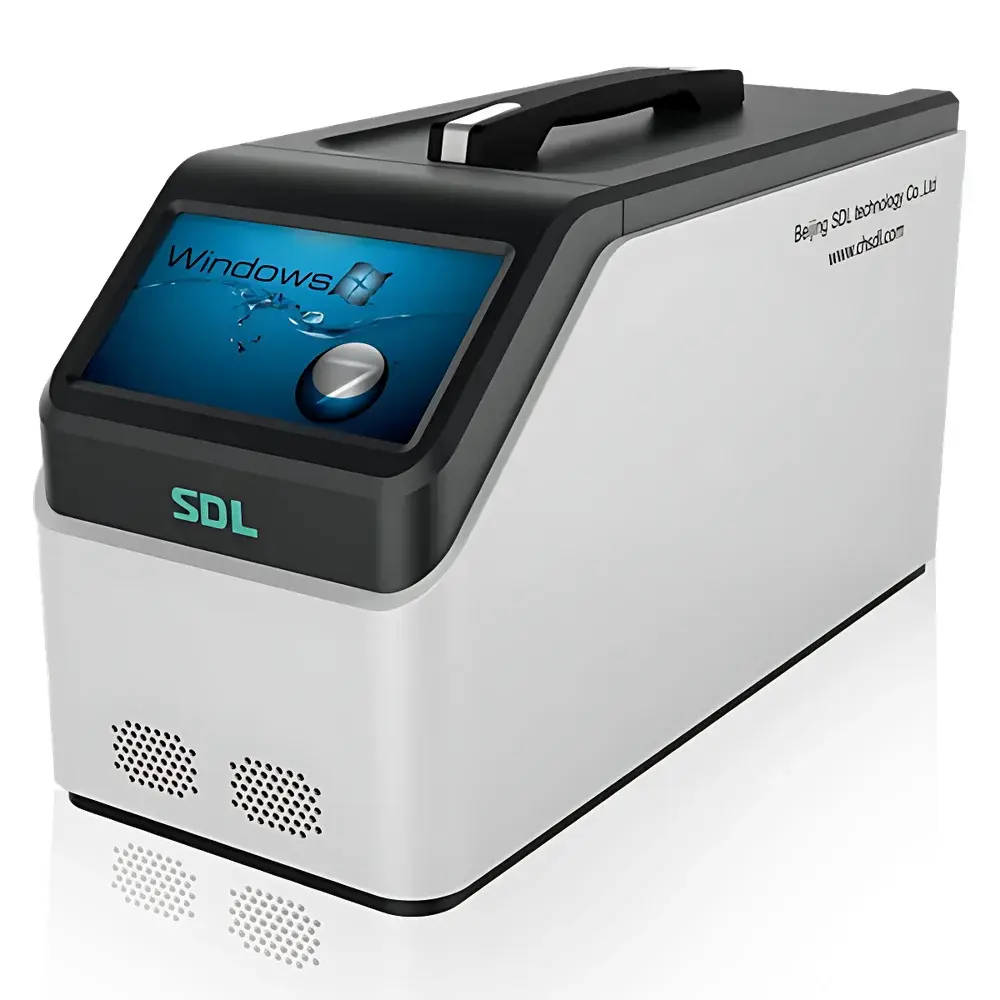
SDL MODEL 3080GC-NMHC Portable Gas Chromatograph for NMHC and BTEX Analysis
| [Brand | SDL |
|---|---|
| Origin | Beijing, China |
| Manufacturer Type | Original Equipment Manufacturer (OEM) |
| Instrument Type | Portable Gas Chromatograph |
| Application Scope | Environmental Air & Stack Emission Monitoring |
| Compliance | HJ 1012–2018 |
| Detection Targets | Methane, Total Hydrocarbons (THC), Non-Methane Hydrocarbons (NMHC), BTEX (Benzene, Toluene, Xylenes) |
| Power Options | Integrated Rechargeable Battery (≥4 hr operation) & 220 VAC Input |
| Weight | ≤10 kg |
| Column Technology | Capillary GC Separation with Valve-Switching Configuration |
| Detector | Flame Ionization Detector (FID) with Auto-Ignition & Flame Temperature Monitoring |
| Sample Path Heating | Full-path heated to ≥120 °C |
| Gas Control | Fully Automated Pressure Regulation (Accuracy: ±0.18% F.S.) |
| Hydrogen Supply | Low-Pressure Metal Hydride Cartridge |
| Carrier/Calibration Gas Supply | High-Pressure Cylinders (Manual Hot-Swap Enabled)] |
Overview
The SDL MODEL 3080GC-NMHC is a field-deployable gas chromatograph engineered for quantitative analysis of hydrocarbon species in ambient air and industrial stack emissions. It operates on the fundamental principle of capillary gas chromatography coupled with flame ionization detection (GC-FID), utilizing precise column separation, programmable valve switching, and real-time combustion monitoring to deliver trace-level quantification of methane (CH4), total hydrocarbons (THC), non-methane hydrocarbons (NMHC), and aromatic compounds—including benzene, toluene, and xylene isomers (BTEX). Designed in strict alignment with the Chinese national standard HJ 1012–2018, this instrument meets the technical requirements for portable NMHC analyzers used in regulatory environmental monitoring, emergency response, and routine compliance verification. Its compact architecture integrates all critical subsystems—analytical module, carrier gas management, calibration gas delivery, hydrogen generation, and power supply—into a single, self-contained unit suitable for rapid deployment without external infrastructure.
Key Features
- Integrated GC-FID platform with dual-column configuration and automated six-port valve switching for selective NMHC and BTEX elution pathways
- Real-time flame temperature monitoring and auto-reignition logic with fail-safe flame-out detection and shutdown protocol
- Full-path high-temperature sample conditioning: inlet, transfer lines, and detector maintained at ≥120 °C to prevent condensation and adsorption losses in humid or low-temperature environments
- Automated pneumatic control system for carrier gas (N2 or He), hydrogen (H2), and synthetic air—each regulated via digital pressure controllers with ±0.18% full-scale accuracy
- Modular gas supply design: low-pressure metal hydride hydrogen cartridge enables safe, tool-free cylinder replacement without interrupting analysis; high-pressure cylinders for carrier and calibration gases support hot-swap capability
- Dual-power architecture: rechargeable lithium-ion battery pack (rated for ≥4 hours of continuous operation under typical load) and universal 220 VAC input with automatic switchover
- Compact form factor weighing ≤10 kg, featuring ergonomic handle and ruggedized housing compliant with IP54 ingress protection for field use
- Certified under China’s Metrological Instrument Type Approval framework; incorporates three proprietary patents covering FID thermal stability control, GC column thermal management, and multi-gas flow synchronization logic
Sample Compatibility & Compliance
The MODEL 3080GC-NMHC is validated for direct analysis of unfiltered ambient air, diluted stack effluent, and grab samples collected in Tedlar® bags or stainless-steel canisters. It accommodates sample matrices with relative humidity up to 95% RH and particulate loading typical of urban or industrial boundary-layer conditions. All measurement protocols conform to HJ 1012–2018, including calibration frequency (daily zero/span verification), linearity verification (R² ≥ 0.999 over 0.1–100 ppmC range), and interference testing against common co-emitted compounds (e.g., CO, CO2, NOx, SO2). While not pre-certified to ISO 8573 or ASTM D6245, its analytical methodology is fully compatible with GLP-aligned data acquisition practices and supports audit-ready electronic records when paired with compliant software.
Software & Data Management
Embedded firmware provides intuitive touchscreen navigation, real-time chromatogram display, peak integration with baseline correction algorithms, and automatic calculation of NMHC as THC minus CH4. Raw chromatographic data (time-stamped retention times, peak areas, detector voltage traces) are stored internally in CSV-compliant format and exportable via USB or Wi-Fi. The system supports time-synchronized logging of environmental parameters (ambient temperature, pressure, humidity) via optional external sensors. Data files include embedded metadata required for traceability: operator ID, calibration certificate IDs, gas lot numbers, and instrument serial number. Though not natively Part 11 compliant, the architecture permits integration with third-party LIMS platforms supporting 21 CFR Part 11 audit trails, electronic signatures, and role-based access control when deployed within validated laboratory information systems.
Applications
- Emergency response to VOC leaks, chemical spills, or refinery incidents requiring on-site speciation and concentration mapping
- Routine ambient air quality monitoring at urban background, roadside, and industrial fence-line locations
- Regulatory enforcement sampling for EPA-style Method 25A-equivalent NMHC reporting and HJ 1012–2018 compliance audits
- Fugitive emission surveys across petrochemical plants, paint manufacturing facilities, and solvent-handling operations
- Method validation and reference analysis in mobile laboratories supporting fixed-site GC-MS or FTIR deployments
- Research-grade field studies investigating atmospheric hydrocarbon reactivity, ozone formation potential, and source apportionment modeling
FAQ
Does the MODEL 3080GC-NMHC support quantitative analysis of individual BTEX isomers?
Yes—it resolves ortho-, meta-, and para-xylene as distinct peaks using optimized temperature ramping and column selectivity, enabling isomer-specific reporting per HJ 1012–2018 Annex B.
What is the minimum detectable concentration for methane under field conditions?
The system achieves a method detection limit (MDL) of ≤0.05 ppmC for methane when operated with 100 mL sample injection volume and optimized FID gain settings.
Can the instrument be operated continuously for extended periods without maintenance?
Continuous operation is supported for up to 8 hours on battery or indefinitely on AC power; recommended maintenance includes weekly FID nozzle cleaning and quarterly column bake-out per manufacturer guidelines.
Is remote diagnostics or firmware update capability available?
Firmware updates are performed via USB stick; remote diagnostic telemetry requires optional cellular modem add-on and is configured through secure SSH tunneling.
How is calibration traceability maintained across field deployments?
Each calibration event logs certified gas lot numbers, expiration dates, and certified concentration values; calibration certificates are digitally signed and archived with raw chromatograms in the internal database.
Related Products




