
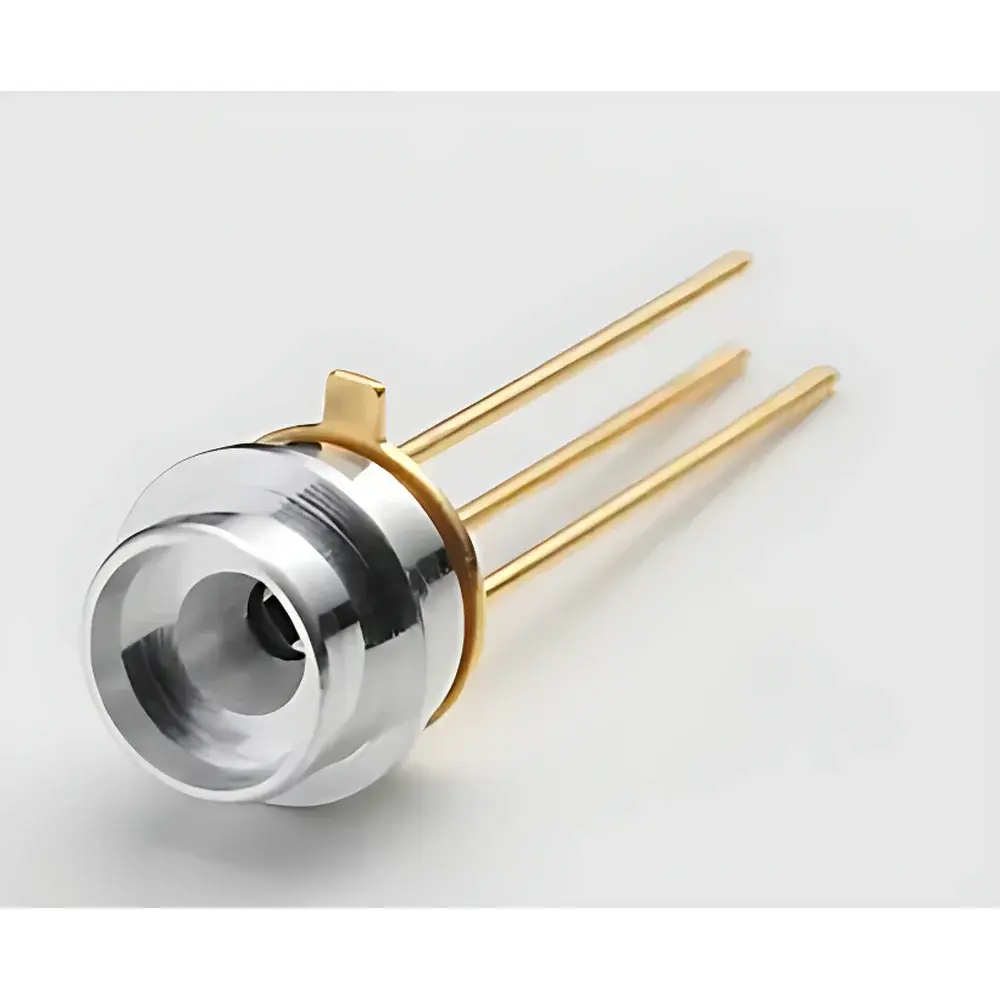
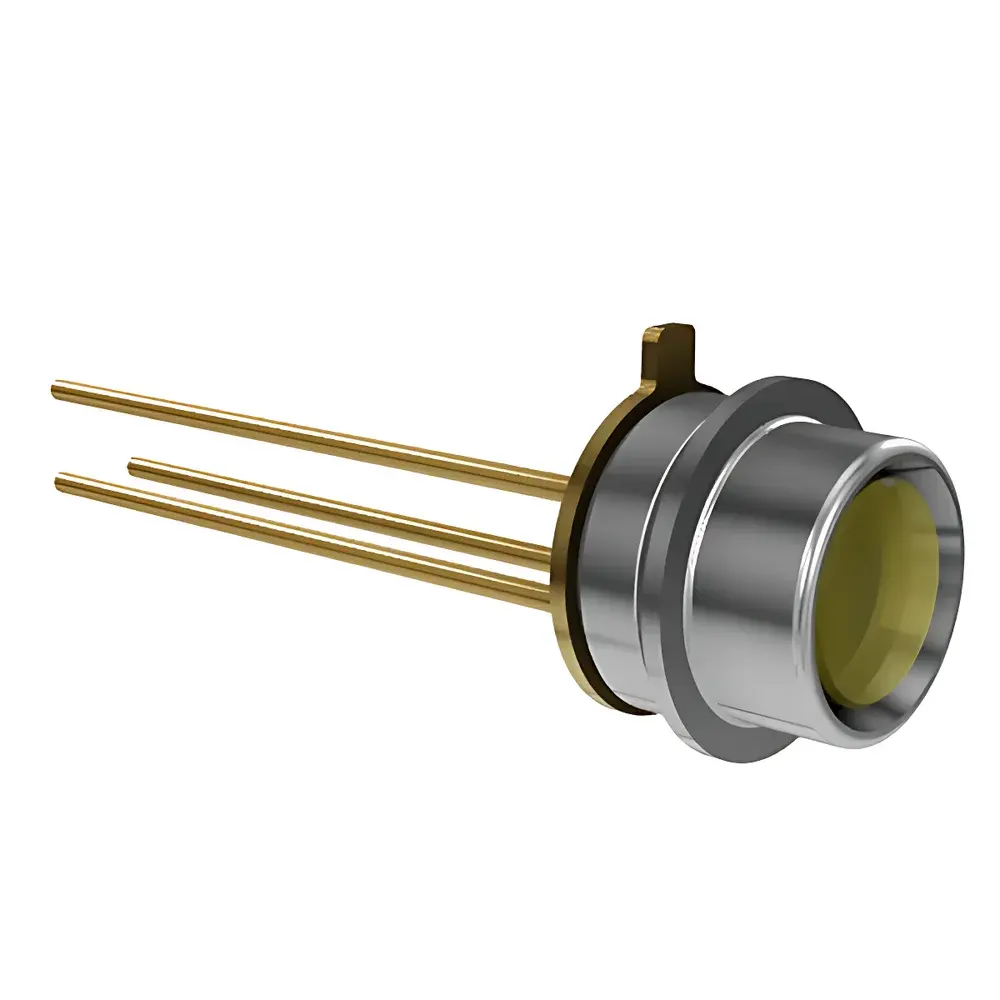
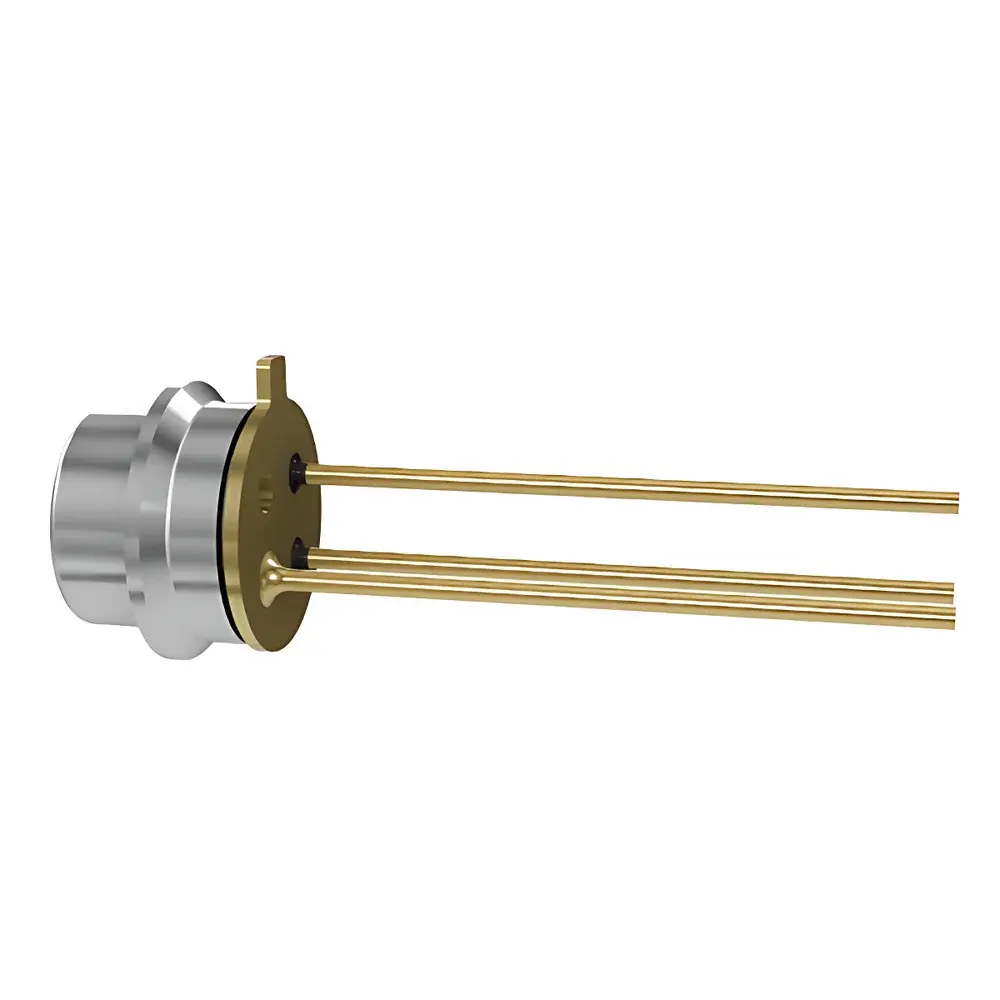
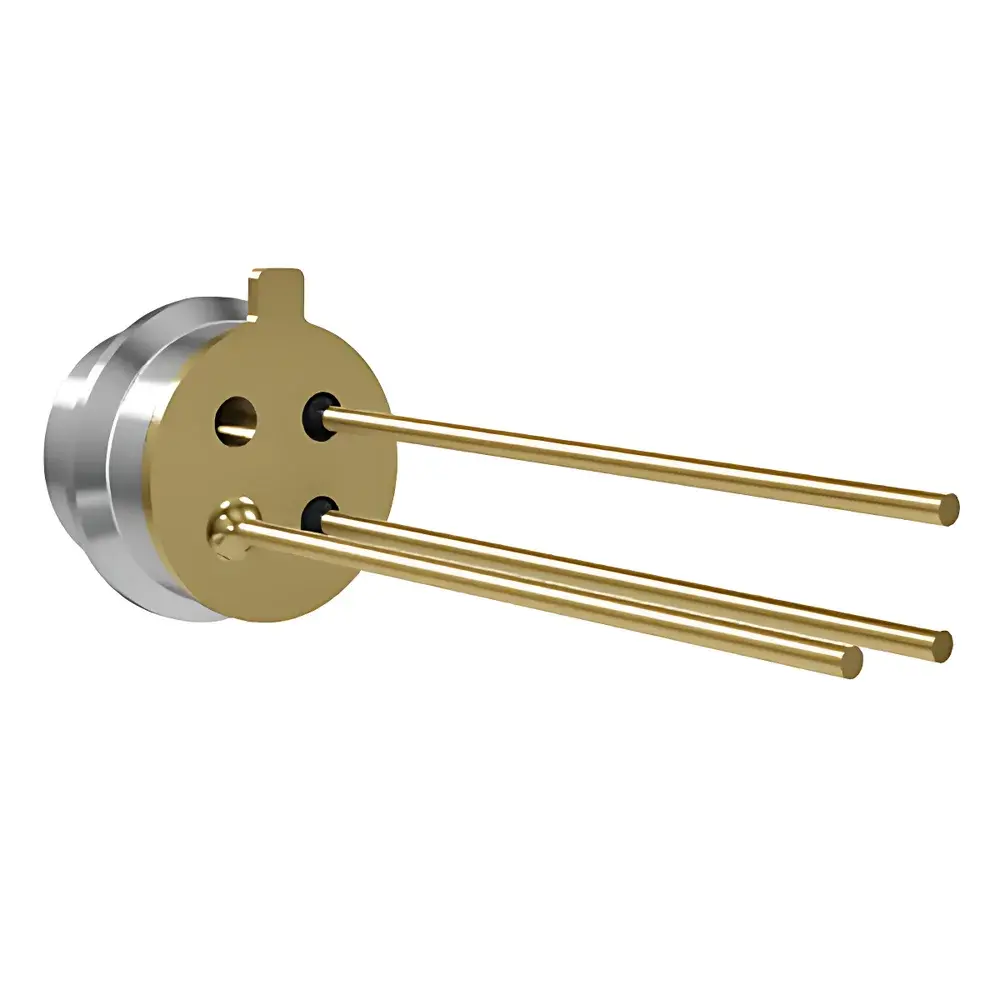
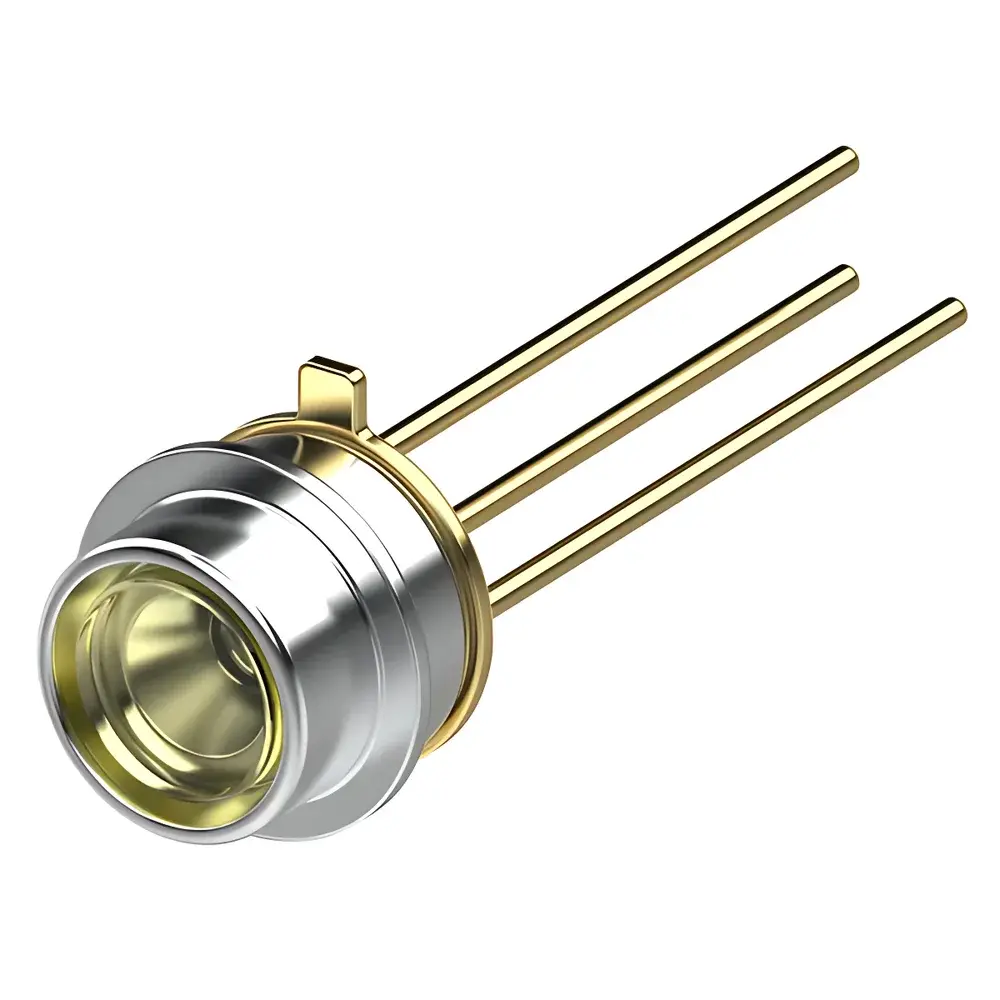
EMIRS Infrared Source with Emission Surface
| Brand | Axetris |
|---|---|
| Origin | Switzerland |
| Model | EMIRS50_AT06V_BR26M |
| Housing | TO-46 metal can |
| Emission Spectrum | 2–14 µm (blackbody-like) |
| Modulation Speed | kHz-range electrical modulation (chopper-free) |
| Emission Surface | Integrated reflective cavity (BR26M variant) |
| Window Options | Sapphire or Barium Fluoride (BaF₂) |
| Power Consumption | Low, typically <150 mW operating power |
| Lifetime | >50,000 hours MTTF |
| MEMS Architecture | Silicon-based micro-hotplate with dielectric emissive coating |
| Compliance | RoHS, REACH, ISO 9001-manufactured |
Overview
The Axetris EMIRS50_AT06V_BR26M is a MEMS-based infrared (IR) thermal source engineered for high-stability, low-power gas sensing applications. Unlike traditional incandescent filaments or ceramic emitters, the EMIRS series leverages a silicon micro-hotplate architecture: a thin-film resistive heater is deposited on a thermally isolated silicon membrane and coated with a broadband dielectric emissive layer. This structure produces near-ideal blackbody radiation across the mid-infrared range (2–14 µm), enabling precise spectral matching with fundamental vibrational absorption bands of target gases. The BR26M variant integrates a built-in reflective cavity—machined directly into the TO-46 package—to collimate and enhance directional emission from the active surface, improving optical coupling efficiency in compact NDIR, PAS, and ATR-FTIR optical paths. Its chopper-free operation relies on direct electrical modulation of the heater current, supporting kHz-range square-wave or sinusoidal drive signals without mechanical wear, thereby eliminating drift sources associated with rotating choppers and enhancing long-term baseline stability.
Key Features
- MEMS-integrated blackbody emitter with calibrated spectral radiance from 2 to 14 µm
- Integrated reflective cavity (BR26M configuration) for enhanced directionality and signal-to-noise ratio
- Chopper-free, electrically modulated output—supports duty-cycle control, frequency tuning (up to 1 kHz), and phase-synchronized detection
- Low steady-state power consumption (<150 mW typical at operational temperature), minimizing thermal load on adjacent optics and electronics
- Hermetically sealed TO-46 metal-can package with optional sapphire or BaF₂ windows—optimized for transmission in key IR bands (e.g., CO₂ at 4.26 µm, CO at 4.67 µm, CH₄ at 3.3 µm)
- Proven lifetime exceeding 50,000 hours under continuous DC or pulsed operation—validated per Telcordia GR-468-CORE reliability standards
- High emissivity (>0.95 across 3–12 µm), low temporal drift (<0.5% RMS over 1,000 h), and excellent unit-to-unit repeatability (±2% radiance variation)
Sample Compatibility & Compliance
The EMIRS50_AT06V_BR26M is compatible with standard TO-46 socketing and reflow soldering processes (JEDEC J-STD-020 compliant). Its emission profile meets ASTM E1421-20 requirements for reference sources in FTIR spectrometer calibration. When integrated into certified gas analyzers, it supports compliance with ISO 21844 (NDIR gas analyzers), EN 14624 (CO/CO₂ indoor air quality monitors), and FDA 21 CFR Part 866.2100 (in vitro diagnostic medical devices). The device is manufactured under ISO 9001:2015 quality management systems; all materials conform to RoHS Directive 2011/65/EU and REACH Regulation (EC) No. 1907/2006. No hazardous substances are used in the MEMS fabrication or encapsulation process.
Software & Data Management
While the EMIRS is a passive emitter requiring external driver circuitry, Axetris provides comprehensive application support including SPICE-compatible thermal-electrical models, I²C-enabled evaluation boards (e.g., LDK-EMIRS-DRV), and LabVIEW-compatible drivers for real-time modulation waveform generation and thermal feedback control. All firmware and driver packages include audit-trail logging and timestamped parameter recording—supporting GLP/GMP-aligned validation workflows. Integration with third-party data acquisition platforms (National Instruments DAQmx, Keysight PathWave) enables synchronized modulation triggering, lock-in amplification, and multi-channel baseline compensation—critical for trace-level gas quantification in regulated environments.
Applications
- Medical Diagnostics: Capnography (CO₂ monitoring), anesthetic agent analysis (sevoflurane, isoflurane), breath ethanol screening, and pulmonary function testing via sidestream NDIR
- Automotive Safety: On-board alcohol interlock systems (ISO 23271), exhaust gas recirculation (EGR) monitoring, and cabin air quality sensors (CO, NOₓ, VOCs)
- HVAC & Building Automation: Demand-controlled ventilation (DCV) using CO₂ setpoint regulation (ASHRAE Standard 62.1), refrigerant leak detection (R-134a, R-1234yf, SF₆)
- Industrial Safety: Fixed and portable combustible gas detectors (CH₄, H₂, C₃H₈), toxic gas monitors (NH₃, SO₂, H₂S), and incubator atmosphere control
- Environmental Monitoring: Ambient air quality stations (PM₂.₅ co-monitoring with NDIR CO₂), landfill gas analysis (CH₄/CO₂ ratio), and agricultural silo safety systems
FAQ
What is the spectral responsivity range of the EMIRS50_AT06V_BR26M?
The emitter delivers blackbody-like radiance from 2 µm to 14 µm, with peak emission near 5 µm at typical operating temperatures (≈600 K).
Can this source be driven with AC or pulsed DC waveforms?
Yes—it supports both sinusoidal and square-wave modulation up to 1 kHz; optimal performance is achieved using constant-current drivers with fast slew-rate capability.
Is the BR26M reflective cavity optimized for a specific detector geometry?
The cavity is designed for collimation toward planar pyroelectric or thermopile detectors positioned 3–8 mm from the window; ray-tracing models are available upon request.
Does Axetris provide calibration certificates traceable to NIST?
Yes—each production lot undergoes spectral radiance calibration at 500 °C and 600 °C; NIST-traceable certificates (with uncertainty budgets) are available as an optional add-on.
How does the MEMS architecture improve long-term stability compared to wire-filament sources?
The monolithic silicon platform eliminates thermal expansion mismatch, filament sag, and oxidation degradation—resulting in <0.1% radiance drift per 1,000 hours under accelerated life testing.




