
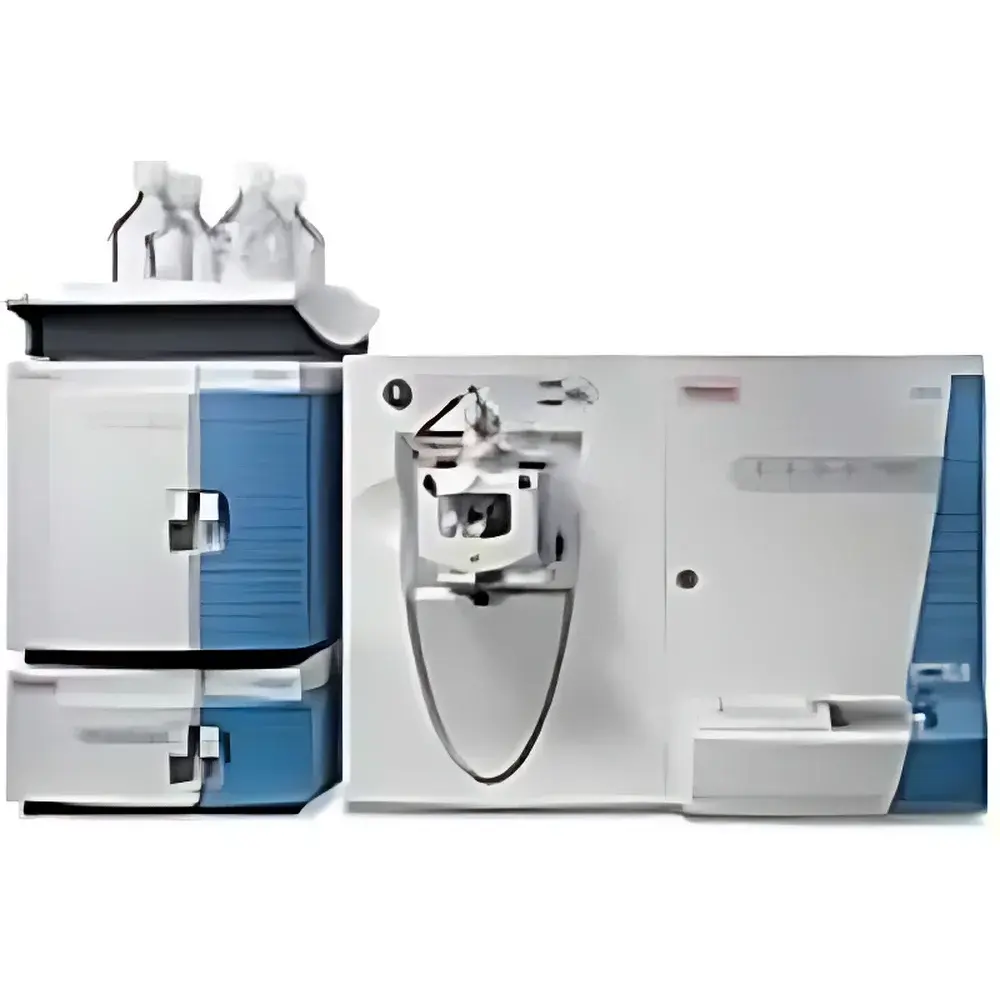
Thermo Scientific LTQ XL Linear Ion Trap Mass Spectrometer
| Brand | Thermo Fisher |
|---|---|
| Origin | USA |
| Manufacturer | Thermo Fisher Scientific |
| Origin Category | Imported |
| Model | LTQ XL |
| Instrument Type | Linear Ion Trap |
| Ionization Sources | ESI, APCI, APPI, NSI |
| Key Dissociation Techniques | CID, PQD, ETD |
| Software | Xcalibur, Mass Frontier, MetWorks |
| Regulatory Compliance | FDA 21 CFR Part 11 ready, GLP/GMP-supportive data acquisition and audit trail |
Overview
The Thermo Scientific LTQ XL Linear Ion Trap Mass Spectrometer is a high-performance, quadrupole-based ion trap system engineered for robust, multi-stage tandem mass spectrometry (MSn) in complex chemical and biological matrices. Operating on the principle of radiofrequency (RF) electric field confinement within a linear geometry, the LTQ XL traps ions radially using a 2D quadrupole field and axially via DC potentials on end lenses—enabling superior ion storage capacity, extended trapping times, and efficient sequential fragmentation (up to MS4). Its architecture supports both conventional collision-induced dissociation (CID) and advanced dissociation modalities—including pulsed Q dissociation (PQD) for enhanced low-mass fragment detection and electron transfer dissociation (ETD), a charge-directed, non-ergodic fragmentation technique uniquely suited for preserving labile post-translational modifications (PTMs) such as phosphorylation, glycosylation, and sulfation. Designed for seamless integration with the Thermo Ultimate 3000 UHPLC system, the LTQ XL delivers high-throughput, data-dependent acquisition (DDA) workflows essential for untargeted metabolomics, bottom-up proteomics, and quantitative bioanalysis.
Key Features
- Linear Ion Trap Architecture: Delivers >10× higher ion storage capacity compared to 3D traps, enabling improved duty cycle, dynamic range, and sensitivity for low-abundance analytes in complex mixtures.
- Multi-Modal Dissociation: Native support for CID, PQD (optimized for m/z < 50 fragments), and ETD—allowing intelligent, method-driven selection of fragmentation pathway based on precursor charge state, m/z, and biological context.
- ETD Module Integration: Fully upgradeable ETD source enables simultaneous or alternating CID/ETD acquisition within a single LC run; maintains peptide backbone cleavage while retaining PTM integrity—critical for phosphoproteome mapping and intact glycopeptide analysis.
- Intelligent Data-Dependent Acquisition (DDA): Real-time, algorithm-driven precursor selection including neutral loss-triggered MS3 (e.g., loss of H3PO4, GlcNAc), retention time alignment, and dynamic exclusion—minimizing redundancy and maximizing structural coverage.
- IonMax Source Platform: Modular, tool-free ESI/APCI/APPI/NSI source interchangeability with XYZ-adjustable probe positioning; optimized for flow rates from 50 nL/min to 1 mL/min without hardware modification.
- Polarity Switching: Sub-second polarity switching (< 500 ms) enables comprehensive detection of both positive- and negative-mode ions in a single chromatographic run—essential for broad-spectrum metabolite profiling.
Sample Compatibility & Compliance
The LTQ XL accommodates diverse sample types—from small-molecule pharmaceuticals and environmental contaminants to intact proteins, peptides, glycans, and lipid species—across liquid chromatography (HPLC/UHPLC), capillary electrophoresis (CE), and direct infusion workflows. Its ion optics and trap control firmware are validated under GLP and GMP-aligned environments. Data acquisition and processing comply with FDA 21 CFR Part 11 requirements when configured with Xcalibur 2.8+ and appropriate system validation packages, including electronic signatures, audit trails, and user-access controls. Method files, raw data (.RAW), and processed results are fully traceable and exportable in open formats (mzXML, mzML) for third-party reprocessing or regulatory submission.
Software & Data Management
Data acquisition and instrument control are managed through Thermo’s Xcalibur platform, supporting real-time spectral visualization, automated calibration, and customizable DDA methods. For structural elucidation, Mass Frontier provides rule-based fragmentation prediction and spectral library matching (NIST, Wiley, custom libraries), while MetWorks enables automated, retention-time– and mass-tolerance–guided metabolite identification—including biotransformation pattern recognition (e.g., oxidation, dealkylation, conjugation). All software modules support batch processing, statistical filtering (e.g., fold-change, p-value), and integration with pathway analysis tools (e.g., Ingenuity Pathway Analysis, MetaCore). Raw data files are stored with embedded metadata (instrument parameters, sequence logs, user annotations), ensuring full reproducibility and audit readiness.
Applications
- Proteomics & PTM Analysis: ETD-enabled sequencing of highly charged peptides improves sequence coverage and localizes labile modifications—supporting large-scale phosphoproteomic studies and characterization of histone tail modifications.
- Metabolomics & Biomarker Discovery: CNL-triggered MS3 workflows enable class-selective detection of glucuronides, sulfates, and acyl-glycines in biofluids; combined with MetWorks, facilitates rapid annotation of phase II metabolites in ADME studies.
- Pharmaceutical Development: Quantitative MRM and qualitative HRAM hybrid workflows (when coupled to Orbitrap systems) support impurity profiling, degradation product identification, and extractable/leachable analysis per ICH Q5A/Q5C guidelines.
- Clinical & Forensic Toxicology: High-specificity MS2/MS3 transitions reduce matrix interference in urine/blood screening; ETD extends detection of synthetic opioids and novel psychoactive substances with unstable adducts.
- Glycomics & Lipidomics: PQD enhances cross-ring cleavages in oligosaccharide MS2; ETD preserves sialic acid linkages—enabling linkage- and isomer-resolved glycan mapping.
FAQ
What distinguishes the LTQ XL from earlier LTQ models?
The LTQ XL features enhanced RF stability, improved vacuum conductance, upgraded electronics for faster scan speeds, and native firmware support for ETD—eliminating the need for external voltage controllers or offline data merging.
Can the LTQ XL operate as a standalone mass spectrometer without LC coupling?
Yes—it supports direct infusion, MALDI (with optional source), and CE interfaces; all acquisition modes (full scan, SIM, DDA, targeted MSn) remain fully functional.
Is ETD compatible with all peptide charge states?
ETD efficiency is optimal for doubly and triply protonated peptides (z ≥ 2); performance declines below z = 2 due to reduced electron transfer cross-sections—CID remains recommended for singly charged precursors.
How does the LTQ XL handle co-eluting isobaric compounds?
Its high-resolution precursor isolation (0.2–0.4 Da window), fast polarity switching, and MS3 capability enable selective fragmentation of individual components even in partially resolved chromatographic peaks.
What level of IT infrastructure is required for MetWorks deployment?
MetWorks operates on Windows Server 2016+ with ≥32 GB RAM and SSD storage; database indexing scales linearly with project size—recommended for centralized deployment in core facilities with ≥10 concurrent users.




