
Aquameter AP500-0 Portable Chlorophyll-a and Phycocyanin (Cyanobacteria) Water Quality Analyzer
| Origin | UK |
|---|---|
| Manufacturer Type | Authorized Distributor |
| Origin Category | Imported |
| Model | AP500-0 |
| Instrument Type | Portable/Handheld Water Quality Analyzer |
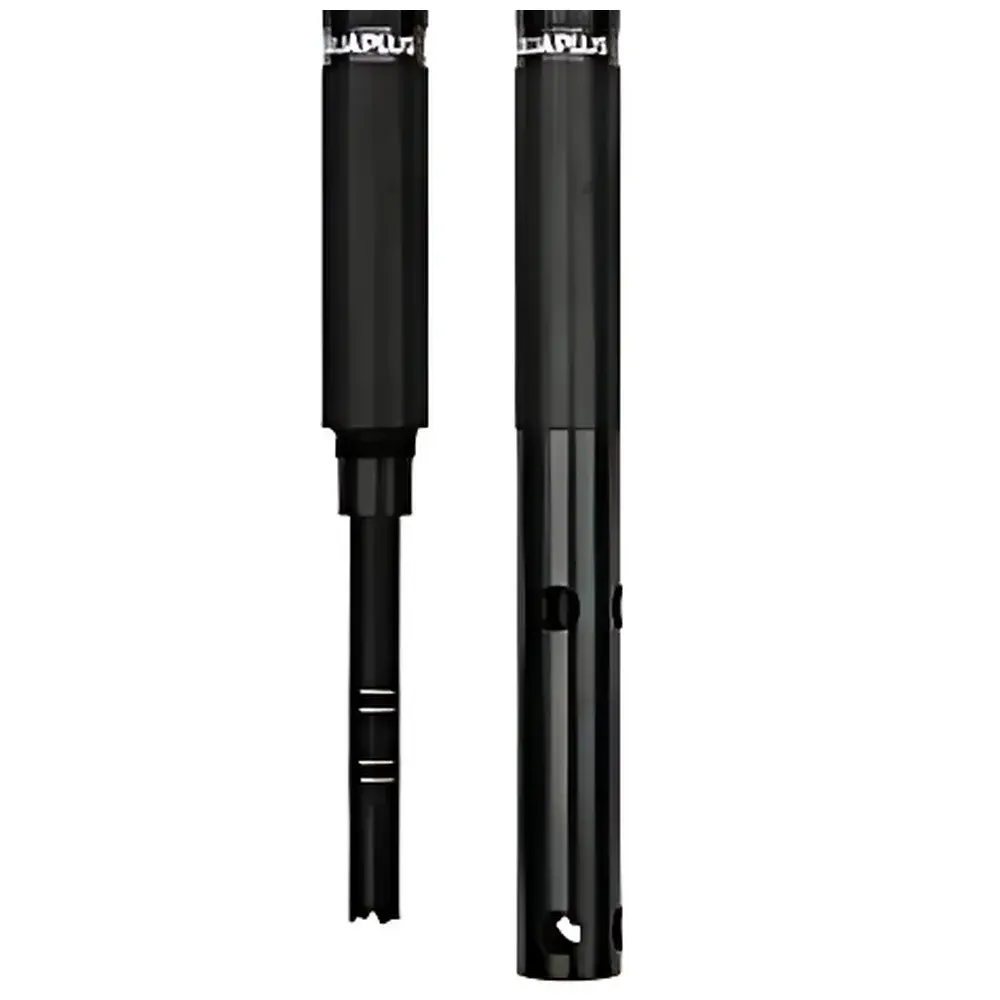
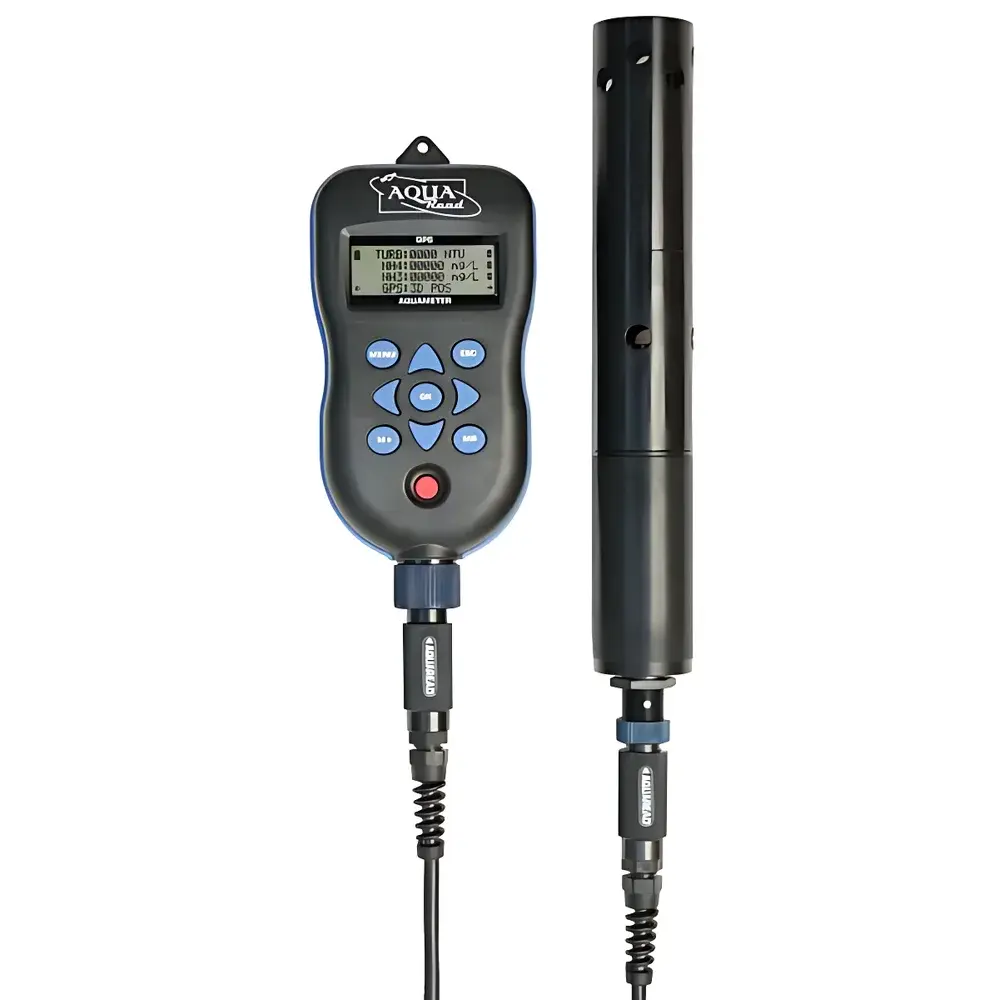
| Sensor Configuration | Aquameter Readout Unit + AP-LITE Sensor Housing + LITE-BGAPE Phycoerythrin Sensor |
| Sensor Housing Dimensions | Ø24 mm × 250 mm |
| Phycoerythrin Measurement Range | 0–500 µg/L |
| Resolution | 0.1 µg/L |
| Repeatability | ±2% of reading |
Overview
The Aquameter AP500-0 is a field-deployable, optical fluorescence-based analyzer engineered for rapid, in-situ quantification of phycoerythrin—a key fluorescent phycobiliprotein predominantly expressed by cyanobacteria (blue-green algae) in freshwater systems. Unlike chlorophyll-a assays that require extraction and spectrophotometric or fluorometric lab analysis, the AP500-0 leverages real-time, excitation-emission optimized fluorescence detection at 495 nm (excitation) and 575 nm (emission) to deliver direct, interference-minimized estimates of cyanobacterial biomass. This principle enables high temporal resolution monitoring during algal bloom events without sample preservation or transport delays. The system is not a chlorophyll-a analyzer per se; rather, it targets phycoerythrin as a taxonomically specific biomarker for phycoerythrin-rich cyanobacterial genera—including Microcystis, Anabaena, and Planktothrix—thereby offering superior specificity over broadband chlorophyll fluorescence methods in mixed phytoplankton communities.
Key Features
- Integrated handheld architecture: Combines the Aquameter digital readout unit (with backlit LCD, onboard memory for >10,000 records, and Bluetooth 5.0 connectivity) with the AP-LITE sensor housing and LITE-BGAPE optical sensor in a single operational unit.
- Optimized optical path: AP-LITE housing features a precision-machined stainless-steel body with a sapphire optical window, designed for minimal biofouling and consistent light transmission across turbidities up to 100 NTU.
- Field-calibrated fluorescence detection: LITE-BGAPE sensor employs dual-wavelength compensation (reference channel at 650 nm) to correct for background organic fluorescence, turbidity scattering, and LED intensity drift—ensuring robustness in variable water matrices.
- GPS-enabled georeferencing: All measurements are automatically tagged with UTC timestamp and WGS84 coordinates via integrated GPS module, supporting spatial mapping of bloom dynamics in reservoirs, lakes, and slow-moving rivers.
- Ruggedized design: IP67-rated enclosure, operating temperature range of 0–40 °C, and battery life exceeding 12 hours on a single charge of the removable Li-ion pack.
Sample Compatibility & Compliance
The AP500-0 is validated for use in natural freshwater environments including eutrophic lakes, drinking water source reservoirs, irrigation canals, and wastewater-impacted streams. It is incompatible with marine or brackish waters due to salinity-induced quenching of phycoerythrin fluorescence and calibration drift beyond 5 ppt conductivity. The instrument complies with ISO 10260:2021 (Water quality — Guidance on fluorescence-based cyanobacterial monitoring), supports GLP-aligned data integrity through audit-trail-enabled firmware (user login, parameter change logs, and measurement metadata), and meets EU Directive 2000/60/EC (Water Framework Directive) Annex V requirements for routine phytoplankton surveillance. Calibration verification follows ASTM D8083-22 (Standard Practice for Field Fluorometric Determination of Phycoerythrin in Freshwater).
Software & Data Management
Data export is supported via USB-C and wireless Bluetooth to the Aquameter Connect desktop application (Windows/macOS) and mobile companion app (iOS/Android). The software provides batch calibration management, time-series visualization with configurable smoothing algorithms, automated outlier flagging based on statistical deviation thresholds, and export to CSV, Excel, or EPA-compatible .WQX formats. All raw fluorescence intensity values (in mV), compensated concentration outputs (µg/L), GPS coordinates, and environmental metadata (temperature, depth, turbidity if co-measured) are stored with cryptographic hash integrity. The system supports 21 CFR Part 11-compliant electronic signatures when deployed under regulated water utility QA/QC protocols.
Applications
- Early warning monitoring of cyanobacterial harmful algal blooms (cyanoHABs) in public water supply reservoirs.
- Regulatory compliance sampling for state and provincial agencies conducting routine lake health assessments.
- Research-grade longitudinal studies tracking seasonal succession of cyanobacterial taxa in response to nutrient loading and climate variables.
- On-site verification of treatment plant influent/effluent for cyanotoxin risk prioritization prior to LC-MS/MS analysis.
- Integration into autonomous buoy networks via optional RS-485 interface and Modbus RTU protocol support.
FAQ
Does the AP500-0 measure chlorophyll-a directly?
No. It measures phycoerythrin fluorescence as a proxy for cyanobacterial abundance. Chlorophyll-a quantification requires separate instrumentation (e.g., HPLC or benchtop fluorometry with acidification).
Can it distinguish between different cyanobacterial species?
Not at the species level. It detects phycoerythrin-containing strains but does not resolve taxonomic identity. Species-level identification requires microscopy or molecular methods (qPCR, metabarcoding).
Is field calibration required before each use?
A zero-point calibration using particle-free deionized water is recommended before deployment; full multi-point calibration is performed annually or after sensor servicing using NIST-traceable phycoerythrin standards.
What maintenance is required for long-term reliability?
The sapphire window should be cleaned with ethanol and lint-free wipes after each deployment; the sensor housing O-rings must be inspected and lubricated quarterly; firmware updates are distributed biannually via Aquameter’s secure portal.
Related Products







