
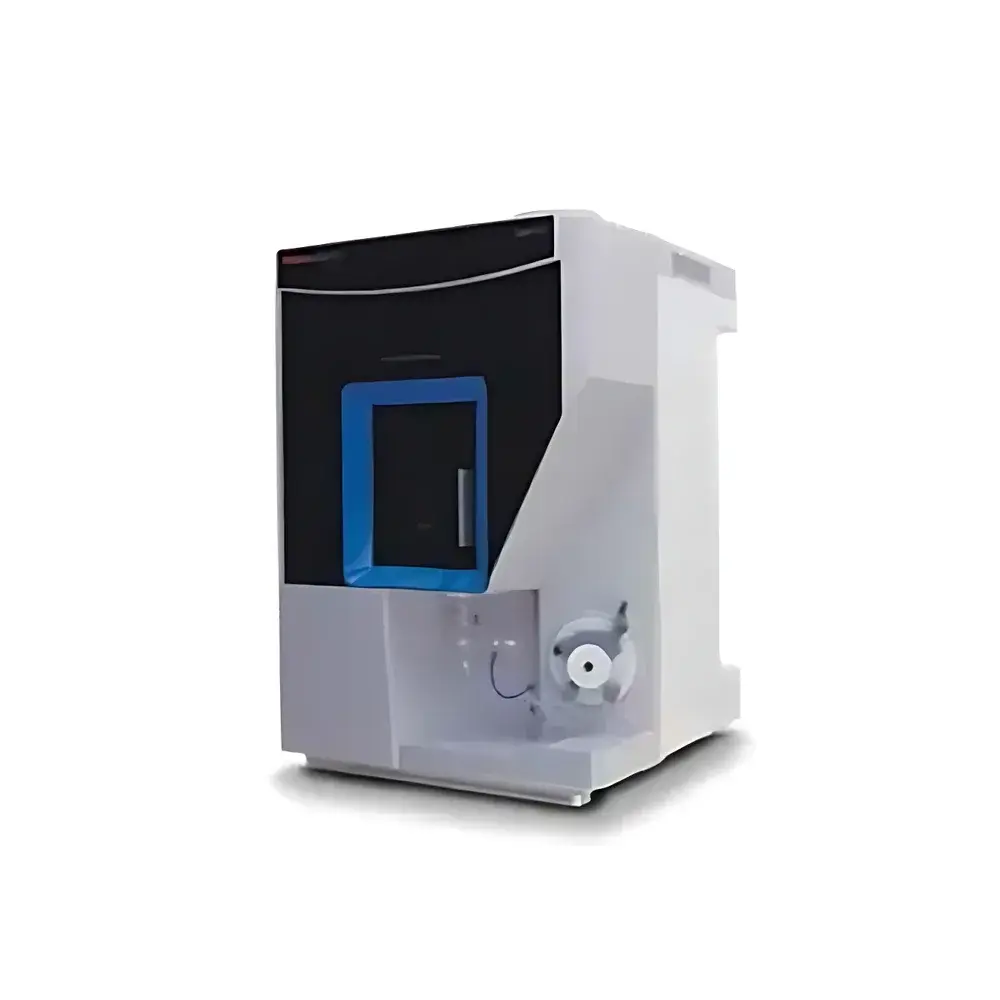
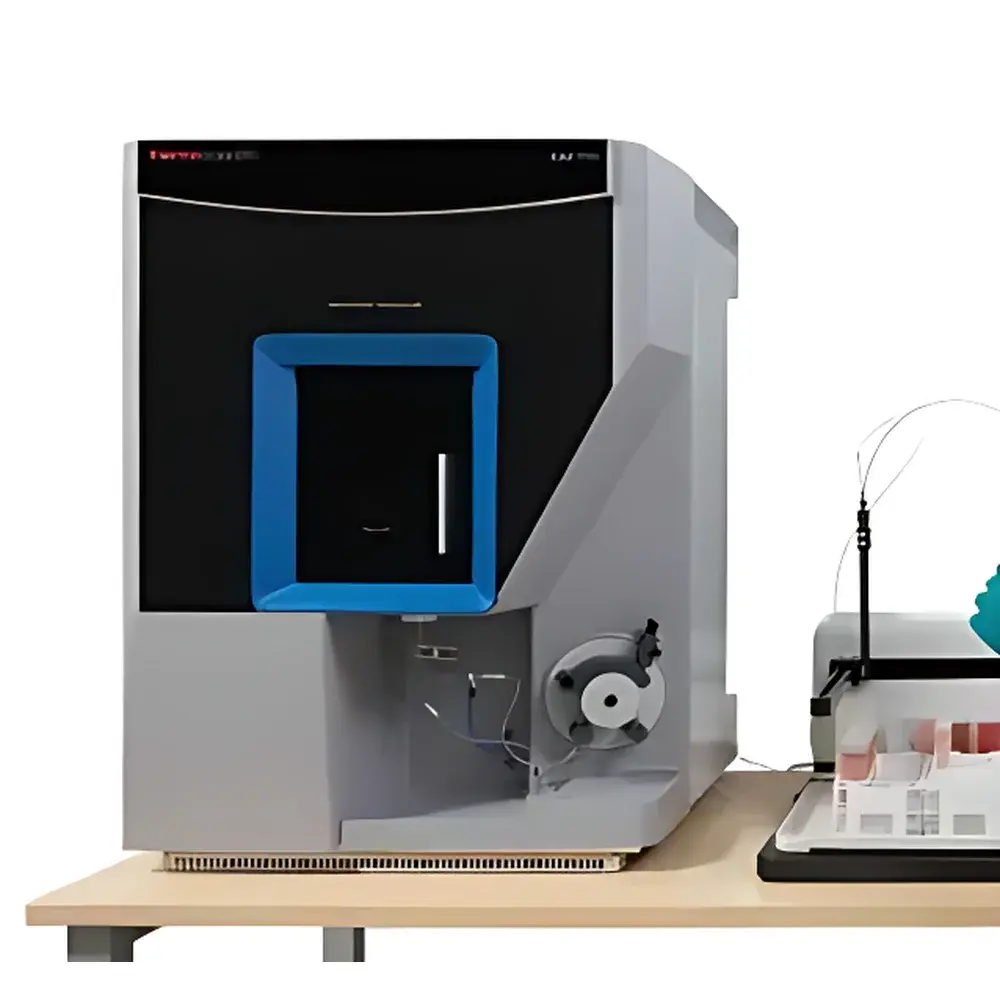
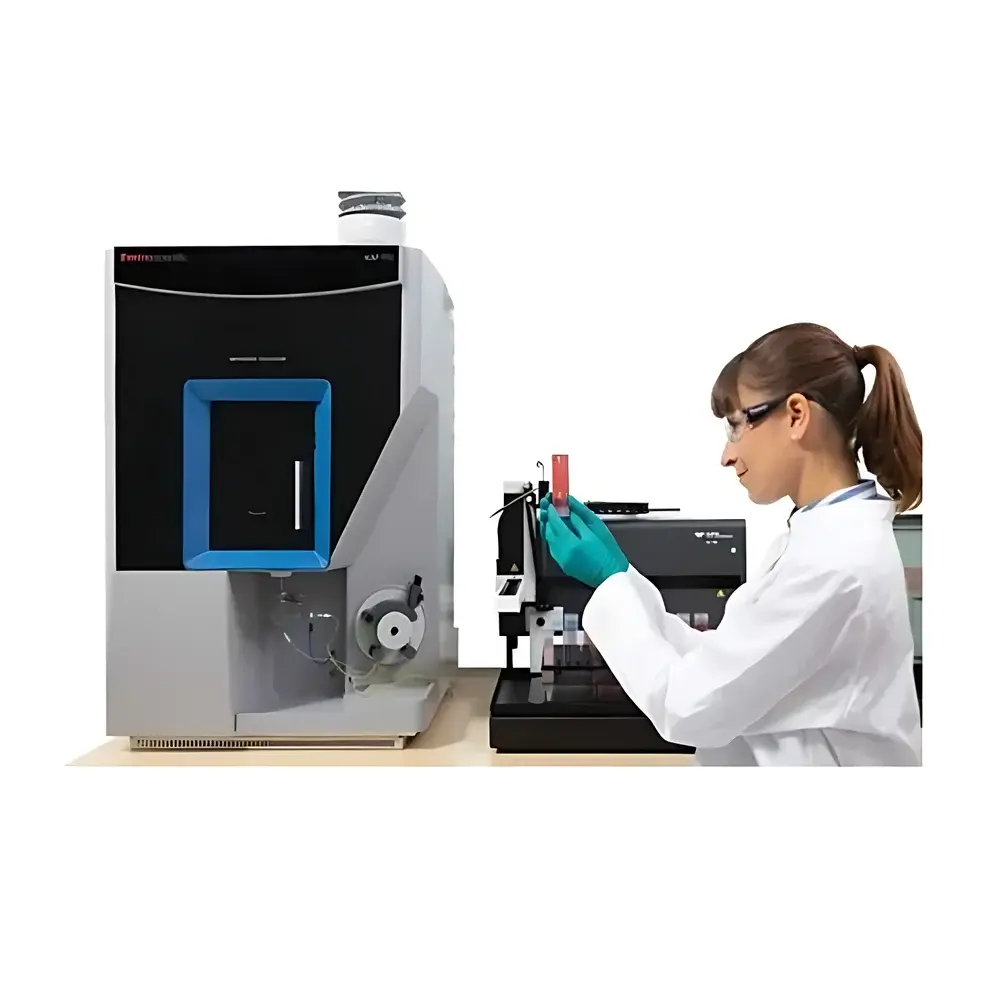
Thermo Fisher iCAP PRO Series Inductively Coupled Plasma Optical Emission Spectrometer
| Brand | Thermo Fisher |
|---|---|
| Origin | Germany |
| Manufacturer | Yes |
| Origin Category | Imported |
| Model | iCAP PRO |
| Instrument Type | Full-Spectrum Direct-Reading |
| Detection Limit | Not Specified |
| Precision (RSD) | Not Specified |
| Stability | Not Specified |
| Wavelength Range | Not Specified |
| Optical Resolution | Not Specified |
Overview
The Thermo Fisher iCAP PRO Series is a state-of-the-art, full-spectrum direct-reading inductively coupled plasma optical emission spectrometer (ICP-OES) engineered for high-throughput, multi-element trace metal analysis in demanding laboratory environments. It operates on the fundamental principle of plasma atomization and excitation: liquid samples are nebulized into fine aerosols, transported into a high-temperature argon plasma (~6,000–10,000 K), where elements are desolvated, atomized, and electronically excited. Emitted photons from returning electrons are dispersed by a high-fidelity optical system and simultaneously detected across the UV–Vis spectral range (typically 130–800 nm) using a charge-injection device (CID) detector. Designed and manufactured in Germany, the iCAP PRO integrates robust plasma hardware architecture with thermally stabilized optics and intelligent software to deliver reproducible quantification for environmental, pharmaceutical, geochemical, and industrial quality control applications—particularly where complex matrices, low-concentration analytes, or regulatory compliance are critical.
Key Features
- Vertical torch configuration with high-matrix tolerance and integrated POP (Plasma Observation Port) quartz window for real-time plasma monitoring and simplified maintenance
- Aerodynamically optimized torch chamber with corrosion-resistant silicon nitride–alumina purge interface, enhancing long-term operational integrity in aggressive acid digestates
- Plug-and-play sample introduction system enabling single-hand installation and removal of nebulizers, spray chambers, and torch components—reducing downtime and operator dependency
- Compact, thermally stabilized Czerny–Turner optical bench delivering sub-7 pm resolution at 200 nm, supporting accurate deconvolution of spectral overlaps in multi-element analysis
- 4-million-pixel CID detector with 2 MHz readout speed, providing >9-decade linear dynamic range and improved signal-to-noise ratio without saturation or extended integration times
- eUV™ ultraviolet enhancement mode—optimized grating coating and detector quantum efficiency boost sensitivity for challenging UV-emitting elements including Al, P, S, As, and Se
- Mass flow-controlled gas delivery system with precision thermal mass flow meters ensuring repeatable plasma conditions across analytical batches
Sample Compatibility & Compliance
The iCAP PRO accommodates aqueous solutions, acid-digested environmental and biological samples (e.g., EPA Method 200.7/6020B), organic solvents (with optional oxygen addition), and high-salt matrices (up to 25% w/v TDS) via its vertical torch design and robust interface. It supports both axial and radial viewing configurations through software-selectable plasma observation geometry. The instrument meets essential regulatory requirements for GLP and GMP environments: Qtegra IS software is compliant with 21 CFR Part 11 for electronic records and signatures, including audit trail logging, user role-based access control, and secure data archiving. It aligns with ISO/IEC 17025 method validation expectations and supports ASTM D5191, ISO 11885, and USP / elemental impurities testing workflows.
Software & Data Management
Qtegra Intelligent Scientific Data Software (ISDS) v3.5+ serves as the unified platform for instrument control, method development, calibration, and reporting. Its Qt-based GUI features guided workflows for novice users—including automated plasma ignition, wavelength optimization, and internal standard selection—while retaining advanced scripting (via Python API) for custom automation. Real-time spectral visualization enables immediate interference assessment; peak fitting algorithms support background correction and line selection for complex spectra. All raw spectral data, acquisition parameters, and processing history are stored in vendor-neutral .qdb format with embedded metadata. Integrated LIMS connectivity (via ASTM E1384 or HL7) facilitates seamless data transfer to enterprise systems, and batch reporting templates conform to ISO 17025-compliant certificate of analysis (CoA) formats.
Applications
- Environmental laboratories performing multi-element analysis of drinking water, wastewater, soils, and sediments per EPA and EU WFD directives
- Pharmaceutical QC labs conducting elemental impurity screening in drug substances and products according to ICH Q3D guidelines
- Metallurgical and mining R&D for rapid alloy composition verification and trace contaminant profiling in ores and concentrates
- Food safety testing for toxic elements (Pb, Cd, As, Hg) and nutritional minerals (Ca, Mg, Fe, Zn) in fortified foods and infant formula
- Academic and government research facilities requiring high-precision, low-detection-limit analysis of geological reference materials and nanomaterial leachates
FAQ
Does the iCAP PRO support both axial and radial plasma viewing modes?
Yes—software-selectable viewing geometry allows users to optimize sensitivity (axial) or matrix tolerance (radial) without hardware reconfiguration.
What sample introduction options are available?
Standard configuration includes glass concentric nebulizer and cyclonic spray chamber; optional accessories include microflow nebulizers, desolvation systems, laser ablation modules, and hydride generation interfaces.
Is remote diagnostics and service support enabled?
Yes—the instrument supports secure remote connection via Thermo Fisher’s ServiceLink platform for predictive maintenance alerts, firmware updates, and expert-assisted troubleshooting.
Can the iCAP PRO be integrated into an automated sample preparation workflow?
It is compatible with third-party autosamplers (e.g., Cetac ASX-560, Elemental Scientific NEXIS) and supports TTL and Ethernet-based trigger protocols for synchronized operation.
What is the expected lifetime of the ceramic torch under routine operation?
With proper maintenance and use of recommended cooling gas flows, the monolithic ceramic torch typically exceeds 1,000 hours of operational life—even in high-TDS applications.



