
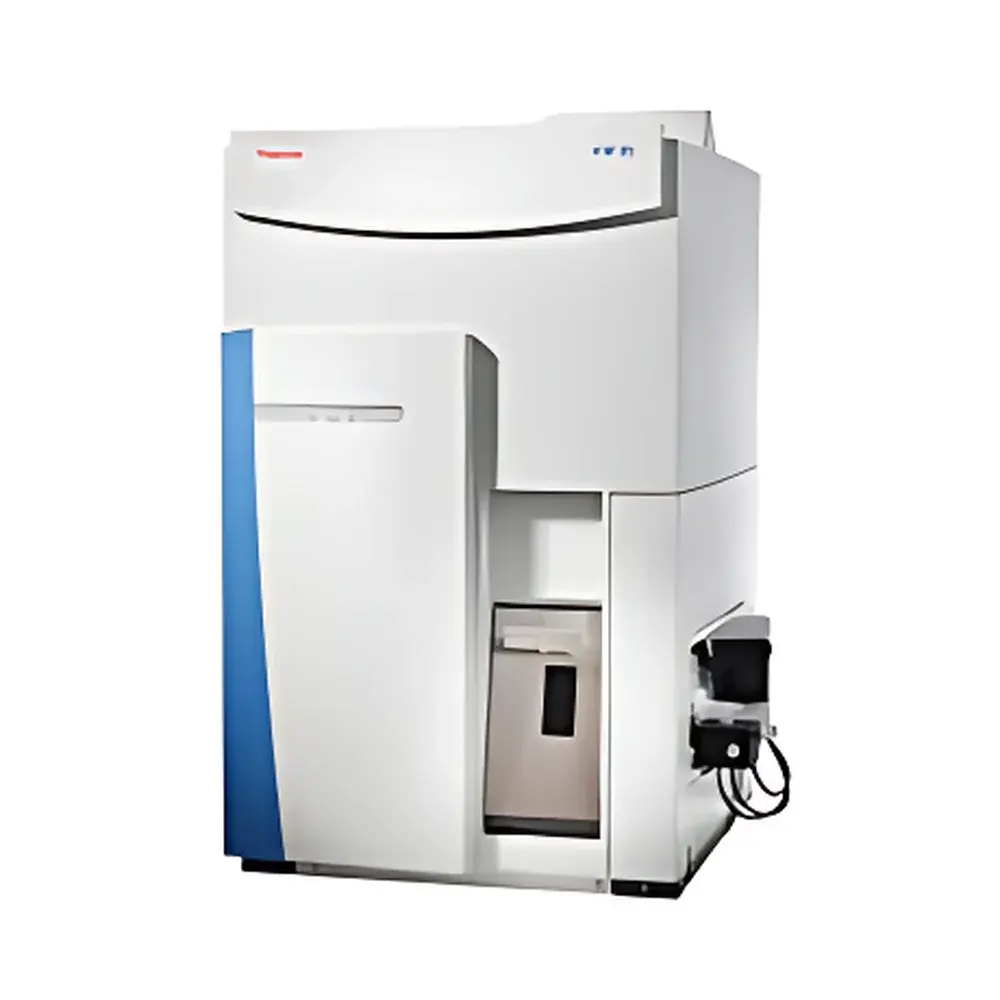
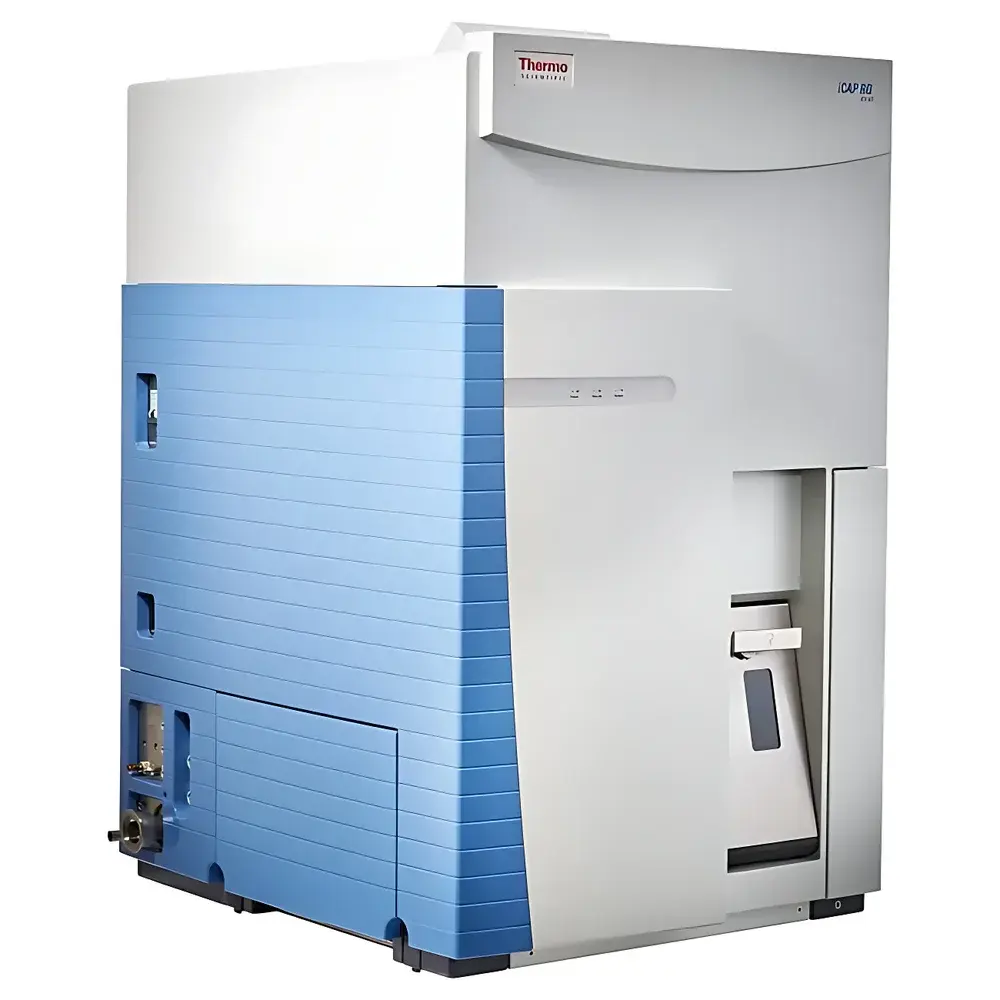
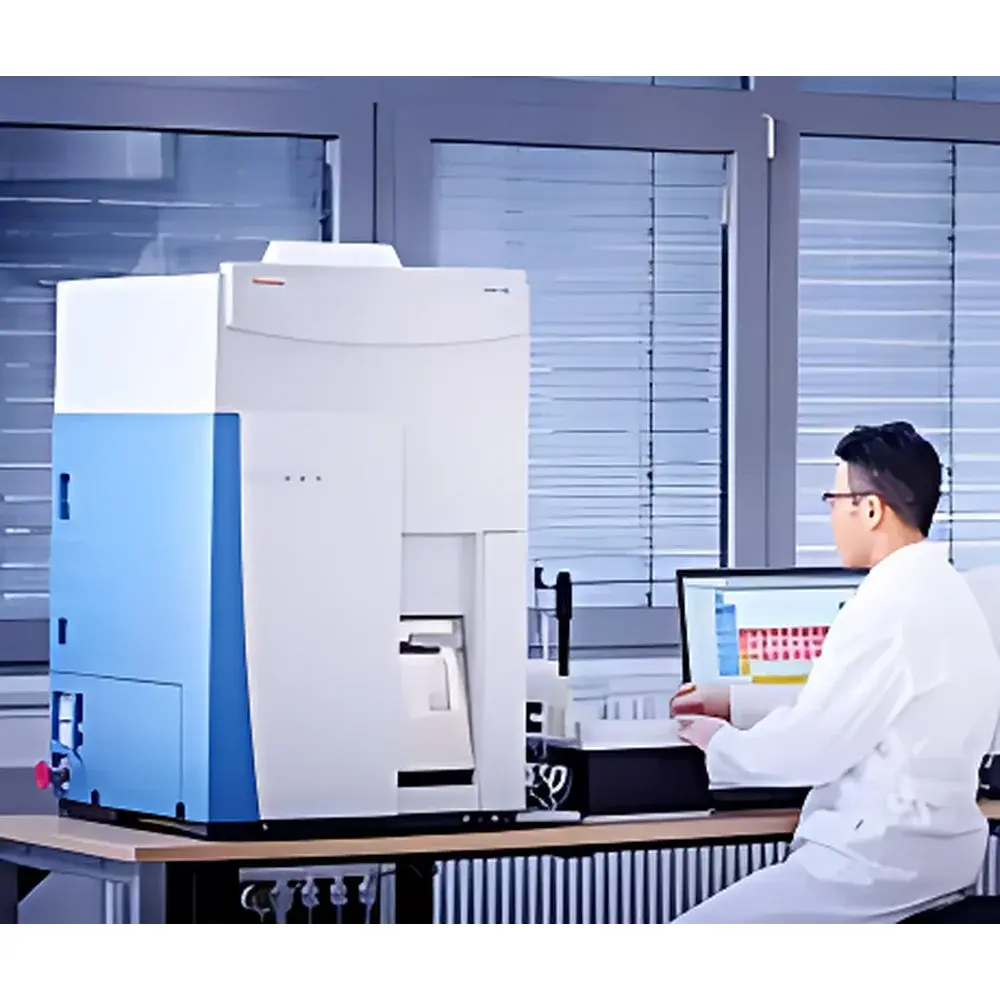
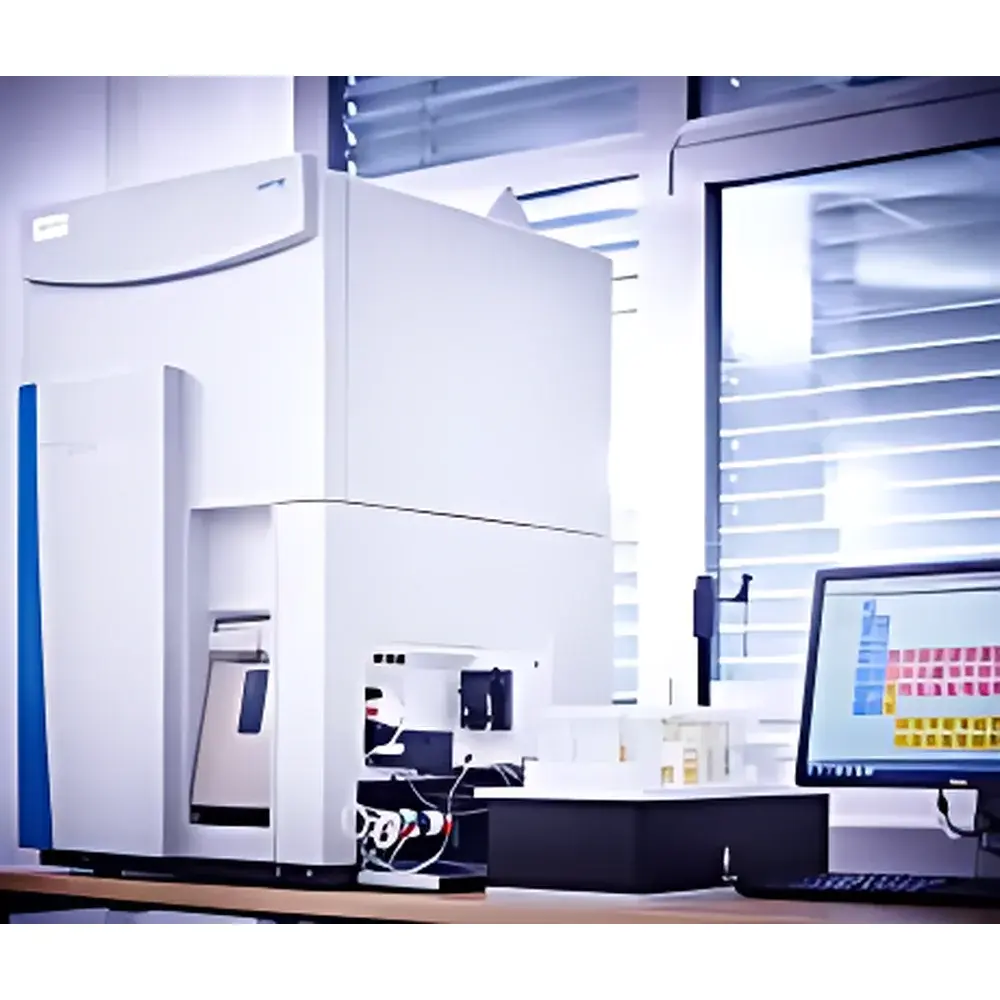
Thermo Scientific iCAP RQ Inductively Coupled Plasma Mass Spectrometer
| Brand | Thermo Fisher |
|---|---|
| Origin | Germany |
| Manufacturer | Thermo Fisher Scientific |
| Origin Category | Imported |
| Model | iCAP RQ |
| Instrument Type | Quadrupole ICP-MS |
| Pricing | Upon Request |
Overview
The Thermo Scientific iCAP RQ Inductively Coupled Plasma Mass Spectrometer (ICP-MS) is a high-throughput, research-grade quadrupole-based elemental analysis platform engineered for precision, robustness, and operational efficiency in demanding laboratory environments. Operating on the fundamental principle of inductively coupled plasma ionization followed by mass separation via a radiofrequency-driven quadrupole mass analyzer, the iCAP RQ delivers quantitative multi-element analysis at trace to ultra-trace concentrations (sub-pg/L to ng/L range). Its design centers on minimizing polyatomic interferences—particularly those arising from argon-based species (e.g., 40Ar16O+, 40Ar1H+)—through integrated collision/reaction cell technology and kinetic energy discrimination (KED) mode using helium gas. This enables reliable detection of challenging low-mass elements such as Li, Be, and B at parts-per-quadrillion (ppt) levels, even in high-salt or organic matrices.
Key Features
- Helium-mode kinetic energy discrimination (KED) for effective removal of polyatomic interferences across the full mass range
- High-efficiency, solid-state RF generator with enhanced ignition reliability and thermal stability for consistent plasma operation
- Optimized interface design with high-matrix tolerance—enables direct analysis of seawater, 100% acetonitrile, and other complex organic or saline samples without manual dilution
- Low-frequency driven quadrupole mass filter coupled with ultra-high vacuum system (<1×10⁻⁷ mbar) for improved sensitivity and mass resolution
- Modular collision/reaction cell supporting multiple gases (He, H2, NH3, O2) and interference elimination modes (collision, reaction, and hybrid)
- One-touch startup, automated tuning, and self-diagnostic routines reducing operator dependency and method development time
- Integrated thermal equilibrium management ensuring long-term signal stability and reproducibility over extended acquisition periods
Sample Compatibility & Compliance
The iCAP RQ accommodates a broad spectrum of sample types—including aqueous standards, environmental digests, geological leachates, biological fluids, pharmaceutical excipients, and high-organic solvents—without requiring extensive sample preparation. Its robust interface components resist salt deposition and carbon buildup, extending uninterrupted run times and minimizing maintenance intervals. From a regulatory standpoint, the instrument meets essential requirements for GLP and GMP-compliant laboratories. It supports audit-ready workflows per FDA 21 CFR Part 11 when used with Qtegra ISDS software, including electronic signatures, secure user access control, and immutable audit trails for all method changes, calibration events, and data processing steps. Method validation aligns with ISO/IEC 17025, EPA Methods 200.8 and 6020B, and USP / for elemental impurities testing.
Software & Data Management
Controlled exclusively by Thermo Scientific Qtegra ISDS software, the iCAP RQ provides an intuitive, workflow-driven interface optimized for both routine QA/QC labs and advanced research applications. The software features automated calibration curve generation, intelligent sample dilution logic for out-of-range or high-matrix samples, and single-standard-based full-element calibration. Data integrity safeguards include role-based permissions, encrypted database storage, and LIMS integration via ASTM E1578-compliant drivers. Reporting modules support customizable templates compliant with internal SOPs or external client specifications. All raw data, processed results, and metadata are stored in a structured, searchable format, enabling full traceability from sample injection to final report export (PDF, CSV, Excel).
Applications
- Environmental monitoring: Quantification of heavy metals and trace elements in seawater, wastewater, soil digests, and airborne particulates
- Geochemical analysis: Isotope ratio screening and elemental fingerprinting of rocks, sediments, and mineral concentrates
- Pharmaceutical quality control: Elemental impurity testing per ICH Q3D guidelines for APIs and drug products
- Clinical and biomonitoring research: Multi-element profiling in serum, urine, and tissue homogenates
- Materials science: Impurity screening in battery cathode materials, semiconductors, and catalyst formulations
- Nuclear safeguards: Uranium and plutonium isotopic ratio measurements in fuel cycle samples
FAQ
Does the iCAP RQ support isotope ratio measurements?
Yes—while optimized for high-precision concentration analysis, the iCAP RQ delivers stable, reproducible isotope signals suitable for semi-quantitative isotope ratio screening and internal standard correction. For high-precision isotope ratio analysis (e.g., δ87Sr), a magnetic sector or multi-collector ICP-MS is recommended.
Can it analyze 100% organic solvents directly?
Yes—the instrument’s robust plasma torch, modified sampler cone geometry, and active cooling system allow stable, long-duration operation with pure acetonitrile, methanol, or other high-carbon solvents without torch clogging or signal drift.
Is remote monitoring and control supported?
Yes—Qtegra ISDS includes secure remote desktop access and real-time status dashboards compatible with enterprise IT infrastructure and TLS-encrypted network protocols.
What vacuum pump configuration does the iCAP RQ use?
It employs a dual-stage turbomolecular pumping system backed by a dry scroll pump, achieving base pressures below 1×10⁻⁷ mbar in the mass analyzer region to ensure optimal ion transmission and detector longevity.
How often does the interface require cleaning?
Under typical high-matrix operation (e.g., seawater analysis), routine interface cleaning is required every 8–12 hours of continuous use; however, optional high-matrix kits extend this interval to >24 hours without performance degradation.






