
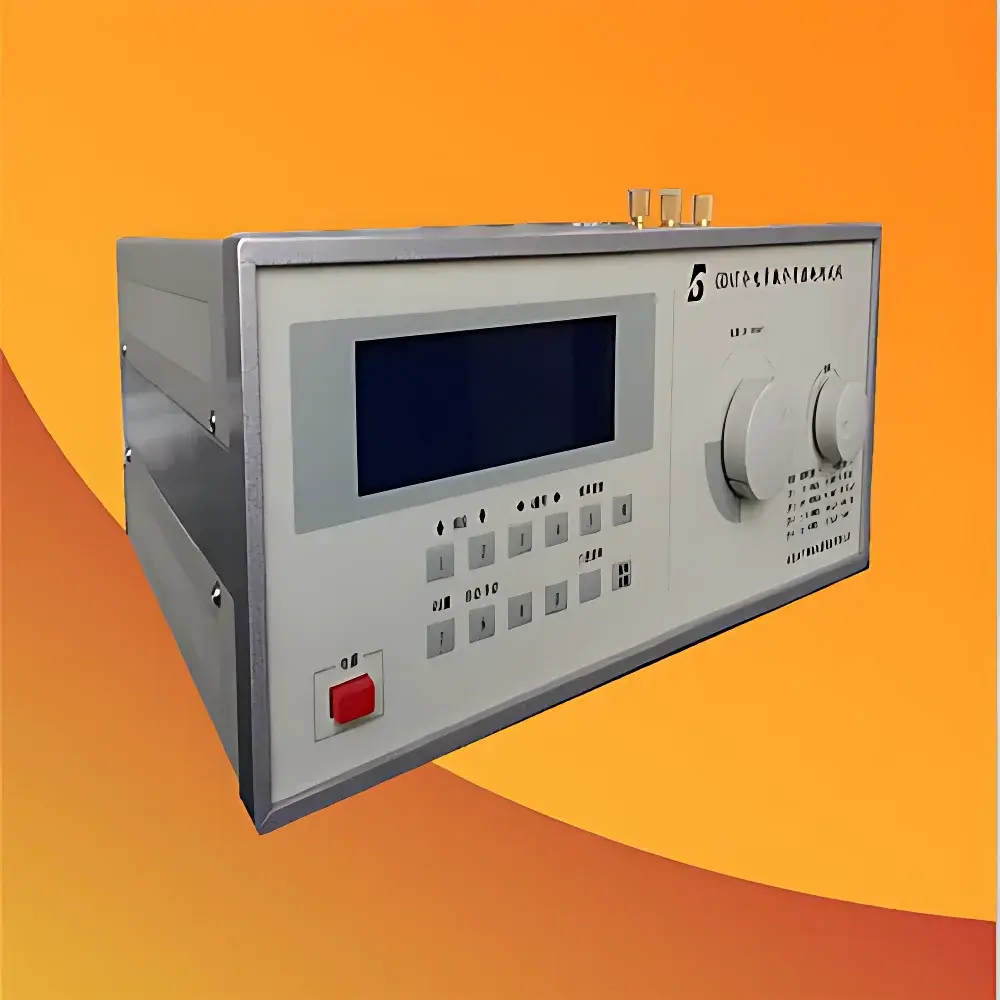
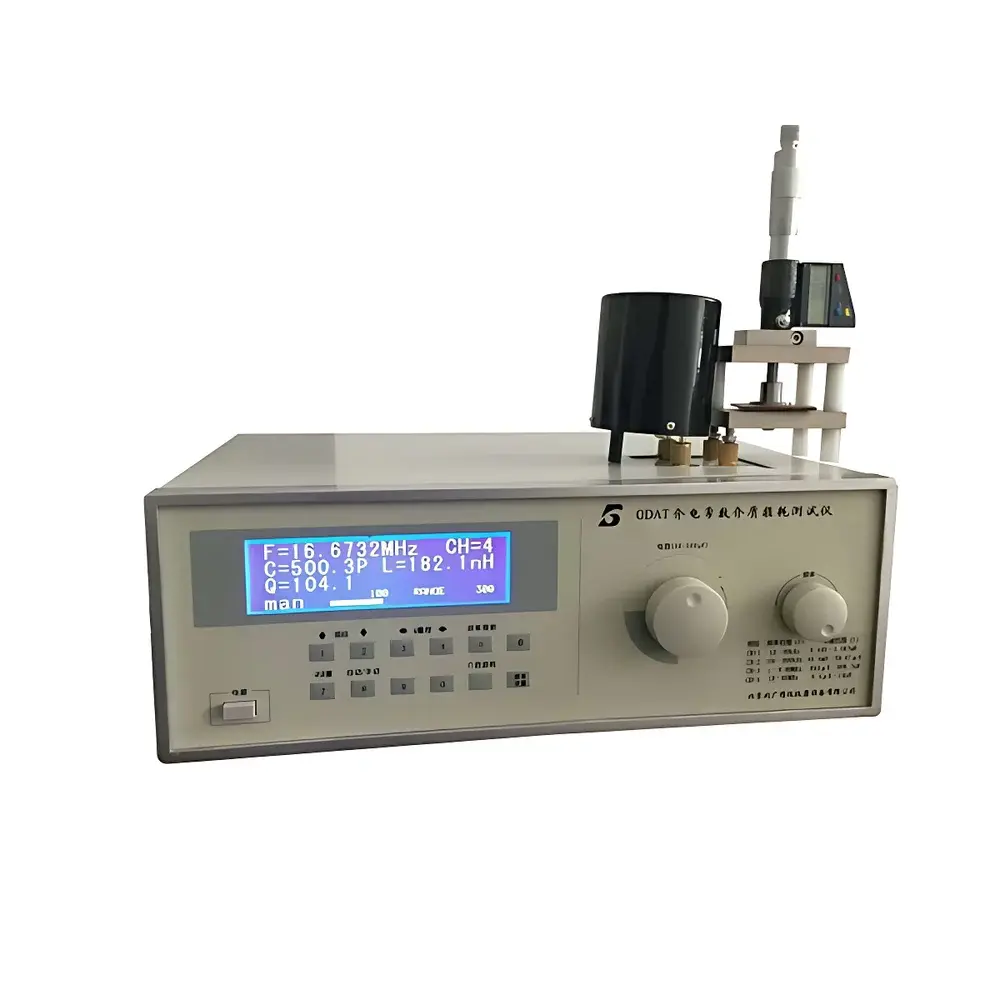
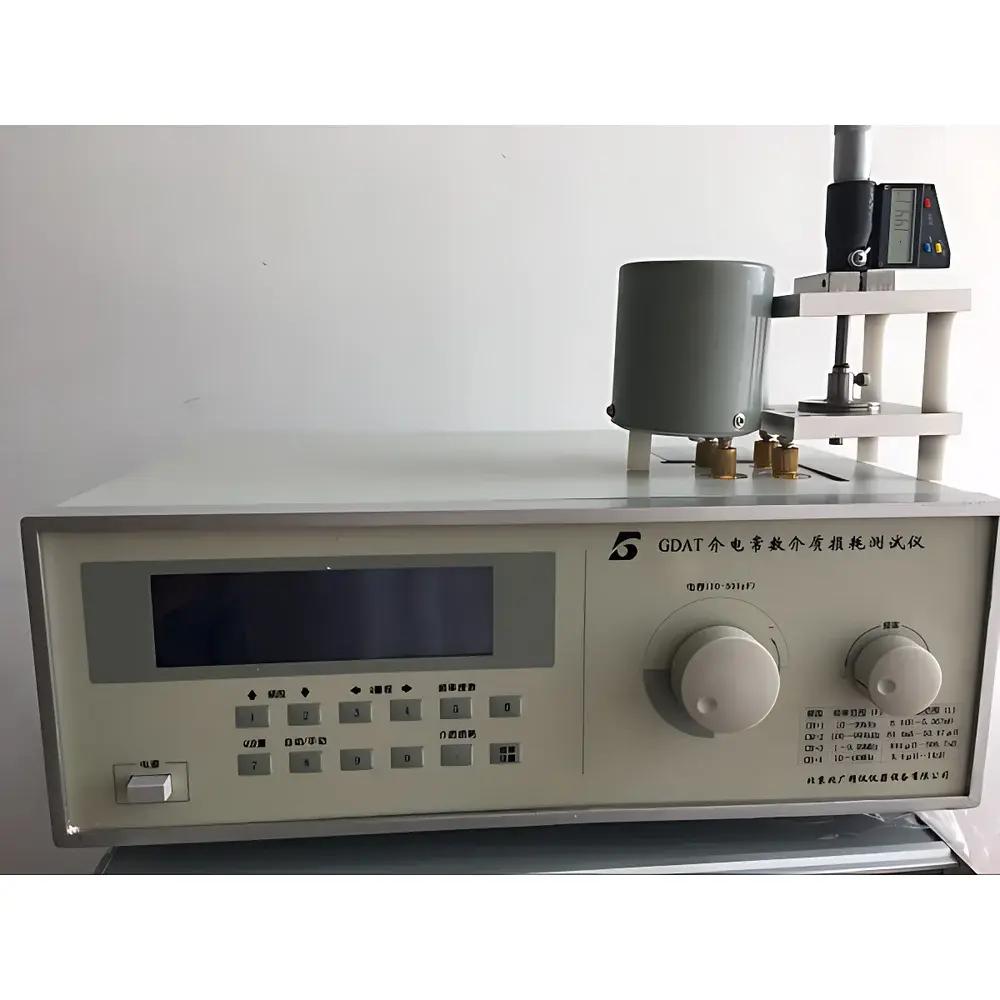
Beiguang Precision GDAT-A High-Frequency Dielectric Constant and Q-Meter (70 MHz)
| Brand | Beiguang Precision Instrument |
|---|---|
| Origin | Beijing, China |
| Manufacturer Type | Direct Manufacturer |
| Product Origin | Domestic (China) |
| Model | GDAT-A (70 MHz) |
| Price | USD 1,850 (approx.) |
Overview
The Beiguang Precision GDAT-A is a high-frequency dielectric constant and Q-meter engineered for precision measurement of complex impedance parameters in passive components and dielectric materials. It operates on the principle of resonant cavity perturbation and high-frequency series/parallel resonance methods, enabling accurate determination of dielectric constant (εr), loss tangent (tan δ), quality factor (Q), inductance (L), capacitance (C), distributed capacitance (C0), characteristic impedance (Z0), and equivalent series/parallel resistance (ESR/EPR) across a broad frequency range up to 70 MHz. Designed for laboratory-grade R&D, quality control, and material characterization, the instrument integrates digital frequency locking, automatic resonance search, and microprocessor-controlled parameter optimization to minimize residual inductance and parasitic coupling—critical for reproducible high-frequency measurements under ISO/IEC 17025-aligned test conditions.
Key Features
- Frequency coverage: 25 kHz to 70 MHz (extended beyond standard GDAT-A specification per model designation)
- Q-value measurement range: 2–1023, with auto/manual ranging across five scales (30, 100, 300, 1000)
- Digital frequency synthesis with ±0.01% stability; automatic resonance point detection via sweep algorithms
- Integrated microcontroller core enabling real-time Q-range switching, capacitance tuning, and amplitude stabilization
- Low-residual-inductance resonant circuit architecture (<26 nH typical residual inductance)
- Q-pass/fail preset function with visual (LCD) and audible feedback for high-throughput QC screening
- Dual-search capability: frequency sweep (FSWEEP) and capacitance sweep (CSWEEP) for rapid resonance localization
- Comprehensive correction protocols for distributed capacitance (C0) using natural resonance and frequency multiplication methods
Sample Compatibility & Compliance
The GDAT-A supports solid dielectric samples (ceramics, polymers, composites), discrete passive components (inductors, capacitors, RF chokes), and transmission line segments. Sample fixtures include standardized Lx/Cx terminals, low-loss polyethylene spacers, and shielded grounding jacks compliant with IEC 60250 and ASTM D150-20 for dielectric constant and dissipation factor testing. The instrument’s mechanical design ensures minimal stray coupling—critical for repeatable tan δ measurements below 0.001. All electrical safety conforms to IEC 61010-1:2019 (CAT II, 300 V). While not FDA 21 CFR Part 11 certified out-of-box, audit-ready data logging (via optional RS232/USB interface) supports GLP/GMP traceability when integrated into validated lab workflows.
Software & Data Management
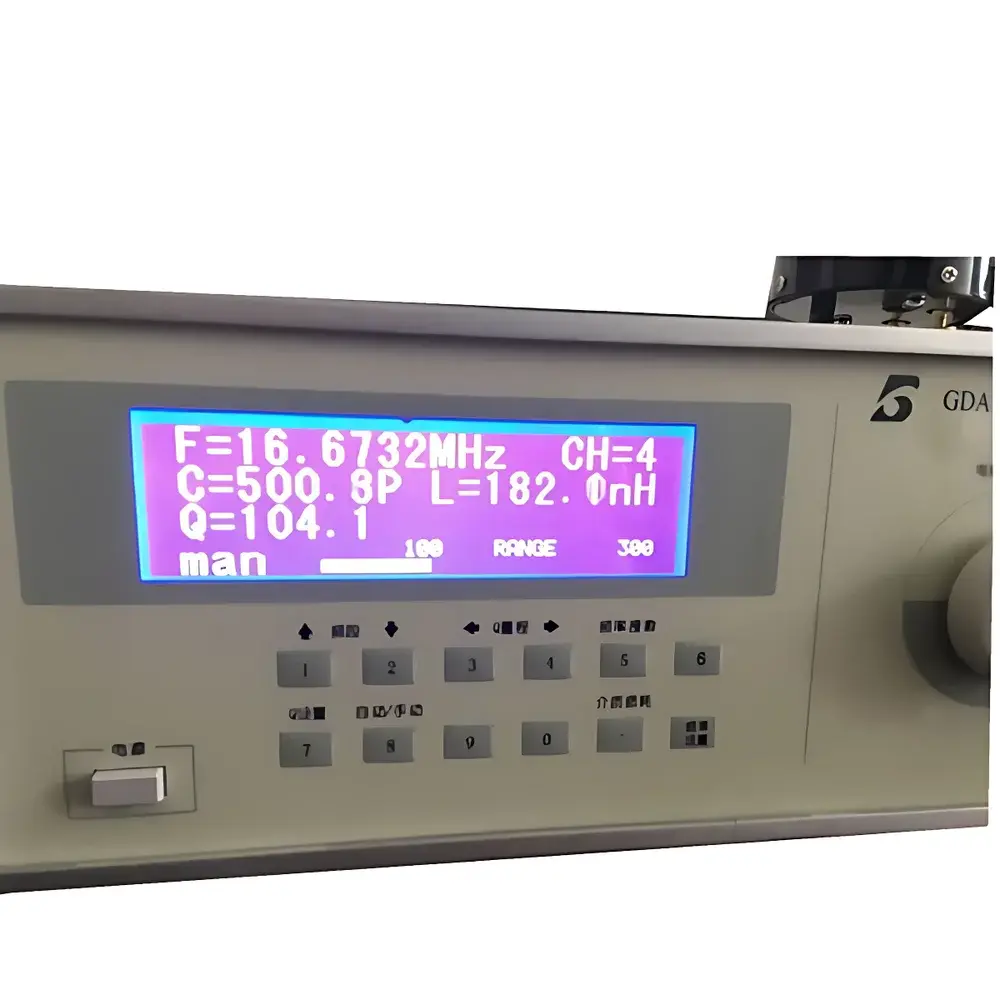
The GDAT-A operates as a standalone benchtop instrument with embedded firmware—no external PC required for core operation. Measurement data (Q, f0, C1, L, tan δ, εr) are displayed on a high-contrast LCD with three-line annotation. Optional serial output enables CSV export for post-processing in MATLAB, Python, or Excel. Firmware includes built-in calibration memory for reference standards (e.g., NIST-traceable air-core inductors), and supports user-defined compensation tables for fixture parasitics. All Q-value calculations adhere to IEEE Std 288-1991 definitions for resonant Q and loss tangent derivation. Audit trails (timestamped pass/fail logs) are retained in non-volatile memory for internal QA review.
Applications
- Characterization of high-frequency ceramic dielectrics (e.g., BaTiO3, Al2O3) per IPC-TM-650 2.5.1
- QC testing of RF inductors and EMI filters in telecom and aerospace supply chains
- Determination of moisture content in polymer matrices via tan δ shifts at fixed frequencies
- Validation of PCB substrate permittivity (εr = 3.2–4.8) for high-speed signal integrity modeling
- Research on metamaterial unit cells requiring sub-1% Q resolution at VHF bands
- Education labs demonstrating electromagnetic energy storage, skin effect, and resonant behavior
FAQ
What is the maximum measurable dielectric loss tangent (tan δ) accuracy?
At 10 MHz, the inherent error is ≤6% ± 2% of full scale; at 70 MHz, working error is ≤8% ± 2% of full scale, consistent with high-frequency Q-meter metrology standards.
Can the GDAT-A measure bulk dielectric properties of powders or liquids?
No—this instrument requires solid, mechanically stable samples with defined geometry. For liquid/powder analysis, a dedicated coaxial or waveguide-based dielectric probe system (e.g., Keysight N1501A) is recommended.
Is firmware upgrade supported?
Yes—field-upgradable via UART interface using Beiguang’s proprietary DFU utility; version history and release notes are available under NDA upon request.
Does the instrument comply with EMC directives for CE marking?
It meets EN 61326-1:2013 (EMC for laboratory equipment) and EN 61000-4-3 (radiated immunity) when operated within specified ambient temperature (15–30°C) and humidity (<70% RH, non-condensing) limits.
How is residual inductance compensated during high-Q inductor measurement?
The GDAT-A applies a factory-calibrated L0 offset (26 nH) and supports user-input C0 correction using the natural resonance method per Section 4.B of the operating manual.



