
All Precision Instrument BRXZZ Melt Flow Indexer for Meltblown Nonwovens
| Brand | All Precision Instrument |
|---|---|
| Origin | Beijing, China |
| Manufacturer Type | Direct Manufacturer |
| Country of Origin | China |
| Model | BRXZZ |
| Price | USD 3,500 (FOB Beijing) |
| Temperature Range | Ambient to 400 °C |
| Temperature Stability | ±0.1 °C |
| Temp. Recovery Time | < 4 min |
| Cut Count | 1–99 |
| Cut Interval | 10–600 s |
| Continuous Operation | >10,000 h |
| Power Supply | AC 220 V ±10%, 50 Hz |
| Die Diameter | Φ2.095 ±0.005 mm |
| Die Length | 8.000 ±0.025 mm |
| Barrel ID | Φ9.550 ±0.025 mm |
| Barrel Length | 152.0 ±0.1 mm |
| Piston Head Diameter | 9.475 ±0.015 mm |
| Piston Head Length | 6.350 ±0.100 mm |
| Standard Loads (8 levels) | 0.325 kg (3.187 N) to 21.600 kg (211.82 N) |
Overview
The All Precision Instrument BRXZZ Melt Flow Indexer is a precision-controlled, microprocessor-based instrument engineered for the quantitative determination of melt mass flow rate (MFR) of thermoplastic polymers—specifically optimized for polypropylene (PP) and polyethylene (PE) grades used in meltblown nonwoven production for medical face masks and filtration media. Operating on the principle of capillary rheometry under standardized gravity-driven extrusion, the BRXZZ complies with ISO 1133-1:2011 and GB/T 3682.1–2018 methodologies. It subjects pre-dried polymer granules or pellets to precisely controlled thermal conditions within a heated barrel, then measures the mass of extrudate expelled through a standardized die (2.095 mm diameter × 8 mm length) under defined dead-weight loads over a fixed 10-minute interval. The resulting MFR value (g/10 min) serves as a critical process control parameter—correlating inversely with average molecular weight and directly with melt processability during high-velocity fiber spinning in meltblown lines.
Key Features
- High-stability PID temperature control system with Pt100 platinum RTD sensor and solid-state relay power modulation, ensuring ±0.1 °C thermal accuracy across the full 25–400 °C operating range
- Dual-mode operation supporting both MFR (mass-based) and MVR (volume-based) measurement protocols per ISO 1133-2
- Eight-grade calibrated load assembly (0.325 kg to 21.600 kg), traceable to national metrological standards, enabling evaluation across low-, medium-, and high-MFR polymer grades
- Automated cut-off mechanism with programmable timing (10–600 s intervals) and user-defined cut counts (1–99), minimizing operator variability and improving inter-laboratory reproducibility
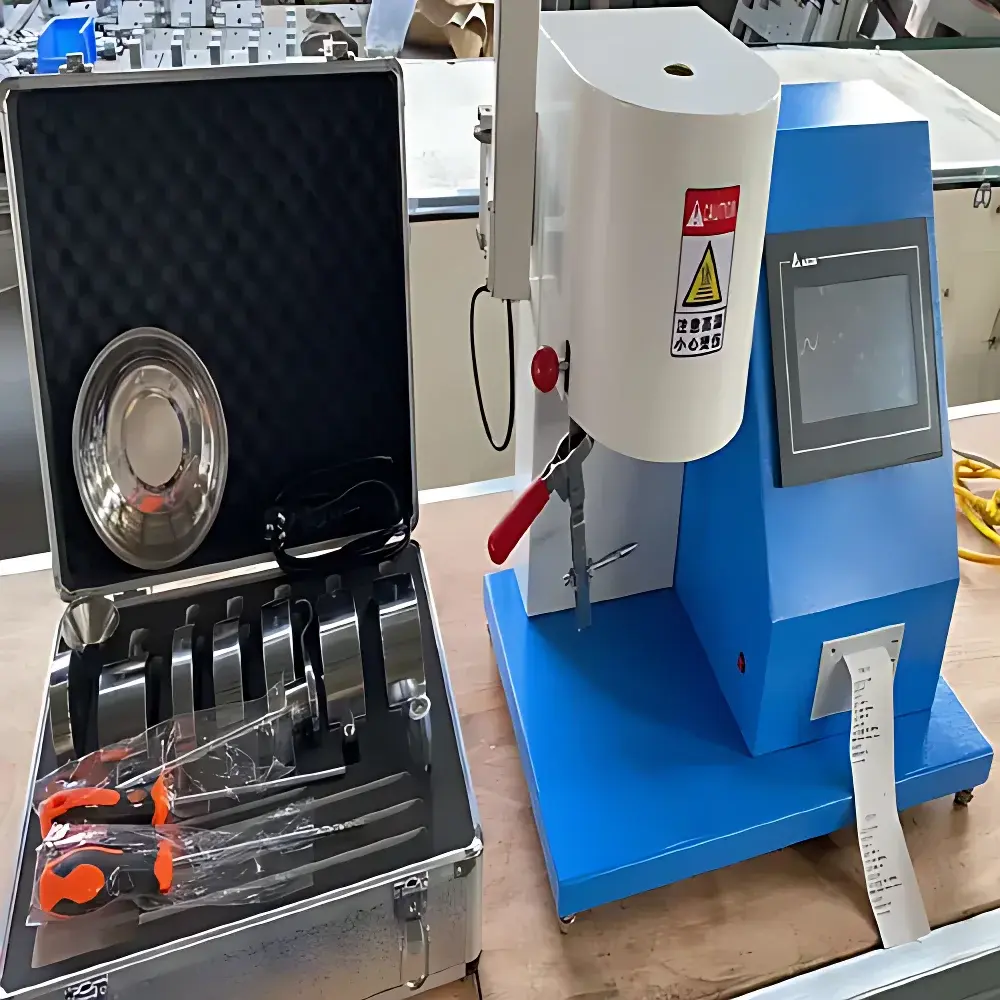
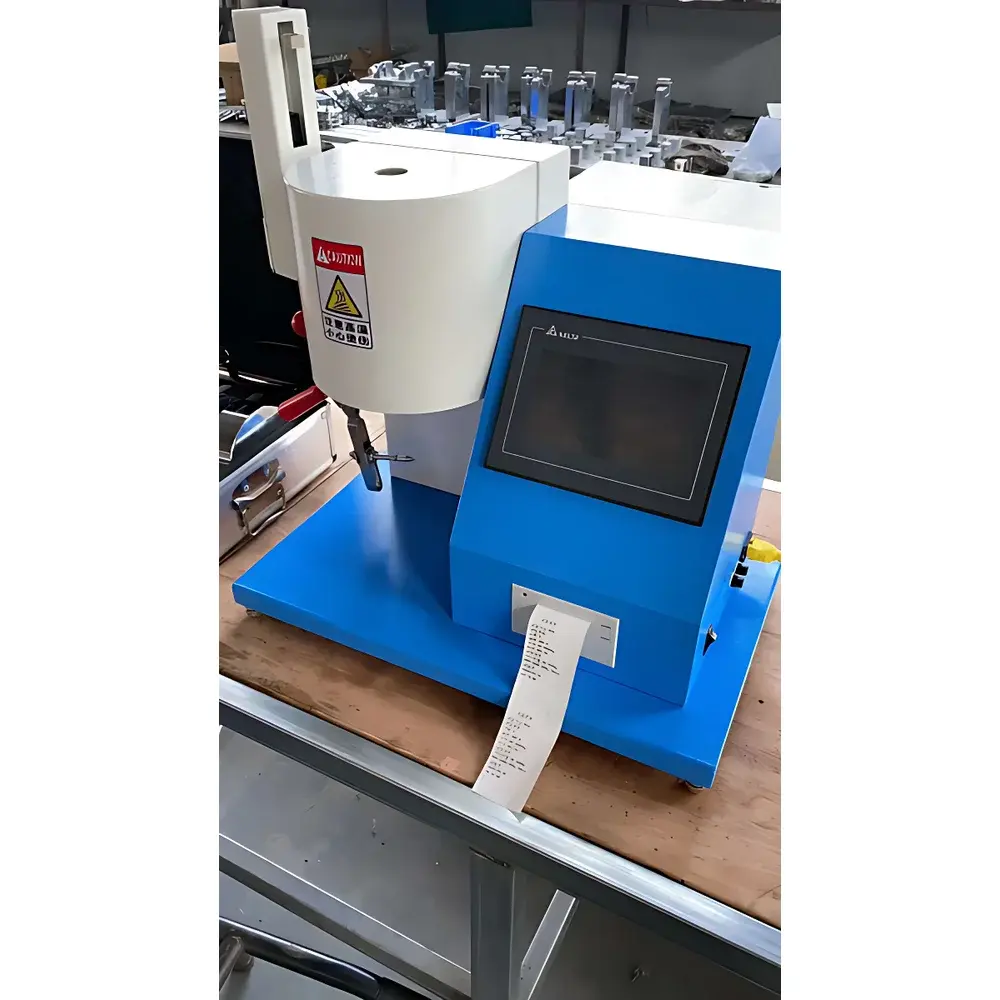
- Robust mechanical architecture: hardened steel barrel and die, precision-ground piston head (9.475 ±0.015 mm), and vibration-isolated base with four adjustable leveling screws
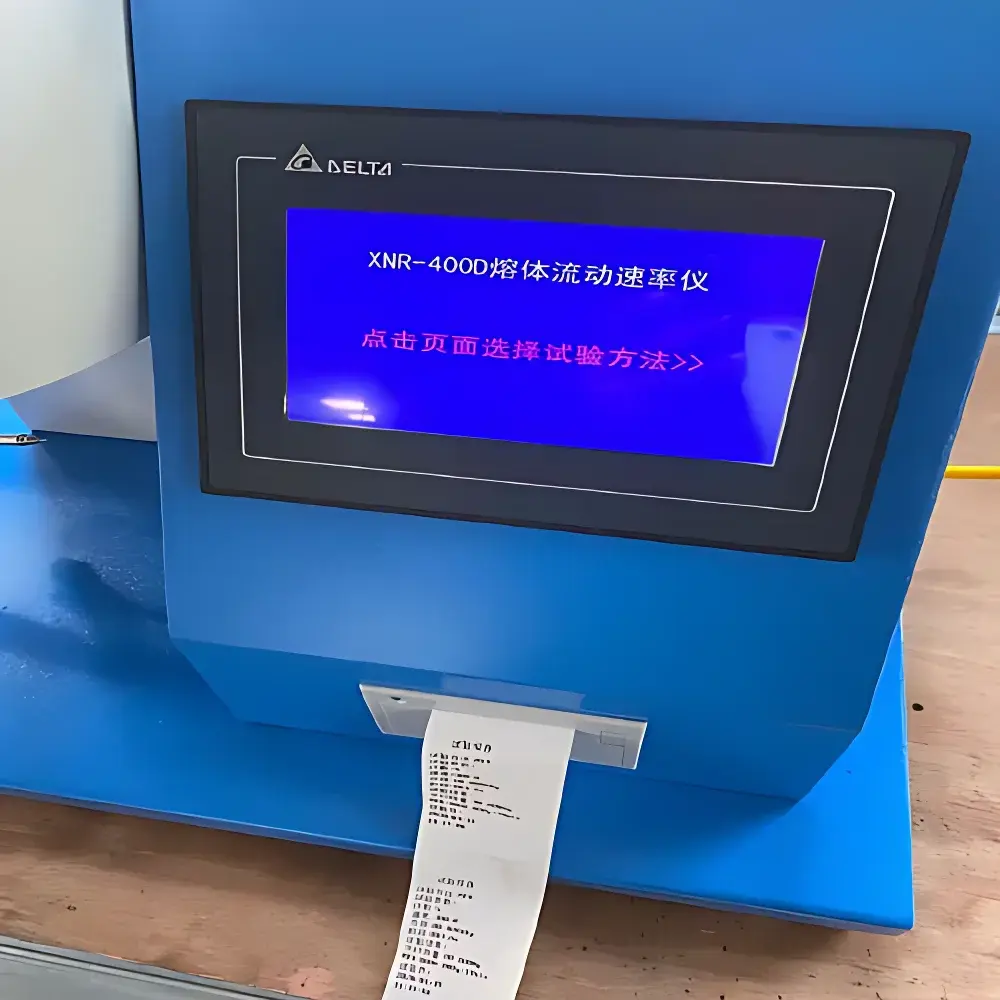
- Integrated real-time display with Chinese-language interface (configurable firmware supports English localization upon request), eliminating external PC dependency for routine testing
Sample Compatibility & Compliance
The BRXZZ is validated for use with homopolymers and copolymers commonly employed in meltblown filtration media, including isotactic PP (iPP), linear low-density PE (LLDPE), and functionalized polyolefins. It accommodates standard sample masses (2.0–5.0 g) and supports preconditioning per ASTM D618 (conditioning at 23 °C/50% RH for ≥4 h). All geometric tolerances—including barrel inner diameter (Φ9.550 ±0.025 mm), die dimensions, and piston geometry—conform strictly to ISO 1133 Annex A requirements. The instrument’s design meets essential safety provisions of IEC 61010-1:2010 for laboratory electrical equipment and supports GLP-compliant documentation when paired with optional audit-trail-enabled printer modules.
Software & Data Management
While the BRXZZ operates autonomously via embedded firmware, its RS232 serial interface enables direct data export to LIMS or QC databases. Raw outputs include test date/time stamp, set temperature, applied load, cut timestamps, individual specimen masses, calculated MFR/MVR, and operator ID (if configured). For regulated environments, optional firmware upgrades support 21 CFR Part 11-compliant electronic signatures, user access tiers (admin/operator), and immutable audit trails—facilitating FDA-submission-ready reporting for medical device raw material qualification. Calibration logs, maintenance records, and temperature verification reports (per ASTM E220) can be archived externally using vendor-supplied CSV templates.
Applications
This instrument is deployed primarily in R&D labs and quality control departments of nonwoven fabric manufacturers, polymer compounders, and medical PPE suppliers. Typical use cases include: incoming inspection of PP resin batches prior to meltblown extrusion; real-time monitoring of thermal degradation during prolonged extrusion runs; correlation of MFR shifts with molecular weight distribution changes measured by GPC; validation of stabilizer package efficacy under accelerated aging; and technical support for ISO 13485-certified quality systems. Its reliability in high-throughput environments makes it suitable for shift-based production labs requiring ≥50 daily tests with ≤2% repeatability (per ISO 1133 repeatability criterion).
FAQ
What standards does the BRXZZ comply with?
It conforms to ISO 1133-1:2011 (MFR), ISO 1133-2:2011 (MVR), and GB/T 3682.1–2018, with all mechanical dimensions certified against ISO 1133 Annex A.
Can it measure both MFR and MVR?
Yes—MFR is default; MVR requires optional displacement sensor assembly (Part No. BRXZZ-MVR-KIT) and calibration with certified reference materials.
Is third-party calibration certification available?
Yes—factory calibration includes NIST-traceable temperature and load verification; ISO/IEC 17025-accredited calibration services are offered via authorized regional partners.
What maintenance is required for long-term accuracy?
Monthly die cleaning with precision reamers, quarterly barrel bore inspection using optical borescopes, and annual recalibration of Pt100 sensor and load cells per ASTM E74.
Does it support automated data transfer to ERP systems?
Via RS232 or optional USB-to-serial adapter, raw test data exports as ASCII text compatible with SAP QM, LabVantage, and custom MES integrations.






