
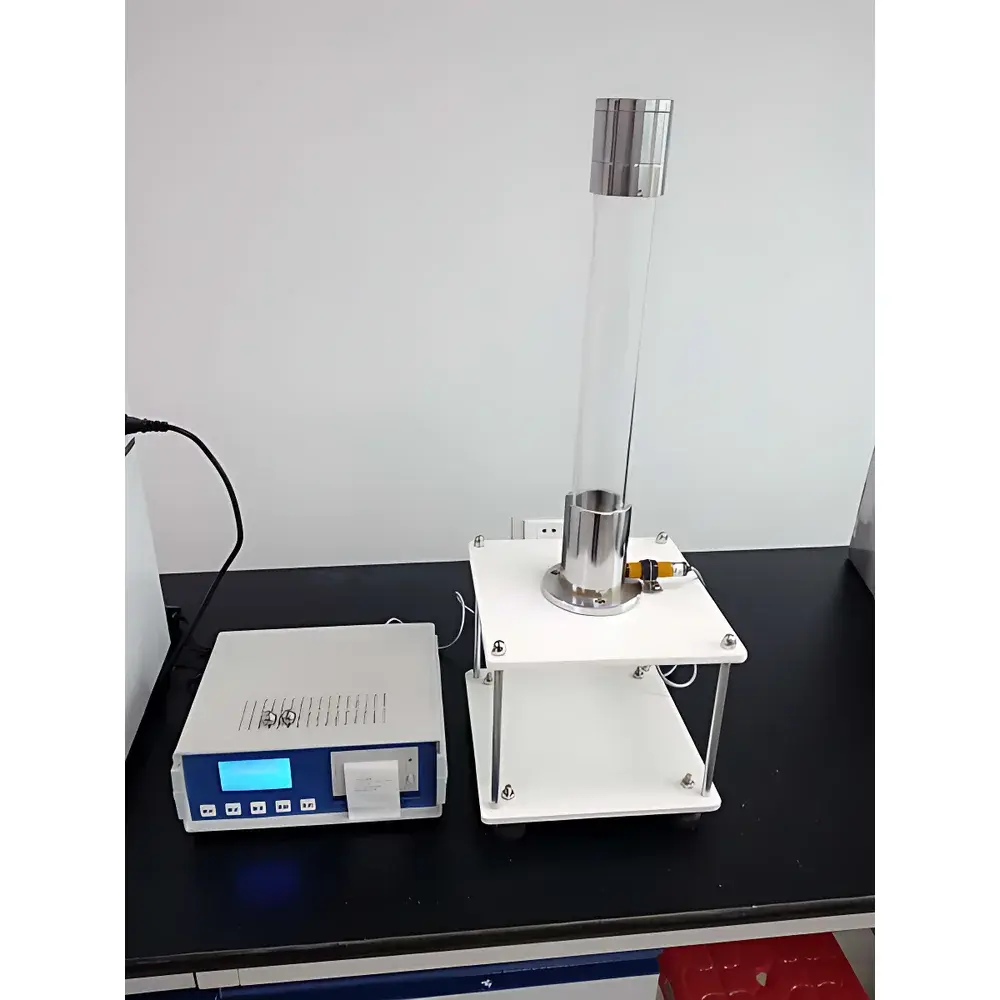
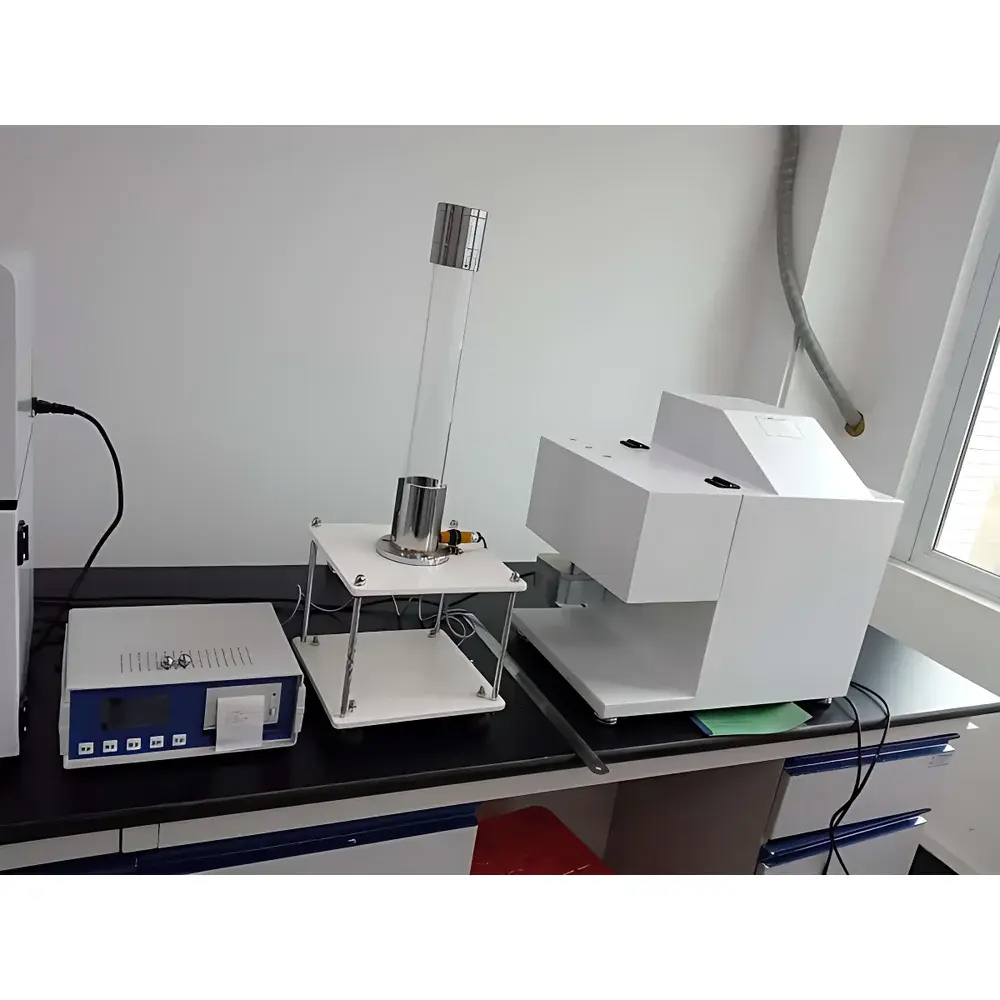
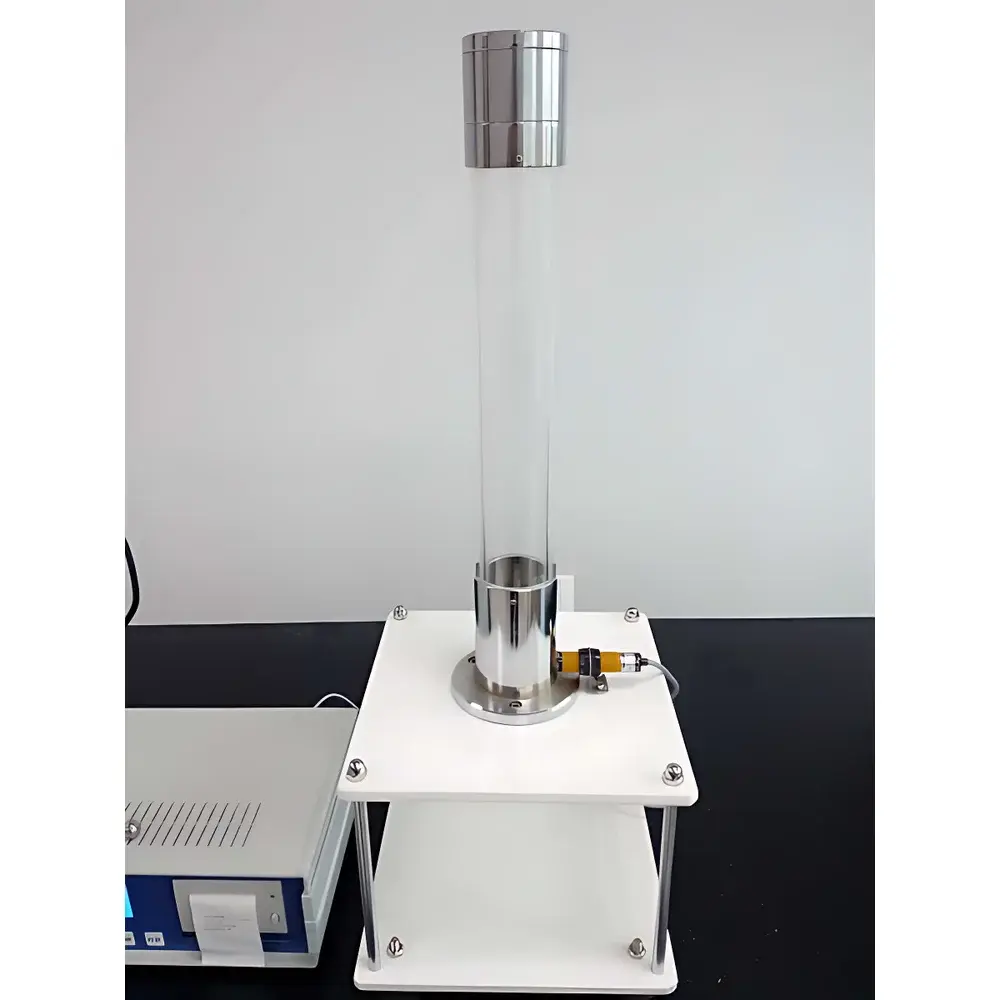
Beijing North Guang Precision Instruments HMLQ-500 Foam Ball Rebound Tester
| Brand | Beijing North Guang Precision Instruments |
|---|---|
| Origin | Beijing, China |
| Manufacturer Type | Direct Manufacturer |
| Country of Origin | China |
| Model | HMLQ-500 |
| Drop Height | 460 mm (GB/T 6670–2008), 500 mm (ASTM D3574) |
| Steel Ball Diameter | Ø16 mm |
| Rebound Accuracy | <1% |
| Specimen Dimensions | 100 mm × 100 mm × 100 mm (or 50 mm thickness) |
| Measurement Output | Automatic average rebound height & rebound percentage calculation |
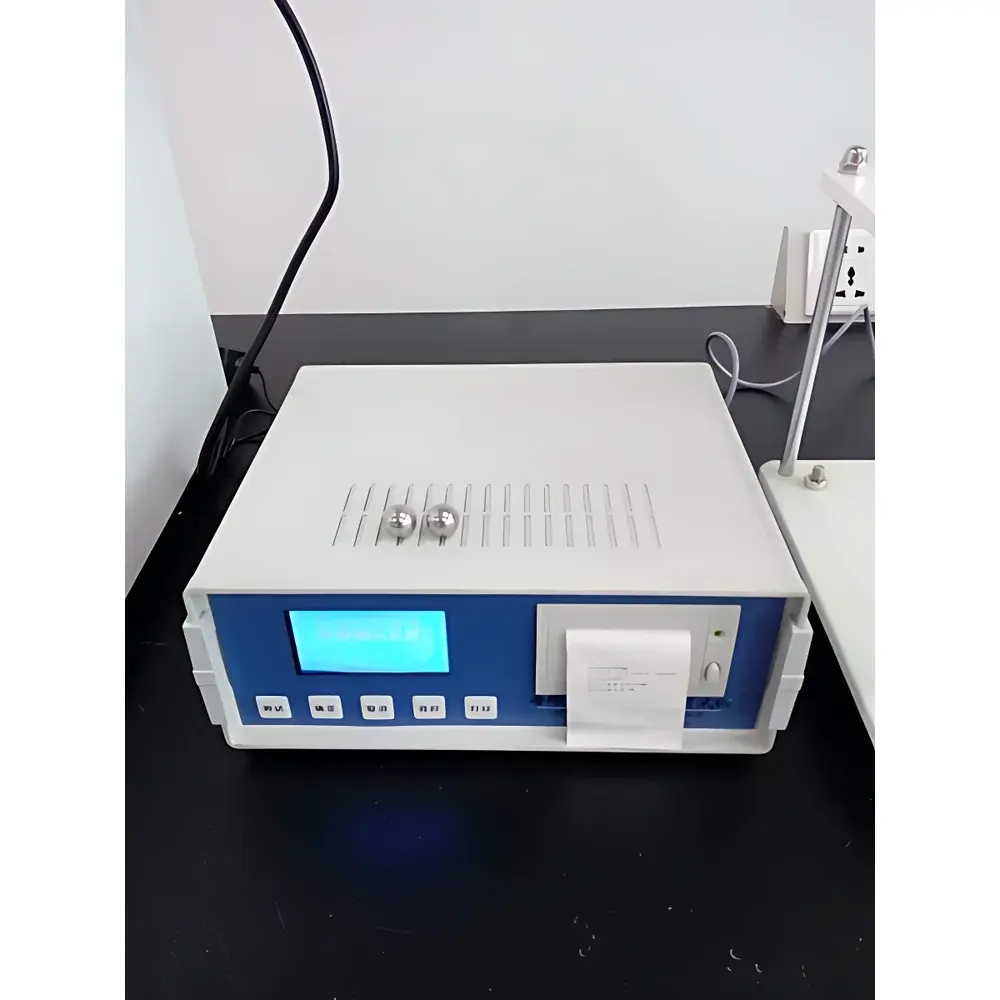
| Control Interface | Intelligent LCD with embedded microprocessor |
| Data Output | Integrated thermal mini-printer |
| Release Mechanism | Dual-mode (manual + pneumatic/electromagnetic auto-release) |
| Capture System | Dedicated ball retention assembly |
| Height Adjustment | Precision mechanical vertical adjustment |
| Sensing | High-stability photoelectric sensor array |
| Leveling | Integrated bubble-level calibration system |
| Compliance | GB/T 6670–2008, ISO 8307:2008, ASTM D3574–2021 (Method A & B) |
Overview
The Beijing North Guang Precision Instruments HMLQ-500 Foam Ball Rebound Tester is an engineered mechanical property testing instrument designed for the quantitative evaluation of dynamic resilience in flexible polymeric foam materials—primarily soft polyurethane (PU) foams, viscoelastic memory foams, and open-cell elastomeric sponge matrices. It operates on the standardized drop-ball principle defined in GB/T 6670–2008, ISO 8307:2008, and ASTM D3574–2021 (Methods A and B). In this method, a precisely dimensioned and weighted steel sphere (Ø16 mm) is released from a controlled vertical height (460 mm per Chinese national standard; 500 mm per ASTM specification) onto a horizontally aligned, conditioned foam specimen. The rebound height is optically captured via a calibrated photoelectric sensor array, and the rebound ratio—expressed as a percentage—is computed as (maximum rebound height / drop height) × 100. This metric serves as a critical indicator of energy return efficiency, internal damping behavior, and structural integrity under transient compressive loading. Unlike static compression metrics (e.g., indentation load deflection), the HMLQ-500 captures time-dependent viscoelastic response, making it indispensable for R&D labs, quality control departments, and certification bodies validating compliance with international foam performance specifications.
Key Features
- Microprocessor-controlled test sequence with real-time LCD interface supporting bilingual operation (English/Chinese firmware options available upon request)
- Dual release architecture: manually actuated lever mechanism + programmable electromagnetic/pneumatic auto-release for repeatability-critical applications
- Integrated precision leveling system with dual-axis bubble vial and adjustable foot screws ensuring ≤0.1° surface deviation
- High-fidelity optical sensing: redundant photoelectric sensors positioned at multiple elevation planes to eliminate parallax error and capture peak rebound displacement unambiguously
- Onboard statistical engine automatically computes mean rebound height and rebound percentage across three consecutive impacts per specimen—per standard requirement
- Thermal mini-printer outputs timestamped test reports including specimen ID, drop height, individual rebound heights, mean value, coefficient of variation (CV%), and pass/fail status against user-defined thresholds
- Rigid aluminum-alloy frame with vibration-dampening base minimizes environmental interference during high-sensitivity measurements
Sample Compatibility & Compliance
The HMLQ-500 accommodates standard test specimens measuring 100 mm × 100 mm × (50–100) mm—compatible with both full-thickness and cut-layer configurations required by GB/T 6670 and ISO 8307. Specimens must be preconditioned per ISO 293, ISO 2208, or ASTM D3574 protocols (typically 23 ± 2°C, 50 ± 5% RH, ≥16 h equilibration). The instrument supports direct alignment verification using NIST-traceable height gauges and steel sphere calipers (Ø16.00 ± 0.02 mm, mass 16.0 ± 0.1 g). All mechanical and electronic subsystems comply with IEC 61000-6-2 (immunity) and IEC 61000-6-3 (emission) standards. Test data generation adheres to GLP principles: audit trails are retained in non-volatile memory, and printed reports include operator ID, date/time stamp, equipment serial number, and calibration due date—supporting FDA 21 CFR Part 11 readiness when integrated with compliant LIMS environments.
Software & Data Management
While the HMLQ-500 operates autonomously via its embedded microcontroller, optional USB-to-PC connectivity enables raw sensor waveform export (CSV format) for advanced post-processing in MATLAB®, Python (NumPy/Pandas), or JMP®. Firmware version 2.3+ supports configurable pass/fail limits, batch reporting, and CSV-compatible metadata tagging (e.g., lot number, material grade, curing batch). Calibration records—including sensor linearity verification (±0.5 mm full scale), drop-height validation (digital caliper traceable to NPL/PTB), and sphere mass certification—are stored internally and exportable. No proprietary software installation is required; all configuration and diagnostics are accessible through the front-panel menu tree with password-protected engineering mode.
Applications
- Quality assurance of automotive seating foams (seat cushions, headrests, armrests) per OEM specifications (e.g., Ford WSS-M99P1111-A, GMW15634)
- R&D screening of novel viscoelastic formulations targeting improved recovery kinetics or reduced hysteresis loss
- Validation of aging effects (thermal, UV, humidity exposure) on rebound stability per ISO 17802
- Supplier qualification audits requiring third-party verified rebound data per ISO/IEC 17025 accredited test methods
- Regulatory submissions for medical cushioning devices (e.g., pressure-relieving mattresses) where resilience correlates with shear-reduction efficacy
- Academic studies on polymer network dynamics, crosslink density–rebound correlation, and temperature-dependent viscoelastic transitions
FAQ
What standards does the HMLQ-500 fully support?
It implements GB/T 6670–2008, ISO 8307:2008, and ASTM D3574–2021 (Methods A and B) with hardware-configurable drop heights and validated measurement uncertainty <1%.
Can the instrument test specimens thinner than 50 mm?
Yes—specimens as thin as 25 mm may be tested using ISO-compliant support plates to prevent bottoming-out; however, results must be annotated per Clause 7.3 of ISO 8307.
Is calibration traceable to national metrology institutes?
All factory calibrations include certificates referencing CNAS-accredited laboratories (China) with traceability to NIM (National Institute of Metrology, China) and cross-verified against PTB (Germany) reference spheres and height standards.
Does the system meet requirements for ISO/IEC 17025 accredited laboratories?
Yes—the design includes documented uncertainty budgets, maintenance logs, environmental monitoring integration points, and full audit trail capability for test execution and calibration history.
What maintenance is required for long-term accuracy?
Biannual verification of drop-height accuracy (using certified gauge blocks), annual photoelectric sensor sensitivity check, and quarterly cleaning of guide rails and release mechanisms using isopropyl alcohol and lint-free wipes.





