
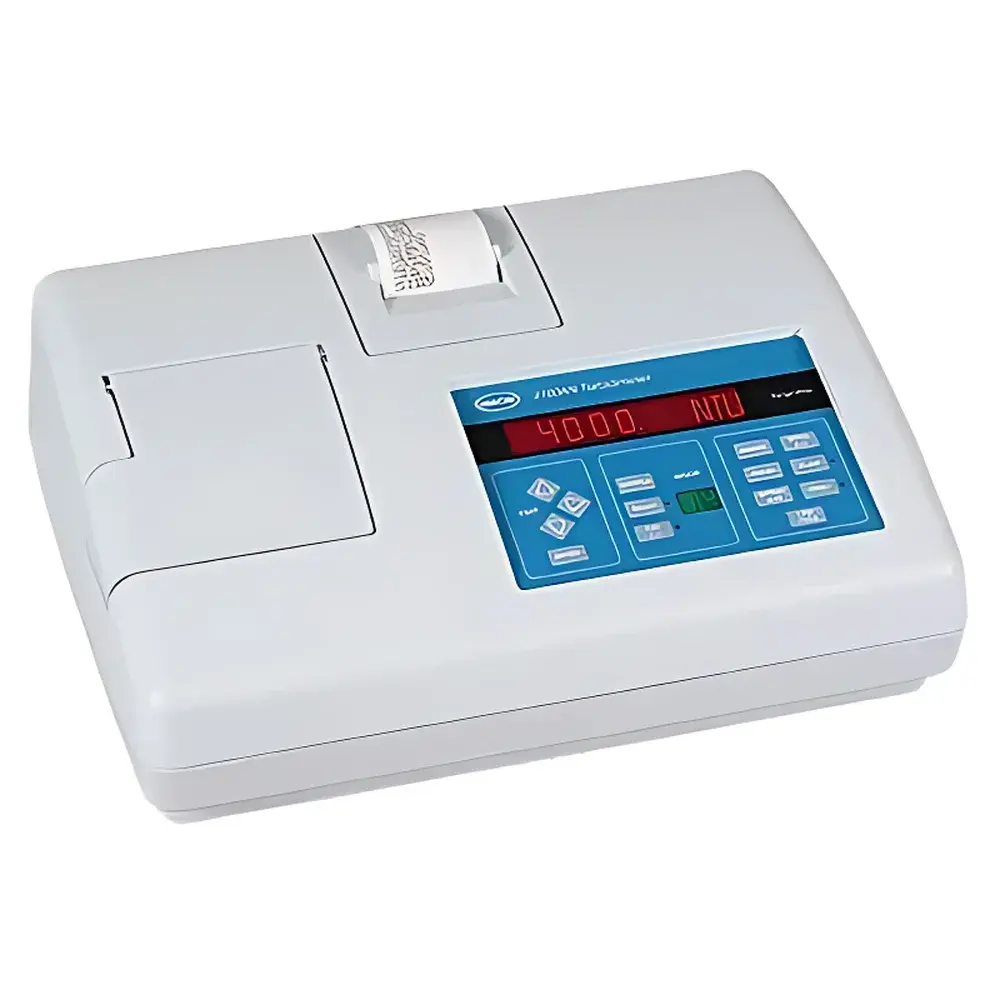
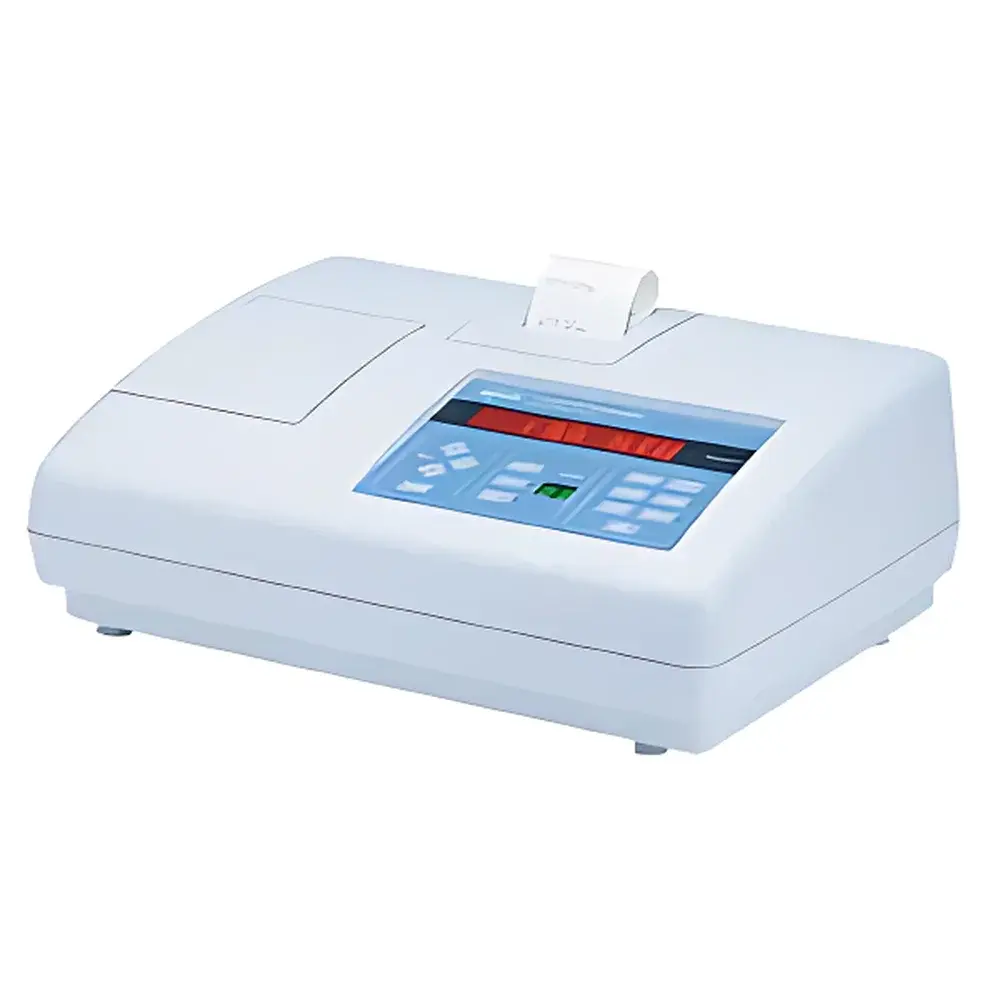
Hach 2100AN Benchtop Turbidimeter
| Brand | Hach |
|---|---|
| Origin | USA |
| Model | 2100AN |
| Product Type | Benchtop/Laboratory |
| Measurement Range | 0–4000 NTU (extended to 10,000 NTU) |
| Resolution | 0.001 NTU |
| Operating Temperature | 10–40 °C |
| Accuracy | ±0.01 NTU or ±2% (0–1000 NTU), ±5% (1000–4000 NTU), ±10% (4000–10,000 NTU) |
| Colorimetric Range | 0–500 CU |
| Colorimetric Accuracy | ±2 CU (0–30 CU), ±5 CU (0–500 CU) |
| Light Source | Tungsten lamp |
| Compliance | EPA Method 180.1 |
| Repeatability | ±1% of reading or 0.01 NTU |
| Minimum Sample Volume | 20 mL |
| Measurement Units | NTU, NEP, EBC, ABS, T%, CU, user-defined |
| Data Storage | Internal memory with HachLink™ software export capability |
Overview
The Hach 2100AN Benchtop Turbidimeter is a precision optical instrument engineered for high-accuracy turbidity and color measurement in regulated laboratory environments. Based on the nephelometric principle—measuring light scattered at 90° from a collimated tungsten light source—the 2100AN employs Hach’s proprietary ratio measurement technology to correct for interferences caused by sample color, absorbance, and stray light. This dual-beam optical architecture ensures stable baseline performance across diverse matrices, including potable water, wastewater effluents, surface and groundwater, process streams, and research-grade samples. Unlike single-detector designs, the ratio mode compares forward-scattered and 90°-scattered intensities in real time, effectively compensating for chromophore-induced attenuation—a critical requirement for compliance with U.S. Environmental Protection Agency (EPA) Method 180.1 and ISO 7027-1:2016. The instrument operates within a validated temperature range of 10–40 °C at ≤90% relative humidity (non-condensing), with an integrated air-purge system that prevents condensation buildup in the sample cell chamber—enabling reliable measurements of both chilled and heated samples without optical drift.
Key Features
- Extended turbidity measurement range: 0–10,000 NTU (primary calibrated range 0–4000 NTU), supporting low-level drinking water analysis and high-turbidity industrial slurry characterization
- Simultaneous turbidity and true color (Platinum-Cobalt Units, CU) quantification using the same optical path and sample vessel
- Ratio-based nephelometry with dual photodetectors, minimizing error from sample absorbance and particulate absorption artifacts
- Programmable signal averaging (1–100 readings per result) to enhance precision in low-turbidity applications (e.g., filtered drinking water)
- Automated calibration routine with support for primary standards (Formazin, AMCO AEPA, StablCal®) and user-defined calibration curves
- Integrated thermal printer for immediate hardcopy output of results, calibration logs, date/time stamps, and operator ID fields
- Real-time self-diagnostic monitoring of lamp intensity, detector response, cell cleanliness, and purge airflow status
- Robust benchtop chassis (3.43 kg) with ESD-safe housing and IEC 61000-4 electromagnetic compatibility certification
Sample Compatibility & Compliance
The 2100AN accepts standard 25-mm round glass vials (20 mL minimum volume) and accommodates samples with suspended solids up to 100,000 ppm. Its air-purge feature mitigates condensation-related scattering errors when measuring cold (35 °C) samples—common in thermal process validation or groundwater field-lab workflows. The instrument meets regulatory requirements for environmental laboratories under EPA Method 180.1 and supports data integrity protocols aligned with GLP and GMP frameworks. All calibration events, measurement metadata (including ambient temperature and humidity), and operator inputs are timestamped and stored internally. Audit trails comply with FDA 21 CFR Part 11 expectations when used with HachLink™ software configured for electronic signatures and role-based access control.
Software & Data Management
HachLink™ software (Windows-compatible) provides bidirectional communication via USB or RS-232 interface. It enables secure export of raw and averaged turbidity/color values, calibration history, QC check records, and instrument diagnostic logs in CSV, PDF, or XML formats. Users may define custom report templates compliant with LIMS integration requirements. The software supports automated pass/fail evaluation against configurable specification limits and generates trending charts for method performance verification (MPV). Internal memory retains ≥1,000 test records with full parameter context—including unit selection, averaging count, and standard used—ensuring traceability during regulatory audits.
Applications
- Drinking water treatment: Verification of filtration efficiency, coagulation optimization, and disinfection byproduct precursor monitoring
- Wastewater compliance: Effluent turbidity reporting per NPDES permits and secondary treatment validation
- Pharmaceutical water systems: USP purified water and WFI turbidity screening (≤0.1 NTU threshold)
- Food & beverage QA: Juice clarity assessment, brewing wort analysis, and dairy processing stream monitoring
- Academic research: Colloid stability studies, flocculation kinetics, and nanoparticle dispersion characterization
- Industrial process control: Cooling tower blowdown management, membrane fouling detection, and polymer emulsion quality assurance
FAQ
Does the 2100AN require annual recalibration by a certified service provider?
No—routine user-performed calibration using NIST-traceable standards satisfies ISO/IEC 17025 and EPA requirements; however, biannual verification against primary Formazin standards is recommended for accredited labs.
Can the instrument measure turbidity in non-aqueous solvents such as ethanol or glycerol?
Not without method validation—refractive index mismatch and solvent fluorescence may invalidate NTU correlation; application-specific SOP development is required.
Is the built-in printer compatible with network printing or only direct thermal output?
The integrated thermal printer supports only local, real-time hardcopy generation; network printing requires external PC-based export via HachLink™.
What happens if the air purge flow drops below specification during measurement?
The self-diagnostic system triggers an audible alert and displays “PURGE ERROR” on-screen, suspending measurement until airflow is restored and confirmed.
How does the 2100AN handle highly colored, low-turbidity samples like tea or fruit juice extracts?
The ratio measurement mode actively suppresses absorbance bias, but users must validate recovery using spiked Formazin standards in representative matrix blanks per ASTM D6708 guidance.





