
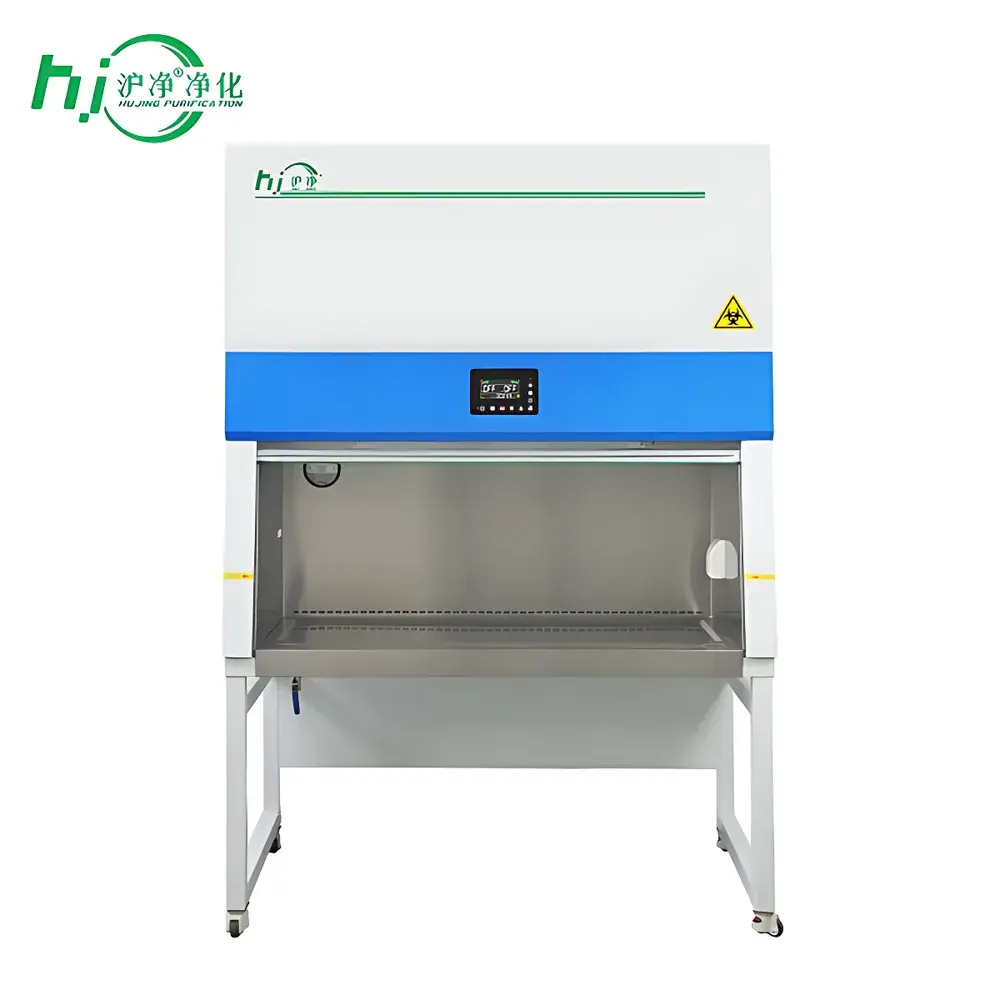
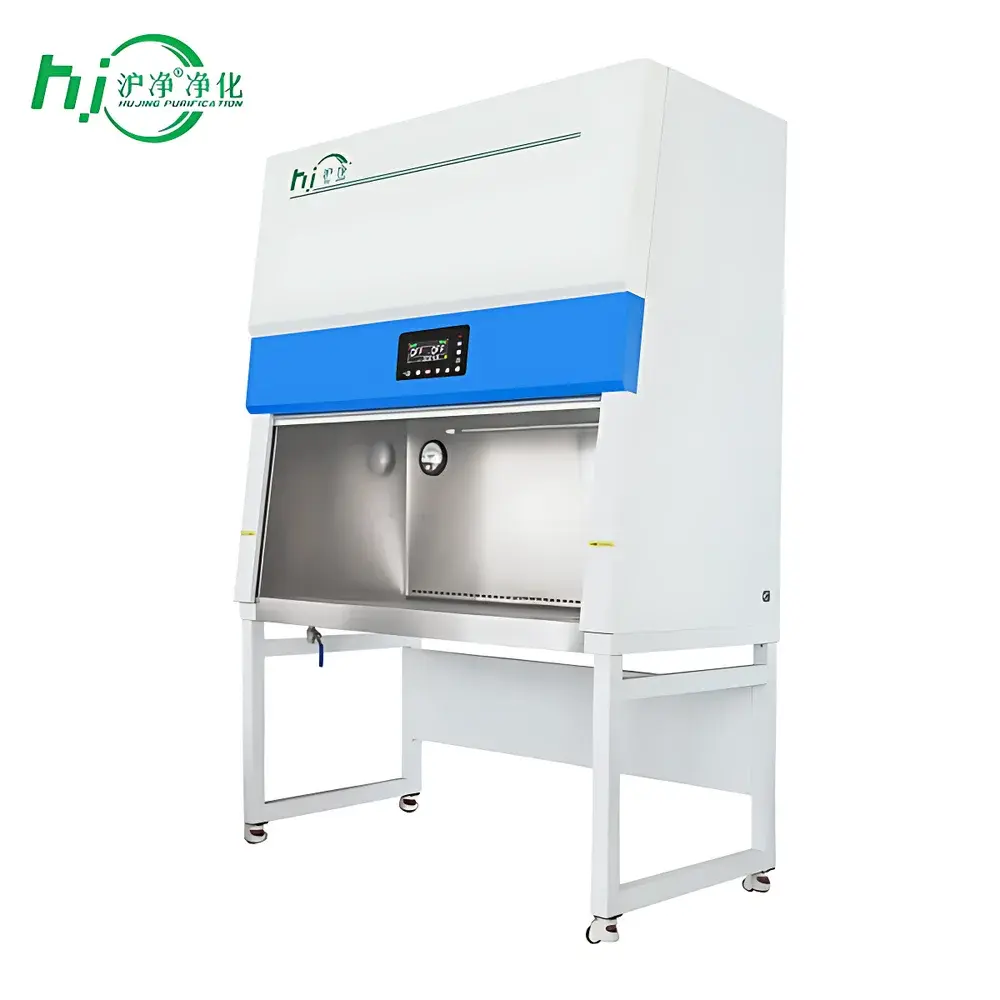
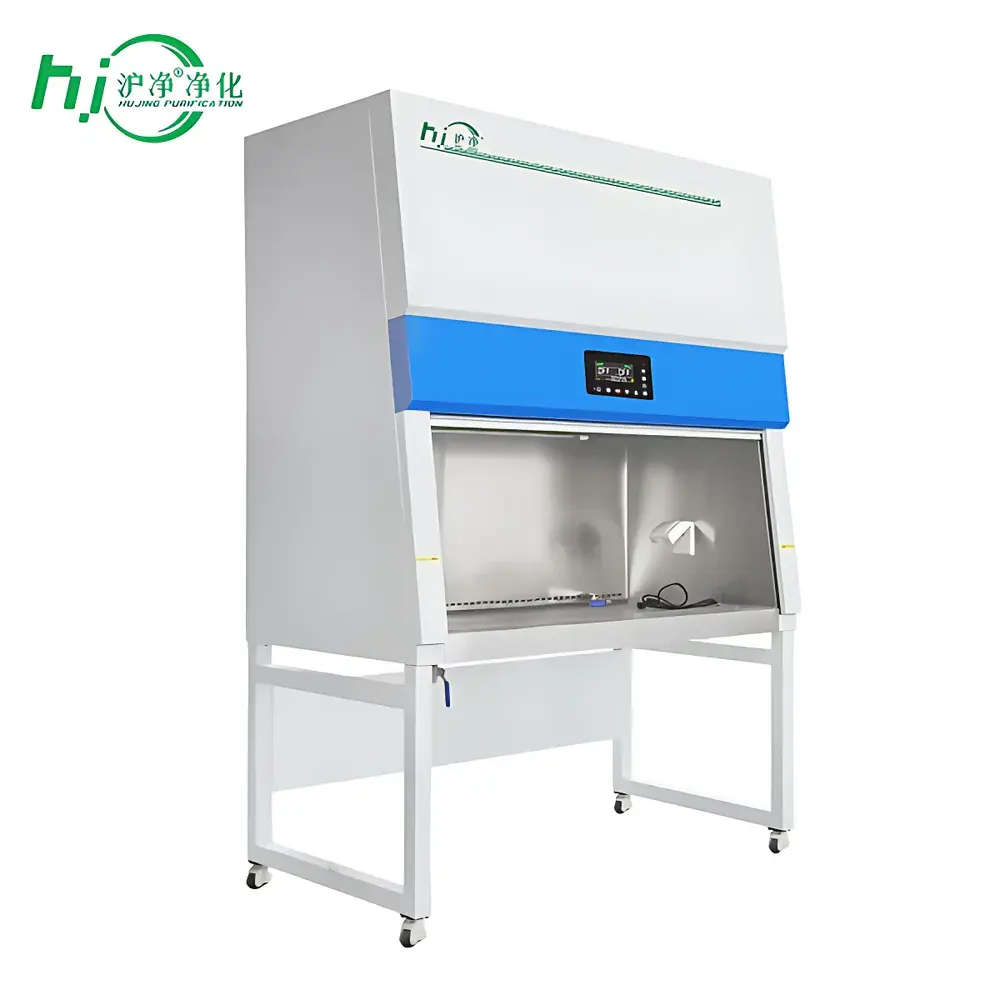
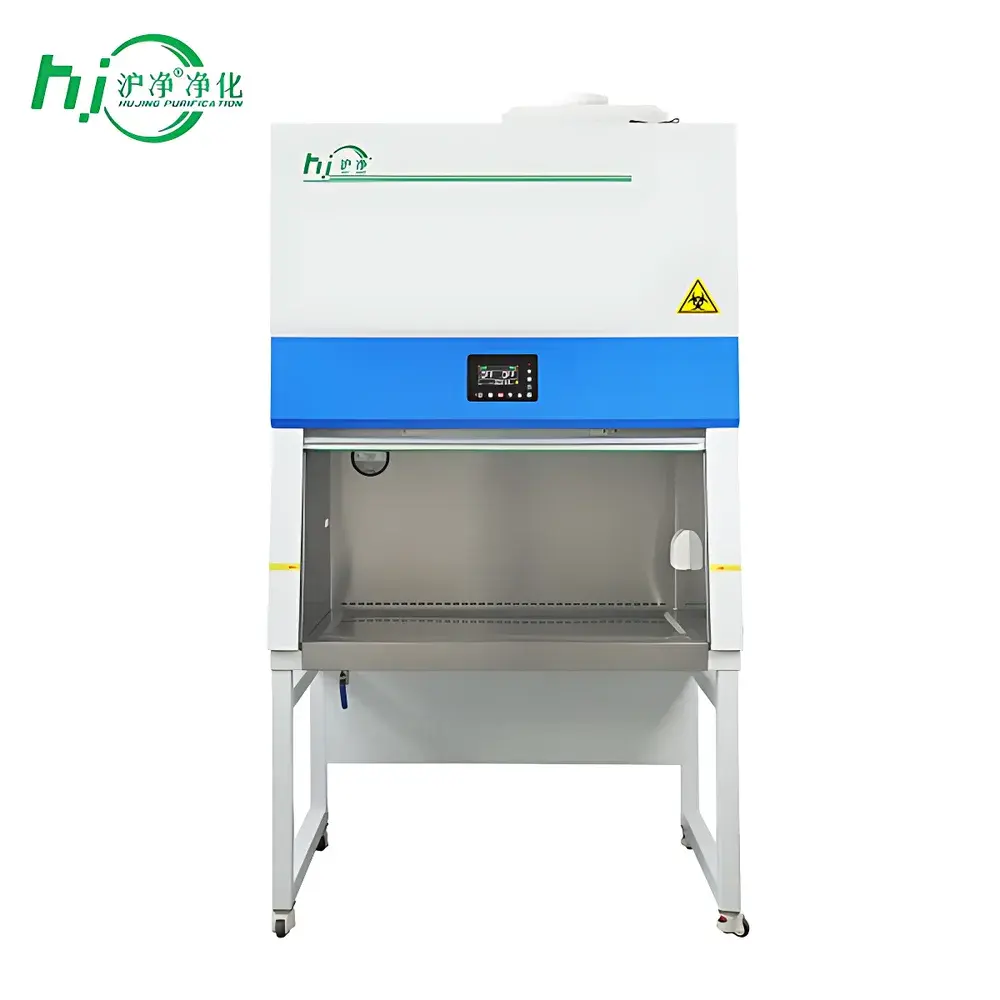
HJ BSC-1300IIB2 Class II Type B2 Full-Stainless-Steel Biological Safety Cabinet
| Brand | HJ Purification |
|---|---|
| Origin | Shanghai, China |
| Manufacturer Type | Direct Manufacturer |
| Country of Origin | China |
| Model | BSC-1300IIB2 |
| External Dimensions (L×W×H) | 1500 × 800 × 2270 mm |
| Internal Work Area Dimensions (L×W×H) | 1340 × 700 × 600 mm |
| Filter Efficiency (Particle Capture) | ≥98% @ 0.3 µm (DOP-tested) |
| Inflow Velocity | 0.55 ± 0.025 m/s |
| Downflow Velocity (Center) | 0.26 ± 0.025 m/s |
| Downflow Velocity (Rear) | 0.27 ± 0.025 m/s |
| Side Wall Inflow Velocity | 0.38 ± 0.025 m/s |
| Noise Level | ≤65 dB(A) |
| Vibration (Half-Peak) | ≤3 µm |
| Power Supply | AC 220 V / 50 Hz |
| Max. Power Consumption | 600 W |
| Net Weight | 250 kg |
| Work Surface Material | 304 Stainless Steel |
| Airflow Configuration | Total Exhaust (100% ducted), Negative Pressure Vertical Laminar Flow |
| Filtration System | Dual HEPA (Supply + Exhaust), DOP Test Port Included |
| Lighting | 20 W × 2 Fluorescent Lamps |
| UV Lamp | 30 W × 1 with Interlocked Safety Cutoff |
| Control Interface | LED Digital Panel with Door Height Monitoring & Alarm |
| Tilt Angle | 10° Ergonomic Design |
| Certifications | Compliant with EN 12469:2000, GB 50346-2011, and AS/NZS 2252.2:2013 |
Overview
The HJ BSC-1300IIB2 is a Class II, Type B2 (total-exhaust) biological safety cabinet engineered for high-containment applications requiring both personnel and product protection in microbiological, molecular biology, and pharmaceutical laboratories. Unlike recirculating Class II A2 cabinets, the BSC-1300IIB2 fully exhausts 100% of airflow through a dedicated hard-ducted system—eliminating any air recirculation within the laboratory environment. This configuration ensures absolute containment of hazardous aerosols, volatile chemicals, and genetically modified organisms (GMOs), making it suitable for work involving low-to-moderate risk biological agents (BSL-2) and select chemical compounds under strict ventilation control. The cabinet employs a dual HEPA filtration system: supply air passes through a pre-filter and primary HEPA filter to deliver ISO Class 5 (Federal Standard 209E Class 100) laminar downflow over the work surface, while exhaust air undergoes secondary HEPA filtration prior to external discharge. All internal surfaces are constructed from electropolished 304 stainless steel—non-porous, corrosion-resistant, and compatible with common disinfectants including 70% ethanol, sodium hypochlorite, and hydrogen peroxide vapor.
Key Features
- Full stainless-steel construction (304 grade) with seamless, radius-curved corners and smooth-welded joints—designed for rapid decontamination and long-term resistance to chemical degradation.
- Vertically oriented, negative-pressure laminar airflow system with precisely calibrated inflow (0.55 m/s) and uniform downflow velocities (0.26–0.27 m/s) across the work area—validated per EN 12469 Annex C protocols.
- Motorized or manually operated sash window with positional memory, adjustable height locking, and integrated sash-height monitoring circuitry that triggers audible/visual alarms when out-of-range positioning occurs.
- Interlocked UV germicidal lamp (30 W) with automatic cutoff upon sash opening—preventing operator exposure during active irradiation cycles.
- DOP (Di-Octyl Phthalate) test port and built-in differential pressure gauge for routine filter integrity verification and real-time airflow performance tracking.
- Ergonomically optimized 10° forward tilt of the work surface—reducing operator fatigue during extended procedures and improving visual alignment with sample handling zones.
- Dedicated 220 V AC power outlets (IPX4-rated waterproof) and liquid waste drainage interface located within the work chamber—enabling integration of centrifuges, pipette controllers, and other benchtop instrumentation without compromising containment.
Sample Compatibility & Compliance
The BSC-1300IIB2 supports safe manipulation of a broad range of biological materials—including bacterial cultures, viral vectors, mammalian cell lines, and RNA/DNA extraction reagents—as well as limited use with low-volatility solvents when connected to a properly balanced exhaust system. Its design conforms to international biosafety standards including EN 12469:2000 (European standard for performance requirements), GB 50346-2011 (Chinese national standard for biosafety laboratory construction), and AS/NZS 2252.2:2013 (Australian/New Zealand standard for microbiological safety cabinets). It is validated for ISO 14644-1 Class 5 cleanroom performance at ≥0.5 µm particle count, with microbial recovery rates consistently ≤0.5 CFU/plate·hour using Φ90 mm settle plates. The cabinet meets GLP-compliant documentation requirements for audit-ready operation logs when paired with optional data-logging accessories.
Software & Data Management
While the base unit features an embedded LED digital control panel with real-time sash position feedback, airflow status indicators, and UV timer functionality, optional firmware upgrades support RS-485 or Modbus RTU communication for integration into centralized laboratory building management systems (BMS). All operational parameters—including sash height, UV activation history, and alarm events—are timestamped and stored locally for up to 30 days. When deployed in regulated environments (e.g., pharmaceutical QC labs), the cabinet can be configured to generate CSV-formatted audit trails compliant with FDA 21 CFR Part 11 requirements, provided third-party validation and electronic signature modules are implemented per site-specific SOPs.
Applications
- Cell culture maintenance and transfection under sterile conditions with simultaneous chemical exposure control.
- Preparation of clinical diagnostic reagents where cross-contamination between samples must be eliminated.
- Handling of recombinant DNA constructs in accordance with NIH Guidelines for Recombinant DNA Research.
- Pharmaceutical aseptic processing of non-sterile intermediates prior to terminal sterilization steps.
- Environmental microbiology workflows involving air and water sampling analysis with pathogen isolation.
- Teaching laboratories requiring robust, serviceable containment infrastructure for undergraduate and graduate bioscience instruction.
FAQ
Is the BSC-1300IIB2 certified to EN 12469:2000?
Yes—the cabinet undergoes full type testing per EN 12469:2000 Annexes A–F, including containment validation (KI-Discus test), airflow smoke visualization, and filter integrity assessment.
Can this cabinet operate without external ducting?
No. As a Type B2 total-exhaust cabinet, it requires connection to a dedicated, balanced exhaust system with stable static pressure compensation. Recirculation is not supported.
What maintenance intervals are recommended for HEPA filters?
Annual DOP testing is required; filter replacement frequency depends on usage intensity and ambient particulate load—but typically ranges from 3 to 5 years under normal laboratory conditions.
Does the unit include validation documentation?
Factory-installed units ship with a Certificate of Conformance, initial airflow calibration report, and filter integrity test record. Site-specific IQ/OQ documentation kits are available upon request.
Is the stainless-steel work surface resistant to hydrochloric acid exposure?
304 stainless steel offers moderate resistance to dilute HCl (<10%) at room temperature but is not recommended for prolonged or concentrated contact; alternative passivation or material upgrades (e.g., 316L) may be specified for aggressive chemistries.



