
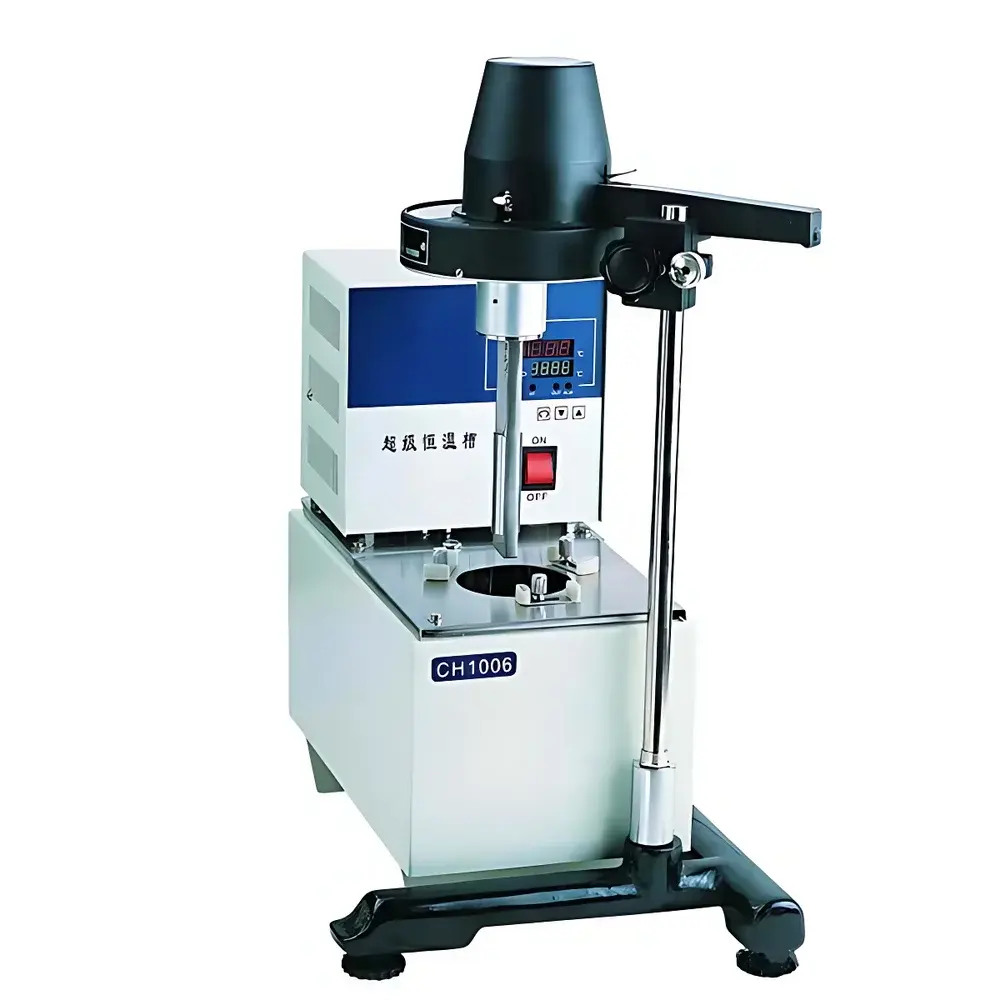
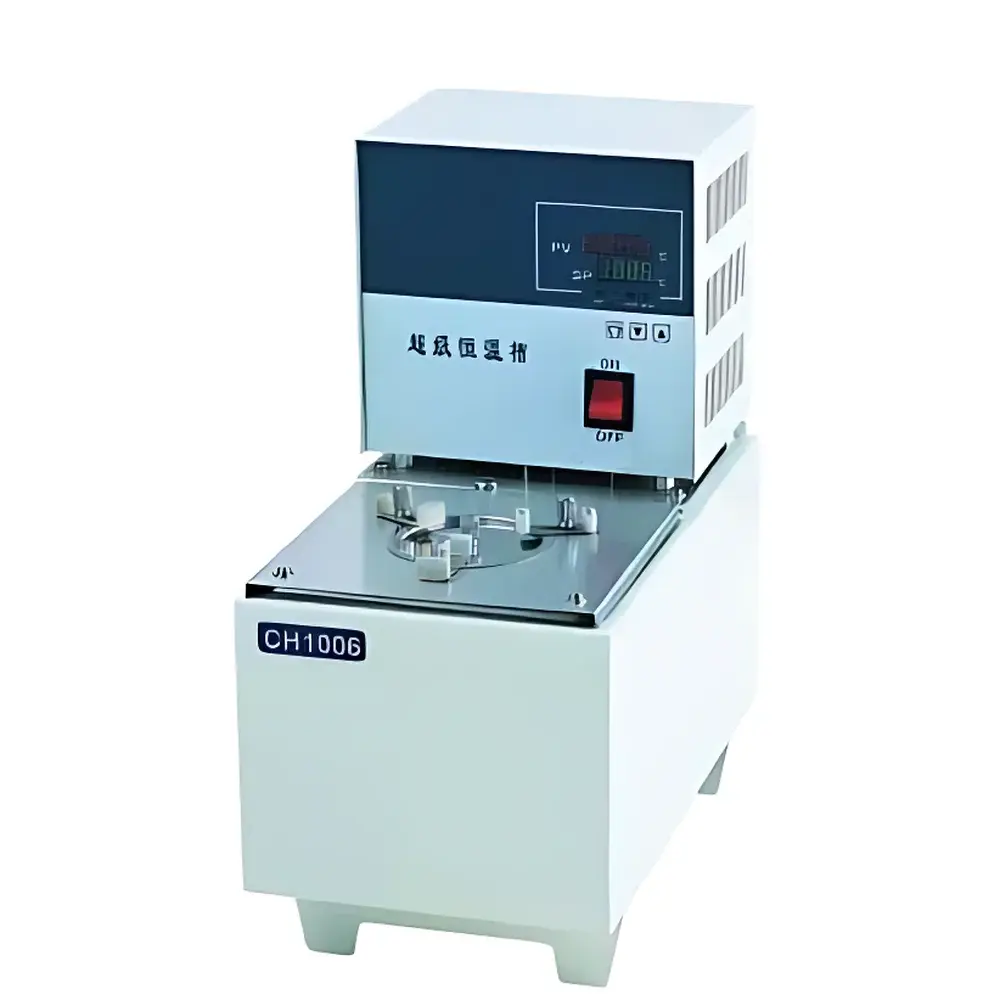
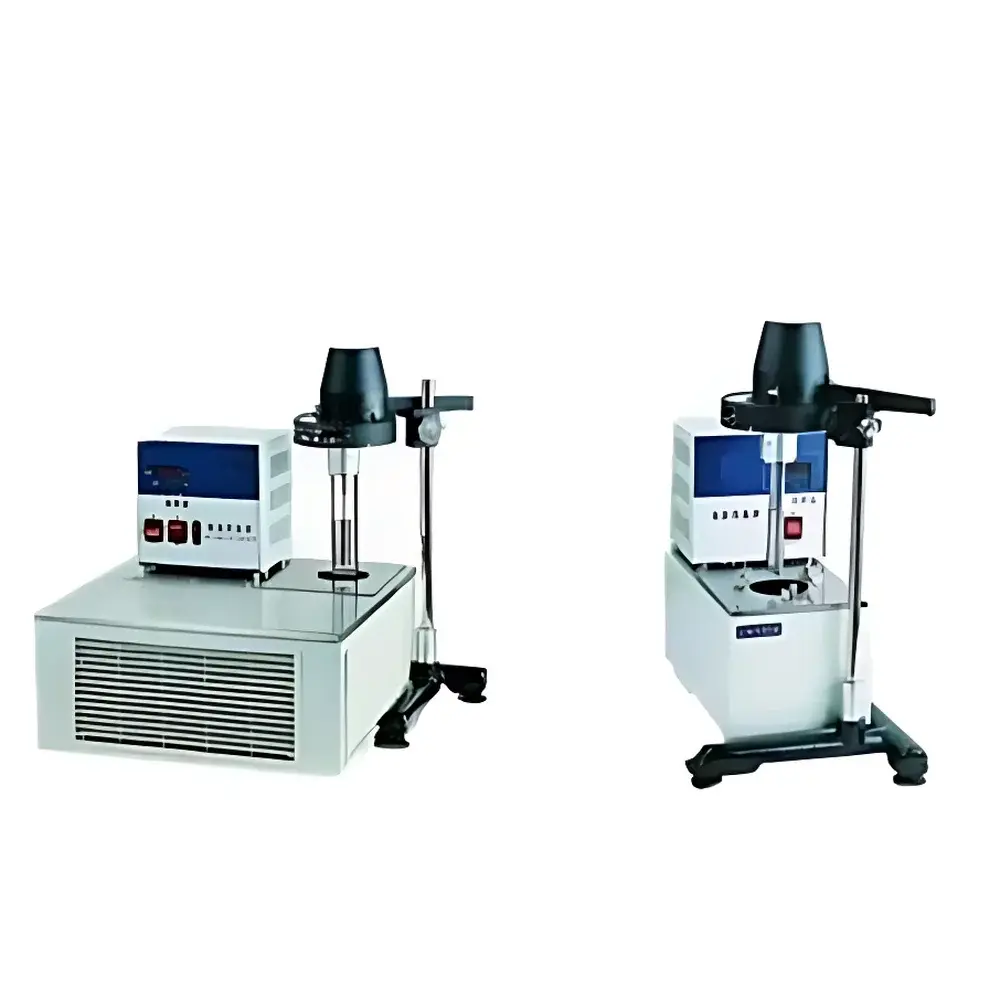
Yoyilab CH1006 Rotational Viscometer Dedicated Constant-Temperature Bath
| Brand | Yoyilab |
|---|---|
| Origin | Shanghai, China |
| Manufacturer Type | Direct Manufacturer |
| Product Category | Domestic |
| Model | CH1006 |
| Instrument Type | Constant-Temperature Bath |
| Circulation Mode | Internal & External Circulation |
| Temperature Control Function | Heating-Only |
| Bath Volume | 6 L |
| Temperature Range | Ambient + 20 °C to 100 °C |
| Temperature Stability | ±0.1 °C |
| Temperature Resolution | 0.1 °C |
| Opening Diameter | Φ70 mm |
| Internal Chamber Dimensions (L×W×D) | 145 × 150 × 150 mm |
| Pump Flow Rate | 8 L/min |
| Power Consumption | 0.7 kW |
| External Dimensions (W×D×H) | 190 × 334 × 345 mm |
Overview
The Yoyilab CH1006 Rotational Viscometer Dedicated Constant-Temperature Bath is an engineered thermal environment system designed specifically for precision rheological measurements using rotational viscometers. It operates on the principle of forced liquid circulation—typically water or silicone oil—to maintain a highly uniform and stable temperature field around sample containers (e.g., 200 mL beakers) placed within its stainless-steel bath chamber. With a working temperature range from ambient +20 °C up to 100 °C and a stability of ±0.1 °C, the CH1006 ensures minimal thermal drift during viscosity testing, directly supporting compliance with standardized test methods such as ASTM D2196, ISO 2555, and GB/T 2794—where temperature control is a critical parameter affecting shear-rate-dependent viscosity reporting. Its compact footprint (190 × 334 × 345 mm) and optimized internal geometry—including a Φ70 mm central aperture and rigid sample holder assembly—enable seamless integration with common benchtop viscometers (e.g., Brookfield DV2T, Anton Paar Physica MCR series), eliminating manual temperature adjustment and reducing operator-induced variability.
Key Features
- Microprocessor-based PID temperature control with auto-tuning capability, delivering high repeatability across extended operational cycles
- Dual-mode circulation system (internal recirculation + external pump outlet) for enhanced thermal homogeneity and compatibility with auxiliary equipment
- 304 stainless-steel inner tank with precision-machined dimensions (145 × 150 × 150 mm) and corrosion-resistant finish, ensuring long-term fluid integrity and ease of cleaning
- Integrated digital display with 0.1 °C resolution and real-time setpoint/actual temperature feedback
- Thermally insulated housing and optimized heater layout enabling rapid heating response without overshoot, even at upper-range setpoints (e.g., 95–100 °C)
- Fixed-position sample support structure accommodating standard 200 mL cylindrical vessels, minimizing mechanical disturbance to rotating spindles during measurement
Sample Compatibility & Compliance
The CH1006 is validated for use with aqueous, glycol-based, and low-viscosity silicone oil media, supporting both Newtonian and non-Newtonian fluid characterization under controlled thermal conditions. Its design conforms to general laboratory safety requirements per IEC 61010-1 and meets structural robustness expectations for Class II laboratory equipment. While not intrinsically rated for hazardous environments, it supports GLP-compliant workflows when paired with audit-trail-capable viscometry software. The bath’s temperature stability specification (±0.1 °C) satisfies minimum requirements outlined in USP for viscosity determinations and aligns with calibration traceability frameworks used in ISO/IEC 17025-accredited laboratories. No refrigeration or cryogenic capability is included; this unit is strictly heating-only and intended for ambient-plus applications only.
Software & Data Management
The CH1006 operates as a standalone analog-digital hybrid instrument with no embedded network interface or native data logging. Temperature setpoints and real-time readings are accessible exclusively via its front-panel LED display. For integrated data acquisition, users may connect external PT100 probes (not supplied) to third-party DAQ systems or viscometer controllers supporting RS232/RS485 or analog voltage output (0–5 V or 4–20 mA, if equipped with optional signal interface module). When deployed in regulated environments, documented calibration records—including verification of temperature uniformity across the bath volume using NIST-traceable thermometers—and maintenance logs must be retained per FDA 21 CFR Part 11 guidance for instruments influencing analytical result validity.
Applications
- Quality control testing of polymer solutions, coatings, adhesives, and pharmaceutical suspensions where viscosity-temperature dependence must be quantified per ISO 3219
- Routine calibration verification of rotational viscometers using reference oils (e.g., Cannon-Fenske certified standards) across defined thermal gradients
- Stability assessment of emulsions and colloidal dispersions under accelerated thermal aging protocols
- Supporting ASTM D1084 gel time measurements requiring precise bath temperature maintenance during resin curing kinetics studies
- Academic research in soft matter physics, particularly for characterizing temperature-sensitive yield stress fluids and thixotropic recovery behavior
FAQ
Does the CH1006 support sub-ambient cooling?
No. This model is a heating-only constant-temperature bath with a lower operational limit of ambient +20 °C. It does not incorporate refrigeration or compressor-based cooling.
Can the CH1006 be used with silicone oil as the heat transfer medium?
Yes—provided the oil’s flash point exceeds the maximum operating temperature (100 °C) and its viscosity remains compatible with the 8 L/min pump flow rate. Users must verify chemical compatibility with 304 stainless steel and monitor for thermal degradation over time.
Is external circulation mandatory for viscometer integration?
Not mandatory, but recommended for improved temperature uniformity when multiple samples or larger vessels are used. Internal circulation alone suffices for single-beaker configurations under standard test conditions.
What maintenance intervals are recommended for optimal thermal performance?
Inspect and clean the external heat sink fins every 6 months; verify pump impeller integrity annually; recalibrate temperature sensors against a traceable reference thermometer at least once per year or after any impact event.
Does the unit include a certificate of conformance or factory calibration report?
Standard delivery includes a manufacturer’s conformity statement. A formal calibration certificate with uncertainty budget and traceability documentation is available upon request at additional cost and requires lead-time coordination.



