
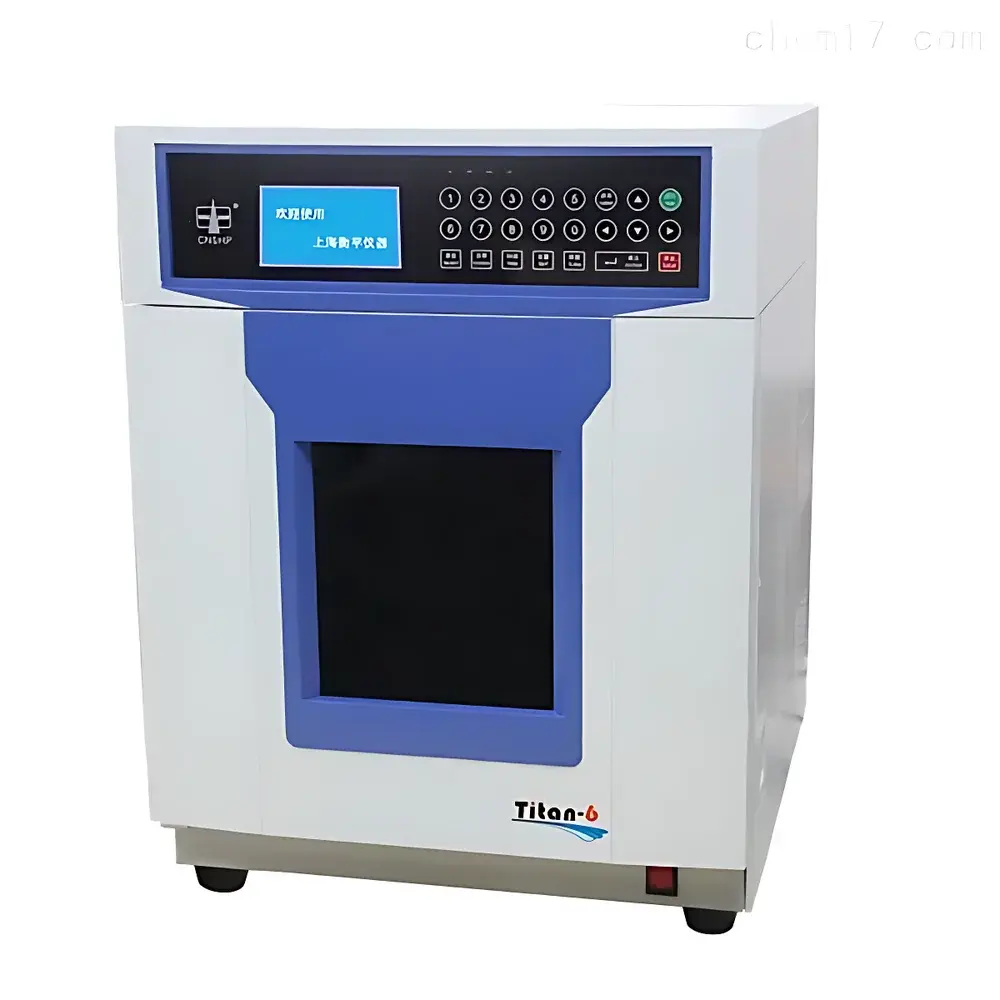
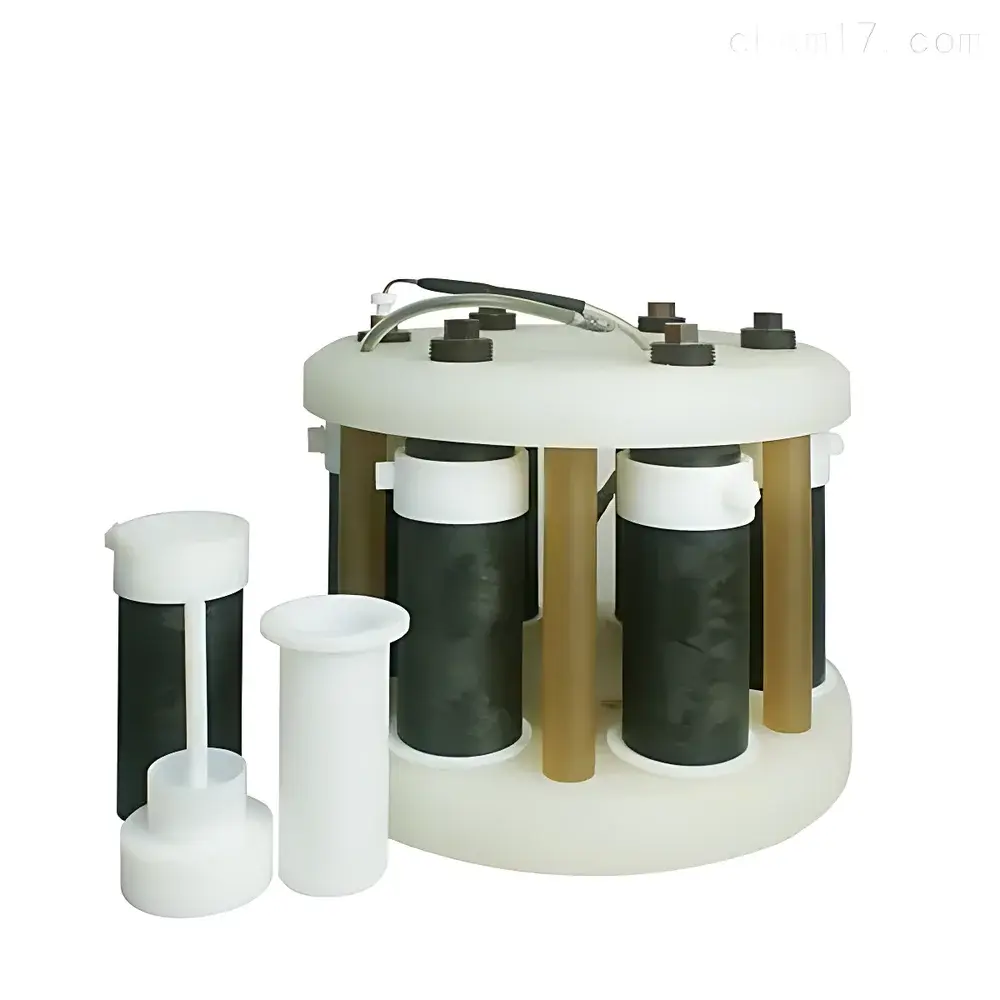
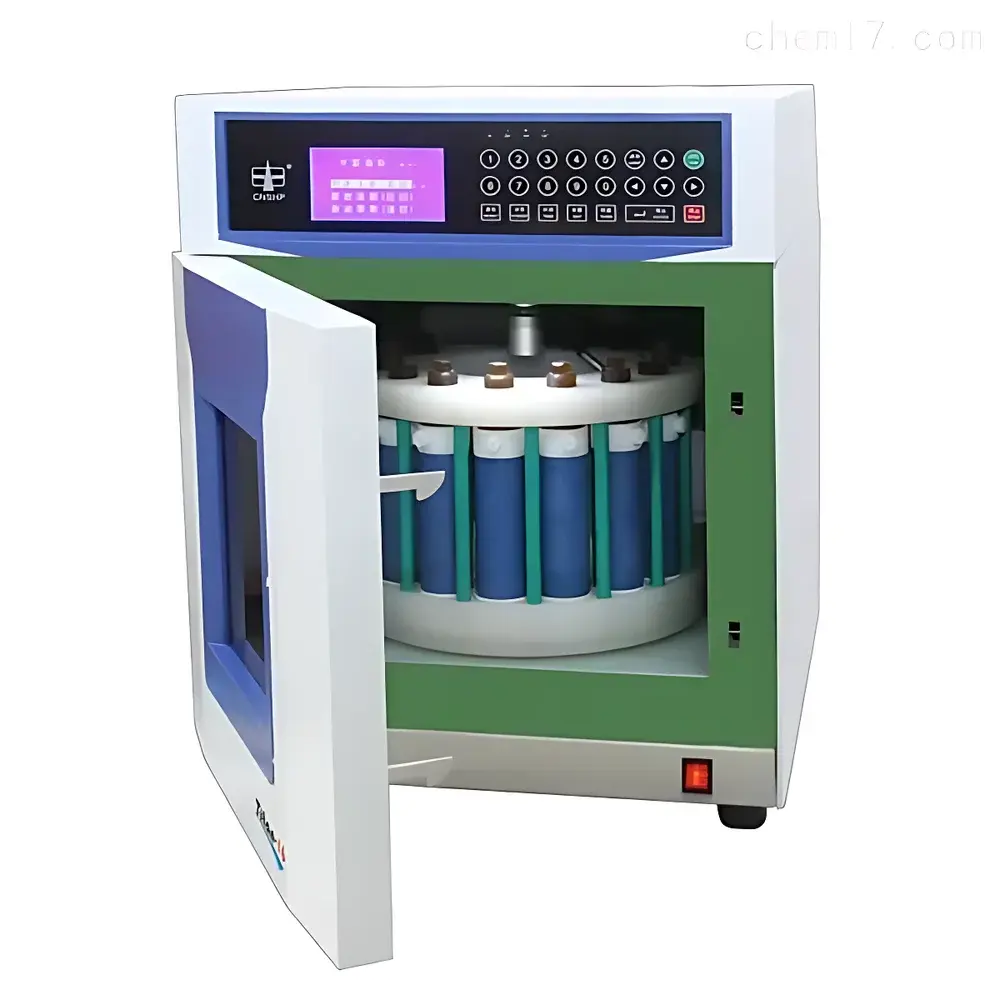
yoyilab Titan-6 Industrial-Grade 6-Position High-Throughput Microwave Digestion and Extraction System (Optional Acid Evaporation Module)
| Brand | yoyilab |
|---|---|
| Origin | Shanghai, China |
| Manufacturer Type | Direct Manufacturer |
| Country of Origin | China |
| Model | Titan-6 |
| Price | USD 6,700 (FOB Shanghai) |
| Cavity Grade | Industrial-Grade |
| Batch Capacity | 6 Samples |
| Microwave Source | Single Magnetron |
| Max Temperature | 300 °C |
| Max Pressure | 20 MPa |
Overview
The yoyilab Titan-6 is an industrial-grade, high-throughput microwave digestion and extraction system engineered for rigorous sample preparation in analytical laboratories. It operates on the principle of controlled microwave energy absorption by polar molecules—primarily water and acids—within sealed quartz or composite fiber vessels, enabling rapid, uniform, and reproducible thermal decomposition of organic matrices and dissolution of inorganic species under elevated temperature and pressure conditions. Designed for compliance with ISO/IEC 17025 pre-analytical requirements and aligned with ASTM D5511, EPA Method 3052, and GB/T 22914–2008 protocols, the Titan-6 serves as a critical first step in elemental analysis workflows—including ICP-OES, ICP-MS, AAS, and HG-AFS—where complete matrix destruction, low blank levels, and trace-element preservation are non-negotiable.
Key Features
- Industrial-class 316L stainless steel cavity with eight-layer PFA (perfluoroalkoxy) coating for exceptional corrosion resistance against HF, HNO₃, HCl, and aqua regia vapors.
- Single-magnetron microwave source (2450 MHz) with automatic frequency tuning for stable power delivery and extended magnetron lifetime.
- Real-time, closed-loop PID control of both temperature (via high-precision Pt1000 sensor, −40 °C to 500 °C, ±0.1 °C accuracy) and pressure (via contactless piezoelectric crystal sensor, 0–20 MPa, ±0.01 MPa control precision).
- Unidirectional continuous rotation of the 6-position rotor ensures homogeneous microwave field distribution and eliminates thermal hotspots associated with bidirectional stop-start motion.
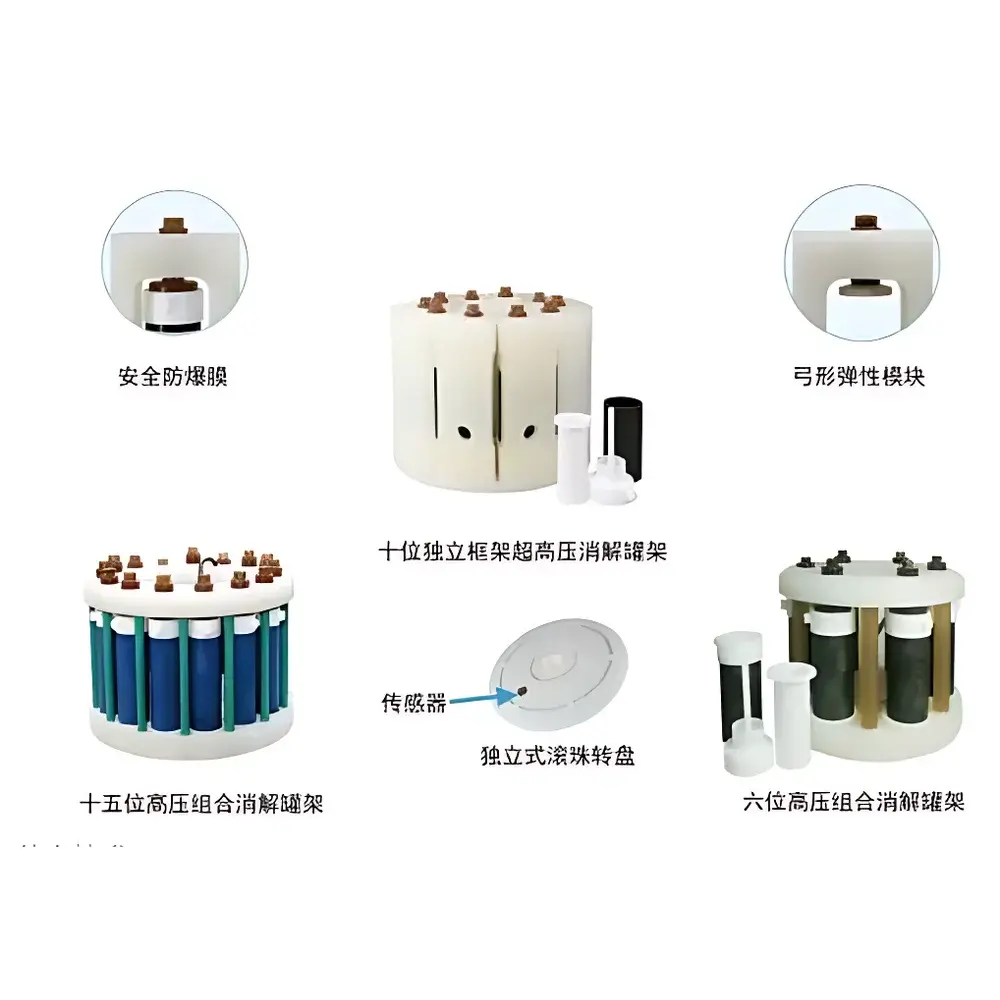
- Multi-tiered active and passive safety architecture: smart interlocked door with self-checking electromagnetic lock; real-time status LEDs for door, microwave emission, rotor motion, and keypad input; explosion-proof composite fiber outer vessels rated to 85 MPa (12,500 psi); dual-pressure relief mechanism combining bow-spring elastic modules and rupture discs.
- Optimized top-exhaust ventilation system reduces acid vapor residence time and accelerates post-digestion cooling, enhancing throughput and cavity longevity.
Sample Compatibility & Compliance
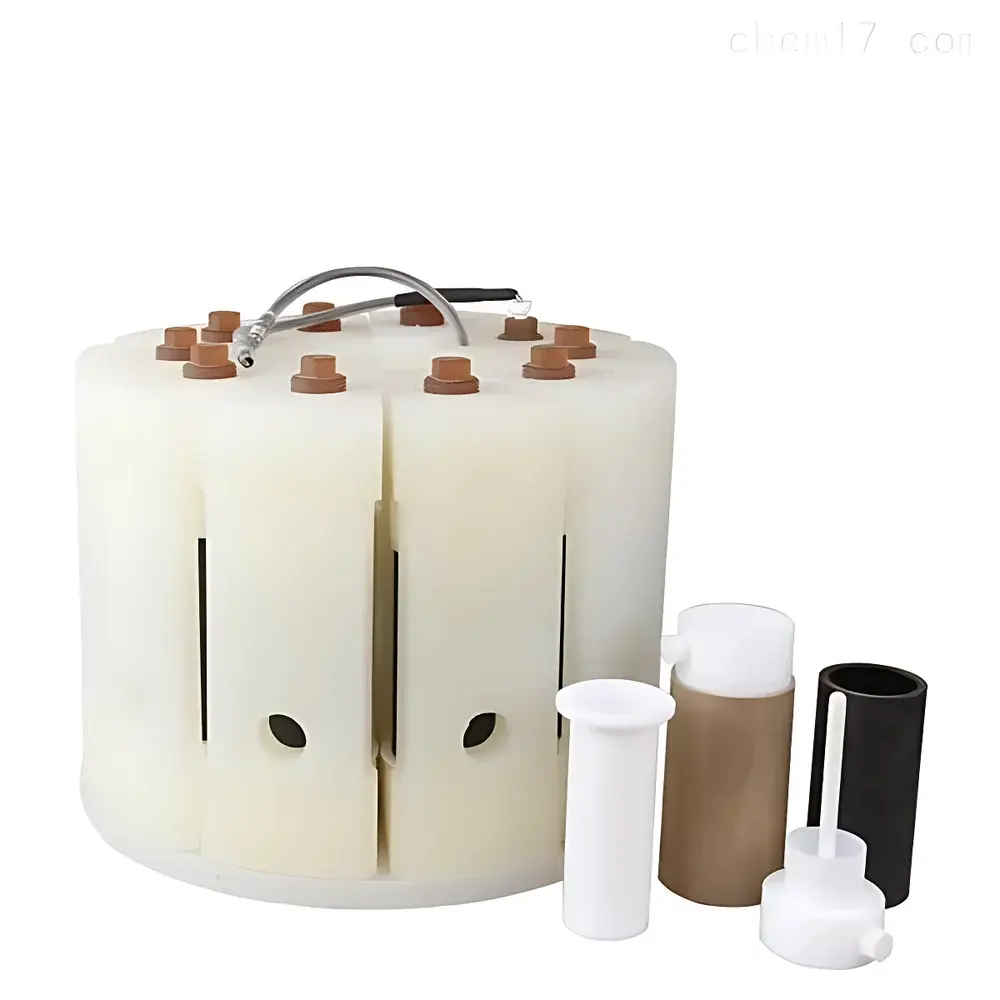
The Titan-6 accommodates standard 55 mL or 100 mL high-pressure digestion vessels (compatible with industry-standard rotor configurations), supporting solid, semi-solid, and liquid samples across environmental, geological, food, pharmaceutical, and clinical research applications. All vessel assemblies utilize PFA-coated composite fiber outer sleeves—superior to modified PEEK in thermal stability (>300 °C), acid resistance, and structural integrity under cyclic pressurization. The system meets CE marking requirements for electromagnetic compatibility (EN 61326-1) and electrical safety (EN 61010-1). Its design supports GLP/GMP-aligned documentation practices, including full audit trails for method parameters, run logs, and calibration records when paired with optional compliant software packages.
Software & Data Management
The Titan-6 features an embedded touchscreen interface with intuitive icon-driven navigation and multilingual support (English, Chinese, Spanish). All method parameters—including ramp profiles, hold times, target temperature/pressure setpoints, and power modulation schemes—are stored locally with timestamped execution logs. Optional USB export enables traceable data transfer to LIMS or laboratory informatics platforms. While the base configuration does not include FDA 21 CFR Part 11-compliant electronic signatures or role-based access control, the firmware architecture allows integration with validated third-party software modules that provide full electronic record integrity, user authentication, and change control—essential for regulated QC/QA environments.
Applications
- Environmental analysis: Total digestion of soils, sediments, sludges, and airborne particulates for heavy metal quantification (Pb, Cd, As, Cr, Hg).
- Food and agriculture: Rapid mineral profiling of cereals, dairy products, and plant tissues; recovery optimization for Se, I, and Zn in fortified foods.
- Geochemical testing: Complete dissolution of silicate rocks and refractory minerals (e.g., zircon, monazite) prior to REE determination.
- Pharmaceutical R&D: Residual catalyst (Pd, Pt, Rh) analysis in active pharmaceutical ingredients (APIs) following ICH Q2(R2) validation guidelines.
- Clinical and biological research: Phosphorus, calcium, and magnesium quantification in bone ash and soft tissue homogenates using standardized wet-ashing protocols.
FAQ
What safety certifications does the Titan-6 hold?
The instrument complies with EN 61010-1 (Safety Requirements for Electrical Equipment for Measurement, Control, and Laboratory Use) and EN 61326-1 (EMC for Laboratory Equipment). It carries CE marking for the European Economic Area.
Can the Titan-6 be used with hydrofluoric acid (HF)?
Yes—when equipped with quartz inner vessels and PFA-coated composite fiber outer sleeves, the system is compatible with HF-containing digestion mixtures up to 5% v/v, provided appropriate procedural controls and PPE are enforced.
Is the optional MTC-II acid evaporation module compatible with ICP-MS trace analysis?
The MTC-II features PID-controlled, multi-step programmable heating (RT–250 °C, ±0.1 °C), PFA-coated aluminum heating blocks, and independent temperature monitoring per zone—making it suitable for low-blank final volume reduction prior to ultratrace elemental analysis.
Does the Titan-6 support remote monitoring or network connectivity?
The base unit operates as a standalone system with local touchscreen control. Ethernet or Wi-Fi connectivity is not natively supported but can be added via external industrial gateways interfacing with Modbus TCP or OPC UA protocols for facility-wide integration.
What is the expected service life of the magnetron under routine operation?
With proper cooling, regular maintenance, and adherence to recommended duty cycles (≤8 hrs/day average), the single magnetron is rated for ≥5,000 hours of operational life—equivalent to approximately 3–4 years of typical laboratory use.
Related Products



