
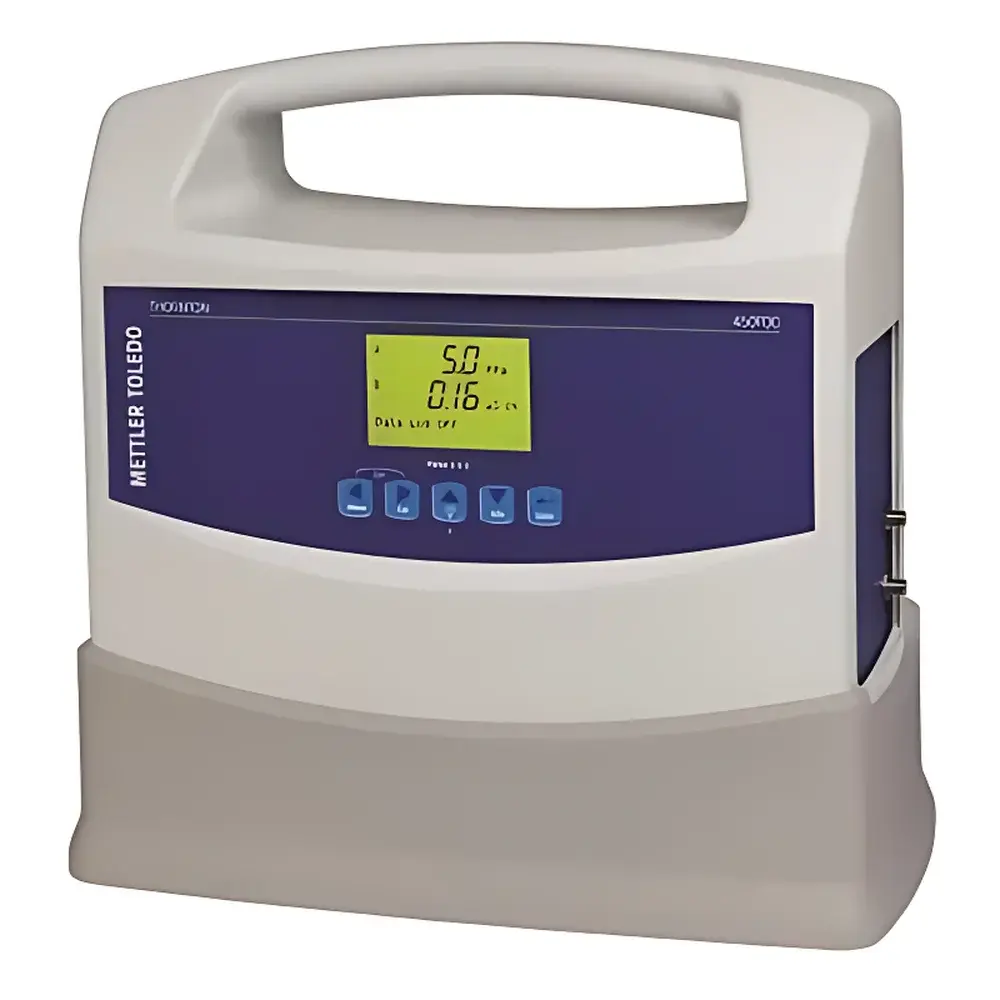
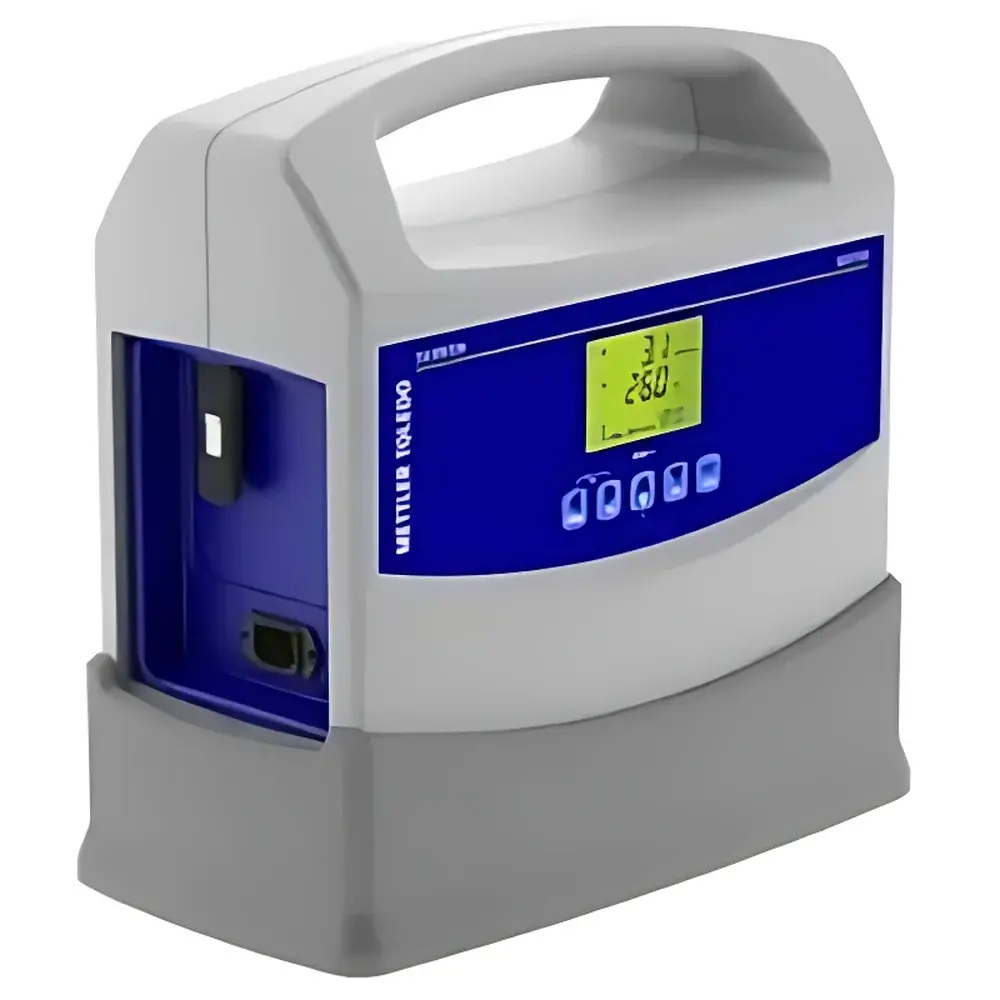
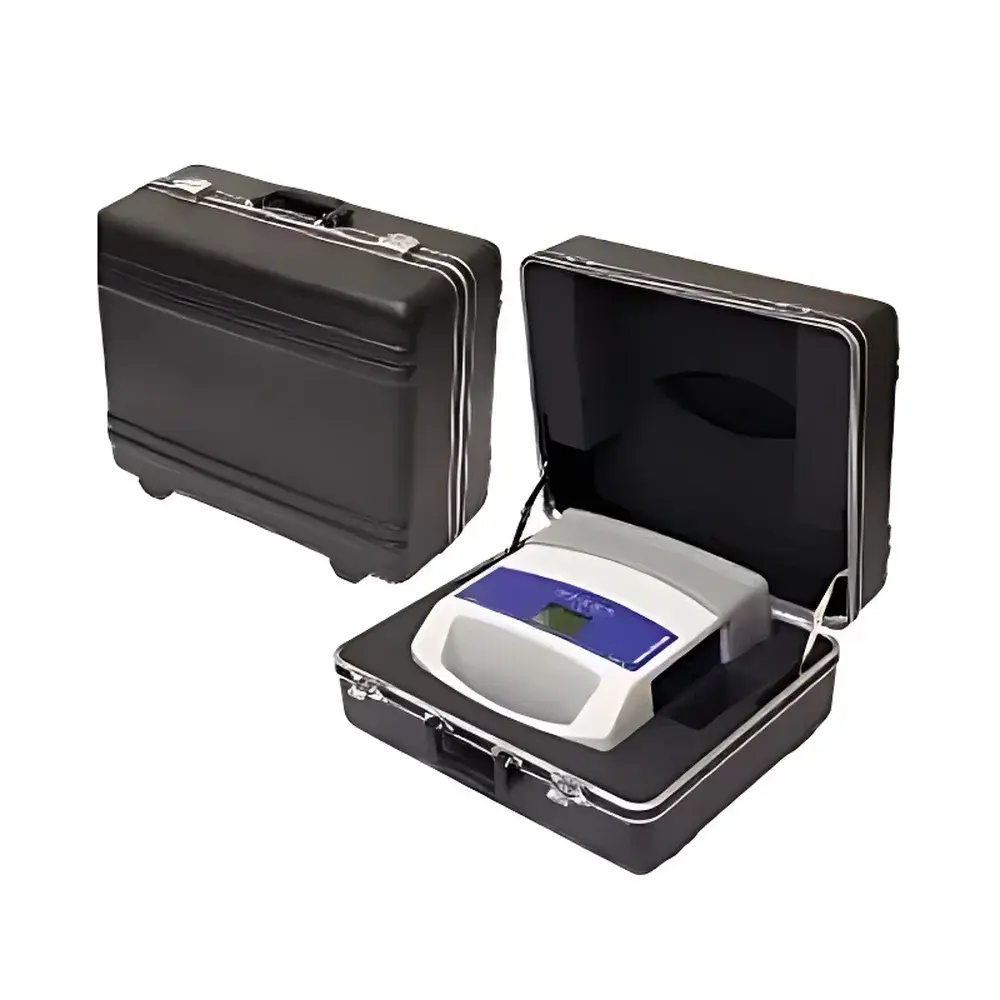
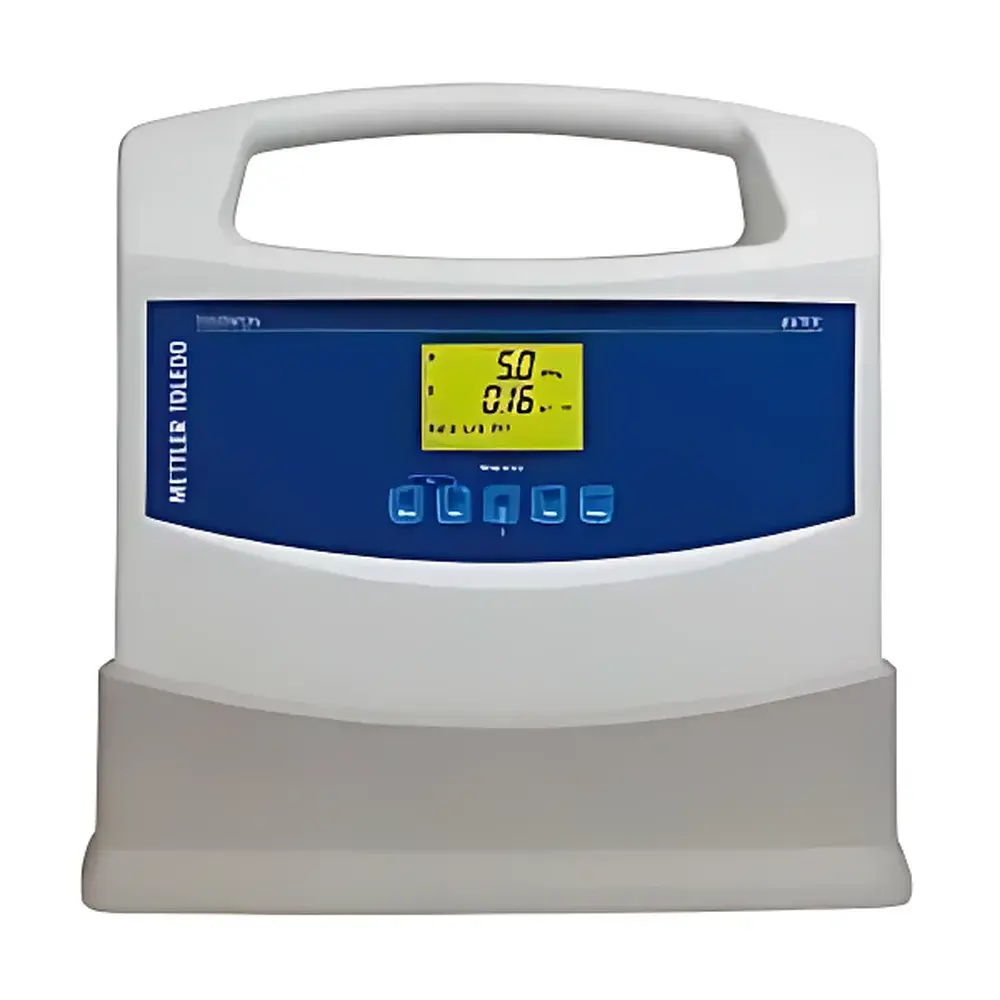
METTLER TOLEDO Thornton 450TOC Portable Total Organic Carbon Analyzer
| Brand | METTLER TOLEDO |
|---|---|
| Origin | USA |
| Model | 450TOC |
| Instrument Type | Portable TOC Analyzer |
| Detection Principle | Direct Conductivity Measurement |
| Oxidation Method | UV Photolysis (185 nm) |
| Measurement Range | 0.05 – 1000 ppb C (μg C/L) |
| Accuracy | ±0.1 ppb C for TOC < 2.0 ppb |
| Resolution | 0.001 ppb C (μg C/L) |
| Detection Limit | 0.025 ppb C |
| Repeatability | ±0.05 ppb C (< 5 ppb), ±1.0% (> 5 ppb) |
| Sample Temperature | 0–70 °C |
| Particle Size Limit | < 100 µm |
| Conductivity Requirement | ≥0.5 MΩ·cm (≤2 µS/cm) |
| pH Limit | < 7.5 |
| Flow Rate | 20 mL/min |
| Inlet Pressure | 4–85 psig (0.3–5.8 bar) |
| Dimensions | 334 × 185 × 324 mm |
| Weight (with base) | 7.0 kg |
| Enclosure Material | UL 94 V-0 Flame-Retardant Polystyrene |
| Wetted Materials | 316 Stainless Steel, Quartz, PEEK, Titanium, PTFE, Silicone, FFKM, EPDM |
| Environmental Operating Range | 5–50 °C / 5–80% RH (non-condensing) |
| Power | 100–240 VAC, 50/60 Hz, max. 40 W |
| Certifications | CE, cULus |
| Traceability | NIST-traceable conductivity & temperature sensors per ASTM D1125 and D5391 |
| Compliance | ASTM D5173, USP <643>, EP 2.2.44, JP 2.59, ChP 0912 |
Overview
The METTLER TOLEDO Thornton 450TOC Portable Total Organic Carbon Analyzer is an engineered solution for real-time, on-site quantification of total organic carbon in ultrapure water (UPW) and high-purity process water systems. It employs direct conductivity detection following low-pressure ultraviolet (UV) photolysis at 185 nm—a method standardized in ASTM D5173—to oxidize non-purgeable organic compounds into CO₂, which dissolves to form carbonic acid and alters the sample’s specific conductance. This principle eliminates reagent dependency, avoids catalytic interference, and ensures stable baseline performance across extended operation. Designed for deployment in pharmaceutical clean utilities, semiconductor fab monitoring points, biotech facility validation zones, and regulated water distribution loops, the 450TOC delivers laboratory-grade data without requiring off-site sampling or centralized lab turnaround. Its compact architecture enables rapid relocation between sampling ports—critical during system commissioning, routine surveillance, or root-cause diagnostics—while maintaining full compliance with pharmacopeial requirements including USP , EP 2.2.44, JP 2.59, and ChP 0912.
Key Features
- True portable design: Integrated battery-free operation with universal AC input (100–240 VAC); weighs only 7.0 kg with base—optimized for handheld transport and benchtop or wall-mount installation.
- UV oxidation module: Sealed quartz UV lamp (185 nm) with calibrated intensity and lifetime monitoring; no chemical oxidants or catalysts required.
- High-sensitivity conductivity cell: Dual-electrode, flow-through design with NIST-traceable calibration; resolution down to 0.001 ppb C and detection limit of 0.025 ppb C.
- Real-time continuous measurement: Initial response within ≤60 seconds; stable readings maintained under dynamic flow conditions (20 mL/min) across inlet pressures from 0.3 to 5.8 bar.
- Robust fluidic path: All-wetted materials conform to FDA-compliant specifications—316 stainless steel, PEEK, titanium, quartz, and perfluoroelastomer (FFKM) seals—ensuring compatibility with aggressive UPW chemistries and minimizing extractables.
- On-device data handling: USB host port supports FAT32-formatted flash drives for automatic timestamped data logging; optional USB thermal printer interface enables immediate hard-copy reporting compliant with ALCOA+ principles.
Sample Compatibility & Compliance
The 450TOC is validated for use with resistivity ranges from 0.5 to 18.2 MΩ·cm (conductivity: 0.055–2.0 µS/cm), accommodating both pretreated feedwater and final-stage ultrapure water. Sample temperature must remain between 0–70 °C, with particulate load limited to <100 µm (integrated 60 µm stainless-steel inlet filter prevents sensor fouling). pH must not exceed 7.5 to avoid carbonate interference in low-conductivity matrices. The analyzer meets electromagnetic compatibility (EMC) and safety standards per CE and cULus directives. Conductivity and temperature sensors are certified traceable to NIST standards under ASTM D1125 (electrical conductivity) and ASTM D5391 (ultrapure water conductivity), supporting audit readiness under FDA 21 CFR Part 11 when paired with validated software configurations. System qualification protocols—including Installation Qualification (IQ), Operational Qualification (OQ), and Performance Qualification (PQ)—are reduced by up to 80% versus traditional lab-based TOC methods due to elimination of sampling variability and transport artifacts.
Software & Data Management
Data acquisition and export are managed via embedded firmware with no external PC dependency. Measurement records include TOC concentration (ppb C), specific conductivity (µS/cm), temperature (°C), UV lamp status, and system fault codes—all logged with ISO 8601 timestamps. Files export in CSV format for integration into LIMS, MES, or electronic batch record (EBR) systems. While the 450TOC does not include onboard trend visualization, its structured output supports automated parsing for SPC charting, deviation alerting, and statistical process control in GxP environments. Audit trails are maintained through immutable device logs; firmware updates follow controlled change management procedures aligned with ICH Q9 and ISO 13485 requirements.
Applications
- Pharmaceutical water system validation: Point-of-use TOC verification during PQ studies for purified water (PW) and water for injection (WFI) loops per USP and EU Annex 1.
- Semiconductor fab utility monitoring: Real-time detection of organic contamination spikes following filter changeouts, valve actuations, or maintenance interventions.
- Biotechnology facility troubleshooting: Rapid isolation of TOC excursions to specific sub-loops (e.g., media prep, buffer storage, CIP skids) without cross-contamination risk from grab sampling.
- Contract manufacturing organization (CMO) support: Mobile deployment across multiple client sites for concurrent system assessments and regulatory inspection readiness.
- Educational and field service training: Used in technical workshops to demonstrate pharmacopeial TOC methodology fundamentals and system hygiene best practices.
FAQ
Does the 450TOC require daily calibration?
No. The instrument uses a zero-reference conductivity measurement principle and factory-calibrated UV lamp intensity; routine verification is performed using certified low-TOC standard water (e.g., 1 ppb C KHP solution) per ASTM D5173 Section 9.
Can it measure TOC in seawater or wastewater?
No. The 450TOC is designed exclusively for high-resistivity water systems (≥0.5 MΩ·cm). High ionic strength matrices cause conductance saturation and violate the linear response assumption of direct conductivity detection.
Is the UV lamp user-replaceable?
Yes. The quartz-encapsulated 185 nm lamp is a field-serviceable component with documented replacement procedure and post-installation intensity verification protocol.
What is the expected service life of the conductivity cell?
Under normal UPW conditions and recommended maintenance (quarterly cleaning with dilute nitric acid), the dual-electrode cell maintains specification performance for ≥24 months.
Does it support 21 CFR Part 11 compliance?
The hardware supports Part 11 readiness when integrated with validated third-party data management software that enforces electronic signatures, audit trails, and role-based access control—features not embedded in the standalone firmware.
Related Products







