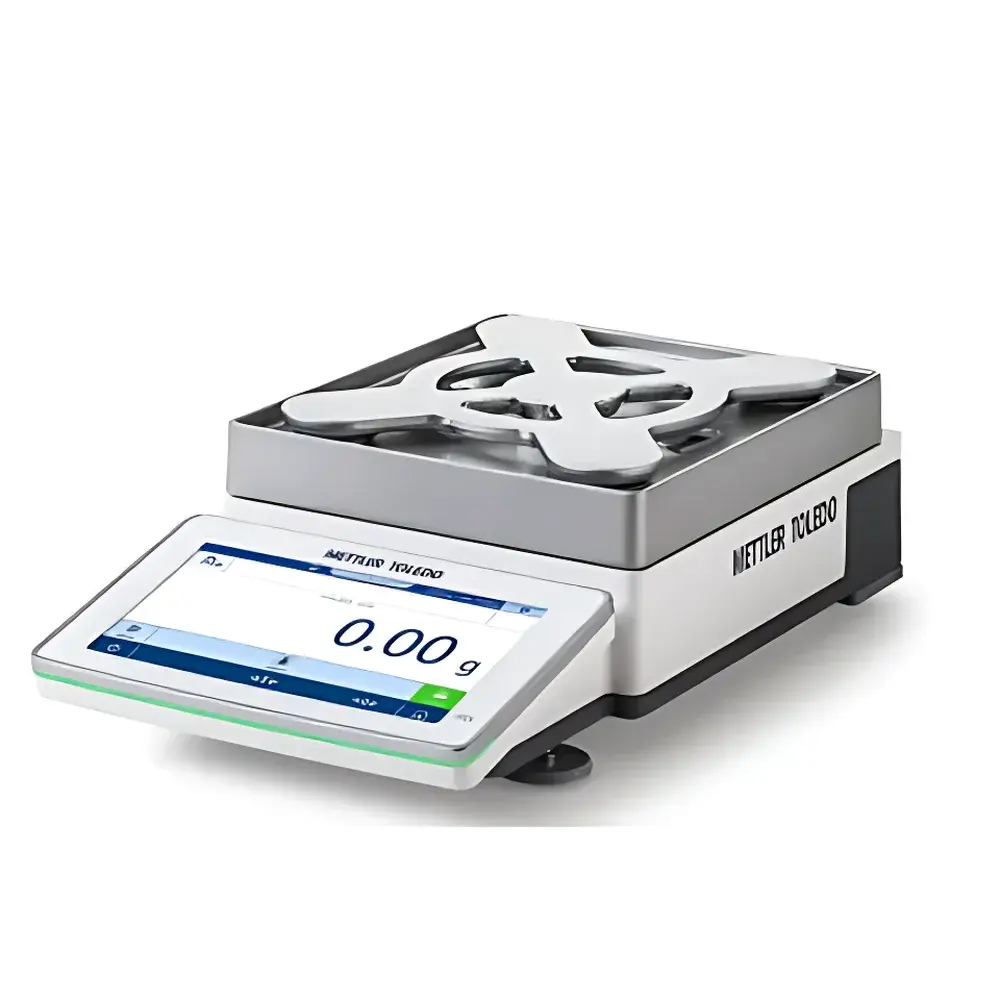
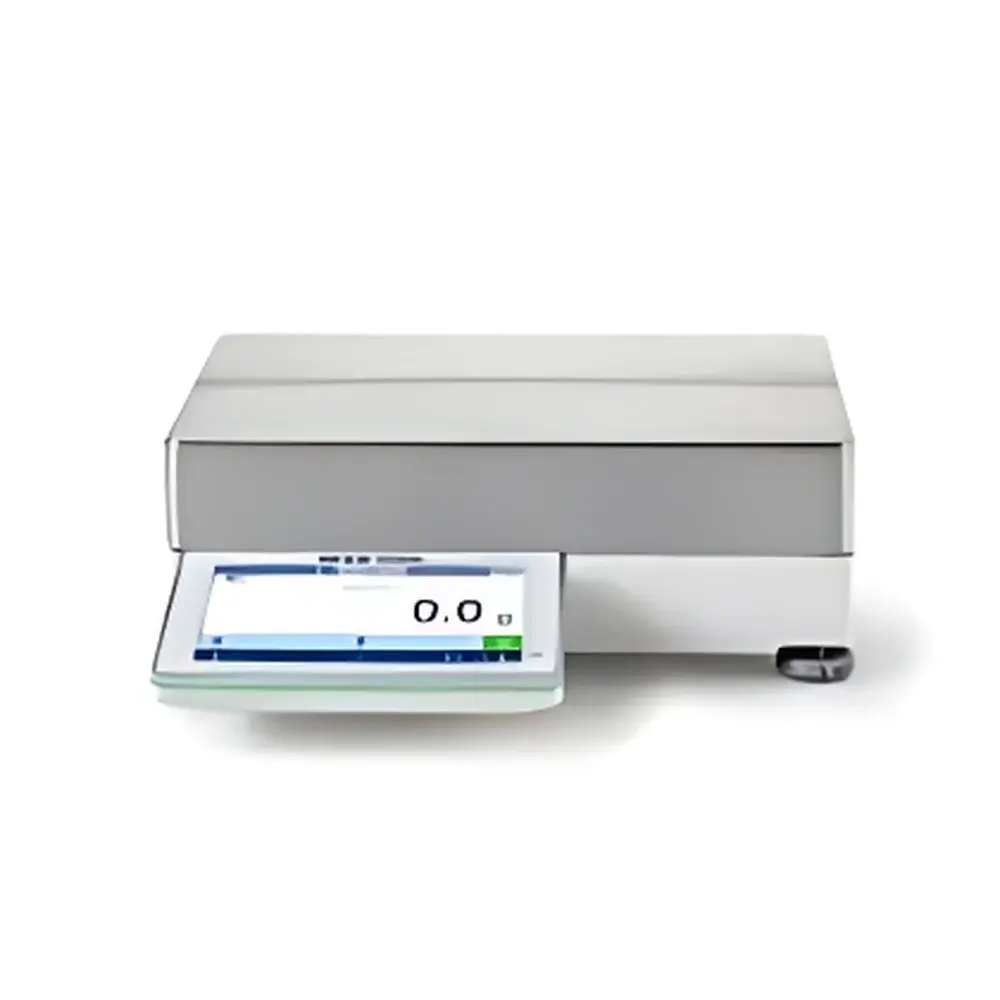
METTLER TOLEDO MX16001L Precision Balance
| Brand | METTLER TOLEDO |
|---|---|
| Origin | Shanghai, China |
| Model | MX16001L Precision Balance |
| Maximum Capacity | 32 kg |
| Readability | 1 mg |
| Protection Class | IP54 |
| Compliance | GxP-ready, 21 CFR Part 11 support via optional software modules |
| Connectivity | RS232, USB, Ethernet, Bluetooth (optional) |
Overview
The METTLER TOLEDO MX16001L Precision Balance is an industrial-grade analytical and semi-micro weighing instrument engineered for laboratories and production environments requiring high repeatability, traceable accuracy, and robust regulatory compliance. Built upon METTLER TOLEDO’s proprietary electromagnetic force compensation (EMFC) sensor technology, the MX16001L delivers stable, drift-resistant measurements across dynamic ambient conditions—including air currents, temperature fluctuations, and mechanical vibrations. With a maximum capacity of 32 kg and readability down to 1 mg, it bridges the performance gap between standard precision balances and analytical instruments, supporting applications ranging from formulation QC in pharmaceutical manufacturing to raw material verification in chemical synthesis and quality assurance in food processing.
Key Features
- SmartPan™ Draft Shield Technology: Integrated pan design minimizes air turbulence effects and accelerates stabilization time—critical in non-climate-controlled or high-traffic lab settings.
- StatusLight™ Visual Feedback System: A three-color LED ring provides at-a-glance confirmation of balance readiness, calibration status, and weighing stability—reducing operator error and training time.
- GxP-Ready Architecture: Supports user-level access control, electronic signatures, audit trail logging (when paired with LabX® software), and automatic metadata capture (operator ID, timestamp, method name, environmental parameters).
- Intelligent Calibration & Maintenance Management: Built-in scheduler enables configurable internal/external calibration intervals and daily performance checks; alerts trigger automatically when test deadlines approach, ensuring continuous metrological validity within defined calibration windows.
- Energy-Saving Mode: Programmable auto-standby reduces power consumption during idle periods without compromising warm-up stability or measurement readiness.
- Rugged IP54 Enclosure: Dust- and splash-resistant housing constructed from reinforced polymer and stainless-steel components ensures long-term reliability in demanding industrial or shared-lab environments.
Sample Compatibility & Compliance
The MX16001L accommodates a wide range of sample types—from powders and granules to packaged intermediates and small assemblies—without requiring external draft enclosures in most standard laboratory settings. Its large, flat weighing pan (240 × 240 mm) supports oversized containers and multi-step dispensing workflows. From a regulatory standpoint, the balance meets essential requirements for ISO/IEC 17025-accredited testing labs and complies with relevant clauses of USP , ASTM E899, and OIML R76. When deployed with validated software (e.g., LabX or MT-SICS), it satisfies data integrity expectations under FDA 21 CFR Part 11, EU Annex 11, and ICH GCP guidelines—particularly regarding ALCOA+ principles (Attributable, Legible, Contemporaneous, Original, Accurate, Complete, Consistent, Enduring, Available).
Software & Data Management
The MX16001L features native integration with METTLER TOLEDO’s LabX® software platform, enabling centralized method management, automated report generation (PDF, CSV, XML), and secure database archiving. All weighing events—including tare operations, unit conversions, statistical summaries, and deviation flags—are timestamped and linked to authenticated users. Optional MT-SICS firmware allows direct connection to LIMS or ERP systems via TCP/IP or OPC UA protocols. Audit trails are immutable and exportable in human-readable format, supporting internal audits and regulatory inspections. Data encryption (AES-256) and role-based permissions further reinforce data governance frameworks required in GLP/GMP environments.
Applications
- Pharmaceutical: Batch release testing, active pharmaceutical ingredient (API) dispensing, excipient blending verification, and reference standard weighing per USP .
- Chemical Manufacturing: Catalyst dosage control, reaction stoichiometry validation, and purity assessment of intermediate compounds.
- Food & Beverage: Nutritional labeling compliance, allergen segregation verification, and net content auditing against legal metrology standards (e.g., NIST Handbook 133).
- Academic & Contract Research: Reproducible gravimetric analysis in materials science, polymer characterization, and environmental sample preparation.
- Quality Control Labs: In-process checks for tablet weight variation, capsule fill uniformity, and packaging net weight verification.
FAQ
What is the recommended calibration frequency for the MX16001L in a GMP environment?
Calibration intervals must be risk-assessed per your SOPs—but typical practice includes daily performance verification, weekly internal calibration, and annual external calibration by an ISO/IEC 17025-accredited provider.
Does the MX16001L support direct printing to thermal label printers?
Yes—via RS232 or USB interface using standard ESC/POS or ZPL command sets; compatible with common industrial label printers from Zebra, SATO, and Brady.
Can multiple users share one MX16001L while maintaining individual accountability?
Yes—user profiles can be created and assigned via LabX or local keypad login; all actions are logged with unique identifiers and timestamps.
Is the MX16001L suitable for use in humid or dusty production areas?
Its IP54 rating confirms protection against limited dust ingress and water splashes from any direction—making it appropriate for controlled manufacturing zones where occasional exposure occurs.
How does SmartPan improve weighing speed in unstable environments?
SmartPan modifies the effective damping characteristics of the weighing cell through geometric optimization and mass distribution—reducing oscillation amplitude and shortening settling time by up to 40% compared to conventional pans under identical vibration conditions.