
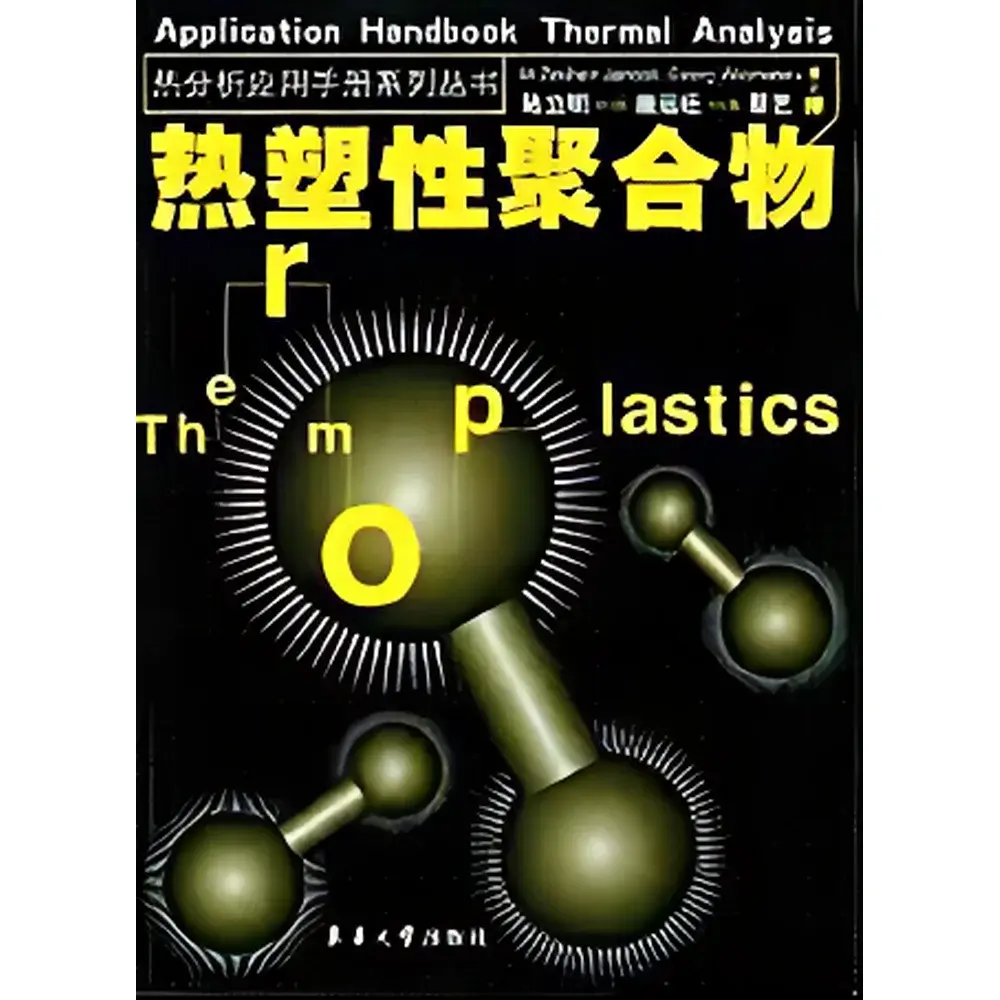
METTLER TOLEDO Thermal Analysis Application Handbook Series: Thermoplastic Polymers
| Brand | METTLER TOLEDO |
|---|---|
| Origin | Shanghai, China |
| Distribution Type | Authorized Distributor |
| Product Category | Thermal Analyzer Accessory / Reference Publication |
| Model | Thermal Analysis Application Handbook Series – Thermoplastic Polymers |
| Pricing | Available Upon Request |
Overview
The METTLER TOLEDO Thermal Analysis Application Handbook Series: Thermoplastic Polymers is a comprehensive technical reference publication designed for scientists, materials engineers, and thermal analysis practitioners working with thermoplastic materials. Unlike instrumentation, this resource serves as a domain-specific knowledge framework grounded in the fundamental principles of thermal analysis techniques—including Differential Scanning Calorimetry (DSC), Thermogravimetric Analysis (TGA), Thermomechanical Analysis (TMA), and Dynamic Mechanical Analysis (DMA). It systematically correlates polymer microstructure (e.g., amorphous entanglement vs. semicrystalline lamellar ordering) with measurable thermal transitions—glass transition (Tg), melting temperature (Tm), crystallization onset (Tc), decomposition onset (Td)—and provides experimentally validated interpretation guidelines. The handbook is engineered to support method development, data validation, and regulatory documentation in environments governed by ISO 11357, ASTM D3418, ASTM E1356, and USP <731>, particularly where thermal characterization underpins quality control, formulation optimization, or regulatory submissions in pharmaceuticals, automotive composites, and packaging materials.
Key Features
- Structured pedagogical progression—from foundational thermal analysis theory to advanced multi-technique correlation strategies
- Dedicated chapters on polymer morphology–property relationships, including quantitative differentiation between amorphous and semicrystalline thermoplastics via DSC baseline curvature and melting peak deconvolution
- Standardized application protocols for 11 major thermoplastic families (PE, PP, PS, PVC, PET, PC, PA, POM, PTFE, E/VAC, PVAC), each accompanied by annotated thermograms and experimental parameters (heating rate, atmosphere, sample mass, crucible type)
- Integrated guidance on hybrid measurements—e.g., TGA–MS and TGA–FTIR for evolved gas analysis (EGA), and temperature-modulated DSC (TOPEM™, IsoStep™, ADSC™) for resolving overlapping transitions
- Cross-referenced characteristic temperature tables aligned with international material specifications (e.g., ISO 1043, ASTM D1600), enabling rapid benchmarking against industry-standard thermal behavior profiles
- Regulatory-ready methodology notes supporting GLP-compliant reporting, audit trails, and 21 CFR Part 11–aligned data integrity practices for QA/QC laboratories
Sample Compatibility & Compliance
This handbook supports thermal analysis of solid-state thermoplastic specimens—pellets, films, fibers, injection-molded parts, and extruded profiles—across standard sample mass ranges (1–20 mg for DSC/TMA; 5–50 mg for TGA). It explicitly addresses matrix-specific considerations: oxidative degradation mitigation for polyolefins under N2/air switching protocols; hydrolytic stability assessment for polyesters via humidity-controlled TMA; and filler–polymer interfacial effects in reinforced composites using DMA frequency sweeps. All referenced procedures comply with ISO/IEC 17025 requirements for method validation, and align with ASTM E2550 (TGA), ASTM E1640 (DMA), and ICH Q5C (stability testing of biopharmaceutical excipients). The content is routinely updated to reflect revisions in ISO 11357-1 through -7 and harmonized pharmacopeial monographs.
Software & Data Management
While the handbook itself is a printed and PDF-distributed technical document, it is fully interoperable with METTLER TOLEDO’s STARe® software ecosystem. Each application example includes recommended STARe® module configurations (e.g., “Peak Deconvolution” for overlapping Tm/Tc in PP copolymers; “Kinetics Neo” for isoconversional decomposition modeling in PVC), metadata tagging conventions, and report templates compliant with ALCOA+ principles (Attributable, Legible, Contemporaneous, Original, Accurate, Complete, Consistent, Enduring, Available). Appendices provide SOP-aligned workflow diagrams for instrument qualification (IQ/OQ/PQ), calibration verification (indium, zinc, sapphire standards), and electronic signature implementation per FDA 21 CFR Part 11 Annex 11 requirements.
Applications
The handbook enables rigorous thermal characterization across R&D, manufacturing, and regulatory domains: polymer grade authentication via Tg/Tm fingerprinting; crystallinity quantification in PET bottle preforms using DSC enthalpy integration; oxidative induction time (OIT) determination for PE pipe resins per ASTM D3895; thermal stability profiling of flame-retardant PC/ABS blends under nitrogen; and degradation kinetics modeling for recycled polyolefins in circular economy initiatives. It further supports failure analysis—e.g., distinguishing processing-induced degradation (broadened Tg, reduced Tm) from thermal aging (carbonyl index growth tracked via TGA–FTIR)—and supports root-cause investigations in automotive interior trim delamination or medical device sterilization validation.
FAQ
Is this a physical instrument or a software package?
No—it is a peer-reviewed technical reference publication, not hardware or licensed software. It functions as an application library and interpretive guide for users of METTLER TOLEDO thermal analyzers.
Does it include raw data files or instrument method templates?
Yes—digital versions include downloadable .sta (STARe® method files), annotated .pdf thermograms, and Excel-based characteristic temperature databases compatible with LIMS integration.
Can it be used with non-METTLER TOLEDO instruments?
The fundamental thermal analysis principles and polymer science content are universally applicable; however, technique-specific protocols (e.g., TOPEM™, SDTA™) and software workflows assume METTLER TOLEDO instrumentation architecture.
Is the content compliant with GMP/GLP documentation standards?
Yes—method descriptions follow ICH and ISO documentation hierarchies, and appendices detail traceability requirements for calibration standards, environmental monitoring logs, and analyst training records.
How frequently is the handbook updated?
New editions are released biannually, incorporating updates from ISO/ASTM committee meetings, METTLER TOLEDO firmware releases, and peer-reviewed literature on emerging thermoplastic systems (e.g., bio-based PHA, high-temperature PEKK).



