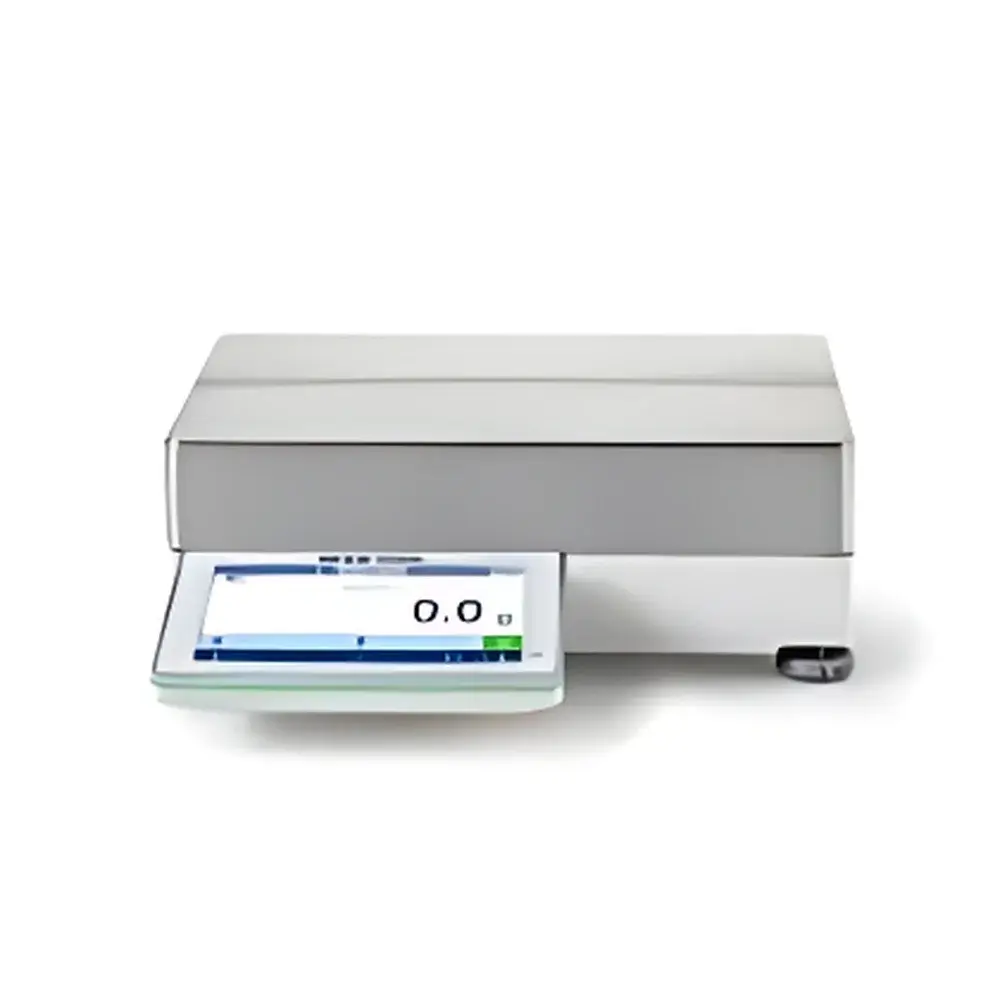
METTLER TOLEDO MX12001L Precision Balance
| Brand | METTLER TOLEDO |
|---|---|
| Origin | Shanghai, China |
| Model | MX12001L Precision Balance |
| Max Capacity | 32 kg |
| Readability | 1 mg |
| IP Rating | IP54 |
| Compliance | GxP-ready, FDA 21 CFR Part 11–compatible data handling (via optional software), GLP/GMP traceability support |
Overview
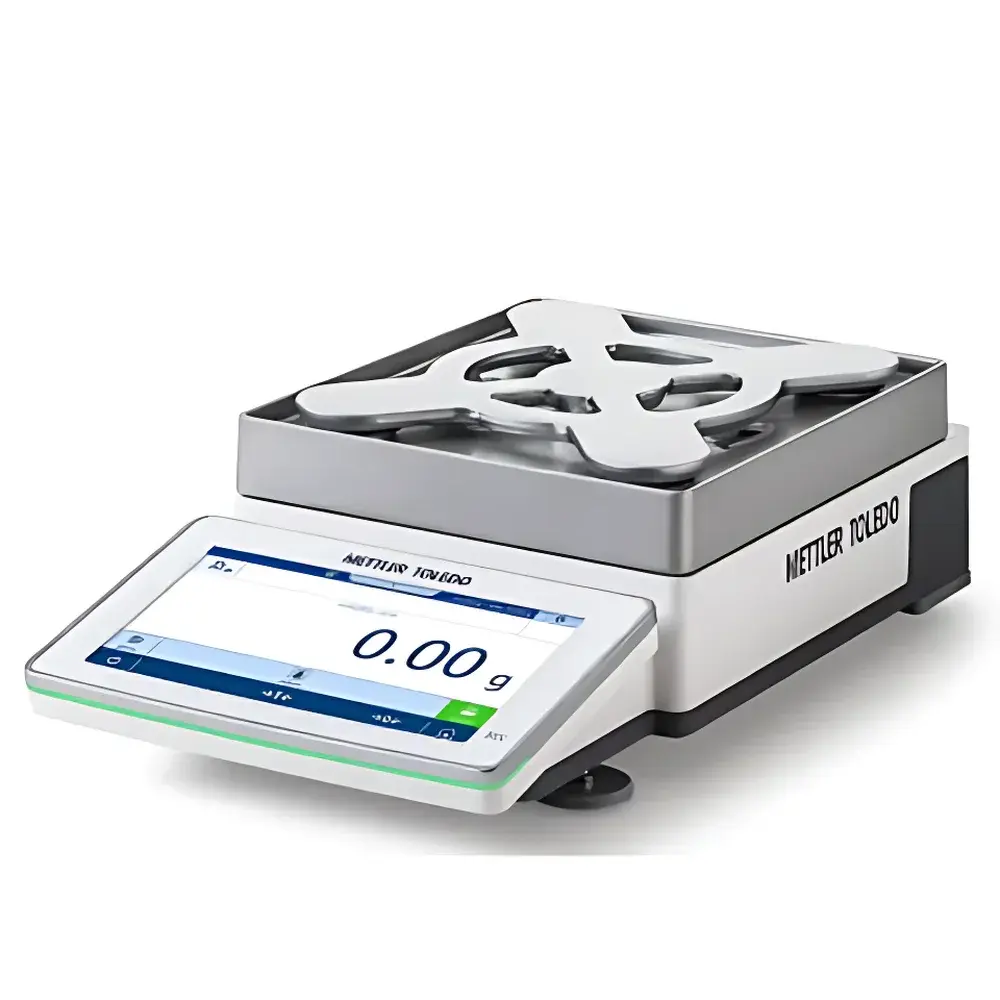
The METTLER TOLEDO MX12001L Precision Balance is an industrial-grade analytical and semi-micro weighing instrument engineered for laboratories and production environments where high mass accuracy, operational reliability, and regulatory traceability are non-negotiable. Utilizing METTLER TOLEDO’s proprietary monolithic electromagnetic force compensation (EMFC) sensor architecture, the MX12001L delivers stable, drift-resistant measurements across its full 32 kg capacity range with 1 mg readability. Its measurement principle relies on real-time null-balance detection—where coil current required to restore the load cell to zero displacement is linearly proportional to mass—ensuring high reproducibility and long-term stability under variable ambient conditions. Designed for routine QC testing, formulation verification, sample preparation, and raw material receipt inspection, the MX12001L integrates seamlessly into regulated workflows requiring documented calibration history, user accountability, and audit-ready data integrity.
Key Features
- Monolithic EMFC sensor with active temperature compensation and automatic internal adjustment for optimal long-term linearity and repeatability.
- SmartPan™ draft shield–integrated weighing pan design minimizes air current interference and accelerates stabilization time—even in non-ideal lab environments (e.g., near HVAC vents or open benchtops).
- StatusLight™ visual feedback system provides at-a-glance confirmation of balance readiness, calibration status, and error conditions via color-coded LED indicators.
- Configurable power management mode automatically activates low-power standby after user-defined idle periods—reducing energy consumption without compromising startup readiness.
- Intelligent built-in test scheduler supports customizable daily/weekly performance checks (e.g., repeatability, eccentricity, linearity) aligned with internal SOPs or ISO/IEC 17025 requirements; alerts trigger prior to due date to maintain uninterrupted compliance.
- Robust IP54-rated enclosure—featuring stainless steel pan, reinforced polymer housing, and sealed key membrane—ensures resistance to dust ingress and incidental liquid splashes during routine cleaning or humid operation.
Sample Compatibility & Compliance
The MX12001L accommodates a wide range of sample types—from powder blends and granular solids to packaged components and small-volume containers—within its 32 kg max load limit. Its large 220 × 280 mm weighing pan enables stable placement of volumetric flasks, beakers, and nested tare vessels. For regulated applications, the balance supports full GxP alignment when paired with METTLER TOLEDO LabX® software: electronic signatures, role-based user access control, immutable audit trails, and automatic metadata capture (operator ID, timestamp, environment log, calibration certificate reference) meet FDA 21 CFR Part 11 and EU Annex 11 expectations. All firmware updates and configuration changes are logged with time-stamped, user-attributed records—essential for GLP audits and quality system reviews.
Software & Data Management
Native connectivity includes RS232, USB device/host, and Ethernet interfaces for direct integration with LIMS, ERP, or MES platforms. The balance supports ASCII and SICS protocols for seamless printer output (thermal or dot-matrix) and PC-based data capture. When used with LabX®, users gain automated report generation (PDF/CSV), customizable templates for SOP-driven workflows, and centralized instrument fleet monitoring—including remote calibration scheduling, firmware version tracking, and usage analytics. All data transfers comply with ALCOA+ principles (Attributable, Legible, Contemporaneous, Original, Accurate, Complete, Consistent, Enduring, Available), ensuring full data lifecycle integrity from acquisition to archival.
Applications
- Pharmaceutical: Raw material identity verification, tablet weight uniformity checks, excipient dispensing in pre-formulation studies.
- Chemical manufacturing: Batch reconciliation, catalyst dosing, and reaction stoichiometry validation.
- Food & beverage QA: Net content verification per EU Directive 76/211/EEC, ingredient proportioning for allergen-sensitive formulations.
- Academic research labs: Sample preparation for ICP-MS, GC-MS, and HPLC analyses where sub-milligram precision impacts detection limits.
- Contract manufacturing organizations (CMOs): Audit-ready documentation for client-facing release testing and stability study sample logging.
FAQ
What is the recommended calibration frequency for the MX12001L in a GMP environment?
Calibration intervals must be risk-assessed per your SOP—but typical practice aligns with daily performance verification and external recalibration every 3–6 months using NIST-traceable weights, validated against ISO 9001 and USP <41> guidelines.
Does the MX12001L support multi-user authentication without LabX?
Basic password-protected user profiles are available onboard; however, full role-based permissions, electronic signatures, and audit trail generation require LabX® or compatible third-party LIMS integration.
Can the balance operate reliably in environments with vibration from nearby centrifuges or HVAC systems?
Yes—the SmartPan™ design combined with adaptive digital filtering reduces sensitivity to mechanical perturbation; installation on a dedicated granite or anti-vibration table is still advised for <1 mg repeatability under continuous dynamic loading.
Is the MX12001L compliant with ISO/IEC 17025 for accredited testing laboratories?
It meets all hardware and firmware prerequisites for ISO/IEC 17025:2017 Clause 6.4 (Equipment) and 6.5 (Measurement Traceability); formal accreditation requires documented metrological validation, uncertainty budgeting, and controlled environmental monitoring per your scope of accreditation.