
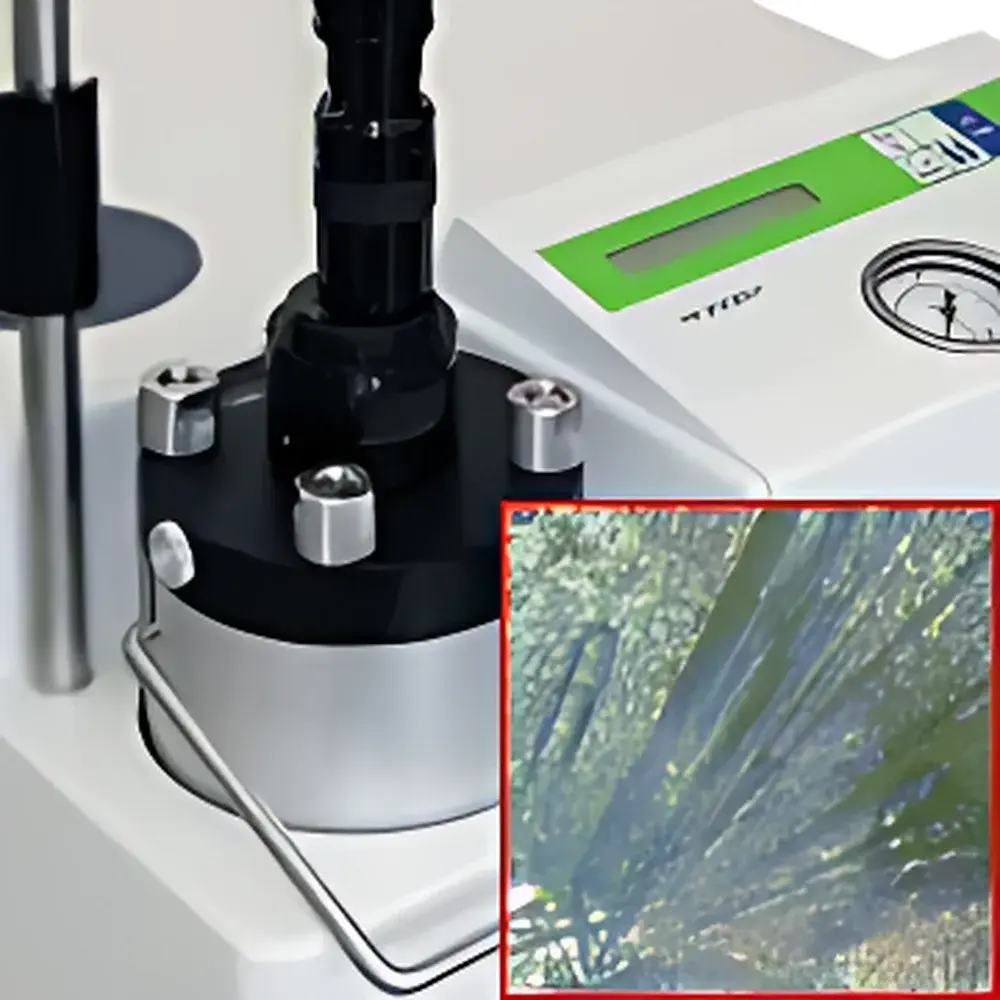
METTLER TOLEDO DSC1+ Microscopy System and HP DSC1+ High-Pressure Microscopy System
| Brand | METTLER TOLEDO |
|---|---|
| Origin | Switzerland |
| Model | DSC1+ Microscopy System, HP DSC1+ Microscopy System |
| Temperature Range | DSC1+: −150 to 700 °C |
| HP DSC1+ | RT to 700 °C |
| Temperature Accuracy | ±0.1 °C |
| Heating/Cooling Rate | 0.02–300 °C/min |
| Heat Flow Sensitivity | 0.04 µW (FRS5 sensor) / 0.01 µW (HSS8 sensor) |
| Pressure Range (HP variant) | Vacuum to 2 MPa |
| Microscope Integration | Compatible with Olympus, Leica, and other OEM optical platforms |
| Compliance | Designed for GLP/GMP environments with optional 21 CFR Part 11–compliant software audit trail |
Overview
The METTLER TOLEDO DSC1+ Microscopy System represents a purpose-engineered hyphenated analytical platform that synchronously couples high-performance differential scanning calorimetry (DSC) with real-time optical microscopy. Unlike post-hoc correlation methods, this integrated system enables concurrent acquisition of quantitative thermal data—heat flow, enthalpy, transition temperatures—and qualitative morphological evidence—phase separation, crystallization fronts, melt-induced structural collapse, color shifts, or bubble nucleation—within a single experimental run. The core measurement principle relies on heat flux DSC, where the temperature difference between sample and reference crucibles is continuously monitored under controlled heating, cooling, or isothermal conditions. Coupled optics operate through a top-access viewport in the DSC furnace lid, permitting unobstructed light path alignment with standard upright microscopes. This architecture ensures that thermal events are not only detected but visually contextualized—critical for mechanistic interpretation of polymorphic transitions, degradation onset, or reaction kinetics in heterogeneous systems.
Key Features
- Simultaneous thermal and optical data acquisition with temporal synchronization accuracy ≤100 ms
- Dual-sensor configuration: FRS5 for routine high-reproducibility measurements; HSS8 for ultra-low-noise applications requiring sub-microwatt sensitivity
- Modular microscope interface supporting C-mount and infinity-corrected objectives from Olympus, Leica, and Zeiss
- Integrated LED illumination with adjustable intensity and spectral neutrality to avoid photothermal artifacts
- HP DSC1+ variant equipped with a hermetically sealed, pressure-rated furnace capable of operation from vacuum up to 2 MPa, enabling kinetic studies under elevated partial pressures or inert gas atmospheres
- Thermal control stability ≤0.01 °C over 30 min at 200 °C, validated per ISO 11357-1
Sample Compatibility & Compliance
The system accommodates standard DSC pans (aluminum, gold-plated aluminum, stainless steel), as well as custom-designed transparent-bottom crucibles optimized for transmitted-light imaging. Samples ranging from 0.1 mg (pharmaceutical APIs) to 50 mg (polymer pellets or composites) are supported without compromising spatial resolution. All hardware and firmware comply with IEC 61000-6-3 (EMC) and IEC 61010-1 (safety). Software modules support audit trail generation, electronic signatures, and user access control per FDA 21 CFR Part 11 requirements when deployed in regulated QC/QA laboratories. Method validation documentation aligns with ASTM E794 (melting point), ASTM E1269 (heat capacity), and ISO 11357 series standards.
Software & Data Management
STARe Software v15.x provides unified control of both DSC thermogram acquisition and time-lapse image capture. Synchronized timelines allow frame-by-frame overlay of thermal events onto video sequences, with manual or algorithm-assisted annotation of onset points (e.g., Tonset, Tpeak) directly linked to corresponding microstructural changes. Export formats include TIFF (lossless), MP4 (H.264), and CSV/Excel-compatible thermal datasets. Data integrity is ensured via SHA-256 hashing of raw files and immutable storage in project-based repositories. Optional cloud backup and multi-user collaboration features support distributed R&D teams across global sites.
Applications
This system delivers decisive insight in domains where thermal behavior cannot be decoupled from physical structure. In polymer science, it identifies cold-crystallization triggers during annealing and maps spherulite growth velocity against heating rate. For pharmaceutical development, it distinguishes solvate desolvation from polymorphic conversion by correlating mass-loss steps (TGA-DSC) with birefringence loss in hydrates. In food science, it visualizes starch gelatinization hysteresis and lipid polymorph reorganization during freeze-thaw cycling. Battery electrolyte research benefits from observing dendrite formation onset coincident with exothermic decomposition peaks under simulated cell-pressure conditions (HP variant).
FAQ
Can the microscope be upgraded post-purchase?
Yes—the optical interface is mechanically and electrically standardized; compatible with third-party motorized stages, polarizers, and fluorescence modules.
Is nitrogen purge required for all experiments?
No—ambient air operation is supported for non-oxidative samples; optional gas dosing modules enable precise O2, N2, or synthetic air control.
What is the maximum usable magnification with the DSC furnace viewport?
Up to 100× with dry objectives; oil immersion is not recommended due to thermal lensing effects above 150 °C.
Does the system support modulated DSC (MDSC®)?
Yes—both DSC1+ and HP DSC1+ support sinusoidal temperature modulation protocols for reversing/non-reversing heat flow deconvolution.
How is calibration traceability maintained?
Factory calibration uses NIST-traceable indium, tin, zinc, and sapphire standards; users may perform routine verification using included calibration kits per ISO/IEC 17025 guidelines.



