
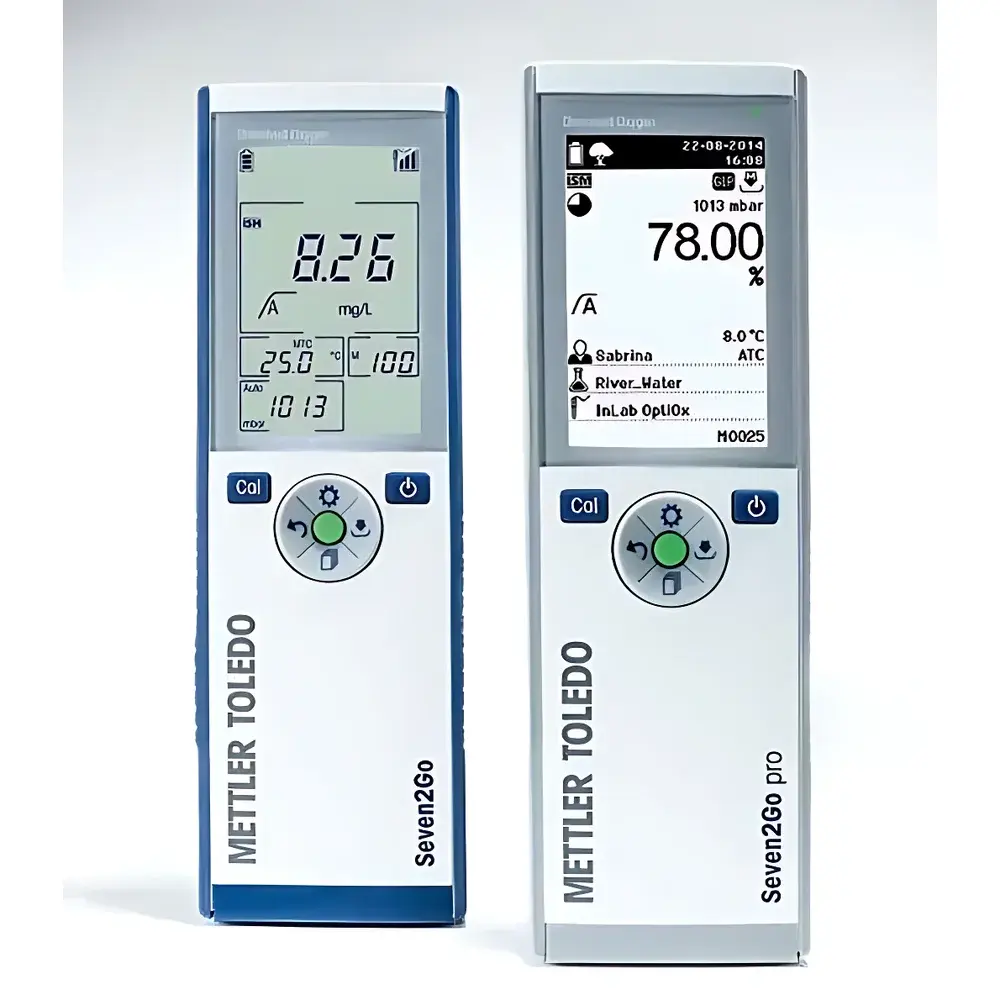
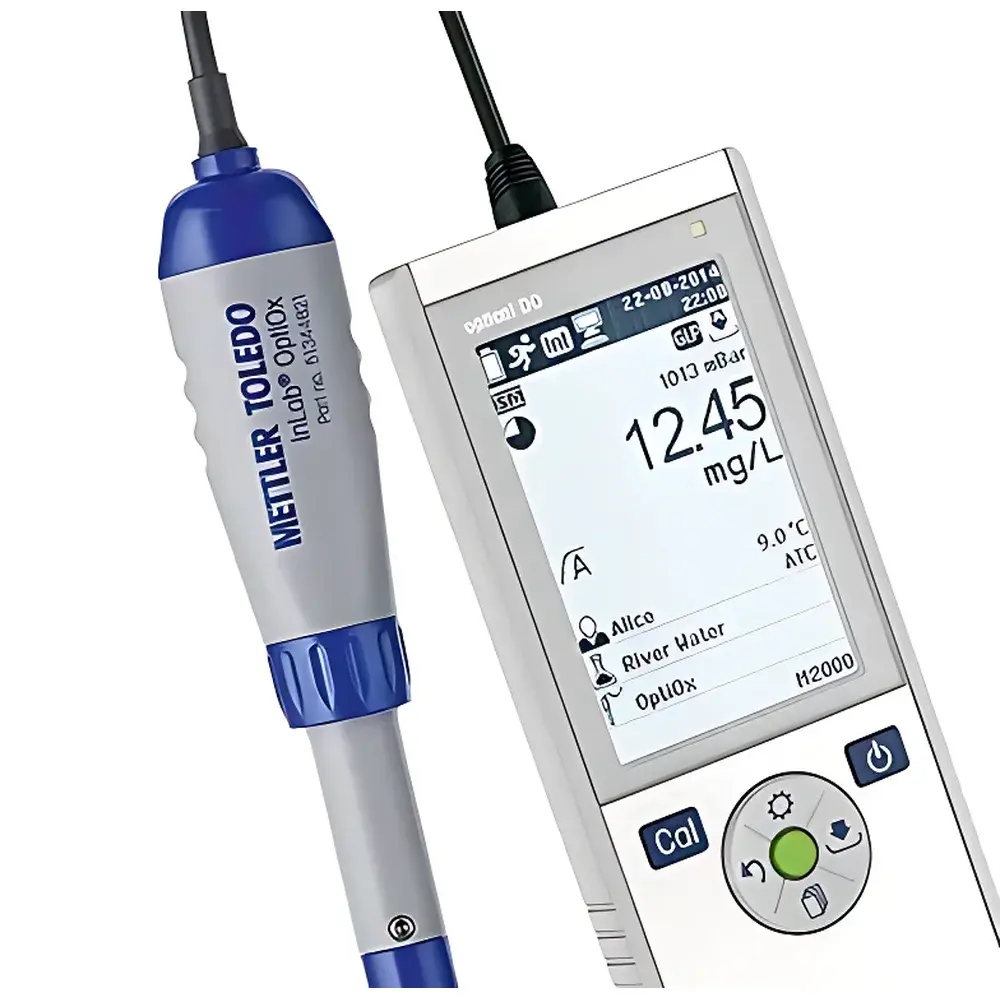
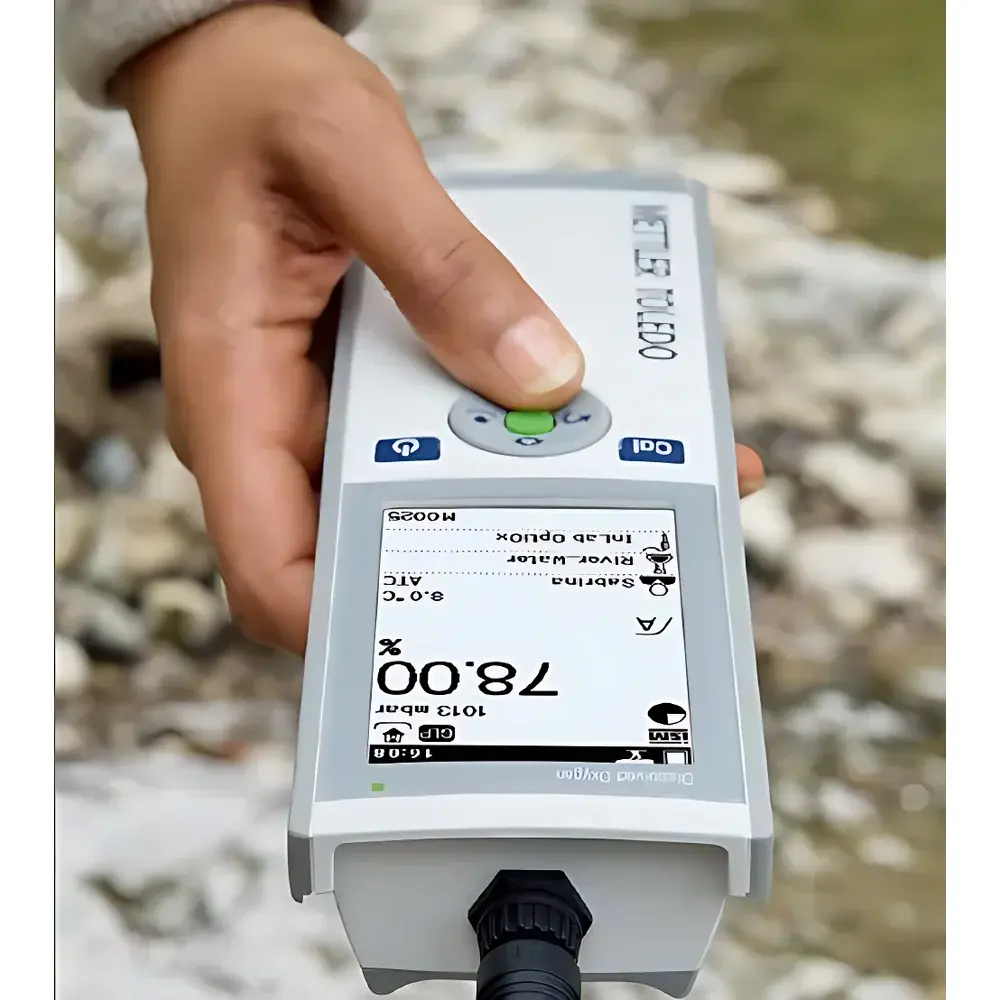
METTLER TOLEDO Seven2Go Pro S9 Portable Dissolved Oxygen Meter
| Brand | METTLER TOLEDO |
|---|---|
| Origin | Switzerland |
| Model | S4, S9 |
| Portability | Portable |
| Measurement Principle | Polarographic (Clark-type) or Optical (Luminescence-based) — configurable per probe |
| Measurement Range | 0.00–50.0 mg/L (ppm) |
| Accuracy | ±0.1 mg/L (0–8 mg/L), ±0.2 mg/L (8–20 mg/L), ±10% (20–50 mg/L) |
| Repeatability | ±0.05% of reading |
| Detection Limit | ±2 ppb (O₂ in water) |
| Ingress Protection | IP67 |
| Electrode Compatibility | ISM® (Intelligent Sensor Management) enabled |
| Data Interface | Waterproof USB (IP67-rated) |
| Display | High-contrast, sunlight-readable LCD with StatusLight™ indicator |
| Language Support | 12 languages including English, German, French, Spanish, Chinese, Japanese, Korean, etc. |
Overview
The METTLER TOLEDO Seven2Go Pro S9 is a high-performance portable dissolved oxygen (DO) meter engineered for rigorous field, laboratory, and process-support applications in environmental monitoring, wastewater treatment, aquaculture, and drinking water quality assurance. Unlike generic handheld meters, the S9 leverages either polarographic (Clark-type) or optical luminescence-based sensing technology—depending on the connected InLab ISM® DO probe—ensuring measurement integrity across diverse sample matrices and temperature conditions. Its core architecture adheres to electrochemical sensor fundamentals: polarographic sensors operate via oxygen diffusion through a selective membrane to a cathode, generating a current proportional to DO concentration; optical sensors utilize dynamic quenching of ruthenium-based luminophores, delivering drift-free, membrane-free operation with minimal maintenance. The instrument’s real-time temperature compensation (0–50 °C), salinity correction (0–70 g/kg), and barometric pressure adjustment (500–1100 hPa) ensure traceable, metrologically sound results compliant with ISO 5814, ASTM D888, and EN 25814 standards.
Key Features
- ISM® (Intelligent Sensor Management) integration: Automatic electrode recognition, storage of calibration history (including date, time, buffer values), and sensor diagnostics—including remaining membrane life and electrolyte expiry alerts.
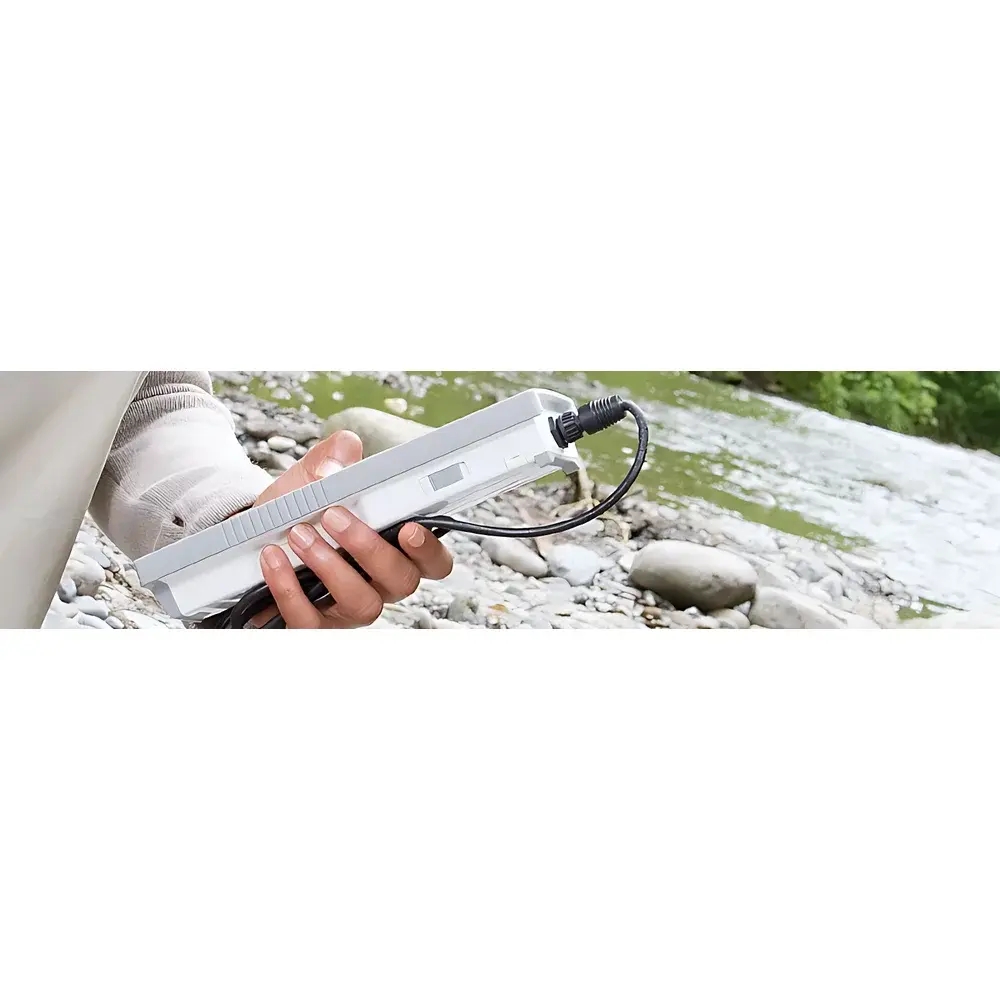
- IP67-rated enclosure and MIL-STD-810G drop-tested housing (1.2 m onto concrete): Fully sealed against dust and immersion up to 1 m for 30 minutes—certified for extended outdoor deployment in rain, humidity, or splashing environments.
- T-Pad™ tactile navigation interface: Ergonomic, thumb-optimized capacitive keypad enabling single-hand operation—even with gloves—reducing operator fatigue during prolonged surveys.
- Sunlight-enhanced display with adaptive contrast: Anti-glare, wide-view LCD with automatic brightness modulation ensures legibility under direct solar irradiance (>100,000 lux).
- StatusLight™ visual status system: Three-color LED (green/yellow/red) provides at-a-glance verification of calibration status, battery level, connectivity, and measurement readiness—eliminating menu diving for routine checks.
- Waterproof USB 2.0 port (IP67): Enables secure, weather-resistant data export without requiring protective caps or adapters—compatible with Windows, macOS, and Linux via METTLER TOLEDO LabX® Light software.
Sample Compatibility & Compliance
The Seven2Go Pro S9 supports aqueous samples across freshwater, seawater, effluent, and low-conductivity ultrapure water—provided appropriate ISM® DO probes are selected (e.g., InLab OptiOx for optical measurement or InLab Expert Pro for polarographic use). It accommodates variable salinity (0–70 g/kg NaCl), temperature (0–50 °C), and atmospheric pressure (500–1100 hPa), with built-in algorithms applying Winkler-equivalent corrections per ISO 5814 Annex A. All calibrations (zero and span) follow documented procedures traceable to NIST-certified standards. The device meets IEC 61000-6-3 (EMC emissions) and IEC 61000-6-2 (immunity), and its firmware architecture supports audit trails and electronic signatures required under GLP and GMP frameworks when used with LabX® Light in regulated environments (21 CFR Part 11 compliance achievable via optional software configuration).
Software & Data Management
Data capture is managed via METTLER TOLEDO’s LabX® Light software—a lightweight, validated desktop application supporting automated report generation (PDF/CSV), customizable templates, and metadata tagging (operator ID, location GPS coordinates via optional Bluetooth module, sampling time). Each measurement record includes timestamp, probe serial number, calibration parameters, ambient conditions, and raw signal stability metrics. The instrument stores up to 2000 data points internally with time-stamped sequences, and all transfers retain full traceability—no data truncation or loss during USB sync. Firmware updates are delivered via signed .hex packages with SHA-256 verification, ensuring cryptographic integrity.
Applications
- Regulatory wastewater discharge monitoring per EPA Method 4500-O G and EU Urban Wastewater Treatment Directive (91/271/EEC)
- Biological oxygen demand (BOD₅) incubation tracking in municipal and industrial labs
- Aquaculture pond health assessment—real-time DO profiling during feeding cycles and aeration events
- Drinking water distribution system validation, including post-chlorination residual oxygen mapping
- Field-based limnological studies in lakes, rivers, and wetlands—integrated with GPS-enabled sampling logs
- Educational laboratories requiring robust, student-proof instrumentation with intuitive pedagogical interfaces
FAQ
What DO measurement principle does the S9 support?
The S9 itself is sensor-agnostic—it operates with either polarographic (electrochemical) or optical (luminescence-based) InLab ISM® probes. The principle is determined by the probe connected, not the meter.
Is the S9 suitable for seawater measurements?
Yes—when paired with an ISM® probe rated for high salinity (e.g., InLab OptiOx with salinity compensation enabled), and with manual or auto salinity input (0–70 g/kg).
Can calibration data be exported for audit purposes?
Yes—calibration logs (including date, operator, buffers used, slope, offset, and sensor diagnostics) are embedded in every data file and fully exportable via LabX® Light.
Does the instrument support GLP-compliant documentation?
When used with LabX® Light and configured with user access control, electronic signatures, and audit trail activation, it fulfills core GLP requirements per OECD Principles of Good Laboratory Practice.
How often does the optical DO probe require maintenance?
Optical probes (e.g., InLab OptiOx) require no membrane replacement or electrolyte refills—only periodic cleaning and annual verification against certified standards.







