
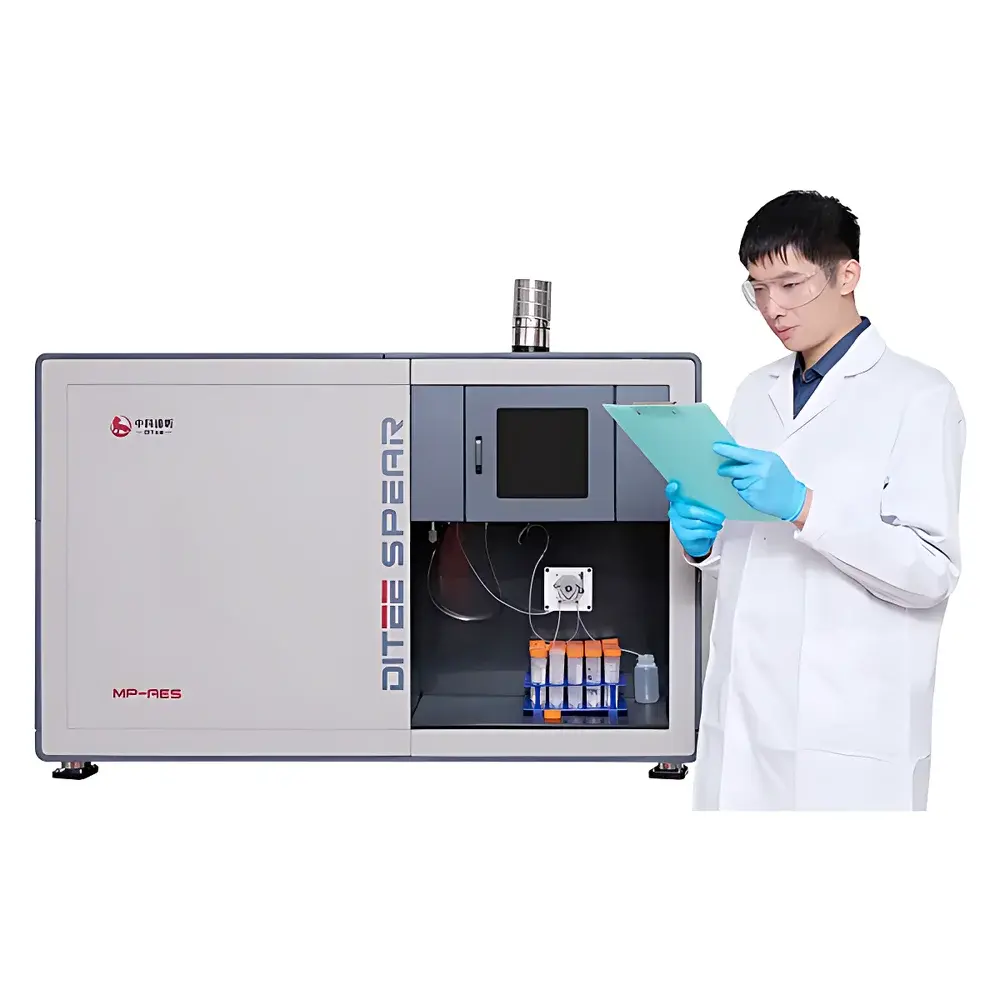
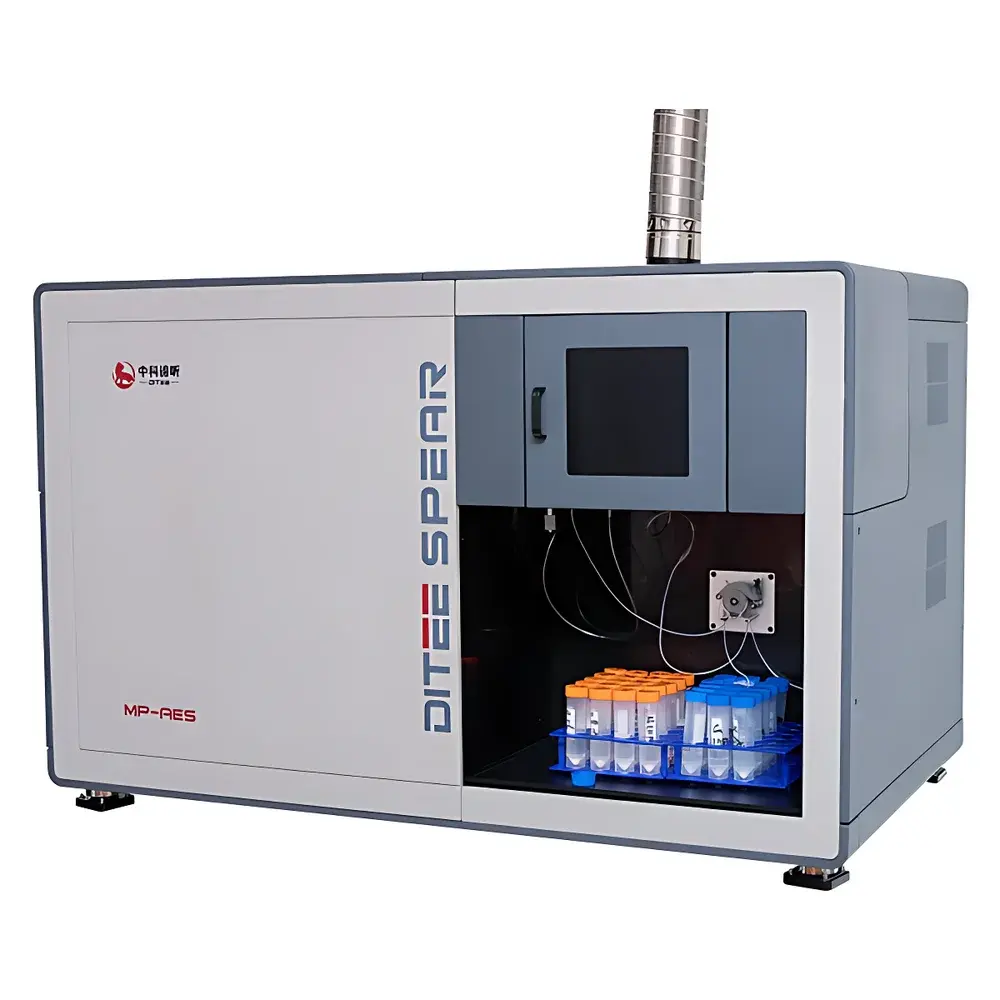
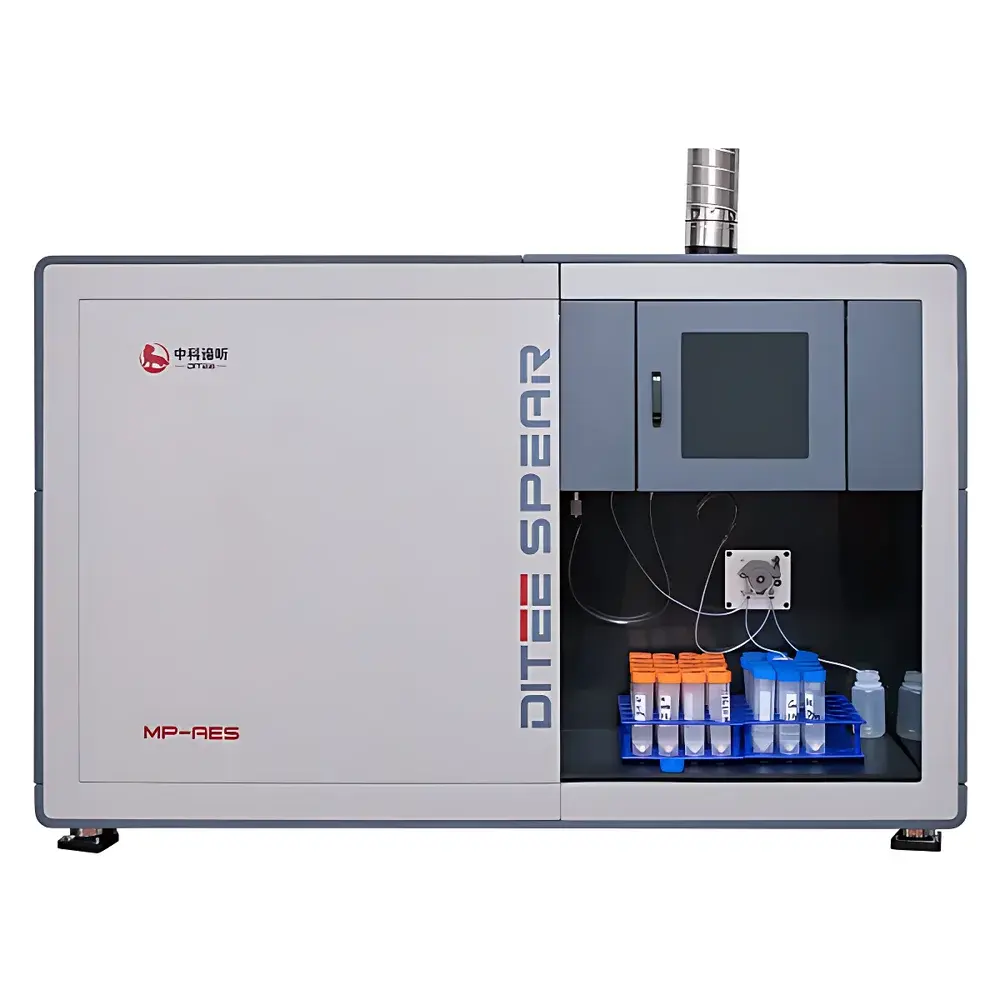
GDANA SPEAR 500 Microwave Plasma Atomic Emission Spectrometer
| Brand | GDANA |
|---|---|
| Origin | Guangdong, China |
| Manufacturer Type | Manufacturer |
| Origin Category | Domestic |
| Model | SPEAR 500 |
| Pricing | Upon Request |
Overview
The GDANA SPEAR 500 Microwave Plasma Atomic Emission Spectrometer (MP-AES) is a benchtop elemental analysis instrument based on microwave-induced plasma excitation and high-resolution optical emission spectroscopy. Unlike conventional inductively coupled plasma (ICP) sources requiring high-purity argon or hazardous fuel gases (e.g., acetylene, nitrous oxide), the SPEAR 500 utilizes nitrogen gas—or even compressed ambient air—as its plasma support medium. This design eliminates dependency on costly, regulated, or flammable gases while maintaining robust analytical performance for quantitative multi-element determination across trace to major concentration ranges. The system employs a high-efficiency industrial magnetron to generate stable 2.45 GHz microwave energy, coupled with a compact, sealed Raman-type optical chamber featuring a true Rowland circle geometry. This ensures first-order diffraction only, minimizing spectral overlap and stray light interference. A scientific-grade linear CMOS detector enables full-spectrum acquisition (175–900 nm) with high dynamic range, low readout noise, and thermal stability—critical for reproducible intensity measurements in routine laboratory and industrial QA/QC environments.
Key Features
- Rowland-circle monochromator with all-first-order optics for minimal spectral interferences and enhanced peak fidelity
- Patented air-cooled microwave coupling architecture—no external water chiller required; rapid thermal equilibrium achieved via integrated forced-air heat dissipation
- Vertically oriented radial-viewed torch configuration with quartz torch tube—optimized for high-matrix liquid samples and resistant to clogging or carbon deposition
- Optical chamber actively maintained at a constant 35 °C via closed-loop thermoelectric stabilization—prevents condensation, drift, and wavelength shift under variable ambient conditions
- High-sensitivity linear CMOS array detector with low dark current, wide linear dynamic range (>10⁵), and sub-pixel wavelength calibration accuracy
- Benchtop integrated design with self-contained plasma generator, spectrometer, and control electronics—minimizes footprint and simplifies installation
Sample Compatibility & Compliance
The SPEAR 500 supports aqueous solutions, acid-digested environmental and geological matrices, organic solvents (with appropriate nebulizer optimization), and—when equipped with optional laser ablation (LA) module—solid conductive and non-conductive materials including metals, ceramics, glasses, and geological sections. Sample introduction is compatible with standard concentric nebulizers, microflow systems, and ultrasonic nebulizers. The instrument meets fundamental requirements for ISO/IEC 17025-compliant laboratories, supports audit-trail-enabled operation when integrated with compliant LIMS or ELN platforms, and facilitates method validation per ASTM D5185 (multi-element analysis in lubricants), EPA Method 6020B (ICP-MS/MP-AES for metals in wastewater), and USP <233> (elemental impurities in pharmaceuticals). Gas supply flexibility (N₂ or filtered compressed air) enhances suitability for remote, field-deployable, or safety-restricted facilities where inert gas infrastructure is unavailable.
Software & Data Management
Instrument control, spectral acquisition, qualitative/quantitative analysis, and reporting are managed through GDANA’s proprietary MP-Suite software. The platform provides real-time spectral visualization, automatic peak identification using NIST atomic database libraries, multi-point calibration with internal standard correction, and customizable report templates compliant with GLP documentation standards. All acquisition parameters, calibration history, user actions, and raw spectral data are time-stamped and stored with immutable metadata—enabling full traceability for regulatory review. Optional 21 CFR Part 11 compliance packages include electronic signatures, role-based access control, and encrypted audit logs. Data export formats include CSV, XML, and PDF, ensuring interoperability with third-party statistical tools (e.g., JMP, Minitab) and enterprise data repositories.
Applications
The SPEAR 500 delivers reliable elemental quantification across diverse sectors: rare-earth element profiling in permanent magnets and battery cathode precursors; trace metal screening in nuclear fuel cycle materials (U, Th, fission products); speciation-independent total element analysis in soil, sediment, and seawater per ISO 17294-2; catalyst composition verification in petrochemical refining; nutrient and heavy metal monitoring in agricultural soils and food extracts; residual catalyst detection in polymer synthesis; and quality control of high-purity semiconductor dopants and sputtering targets. Its air-operated plasma source makes it especially suitable for laboratories seeking cost-effective, low-risk elemental analysis without compromising detection capability for elements from Li to U.
FAQ
What plasma gases are supported by the SPEAR 500?
Nitrogen (N₂) is the recommended primary plasma gas; filtered and dried compressed air is also fully supported as a zero-cost alternative.
Is laser ablation compatibility available as a factory option?
Yes—SPEAR 500 can be ordered with an integrated LA-MP interface supporting 193 nm or 213 nm solid-state lasers and synchronized timing for transient signal acquisition.
Does the instrument require external cooling water?
No—the microwave generator and optical chamber utilize intelligent air-cooling with temperature-regulated fans and heat sinks; no recirculating chiller is needed.
What is the typical detection limit for common elements?
Detection limits vary by element and matrix but generally range from 0.01 to 0.5 µg/L for most metals in aqueous standards under optimized conditions.
Can the SPEAR 500 operate unattended overnight?
Yes—the system supports scheduled sequence runs, automatic lamp warm-up, and error-recovery protocols; all operations are logged with timestamps for GLP compliance.
Related Products






