
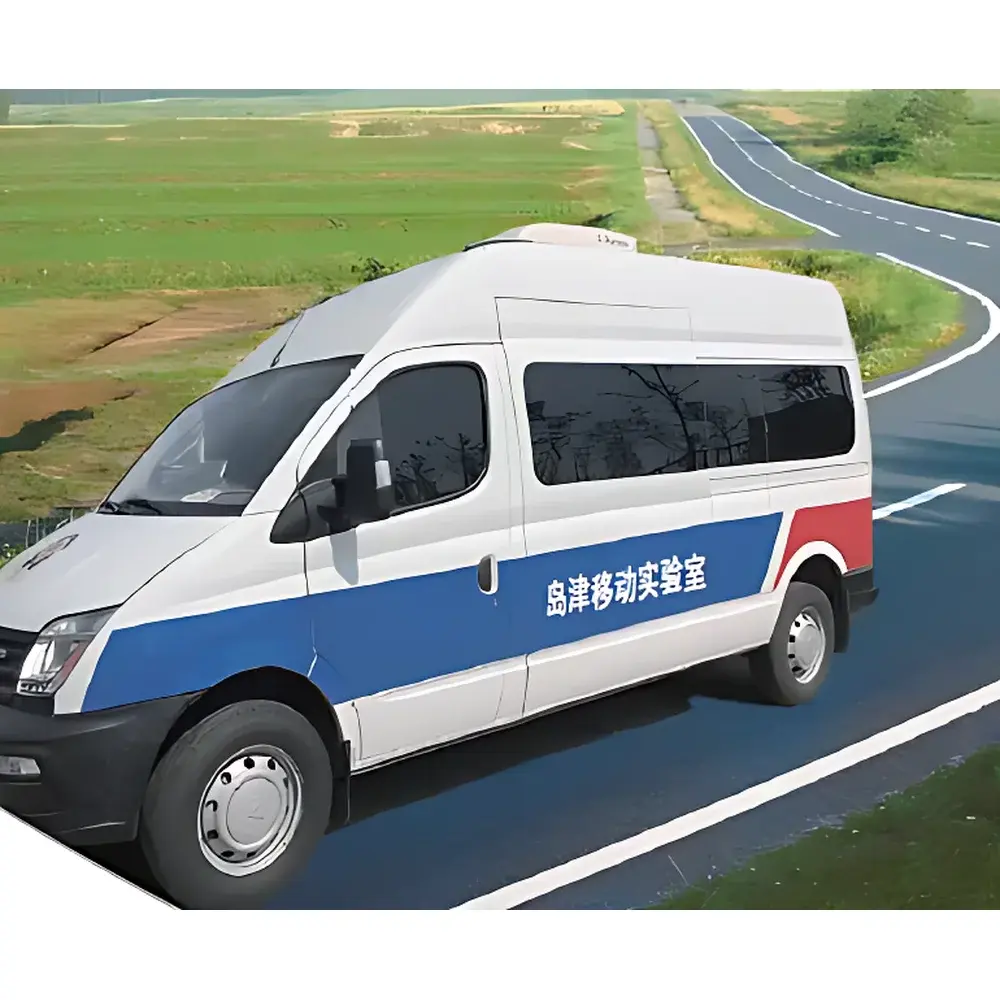
Shimadzu Mobile Laboratory Platform
| Brand | Shimadzu |
|---|---|
| Origin | Jiangsu, China |
| Manufacturer Type | Original Equipment Manufacturer (OEM) |
| Regional Classification | Domestic (PRC) |
| Model | Shimadzu Mobile Laboratory |
| Pricing | Upon Request |
Overview
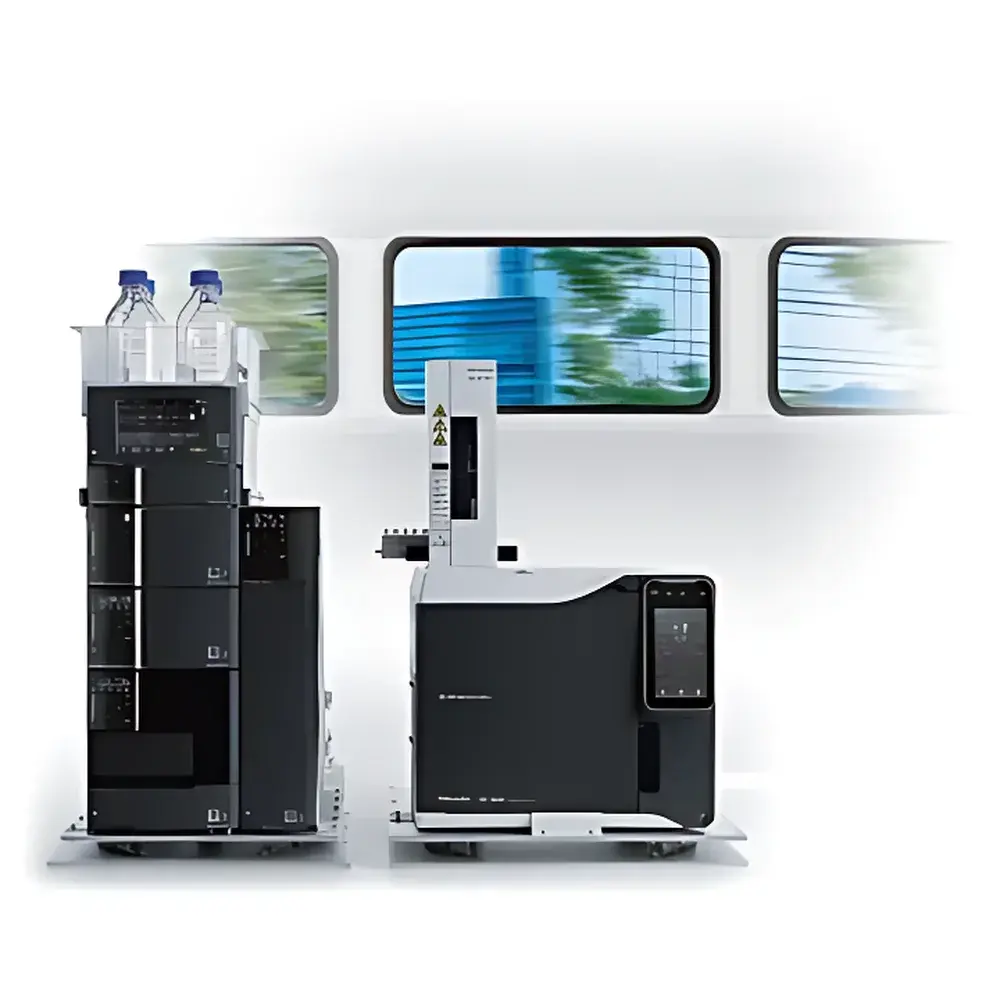
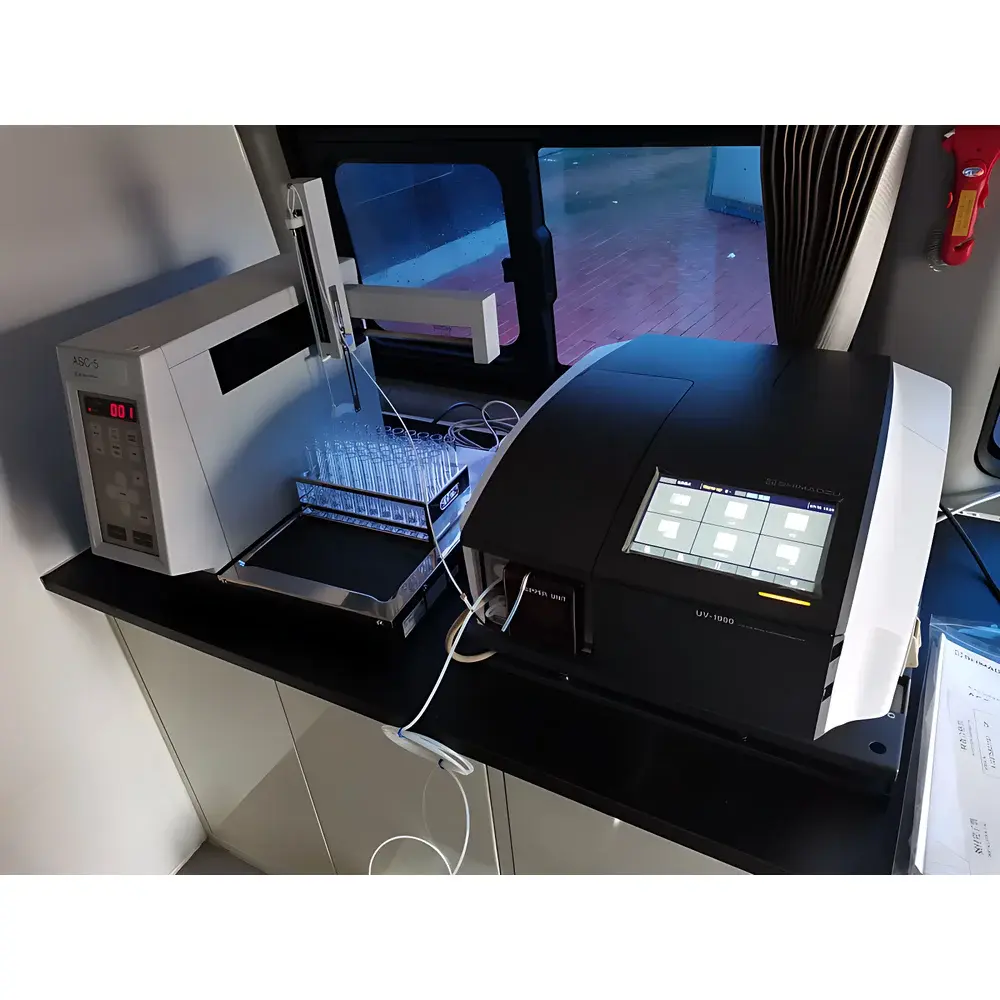
The Shimadzu Mobile Laboratory Platform is a fully integrated, vehicle-mounted environmental monitoring system engineered for high-reliability field deployment in emergency response, routine surveillance, and regulatory compliance scenarios. Unlike conventional portable analyzers or retrofitted vans, this platform is purpose-built around metrological integrity—designed from the ground up to maintain analytical performance under dynamic transport conditions. Its core architecture leverages Shimadzu’s decades of instrumentation expertise, incorporating structural reinforcement, vibration-isolated mounting systems, and climate-stabilized instrument enclosures. The platform operates on established physical measurement principles—including gas chromatography–mass spectrometry (GC-MS), UV-Vis spectrophotometry, ion chromatography (IC), and real-time particulate matter (PM2.5/PM10) detection—enabling trace-level quantification of volatile organic compounds (VOCs), heavy metals, inorganic anions, and airborne pollutants directly at incident sites. Certified by the National Institute of Metrology (NIM), PRC, it meets the mechanical robustness requirements defined in JJF 1479–2014 (Calibration Specification for Mobile Environmental Monitoring Systems) and GB/T 2423.10–2019 (Environmental Testing – Vibration Tests).
Key Features
- Vibration-dampened instrumentation mounting system with multi-axis shock absorption compliant with NHMA1A00 Level 19 vehicle protection standards
- Structural optimization of onboard analyzers—including GC-MS modules, spectrophotometers, and IC systems—to retain calibration stability during transit over cobblestone, corrugated (‘washboard’), and high-speed circular test tracks
- Climate-controlled internal environment (18–28 °C, RH ≤60%) with redundant HVAC and particulate filtration to ensure consistent thermal and humidity conditions across operational cycles
- Integrated power management: dual-source operation (vehicle alternator + UPS-backed 220 V AC / 12 V DC) with automatic switchover and surge suppression
- Modular instrument bays designed for rapid reconfiguration—supporting swap-out of analytical units without recalibration or structural modification
- Onboard data acquisition hub with time-synchronized GPS tagging, environmental sensor fusion (temperature, humidity, pressure, wind speed), and encrypted local storage (AES-256)
Sample Compatibility & Compliance
The platform supports liquid, gaseous, and aerosol sampling protocols aligned with national and international environmental testing frameworks. It accommodates standard EPA methods (e.g., TO-15, Method 8270), ISO 17025-accredited workflows, and China’s HJ series standards (e.g., HJ 639–2012 for VOCs, HJ 828–2017 for COD). All onboard instruments undergo pre- and post-transport verification per NIM-certified procedures—demonstrating <±0.5% deviation in retention time (GC), absorbance linearity (UV-Vis), and peak area reproducibility (IC) after exposure to cumulative vibration spectra equivalent to 500 km of off-road transit. The system is designed to support GLP-compliant audit trails and meets baseline requirements for field-deployable systems referenced in China’s “Technical Guidelines for Emergency Environmental Monitoring” (HJ 589–2010).
Software & Data Management
Field data acquisition is managed via Shimadzu LabSolutions EM (Environmental Module), a validated software suite supporting 21 CFR Part 11-compliant electronic signatures, role-based access control, and immutable audit logging. Raw spectral, chromatographic, and sensor data are stored in vendor-neutral formats (mzML, JCAMP-DX, CSV) with embedded metadata including GPS coordinates, ambient conditions, operator ID, and instrument status flags. Automated QC checks flag drift, baseline noise anomalies, or calibration deviation exceeding predefined thresholds (e.g., ±2% RSD for internal standard response). Data export supports direct integration with provincial environmental information platforms (e.g., China’s National Environmental Monitoring Network—NEMN) via HTTPS/FTPS with TLS 1.2 encryption.
Applications
- Chemical spill response: Real-time identification and quantification of benzene, toluene, xylene, chlorinated solvents, and organophosphates in air and water matrices
- Industrial boundary monitoring: Continuous stack emission profiling and fence-line VOC mapping under ISO 14064-1 verification frameworks
- Drinking water safety assessment: On-site detection of nitrate, fluoride, arsenic, and disinfection by-products (DBPs) per GB 5749–2022
- Soil vapor intrusion screening: Portable GC-MS analysis of subsurface vapors at brownfield sites
- Regulatory inspection support: Mobile accreditation for provincial ecological environment bureaus conducting unannounced facility audits
FAQ
Does the mobile laboratory require site-specific recalibration after each deployment?
No—systematic pre- and post-transit verification per NIM protocols ensures calibration retention. Only daily QC checks (e.g., certified reference material injection) are required before sample analysis.
Can third-party analyzers be integrated into the platform?
Yes—modular bays support standardized mechanical, power, and data interfaces (RS-485, Ethernet, USB 3.0). Integration requires Shimadzu’s Interface Qualification Package (IQP) and firmware validation.
Is remote diagnostics and software update capability available?
Yes—via secure LTE/5G connection with zero-trust network access control (ZTNA). All updates undergo cryptographic signature verification prior to installation.
What documentation is provided for metrological traceability?
Each unit ships with a NIM-issued Transport & Vibration Certification Report, instrument-specific calibration certificates (traceable to NIM primary standards), and a full system validation protocol (IQ/OQ/PQ) executed under ISO/IEC 17025 conditions.
How is cybersecurity addressed in field operations?
The platform implements hardware-enforced secure boot, application sandboxing, automated log rotation with tamper-evident hashing, and compliance with GB/T 36631–2018 (Information Security Technology – Cybersecurity Requirements for Environmental Monitoring Systems).
Related Products







