
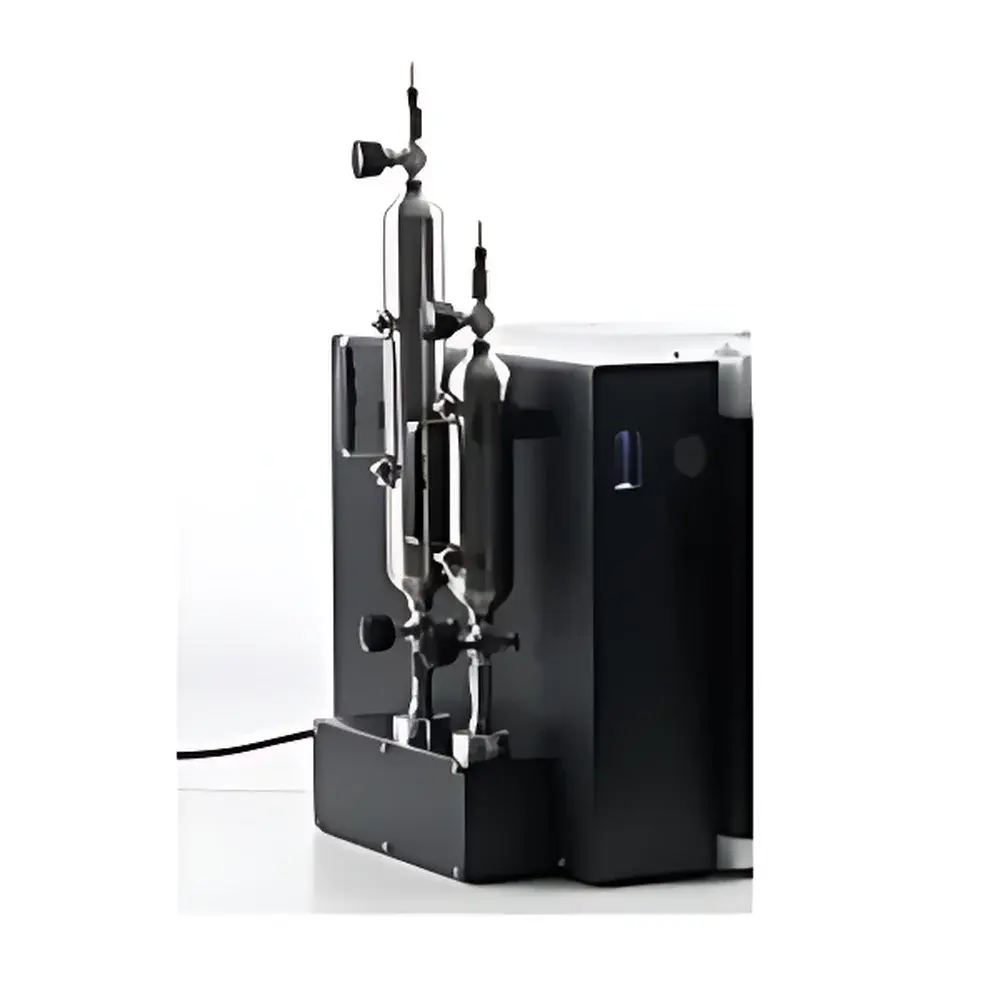
Shimadzu LSV-S High-Pressure Liquid Sampling Valve (Side-Mount Configuration)
| Brand | Shimadzu |
|---|---|
| Origin | Jiangsu, China |
| Manufacturer Type | Original Equipment Manufacturer (OEM) |
| Product Origin | Domestic (China) |
| Model | LSV-S |
| Instrument Type | Gas Chromatography (GC) Liquid Injector |
| Purge Method | Heated Purge |
| Viewports | Dual Integrated Borosilicate Glass Viewports with LED Illumination |
| Filtration | Integrated Stainless-Steel Sintered Filter Module (5 µm nominal pore size) |
| Compatibility | Shimadzu Nexis GC-2030, GC-2014/2014C, GC-2010 Pro |
Overview
The Shimadzu LSV-S High-Pressure Liquid Sampling Valve (Side-Mount Configuration) is a precision-engineered interface component designed for direct, quantitative introduction of pressurized liquid samples into gas chromatographic systems. It operates on the principle of positive-displacement sampling under controlled pressure differentials, enabling reproducible injection of volatile, low-boiling-point hydrocarbon mixtures—such as LPG, natural gas liquids (NGLs), and refinery streams—without phase separation or flash vaporization prior to the GC inlet. Unlike conventional loop injectors or septum-based liquid injectors, the LSV-S maintains sample integrity by preserving system pressure throughout the sampling train, minimizing analyte loss, fractionation, or adsorption. Its side-mount mechanical design integrates seamlessly with Shimadzu’s modular GC platforms—including the Nexis GC-2030, GC-2014/2014C, and GC-2010 Pro—ensuring alignment with OEM thermal management, pneumatic control logic, and valve timing protocols.
Key Features
- Modular valve architecture supporting single high-pressure liquid valve, dual parallel liquid valves, or hybrid gas/liquid configurations—enabling method flexibility across multi-analyte workflows.
- Dual borosilicate glass viewports with integrated LED illumination provide real-time visual confirmation of liquid phase continuity, bubble formation, and flow homogeneity before and after the sampling chamber—critical for verifying sample integrity in high-volatility matrices.
- Heated purge functionality (operable up to 150 °C) allows controlled inert-gas purging of internal pathways and rotor seal surfaces, effectively removing high-boiling residue and mitigating carryover between injections—particularly essential for heavy naphtha, diesel-range components, or sulfur-containing species.
- Standardized push-to-connect fittings (1/8″ NPT female ports, stainless-steel ferrules) ensure leak-tight, rapid connection to high-pressure sampling cylinders (up to 15 MPa working pressure) without torque-sensitive tools or sealing compounds.
- Integrated sintered stainless-steel filter module (5 µm nominal pore rating) installed upstream of the rotor seal prevents particulate ingress from cylinder headspace condensate or pipeline debris—extending service life and maintaining rotational torque consistency over >10,000 actuation cycles.
- Robust 316 stainless-steel body with electropolished wetted surfaces complies with ASTM F800 and ISO 8502-3 cleanliness standards for hydrocarbon analysis instrumentation.
Sample Compatibility & Compliance
The LSV-S is validated for use with liquefied petroleum gas (LPG), ethane–propane–butane blends, light naphthas, and other Class I/II flammable liquids per NFPA 30 and OSHA 1910.106. Its pressure-rated construction meets ASME B31.4 requirements for liquid hydrocarbon transport systems. The dual viewport assembly conforms to IEC 61000-4-2 (ESD immunity) and UL 61010-1 safety standards for laboratory analytical equipment. When deployed in regulated environments—including refinery QC labs operating under API RP 42, ASTM D1835, or ISO 6974-1—its heated purge cycle and filter module support documented adherence to GLP traceability requirements and audit-ready maintenance logs.
Software & Data Management
The LSV-S operates as a hardware-peripheral device synchronized via Shimadzu GC LabSolutions software (v5.92 or later). Valve actuation timing, purge duration, heater setpoint, and status monitoring are fully programmable within sequence methods. All operational parameters—including temperature ramp profiles, purge gas flow rates (via optional mass flow controller integration), and actuation count—are logged with timestamped metadata compliant with FDA 21 CFR Part 11 Annex 11 requirements. Audit trails capture user ID, parameter changes, and error events, supporting GMP-compliant validation documentation (IQ/OQ/PQ protocols available upon request).
Applications
- Direct analysis of pressurized LPG cylinders per ASTM D2158 and EN 15469 for C3/C4 speciation and butadiene quantification.
- On-line monitoring of FCCU feedstocks and hydrotreater effluents where rapid turnaround of saturated/unsaturated C2–C6 hydrocarbons is required.
- Trace sulfur compound profiling (e.g., mercaptans, sulfides) in natural gasoline using PFPD or SCDD detection—enabled by minimized adsorption losses through uncoated metal flow paths.
- Calibration standard delivery for dynamic dilution systems requiring precise, pressure-stabilized liquid injection into carrier gas streams.
- Method development for supercritical fluid chromatography (SFC) sample introduction where phase stability during transfer is critical.
FAQ
What maximum operating pressure is certified for the LSV-S?
The valve is rated for continuous operation at 15 MPa (2175 psi) at 25 °C, with pressure decay testing per ISO 5208 Class A leakage limits.
Is the sintered filter replaceable in the field without disassembling the valve body?
Yes—the filter cartridge is housed in a dedicated, tool-free access port located upstream of the rotor housing; replacement requires only removal of two hex screws and installation of a new 5 µm SS316 element.
Does the LSV-S support automated valve sequencing in multi-method GC runs?
Yes—when configured with Shimadzu’s GC-2030 Advanced Control Unit, the LSV-S accepts TTL-triggered commands from LabSolutions for synchronized actuation across up to four independent sampling events per run.
Can the heated purge function be operated independently of GC oven temperature programming?
Yes—purge heater setpoints and dwell times are decoupled from column oven parameters and may be scheduled as standalone steps within the method editor.
What materials contact the sample stream?
All wetted surfaces consist of electropolished ASTM A276 Type 316 stainless steel, VCR-compatible ferrules, and borosilicate glass (DIN 7080); no elastomers or polymer seals are present in the primary flow path.





