
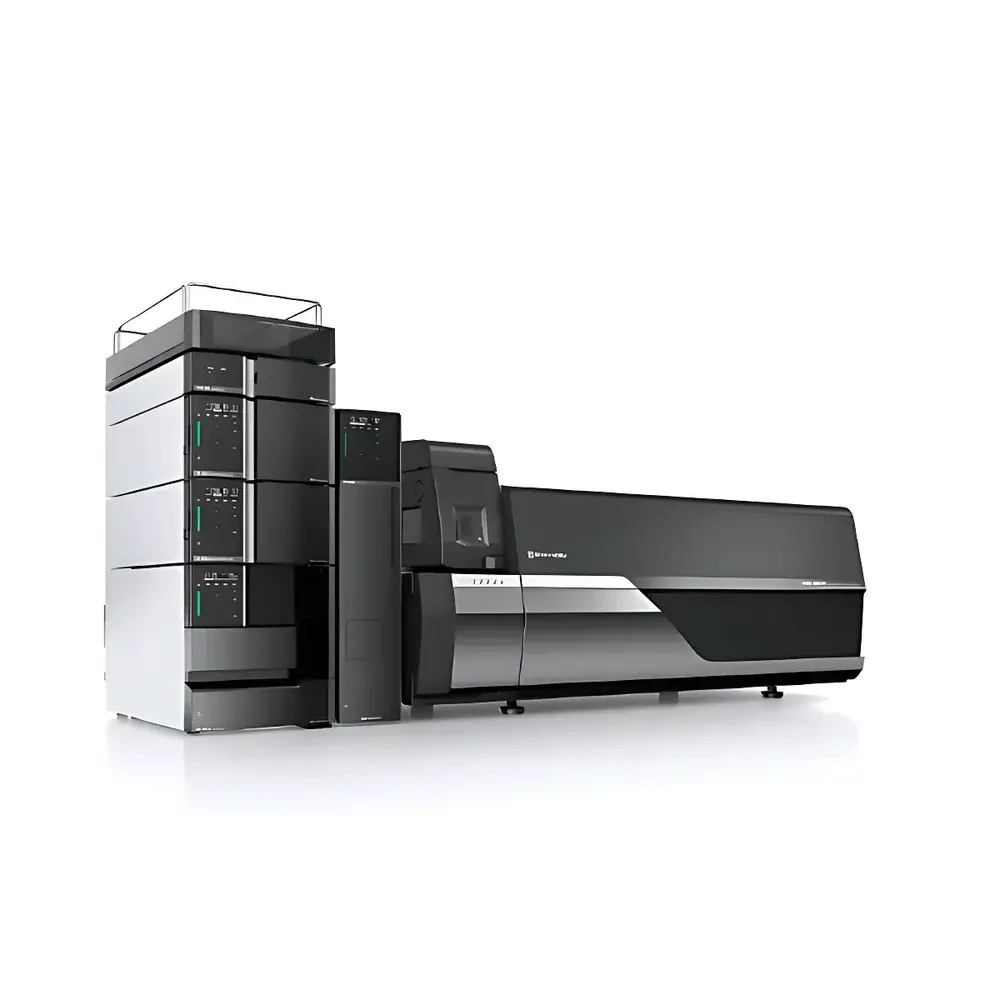
Shimadzu LCMS-8065XE Triple Quadrupole Liquid Chromatography Mass Spectrometer
| Brand | Shimadzu |
|---|---|
| Origin | Japan |
| Manufacturer Type | Original Equipment Manufacturer (OEM) |
| Import Status | Imported |
| Model | LCMS-8065XE |
| Instrument Type | Triple Quadrupole (TQ) |
| Application Scope | General-Purpose Quantitative Analysis |
| Key Technologies | StreamFocus ESI Ion Source, 4th-Generation UFsweeper™ Collision Cell |
| Compliance | Designed for GLP/GMP environments |
Overview
The Shimadzu LCMS-8065XE is a high-performance triple quadrupole liquid chromatography mass spectrometer engineered for ultra-trace quantitative analysis in regulated and research-intensive laboratories. Operating on the principle of tandem mass spectrometry (MS/MS) via collision-induced dissociation (CID) in a Q1–q2–Q3 configuration, the system delivers exceptional selectivity, sensitivity, and reproducibility for targeted small-molecule quantification. As the flagship model in Shimadzu’s Ultra-Fast Mass Spectrometry (UFMS) platform, the LCMS-8065XE integrates hardware innovations—including the StreamFocus electrospray ionization (ESI) source and fourth-generation UFsweeper™ collision cell—to achieve sub-femtogram-level detection limits while maintaining cycle times under 100 ms per MRM transition. Its architecture is optimized for routine operation in pharmaceutical QC, environmental monitoring, clinical toxicology, and food safety testing where regulatory compliance, method robustness, and long-term signal stability are critical.
Key Features
- StreamFocus ESI Ion Source: Features a redesigned low-diffusion nebulizer nozzle that minimizes ion dispersion during desolvation, increasing ion transmission efficiency by up to 2.5× compared to conventional ESI sources—without requiring elevated gas flows or higher voltages.
- 4th-Generation UFsweeper™ Collision Cell: Incorporates an enlarged entrance aperture and dynamically optimized RF/DC lens voltages to maximize precursor ion capture and fragment ion transmission at scan speeds exceeding 1,000 MRM transitions per second.
- Eco Mode Functionality: Automatically initiates instrument sleep state after user-defined idle periods, reducing standby power consumption by approximately 31%—validated per IEC 62301:2011 measurement protocols.
- Integrated PFAS Analysis Workflow (FluoroSuite™): Includes hardware modifications (low-background LC modules, fluoropolymer-free fluidic paths), validated consumables (PFAS-optimized columns and guard cartridges), and pre-configured acquisition methods with retention time locking and background subtraction algorithms.
- Robust Vacuum Architecture: Dual-stage differential pumping with oil-free turbomolecular pumps ensures stable base pressure (<5 × 10⁻⁸ Torr) over extended duty cycles, minimizing downtime associated with vacuum recovery.
Sample Compatibility & Compliance
The LCMS-8065XE accepts standard HPLC/UHPLC eluents (including aqueous/organic gradients with 0.1% formic acid or ammonium acetate modifiers) and interfaces seamlessly with Shimadzu Nexera series LC systems. It supports direct infusion, microflow, and nano-LC configurations via optional source adapters. From a regulatory standpoint, the system meets essential requirements for Good Laboratory Practice (GLP) and Good Manufacturing Practice (GMP) environments: audit trail functionality, electronic signature support, and secure user access control are fully implemented within LabSolutions LCMS software (v5.9+). Instrument qualification documentation aligns with ASTM E2500-13 and ISO/IEC 17025:2017 frameworks, and data handling complies with FDA 21 CFR Part 11 when deployed with validated IT infrastructure.
Software & Data Management
LabSolutions LCMS v5.9 provides a unified interface for instrument control, method development, peak integration, calibration curve generation, and report export. Quantitative workflows include automatic dwell time optimization, scheduled MRM, and internal standard ratio correction. Raw data files adhere to open mzML format (version 1.1.0), enabling interoperability with third-party processing tools such as Skyline, Compound Discoverer, and OpenMS. All audit trails—including parameter changes, sequence edits, and reprocessing events—are time-stamped, immutable, and exportable in PDF/A-1b or CSV formats. Data backups follow NIST SP 800-88 Rev. 1 guidelines for media sanitization and retention scheduling.
Applications
The LCMS-8065XE is routinely deployed in applications demanding high-confidence quantification across complex matrices: residual solvent analysis per ICH Q3C, pesticide multiresidue screening in produce (AOAC 2007.01), mycotoxin verification in cereals (EN 16177:2012), therapeutic drug monitoring (TDM) in plasma using deuterated IS, and per- and polyfluoroalkyl substances (PFAS) analysis down to 0.05 pg/mL in drinking water (EPA Method 537.1). Its speed-sensitivity balance also supports high-throughput bioanalysis—e.g., >1,200 samples/day in regulated pharmacokinetic studies—with <2% CV for inter-day precision across 15-day validation runs.
FAQ
What regulatory standards does the LCMS-8065XE support for data integrity?
It supports full 21 CFR Part 11 compliance when used with LabSolutions LCMS v5.9 in a validated network environment, including role-based access control, electronic signatures, and permanent audit trails.
Can the LCMS-8065XE be integrated with non-Shimadzu LC systems?
Yes—via analog/digital I/O triggers and vendor-neutral API protocols (e.g., OPC UA), though optimal performance and automated method synchronization are guaranteed only with Shimadzu Nexera or Prominence systems.
Is the StreamFocus ion source compatible with APCI or other ionization modes?
No—StreamFocus is exclusively engineered for ESI operation; APCI, DUIS, and MALDI interfaces require separate source modules.
Does the UFsweeper™ collision cell require periodic cleaning or replacement?
Under normal operation with clean mobile phases, the cell requires no routine maintenance; cleaning is recommended only after exposure to highly saline or protein-rich samples, following Shimadzu’s documented procedure (PN: 228-74033-91).
How is PFAS background reduction achieved in the FluoroSuite workflow?
Through a combination of fluoropolymer-free fluidic components (e.g., PEEKsil tubing, ceramic frits), dedicated PFAS-scavenging guard columns, and software-based baseline noise modeling that subtracts persistent fluorinated adduct signals in real time.
Related Products





