
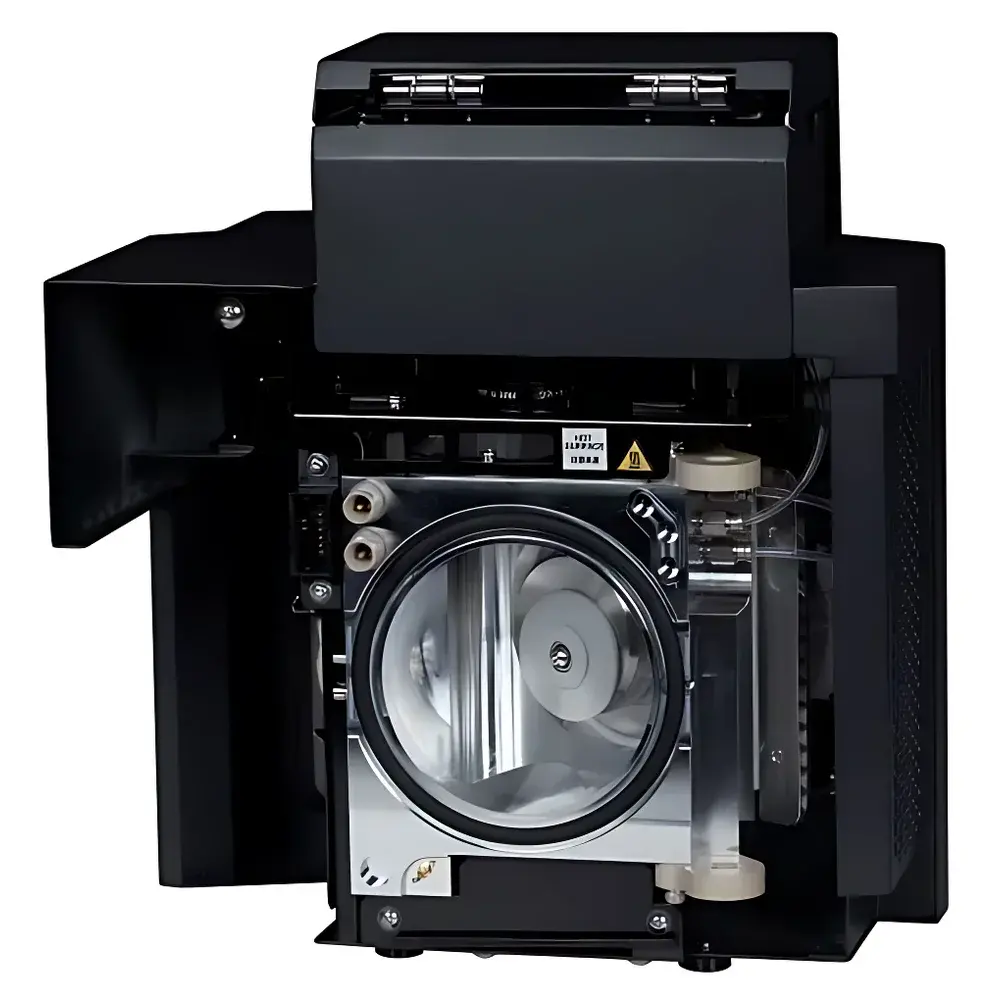
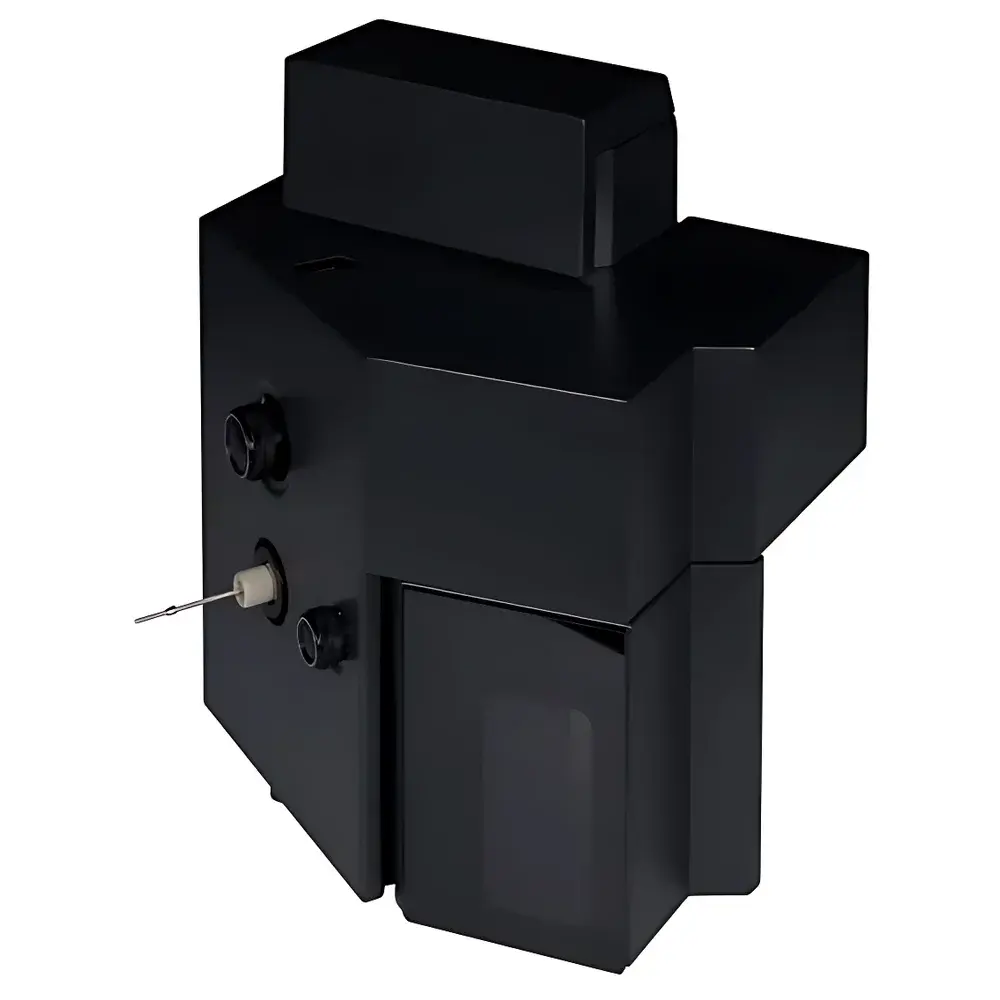
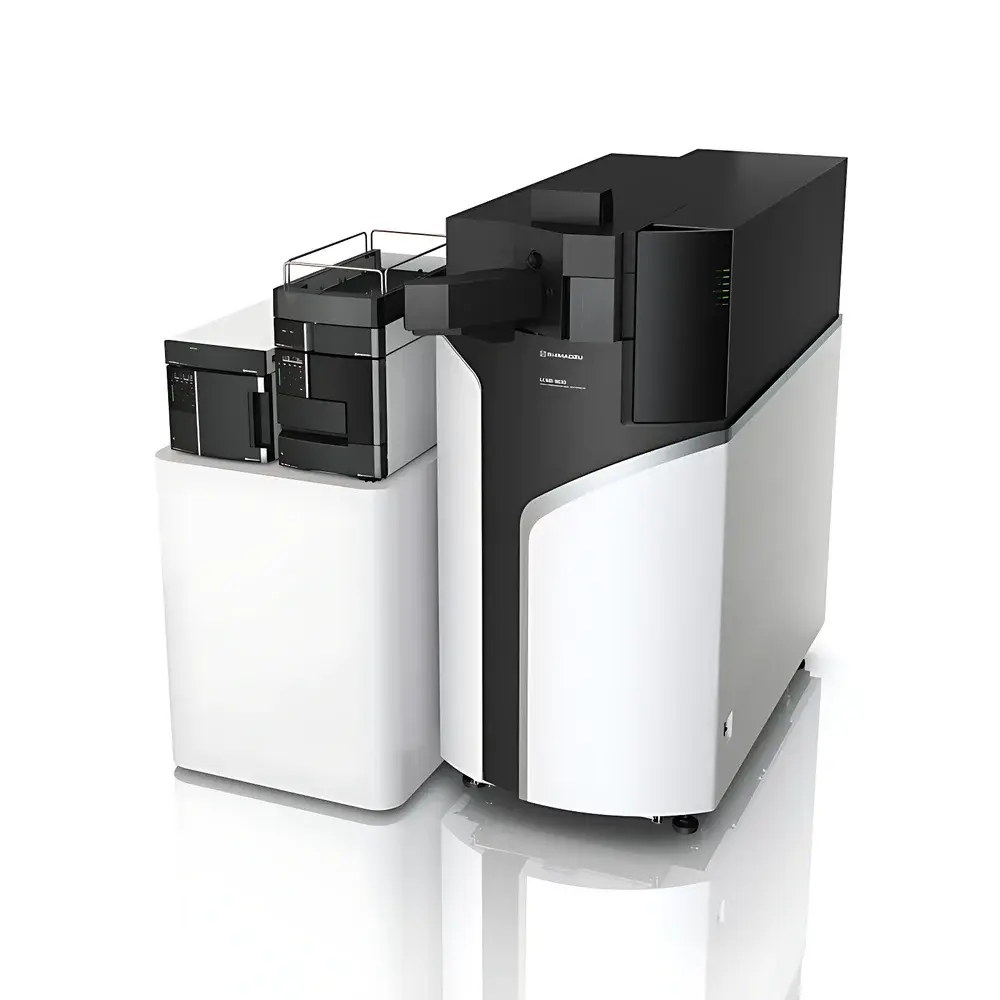
Shimadzu Micro-ESI 9030 High-Resolution LC-MS Microflow Electrospray Ionization Source
| Brand | Shimadzu |
|---|---|
| Origin | Japan |
| Manufacturer Type | Original Equipment Manufacturer (OEM) |
| Import Status | Imported |
| Model | Micro-ESI 9030 |
| Pricing | Available Upon Request |
Overview
The Shimadzu Micro-ESI 9030 is a purpose-engineered electrospray ionization (ESI) source designed exclusively for integration with the Shimadzu LCMS-9030 high-resolution quadrupole time-of-flight (Q-TOF) mass spectrometer. It serves as a dedicated microflow interface optimized for liquid chromatography–mass spectrometry (LC-MS) systems operating in the 1–50 µL/min flow rate regime. Unlike conventional ESI sources intended for standard (≥200 µL/min) or nanoflow (100–1000 nL/min) applications, the Micro-ESI 9030 bridges a critical operational gap—delivering enhanced ionization efficiency, improved signal-to-noise ratio, and superior robustness compared to nanoflow configurations, while retaining significantly higher sensitivity than standard-flow ESI under equivalent analytical conditions. Its design adheres to fundamental principles of electrospray physics, including controlled droplet desolvation, stable Taylor cone formation, and efficient gas-phase ion transfer into the Q-TOF mass analyzer. The source is mechanically and electrically calibrated to ensure reproducible ion transmission across extended run times, making it suitable for regulated environments requiring method transferability and long-term system stability.
Key Features
- Optimized for 1–50 µL/min microflow LC eluent rates—enabling up to 5× higher sensitivity versus conventional ESI at 200–500 µL/min without compromising chromatographic resolution.
- Direct mechanical and electrical compatibility with Shimadzu Nexera Mikros microflow UHPLC system—ensuring seamless hardware synchronization, minimal dead volume, and pressure-tolerant interface coupling.
- Integrated heated capillary and counter-current drying gas system engineered for efficient solvent removal and analyte ion stabilization under low-flow conditions.
- Modular, tool-free source housing design facilitating rapid cleaning, electrode replacement, and routine maintenance—reducing instrument downtime and supporting GLP-compliant operational workflows.
- Robust architecture with temperature-stabilized ion optics and adjustable spray needle positioning—supporting consistent performance across diverse mobile phase compositions (including high aqueous and high organic gradients).
Sample Compatibility & Compliance
The Micro-ESI 9030 supports broad analyte compatibility—including small molecules (e.g., pharmaceuticals, metabolites), peptides, and moderately sized proteins—without requiring derivatization or extensive sample pre-concentration. It operates reliably with common LC solvents (water, acetonitrile, methanol, ammonium formate/acetate buffers) and accommodates pH ranges from 2.5 to 8.5. From a regulatory standpoint, the source is fully compatible with data integrity requirements under FDA 21 CFR Part 11 when used within Shimadzu’s LabSolutions LCMS software environment. Its design aligns with ISO/IEC 17025 principles for method validation and supports audit-ready operation in GMP and GLP laboratories conducting bioanalytical method development, impurity profiling, and stability-indicating assays per ICH Q2(R2) guidelines.
Software & Data Management
The Micro-ESI 9030 is natively supported by Shimadzu LabSolutions LCMS Version 5.9 or later. Source parameters—including capillary voltage, drying gas flow/temperature, nebulizing gas pressure, and interface heater settings—are fully programmable within acquisition methods and stored with raw data files (.qgd format). Real-time monitoring of source status (e.g., current draw, temperature drift, gas pressure stability) is logged automatically and integrated into the system’s electronic lab notebook (ELN) export functionality. All parameter changes are recorded with timestamps and user IDs, fulfilling ALCOA+ data traceability criteria. Method templates for microflow LC-MS workflows—including new drug substance characterization, plasma protein binding studies, and forced degradation analysis—are preconfigured and validated for immediate deployment.
Applications
- Accelerated small-molecule drug discovery: Enables direct injection of limited-volume microextraction samples (e.g., dried blood spots, microdialysates) with sub-pg on-column detection limits.
- Biopharmaceutical characterization: Supports intact mass analysis of monoclonal antibody subunits and ADC payload release profiling under native-like microflow conditions.
- Metabolomics and exposomics: Provides reproducible ionization of polar and semi-polar metabolites across large-scale cohort studies where sample conservation is critical.
- QC/QA release testing: Delivers robust, low-variability quantitation of genotoxic impurities and residual solvents in API batches using validated microflow LC-MS/MS methods.
- Method development optimization: Facilitates rapid scouting of gradient profiles and column chemistries with 90% versus standard-flow protocols.
FAQ
Is the Micro-ESI 9030 compatible with non-Shimadzu mass spectrometers?
No—it is engineered specifically for mechanical, electrical, and software-level integration with the LCMS-9030 platform and requires Shimadzu’s proprietary interface electronics and vacuum coupling geometry.
Can it be retrofitted onto older LCMS-8060 or LCMS-8050 systems?
No—its physical mounting, gas routing, and control firmware are exclusive to the LCMS-9030 Q-TOF architecture and are not backward-compatible.
What maintenance intervals are recommended for routine operation?
Daily visual inspection of the spray needle and capillary tip; weekly cleaning of the ion transfer region using isopropanol; full source disassembly and ultrasonic cleaning every 200–300 analysis hours depending on sample matrix complexity.
Does it support polarity switching during acquisition?
Yes—polarity switching is fully supported in both single-run and scheduled MRM modes via LabSolutions LCMS, with dwell time configurable down to 5 ms per polarity.
How does its sensitivity compare to Shimadzu’s Nano-ESI source?
While Nano-ESI achieves lower absolute detection limits for ultra-trace peptides, the Micro-ESI 9030 delivers superior quantitative precision, shorter cycle times (<1.2 s dwell), and significantly higher uptime—making it preferred for high-throughput regulated bioanalysis.





