
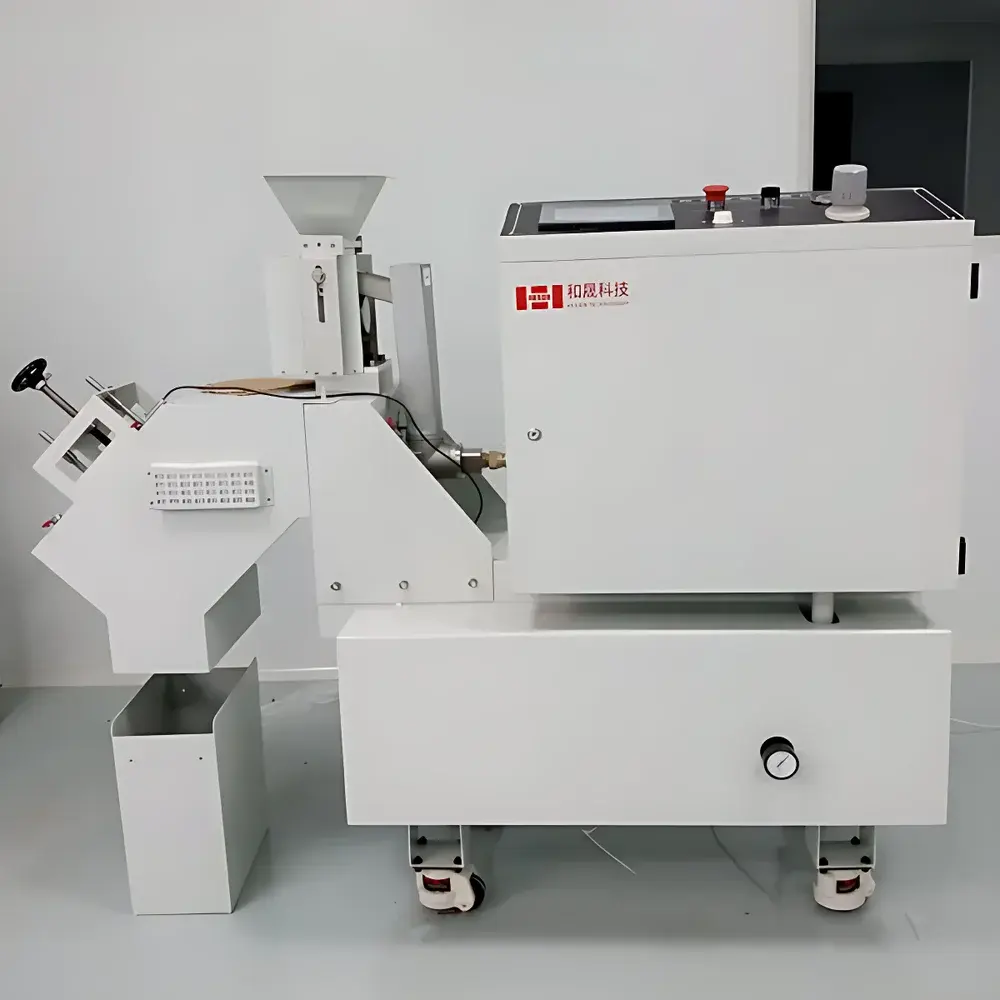
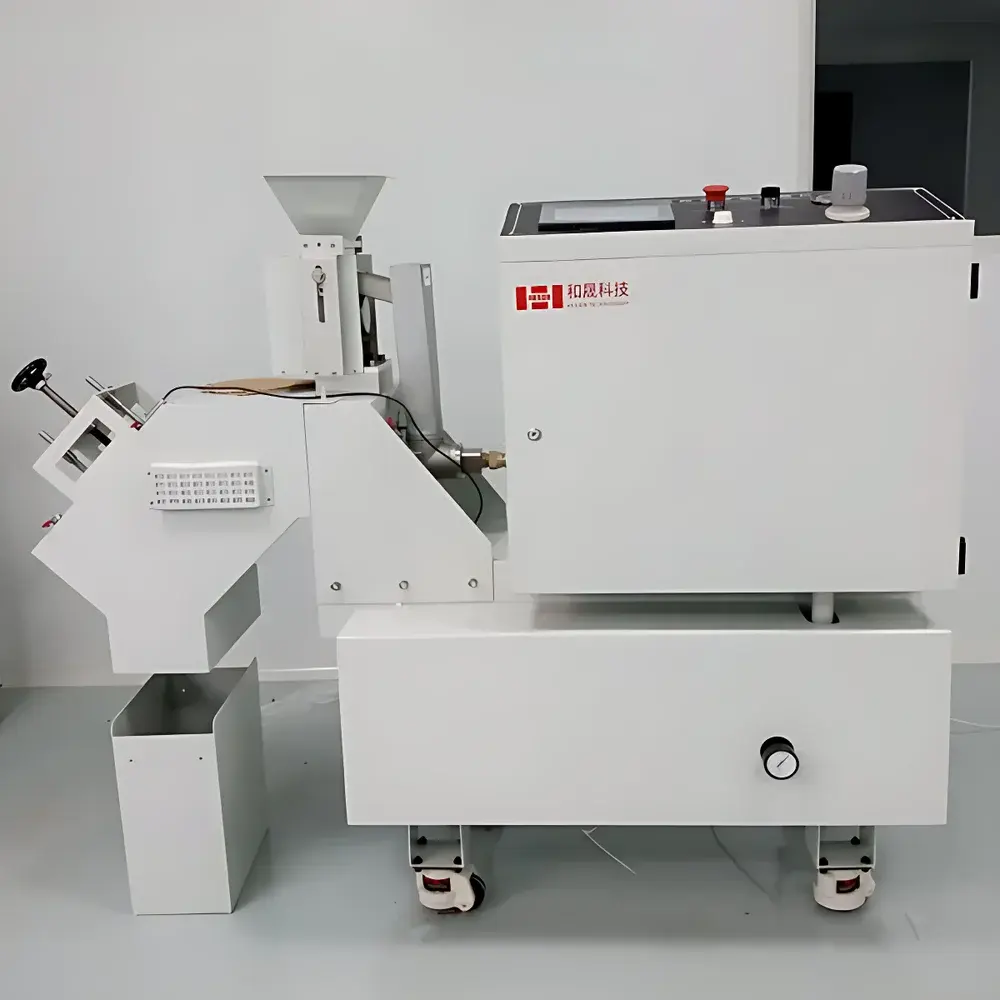
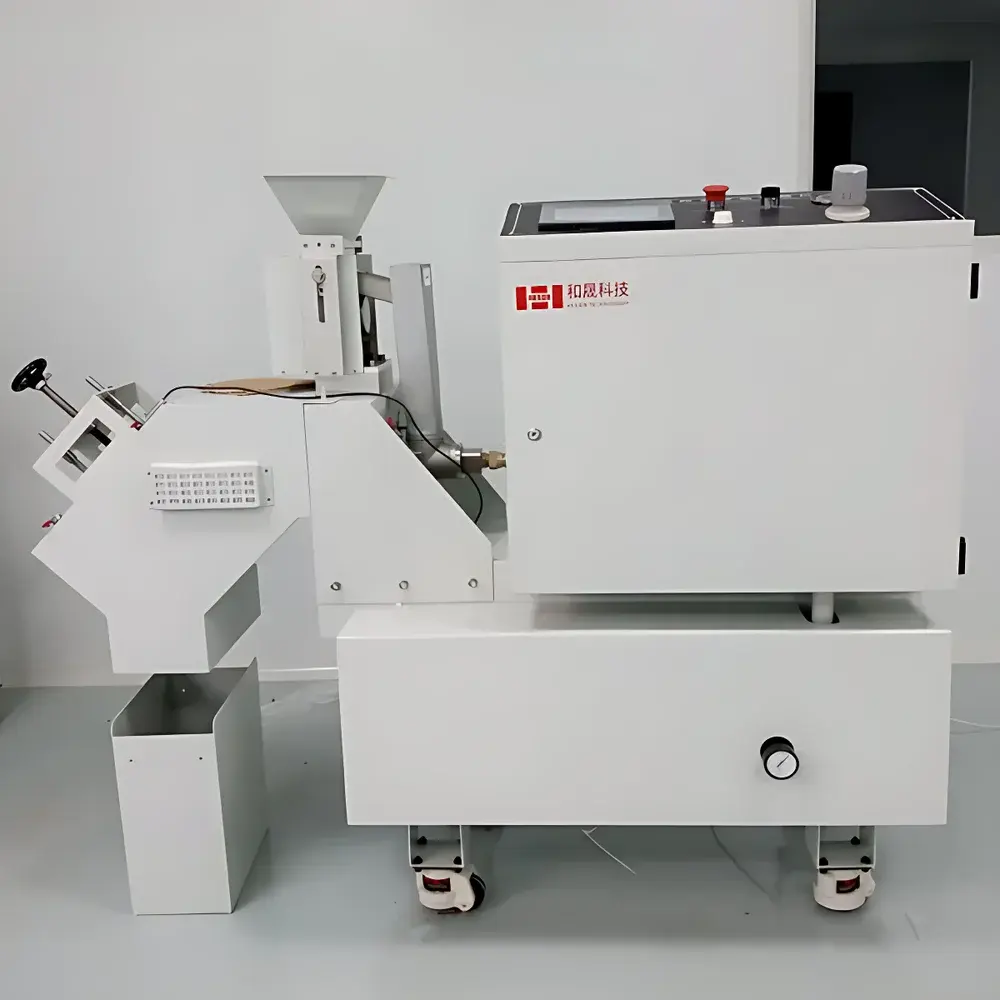
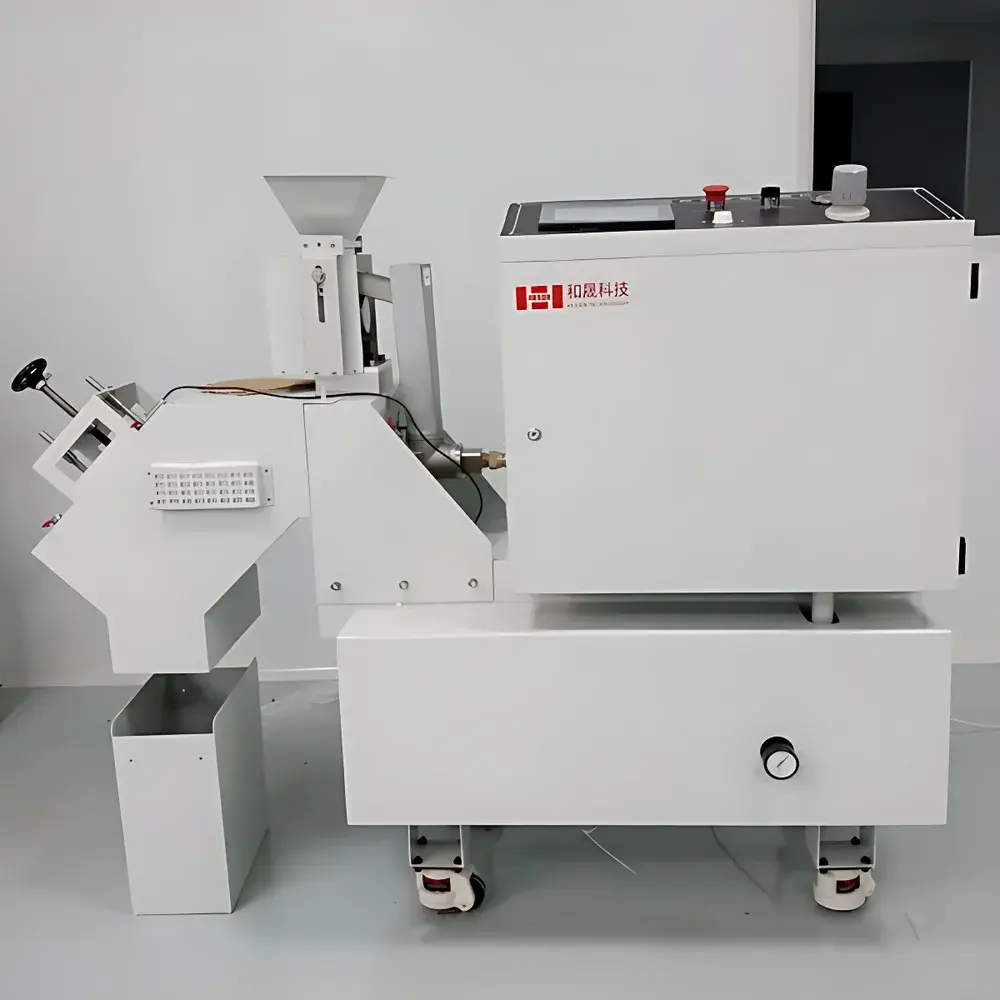
HESON HS-SS-1A Gravel Impact Tester
| Brand | HESON |
|---|---|
| Origin | Shanghai, China |
| Manufacturer Type | OEM Manufacturer |
| Region Category | Domestic (China) |
| Model | HS-SS-1A |
| Price Range | USD 7,000 – 14,000 |
| Compliance Standards | SAE J400, ISO 20567-1:2005, DIN EN ISO 20567-1:2007, ASTM D3170-03(2007), VDA 55996-1:2001, GME 60268-96, GMW14700, Ford FLTM BI 157-06, Toyota NES M0007 Sec.28, Mazda MGR ES30.AD.149 |
| Operating Pressure Range | 0–1 MPa (adjustable) |
| Air Flow Rate | 0–0.08 m³/s (adjustable) |
| Compressed Air Inlet ID | ≥12.7 mm (0.5″) or ≥19 mm (0.75″) |
| Air Reservoir Volume | 136 L |
| Nozzle Inner Diameter | 52.6 mm × 290 mm |
| Max Specimen Dimensions | 105 mm (W) × 30 mm (T) |
| Impact Angles | SAE 45°/90°, VDA 54°/90°, Radiator-Specific Chamber |
| Sound Pressure Level | ≤130 dB(A) |
| Feed Mechanism | Electromagnetic Vibratory Feeder |
| Impact Media | Gravel, Sand, Steel Shot, Iron Shot |
| Test Environment | 5–35 °C, RH ≤85% |
| Continuous Duty Rating | Yes |
Overview
The HESON HS-SS-1A Gravel Impact Tester is an engineered test system designed to evaluate the resistance of automotive exterior materials—including painted metal substrates, polymer composites, thermoplastic elastomers, and laminated glass—to mechanical degradation caused by high-velocity gravel, sand, and metallic shot impact. It operates on the principle of controlled pneumatic propulsion: calibrated abrasive media are vibratory-fed into a precision-guided acceleration channel, then accelerated by regulated compressed air to achieve repeatable impact velocities (e.g., 19.4 m/s per SAE J400 and ISO 20567-1). The resulting impact energy simulates real-world road debris strike events encountered during vehicle operation, enabling quantitative assessment of coating cohesion, interlayer adhesion, substrate delamination, and surface chipping. This instrument is not a generic impact tester but a purpose-built platform aligned with the physical boundary conditions, media specifications, and evaluation protocols defined in major global automotive OEM standards.
Key Features
- Modular architecture composed of standardized subassemblies: impact nozzle assembly, impact chamber (with configurable 45°, 54°, and 90° impact geometries per SAE, VDA, and radiator-specific test requirements), specimen fixture stage, vibratory feed hopper, integrated control panel, and optional air compressor interface.
- Precise regulation of impact parameters via dual independent controls: adjustable air pressure (0–1 MPa) and volumetric flow rate (0–0.08 m³/s), ensuring stable exit velocity and kinetic energy delivery across test cycles.
- Electromagnetically driven linear feeder enables fine-tuned, reproducible media mass flow—critical for achieving consistent particle density and impact frequency per unit area.
- Robust impact chamber constructed from abrasion-resistant steel alloys, incorporating acoustic damping features to maintain operational noise ≤130 dB(A) during continuous-duty testing.
- Compliance-ready design: meets dimensional, media hardness (HV 400), projectile geometry (32 mm diameter, 105° apex angle, 60 g mass), and environmental conditioning (5–35 °C, RH ≤85%) requirements specified in ISO 20567-1, SAE J400, and VDA 55996-1.
- Specimen handling system accommodates flat or curved samples up to 105 mm width and 30 mm thickness, with fixture adaptability for axle sections, body panels, and trim components.
Sample Compatibility & Compliance
The HS-SS-1A is strictly intended for solid, non-hazardous, non-volatile, non-corrosive, and non-biological specimens. It shall not be used for flammable, explosive, volatile, corrosive, biological, or fluid-phase materials. All test samples must be rigidly mounted to prevent displacement during impact and must conform to OEM-specified substrate preparation protocols (e.g., primer application, bake cycles, surface cleaning per ASTM D4585). The system supports full traceability under GLP/GMP-aligned workflows: test logs include timestamped pressure/flow settings, media batch ID, ambient temperature/humidity, operator ID, and specimen identification. Documentation output complies with audit requirements for ISO/IEC 17025-accredited laboratories and satisfies evidentiary expectations under FDA 21 CFR Part 11 when paired with validated electronic record systems.
Software & Data Management
While the base HS-SS-1A operates via analog/digital front-panel controls, it integrates seamlessly with third-party LabVIEW-based or custom SCADA platforms for automated parameter logging, cycle counting, and pass/fail decision logic based on preloaded evaluation criteria (e.g., ISO 20567-1 damage rating scale). Optional digital I/O modules enable synchronization with high-speed imaging systems for post-impact surface morphology analysis. All configuration data, calibration records, and test reports are exportable in CSV and PDF formats compliant with internal quality management systems (QMS) and external certification audits (e.g., IATF 16949).
Applications
- Evaluation of topcoat-to-primer and primer-to-substrate adhesion integrity under multi-impact stress.
- Comparative ranking of polymer matrix toughness in TPO, PP, PC/ABS, and reinforced composites used in bumpers and claddings.
- Validation of anti-chip coatings applied to underbody shields, wheel arch liners, and rocker panels.
- Qualification of clearcoat formulations for UV-stabilized acrylics and fluorinated polyurethanes against cumulative erosion.
- Supporting R&D for lightweight material substitution programs—e.g., aluminum alloy vs. carbon-fiber-reinforced polymer (CFRP) impact resilience at identical coating architectures.
- Production line incoming inspection for supplier-coated parts prior to final assembly.
FAQ
What standards does the HS-SS-1A directly support?
SAE J400, ISO 20567-1:2005 / ISO 20567-1:2007, ASTM D3170-03(2007), VDA 55996-1:2001, GME 60268-96, GMW14700, Ford FLTM BI 157-06, Toyota NES M0007 Section 28, Mazda MGR ES30.AD.149, and Volkswagen TL 226.
Is compressed air supply included with the system?
No—the HS-SS-1A requires an external clean, dry, oil-free compressed air source. An optional integrated air compressor module is available as a configured accessory.
Can the impact angle be changed without tools?
Yes—angle adjustment between 45°, 54°, and 90° configurations is achieved via indexed mechanical stops and locking levers; no disassembly or recalibration is required.
What media types are validated for use?
Gravel (ASTM E11-specified grading), silica sand (ISO 12103-1 A4), hardened steel shot (HV ≥400, 32 mm Ø), and iron shot meeting SAE J444 and ISO 8504-2 specifications.
Does the system provide built-in damage assessment tools?
No—it delivers controlled impact exposure only. Visual or microscopic evaluation per ISO 20567-1 Annex D (rating scale 0–5) or SAE J400 Appendix B must be performed externally using calibrated optical comparators or digital image analysis software.



