
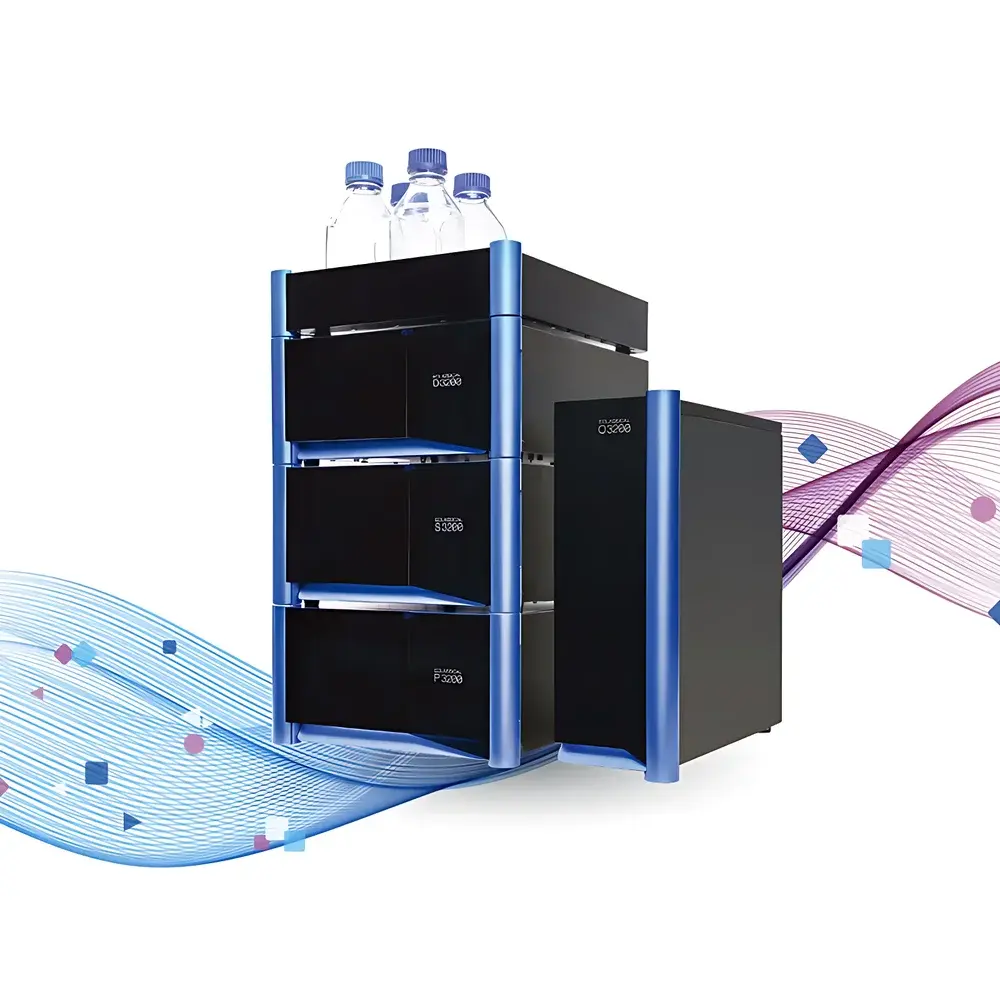
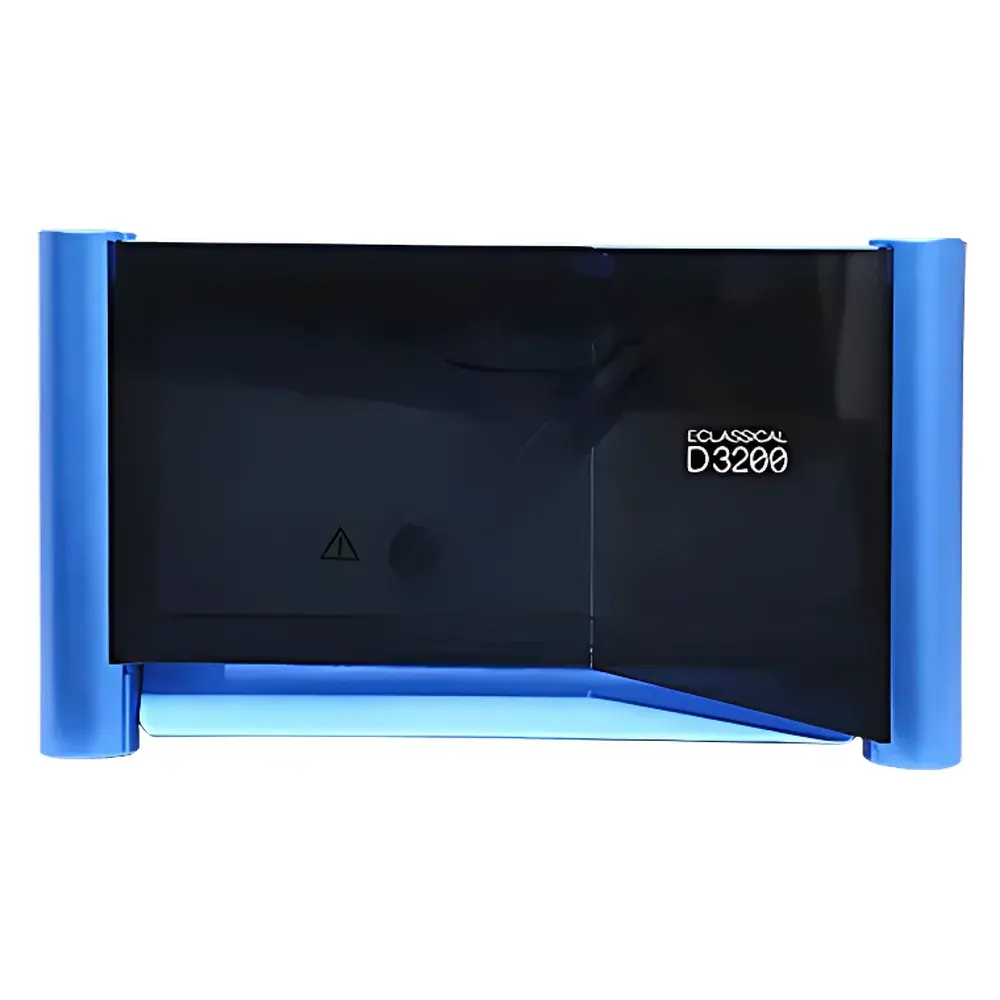
Elite D3270 Evaporative Light Scattering Detector (ELSD)
| Brand | Elite |
|---|---|
| Origin | Liaoning, China |
| Manufacturer Type | Original Equipment Manufacturer (OEM) |
| Product Category | Domestic Instrument |
| Model | D3270 |
| Price Range | USD 14,000–28,000 (FOB) |
| Compatible Systems | HPLC, UHPLC |
| Detector Type | Evaporative Light Scattering Detector (ELSD) |
| Operating Frequencies | 10 Hz / 20 Hz / 50 Hz / 100 Hz |
| Detection Principle | High-Sensitivity Photomultiplier Tube (PMT) |
| Light Source | 650 nm, 30 mW Stable Laser Diode |
| Baseline Noise | < 0.01 mV (RMS, 1 s bandwidth) |
| Baseline Drift | < 0.05 mV / 30 min |
| Signal Interfaces | RS-232, RS-485, USB 2.0, Ethernet (UDP protocol) |
Overview
The Elite D3270 Evaporative Light Scattering Detector (ELSD) is a robust, benchtop-compatible universal detector engineered for high-reproducibility detection of non-chromophoric analytes in liquid chromatography workflows. Unlike UV-Vis or fluorescence detectors, the D3270 operates on the principle of nebulization, solvent evaporation, and light scattering—making it intrinsically insensitive to optical properties of analytes. In this process, the column effluent is atomized into fine droplets, carried through a heated drift tube where volatile mobile phase components are removed, and the remaining non-volatile analyte particles pass into a light-scattering chamber illuminated by a stabilized 650 nm laser. Scattered photons are captured by a high-gain photomultiplier tube (PMT), generating an analog signal proportional to analyte mass concentration. This physical detection mechanism enables quantitative analysis of compounds lacking chromophores—including carbohydrates, lipids, surfactants, polymers, and natural product extracts—without derivatization or method-specific calibration.
Key Features
- Embedded real-time control system with adaptive temperature regulation algorithms for precise drift tube and nebulizer heater management
- Adjustable nebulizer temperature (range: ambient to 120 °C) with rapid thermal ramping (< 5 min to full operating temperature) and active cooling for fast method switching
- Four selectable detection frequencies (10 Hz, 20 Hz, 50 Hz, 100 Hz) to optimize signal-to-noise ratio across diverse flow rates and analyte volatility profiles
- Ultra-low electronic noise floor (< 0.01 mV RMS) and exceptional baseline stability (< 0.05 mV/30 min), critical for trace-level quantitation and gradient elution compatibility
- Open communication architecture supporting UDP-based Ethernet, RS-232, RS-485, and USB 2.0 interfaces—enabling seamless integration with third-party HPLC systems and custom automation frameworks
- Self-cleaning cycle with programmable purge intervals and overheat/overpressure safety interlocks compliant with IEC 61010-1 functional safety requirements
Sample Compatibility & Compliance
The D3270 ELSD detects any solute with volatility lower than that of the mobile phase—regardless of UV absorbance, fluorescence, or electrochemical activity. It is routinely employed for analysis of polysaccharides (e.g., inulin, dextran), fatty acids, phospholipids, glycosides, amino acid derivatives, synthetic polymers (e.g., PEG, PLGA), and herbal extract fractions. The detector supports common reversed-phase, HILIC, and normal-phase LC methods using volatile solvents (e.g., acetonitrile, methanol, ethyl acetate, THF, chloroform). All firmware and hardware design comply with CE marking directives (2014/30/EU EMC, 2014/35/EU LVD) and meet essential requirements for laboratory instrumentation under ISO/IEC 17025-accredited environments. Data integrity features—including audit-trail-enabled method storage and timestamped parameter logging—are aligned with GLP and FDA 21 CFR Part 11 readiness when used with validated Kromstation software configurations.
Software & Data Management
The D3270 is fully controlled via Elite’s Kromstation Chromatography Data System (CDS), which provides bidirectional instrument control, real-time signal monitoring, method parameter archiving, and automated calibration curve generation. Kromstation supports raw data export in ASCII and mzML-compatible formats, enabling post-acquisition processing in third-party tools (e.g., R, Python SciPy, OpenChrom). Firmware updates are delivered via secure HTTPS package deployment; all configuration changes are logged with user ID, timestamp, and pre/post values. For enterprise deployments, the detector’s UDP interface allows integration into LIMS and MES platforms using standard JSON-RPC or Modbus TCP wrappers—eliminating proprietary middleware dependencies.
Applications
- Quantitative profiling of polysaccharide content in traditional Chinese medicine (TCM) extracts per Chinese Pharmacopoeia monographs
- Residual solvent and monomer analysis in biodegradable polymer synthesis (ISO 10993-18)
- Fatty acid methyl ester (FAME) characterization in biodiesel feedstock screening (ASTM D6584)
- Stability-indicating assay of non-UV-absorbing excipients in parenteral formulations
- Method development support for preparative HPLC fraction collection where UV transparency limits conventional detection
- Quality control of oligosaccharide standards in food authenticity testing (AOAC 2012.01)
FAQ
Is the D3270 compatible with ultra-high-performance liquid chromatography (UHPLC) systems?
Yes—the detector supports flow rates from 0.1 to 3.0 mL/min and exhibits minimal band broadening due to its low-volume nebulizer and optimized drift tube geometry.
Does the D3270 require routine PMT voltage recalibration?
No—factory-calibrated PMT gain remains stable over ≥12 months under typical lab conditions; optional daily reference-check routines are available in Kromstation.
Can the D3270 be operated without Kromstation software?
Yes—standalone operation is supported via front-panel controls and analog output (0–1 V); full remote control requires either Kromstation or user-developed UDP clients.
What maintenance is required beyond scheduled cleaning cycles?
None—no consumables (e.g., lamps, filters, or gaskets) require periodic replacement; only distilled water and IPA are used during automated wash sequences.
How does the D3270 handle gradient elution with high aqueous content?
Its intelligent temperature compensation algorithm dynamically adjusts drift tube setpoints to maintain consistent particle drying efficiency across 5–95% aqueous gradients.




