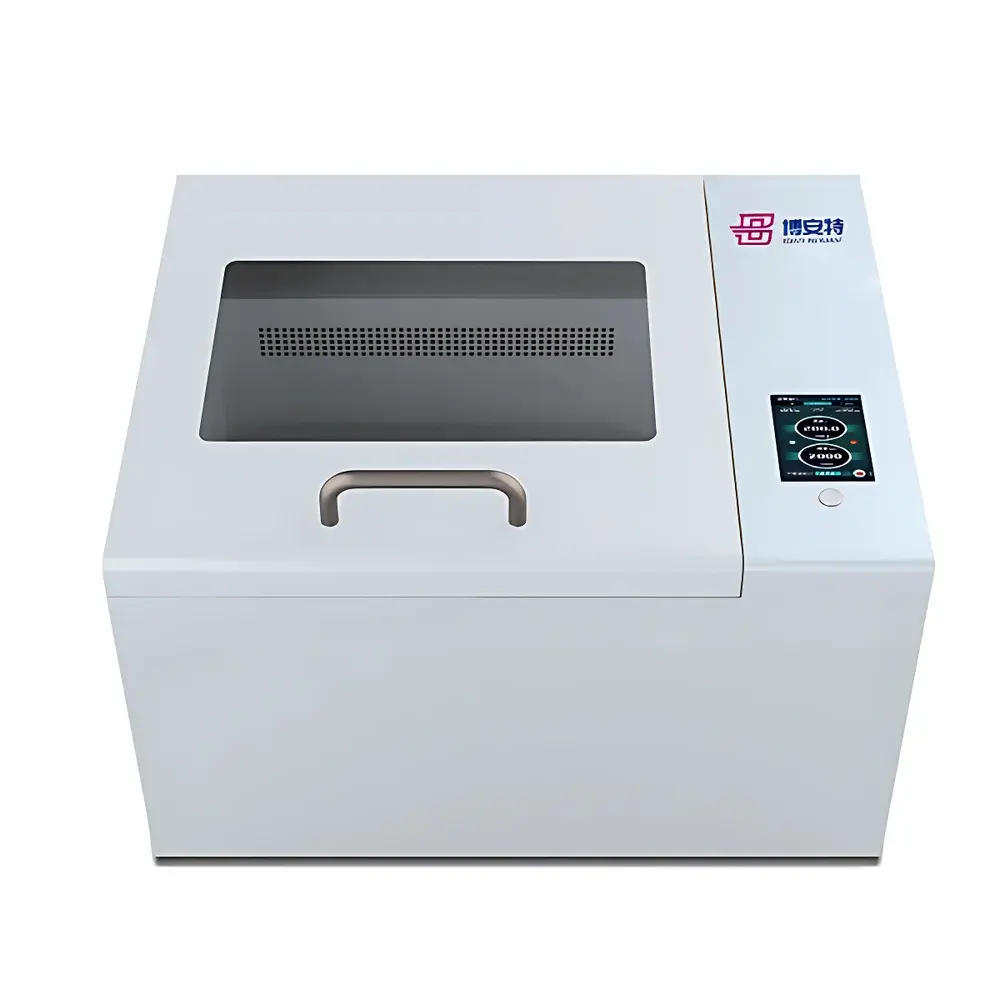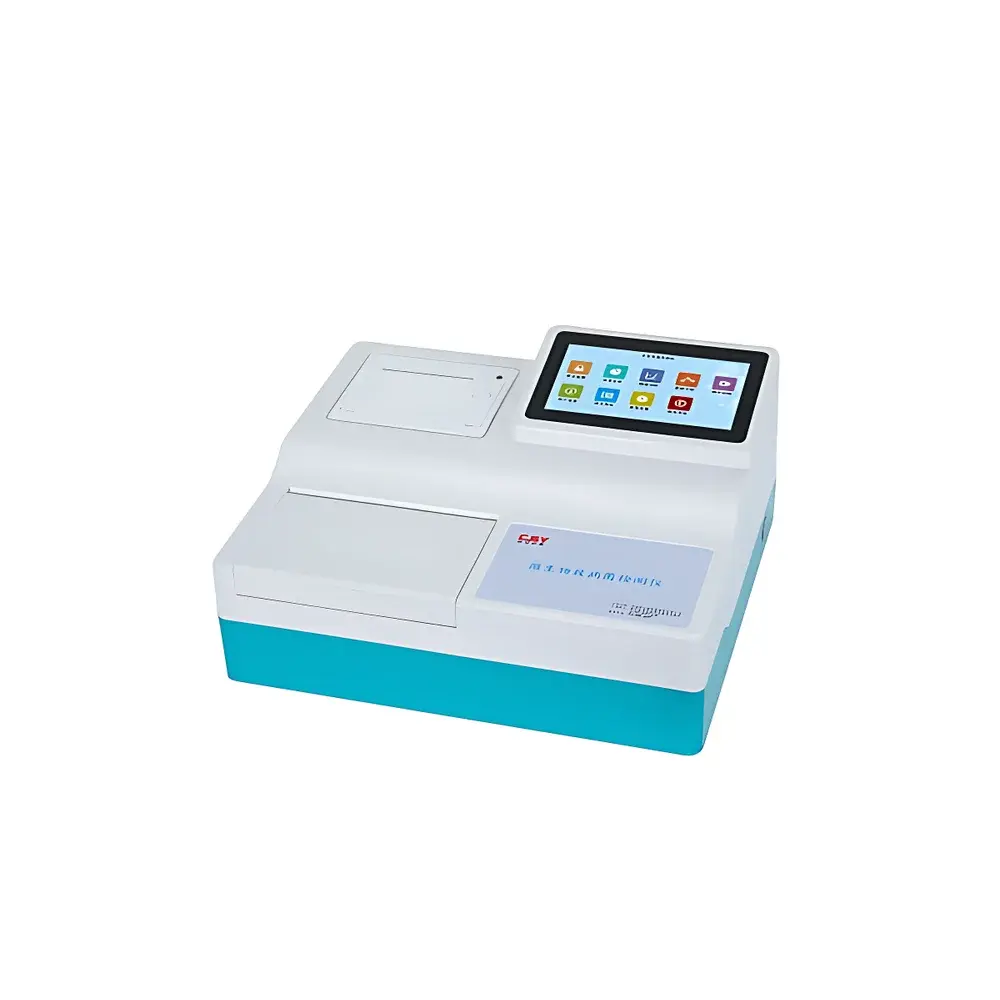
CSY-WSW Beef Salmonella Rapid Detection System
| Brand | CSY (Shenzhen Csys Instrument Manufacturing Co., Ltd.) |
|---|---|
| Origin | Guangdong, China |
| Instrument Type | Semi-Automatic Microbial Pathogen Detection System |
| Detection Throughput | 16-well |
| Sample Types | Solid, Liquid, Surface Swabs |
| Detection Mode | Qualitative and Semi-Quantitative |
| Display | 7-inch Capacitive Touchscreen |
| OS | Android 9.0 (2 GB RAM + 16 GB ROM, expandable to 128 GB via microSD) |
| Connectivity | 4G LTE (universal band), Wi-Fi 802.11 b/g/n, Ethernet, RS232, Dual USB (A & B), GPS Module |
| Data Export | USB export in TXT or Excel (.xlsx) format |
| Reporting | Built-in thermal label printer |
| Data Management | Cloud-ready architecture with platform interoperability (HTTP/HTTPS API compliant) |
| Regulatory Alignment | Designed to support GLP-compliant workflows and aligns with analytical requirements of GB 29921–2013, ISO 6579-1:2017, and AOAC Official Method 2012.06 for Salmonella detection in food matrices |
Overview
The CSY-WSW Beef Salmonella Rapid Detection System is a semi-automated, multi-pathogen screening platform engineered for high-throughput qualitative and semi-quantitative detection of Salmonella spp. and other priority foodborne pathogens—including Staphylococcus aureus, Escherichia coli, Shigella spp., Listeria monocytogenes, Vibrio parahaemolyticus, Vibrio alginolyticus, Cronobacter sakazakii, Bacillus cereus, and Pseudomonas aeruginosa—in complex food matrices. Unlike conventional culture-based methods requiring 48–72 h of enrichment and isolation, the CSY-WSW integrates thermally regulated incubation, immunochromatographic lateral flow assay (LFA) signal amplification, and integrated optical densitometry to deliver actionable results within ≤60 minutes—without pre-enrichment for select high-risk samples such as ground beef, chilled poultry, or ready-to-eat seafood products. Its measurement principle relies on antigen–antibody binding kinetics coupled with time-resolved reflectance quantification at 635 nm, enabling reproducible threshold-based interpretation against calibrated internal controls. The system is not a standalone PCR or sequencing platform; rather, it functions as a frontline triage instrument optimized for routine screening in QC laboratories, food processing facilities, and regulatory field units where speed, operational simplicity, and traceable documentation are critical.
Key Features
- 16 independent detection channels with individual thermal control (37 ± 0.5 °C), enabling parallel analysis of heterogeneous sample types (e.g., homogenized meat slurry, liquid beverage filtrate, surface swab eluate)
- Integrated Android 9.0 operating system with intuitive touchscreen UI, supporting multi-user login, role-based access control, and full audit trail generation per test cycle
- On-device data visualization: real-time pie charts, stacked bar graphs, and trend line plots for batch-level pathogen prevalence assessment
- Comprehensive metadata capture: automatic geotagging (GPS), operator ID assignment, sample origin tracing (facility name, address, lot number), and instrument calibration status embedding
- Regulatory-grade connectivity suite: dual-mode data transmission (Wi-Fi/Ethernet) compliant with HTTP POST/JSON payloads for integration into national food safety surveillance platforms (e.g., China’s NIFDC Food Safety Information System)
- Expandable storage architecture with microSD slot (up to 128 GB), ensuring ≥12 months of raw result logs, image captures, and calibration history retention
- Built-in thermal label printer for immediate physical record generation; optional driver-level support for standard A4 thermal or inkjet printers
Sample Compatibility & Compliance
The CSY-WSW accepts untreated or minimally processed samples across three physical states: solids (ground beef, minced pork, dried spices), liquids (milk, juice, brine solutions), and environmental surfaces (stainless steel, conveyor belts, cutting boards) via sterile swab elution. It has been validated per ISO/IEC 17025:2017 general requirements for testing laboratories and demonstrates performance consistency with ISO 6579-1:2017 Annex D for rapid Salmonella screening in meat products. While not certified under FDA 21 CFR Part 11, its software architecture supports electronic signature readiness, immutable log files, and time-stamped operator actions—enabling alignment with GLP/GMP documentation standards during internal audits. All test strips used with the system are manufactured under ISO 13485-certified conditions and supplied with lot-specific performance verification reports.
Software & Data Management
Firmware v3.2.1 implements a secure local database with AES-256 encryption for stored results. Each detection event generates a structured JSON payload containing: instrument serial number, test strip lot ID, optical density values per channel, pass/fail flag, confidence score (0–100%), and full chain-of-custody metadata. Remote firmware updates occur over TLS 1.2-secured OTA channels. Data export supports both human-readable Excel (.xlsx) and machine-parseable TXT formats. Integration with LIMS environments is achieved via configurable RESTful API endpoints, supporting OAuth 2.0 authentication and webhook-triggered alerts upon detection of non-compliant results.
Applications
This system serves as a primary screening tool in food manufacturing QA/QC labs performing incoming raw material verification (e.g., beef trimmings, frozen poultry), in-process monitoring of RTE product lines, and finished goods release testing. It is routinely deployed by municipal food safety bureaus conducting market surveillance at wet markets, supermarkets, and school canteens. Public health laboratories utilize it for early outbreak signal detection during cluster investigations involving suspected foodborne illness cases. The 16-well throughput enables daily capacity of up to 96 samples when operated in shift-based mode—making it suitable for medium-volume testing environments lacking dedicated molecular biology infrastructure.
FAQ
Does the CSY-WSW require pre-enrichment for beef samples?
Pre-enrichment is not required for ground beef or mechanically tenderized beef cuts when testing for Salmonella at levels ≥1 CFU/g, per internal validation studies aligned with AOAC 2012.06 criteria.
Can the system detect multiple pathogens simultaneously in one sample?
No. Each well tests for one target pathogen using pathogen-specific lateral flow strips. Multiplexing requires separate wells per analyte.
Is third-party method validation documentation available?
Yes—full validation reports per ISO 16140-2:2016 are provided with each instrument shipment, including specificity, sensitivity, repeatability, and ruggedness data across 11 food matrix categories.
What is the shelf life of the test strips?
18 months from manufacture date when stored at 2–8 °C in sealed aluminum pouches with desiccant.
How is calibration maintained across extended operation?
The system performs automated optical self-check at startup and every 4 hours during active use; calibration verification strips are included in each consumables kit and must be run weekly per SOP.