
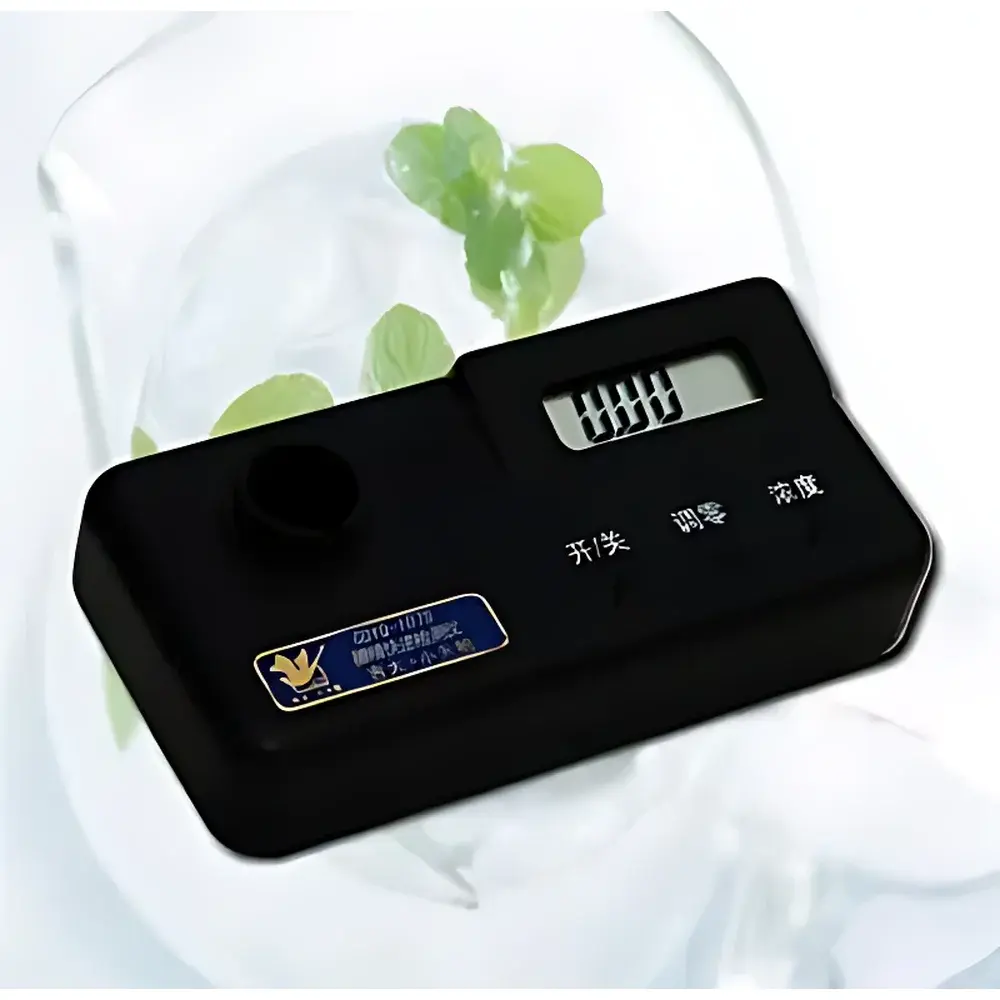
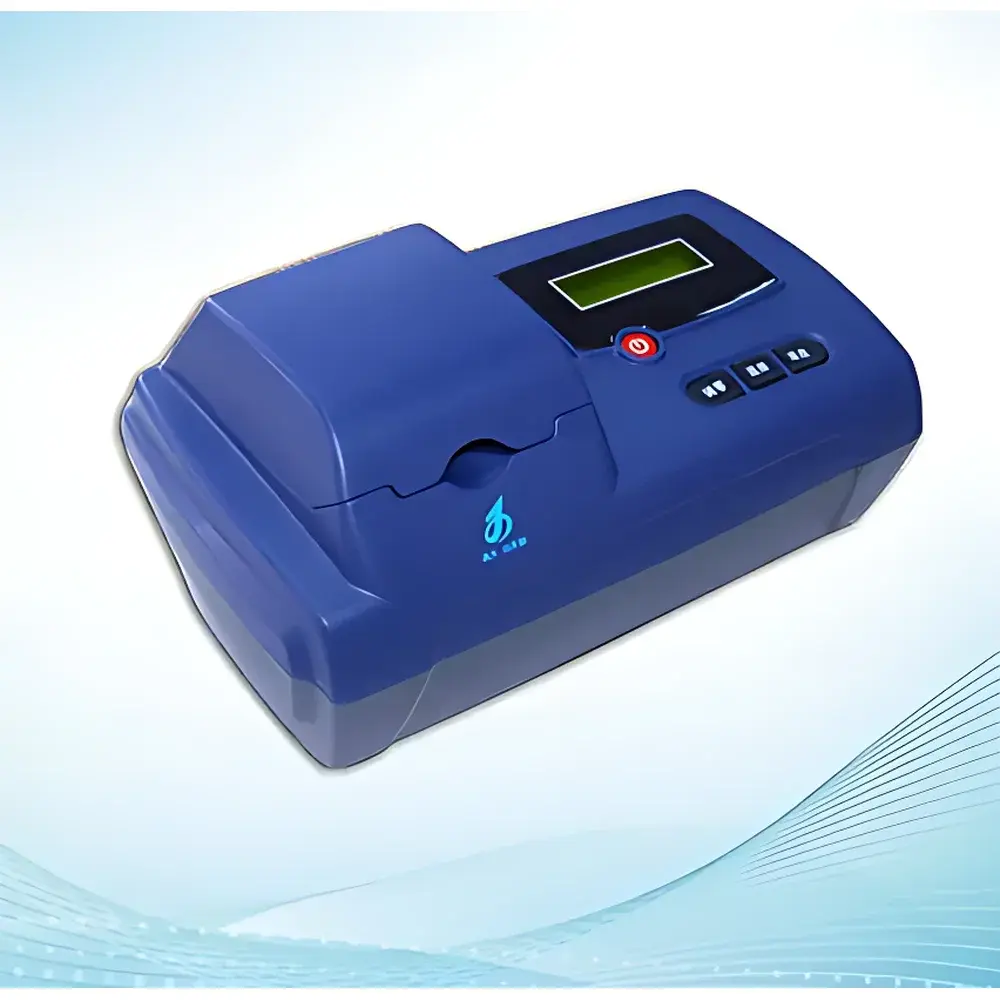
GDYQ-107S Sugar Saccharin Rapid Detection Analyzer by Jilin University–Xiaotian’e
| Brand | Jilin University–Xiaotian’e |
|---|---|
| Model | GDYQ-107S |
| Origin | Jilin, China |
| Manufacturer Type | Direct Manufacturer |
| Country of Origin | PRC |
| Detection Limit | 25.0 mg/kg |
| Measurement Range | 0.0–2000.0 mg/kg |
| Accuracy | ±5% |
| Analysis Time | ≤35 min per sample |
| Sample Processing | Integrated proprietary pretreatment kit and reagents |
Overview
The GDYQ-107S Sugar Saccharin Rapid Detection Analyzer is a dedicated, field-deployable analytical instrument engineered for the quantitative determination of saccharin sodium (o-benzoic sulfimide) in food matrices. It operates on the principle of enzyme-linked immunosorbent assay (ELISA)-enhanced colorimetric detection, optimized for high specificity toward saccharin without cross-reactivity with common natural sweeteners (e.g., sucrose, fructose, stevia glycosides) or artificial alternatives (e.g., aspartame, acesulfame-K). Designed to meet routine screening requirements in food production facilities, third-party testing laboratories, and regulatory inspection units, the system delivers laboratory-grade quantification under non-laboratory conditions—enabling real-time decision-making during raw material intake, in-process quality control, and finished-product release.
Key Features
- Field-validated rapid assay protocol: Complete quantitative analysis—including sample homogenization, extraction, filtration, derivatization, and optical readout—in ≤35 minutes per sample.
- Dedicated sample preparation module: Integrated centrifuge-compatible extraction tube, solid-phase cleanup column, and pre-calibrated reagent vials eliminate manual pipetting variability and reduce operator-dependent error.
- Optical detection system: Dual-wavelength photometric reader (450 nm/630 nm) with temperature-compensated LED source and silicon photodiode detector ensures stable absorbance measurement across ambient conditions (10–35 °C).
- Onboard calibration and QC tracking: Built-in reference standard curve generation using five-point serial dilution; automatic flagging of out-of-range controls (CV >10%) and invalid blank absorbance.
- Ruggedized portable architecture: IP54-rated enclosure, shock-absorbing rubberized housing, and rechargeable Li-ion battery (≥8 h continuous operation) support deployment in warehouse, market, or roadside inspection environments.
Sample Compatibility & Compliance
The GDYQ-107S is validated for use with solid and semi-solid food matrices including beverages (carbonated/non-carbonated), confectionery (candies, chewing gum), dairy desserts (yogurts, puddings), baked goods, and preserved fruits. Liquid samples require minimal dilution; viscous or fatty matrices undergo standardized solvent-assisted extraction followed by phase separation. Method performance complies with GB 5009.28–2023 (National Food Safety Standard – Determination of Saccharin Sodium in Foods) and aligns with AOAC Official Method 2012.05 for rapid immunoassay-based screening. Data output supports GLP-compliant audit trails when paired with optional external USB logging and timestamped report export (CSV/PDF). The system is compatible with internal QA/QC workflows requiring adherence to ISO/IEC 17025:2017 clause 7.2.2 (method validation) and FDA Guidance for Industry: “Analytical Procedures and Methods Validation for Drugs and Biologics” (2015).
Software & Data Management
The embedded firmware (v3.2+) provides intuitive touchscreen navigation with multilingual UI (English, Spanish, Arabic, Vietnamese). All measurements are stored locally with metadata: date/time stamp, operator ID, sample ID, calibration lot number, and environmental temperature/humidity. Data export is supported via micro-USB or Bluetooth 5.0 to Windows/macOS platforms. Optional cloud integration (via secure TLS 1.2 API) enables centralized dashboard monitoring across multi-site operations. Audit log functionality records all user actions—including method edits, calibration resets, and result deletions—with immutable timestamps, satisfying 21 CFR Part 11 electronic record requirements when deployed with role-based access control (RBAC) and digital signature modules.
Applications
- Pre-shipment verification of imported/exported processed foods subject to EU Regulation (EC) No 1333/2008 Annex II restrictions on saccharin usage levels.
- In-line screening of beverage concentrates to prevent over-fortification during blending stages.
- Regulatory surveillance sampling at wholesale markets and border inspection posts where turnaround time is critical.
- Contract laboratory support for brand owners conducting supplier qualification audits under GFSI-benchmarked schemes (e.g., BRCGS, SQF).
- Academic research into sweetener migration kinetics in packaging materials (e.g., PET bottle leaching studies).
FAQ
What regulatory standards does the GDYQ-107S method validate against?
It is fully aligned with GB 5009.28–2023 and functionally equivalent to AOAC 2012.05; method transfer documentation is available upon request.
Can the instrument distinguish saccharin from cyclamate or dulcin?
Yes—the immunochemical recognition element exhibits <0.1% cross-reactivity with sodium cyclamate and no detectable binding to dulcin or neohesperidin dihydrochalcone.
Is reagent lot traceability supported?
Each reagent kit carries a unique QR-coded lot label; scanning auto-populates expiry date, calibration coefficients, and stability data into the instrument database.
Does the system require annual recalibration by the manufacturer?
No—user-performed daily optical verification using supplied NIST-traceable neutral density filters satisfies ongoing performance verification per ISO 8655-6.
How is measurement uncertainty estimated for reported results?
Combined standard uncertainty (k=2) is calculated in real time using propagation-of-error models incorporating repeatability (n=6), within-lot reagent variability, and photometer linearity deviation—displayed alongside each result.




