
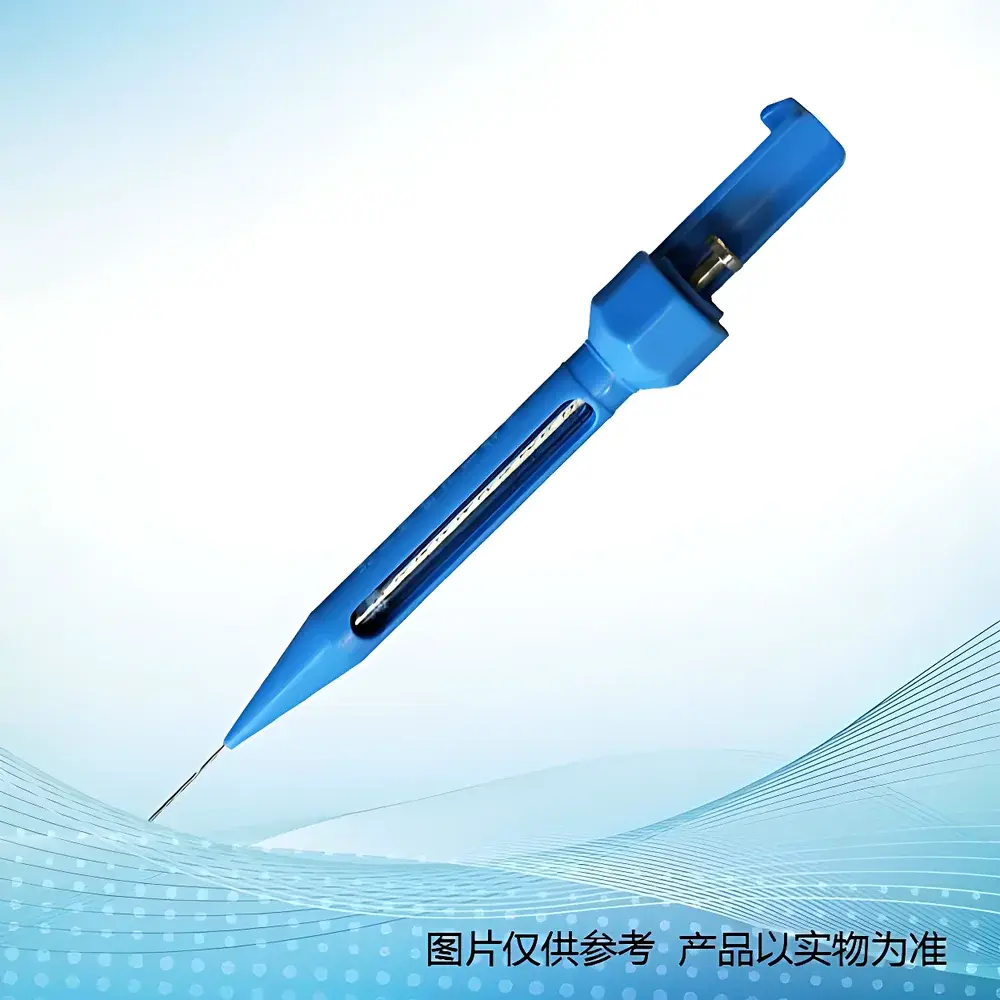
GDYS-102SB Total Hardness Analyzer by Jilin University XIAOTIAN’E
| Brand | Jilin University XIAOTIAN'E |
|---|---|
| Origin | Jilin, China |
| Manufacturer Type | Manufacturer |
| Origin Category | Domestic |
| Model | GDYS-102SB |
| Quotation | Upon Request |
| Detection Limit | 25.0 mg/L CaCO₃ |
| Measurement Range | 0.0–750.0 mg/L CaCO₃ |
| Accuracy | ±5% of full scale |
| Analysis Time | ≤5 minutes per sample |
| Reagent Format | Single-use, pre-calibrated test kit |
Overview
The GDYS-102SB Total Hardness Analyzer is a portable, field-deployable photometric analyzer engineered for rapid, quantitative determination of total hardness—expressed as calcium carbonate (CaCO₃) equivalent—in aqueous samples. It operates on the principle of colorimetric complexation: calcium and magnesium ions in the sample react with a proprietary chromogenic reagent under controlled pH to form a stable colored complex. Absorbance is measured at a fixed wavelength (typically 525 nm or 610 nm, depending on reagent chemistry), and concentration is calculated via a pre-established calibration curve stored in device firmware. Designed for compliance with standard methods including APHA 2340 C and ISO 6059, the instrument delivers laboratory-grade reproducibility without requiring benchtop instrumentation or skilled analysts—making it suitable for routine monitoring in water treatment plants, environmental field surveys, municipal utilities, and regulatory compliance programs.
Key Features
- Field-ready operation: No external power supply required; powered by rechargeable lithium-ion battery (≥8 hours continuous use).
- Five-minute analysis cycle: Includes sample preparation, reagent addition, reaction incubation, and optical readout—optimized for high-throughput screening.
- Integrated optical path: Fixed-wavelength LED light source and silicon photodiode detector ensure long-term stability and minimal drift (<0.5% RSD over 100 measurements).
- Pre-loaded calibration: Factory-calibrated using NIST-traceable CaCO₃ standards; user verification with check standards supported.
- Ruggedized housing: IP65-rated enclosure resistant to dust, moisture, and mechanical shock—certified for outdoor and industrial environments.
- On-device data management: Stores up to 500 measurement records with timestamp, operator ID, and location metadata (GPS optional via Bluetooth pairing).
Sample Compatibility & Compliance
The GDYS-102SB accepts clarified liquid samples with turbidity <5 NTU and suspended solids 0.3 mg/L), manganese (>0.1 mg/L), or residual chlorine (>1.0 mg/L)—are mitigated by included masking agents in the reagent kit. The method conforms to EPA Method 130.1 (colorimetric EDTA titration equivalence), ASTM D1126–22 (Standard Test Method for Hardness in Water), and supports GLP documentation requirements through audit-trail-capable data export (CSV via USB-C or Bluetooth). All reagents are CE-marked and compliant with REACH Annex XIV restrictions.
Software & Data Management
Data acquisition and reporting are managed via embedded firmware with configurable user roles (Operator, Supervisor, Administrator). Measurement results can be exported in CSV format compatible with LIMS integration. Optional PC software (XIAOTIAN’E AquaLink™ v3.2) enables batch report generation, trend analysis, calibration log review, and electronic signature support aligned with FDA 21 CFR Part 11 requirements. Audit trails record all critical events—including calibration updates, reagent lot changes, and result modifications—with immutable timestamps and user attribution. Cloud synchronization (via secure TLS 1.3) is available for centralized fleet management across multi-site operations.
Applications
- Drinking water safety verification at point-of-entry and distribution points.
- Boiler feedwater and cooling tower monitoring to prevent scale formation per ASME B31.1 guidelines.
- Wastewater treatment plant influent/effluent compliance tracking against local discharge limits (e.g., EU Urban Wastewater Directive Annex I).
- Environmental field campaigns assessing watershed hardness gradients and geological leaching impacts.
- Educational laboratories for teaching fundamental water chemistry principles and method validation protocols.
- Industrial process water QC in food & beverage, pharmaceutical, and semiconductor manufacturing facilities.
FAQ
What hardness units does the GDYS-102SB report?
It reports total hardness exclusively as mg/L CaCO₃—consistent with international regulatory frameworks and enabling direct comparison with WHO, EPA, and EU Drinking Water Directive thresholds.
Can the instrument measure calcium and magnesium separately?
No. It quantifies total divalent cation concentration (Ca²⁺ + Mg²⁺) as CaCO₃ equivalent. Separate ion analysis requires ICP-OES or titrimetric differentiation.
Is reagent lot traceability supported?
Yes. Each single-use kit carries a unique QR-coded lot number scanned automatically during initialization; lot-specific calibration coefficients are applied in real time.
How often must the optical system be cleaned or recalibrated?
Optical path cleaning is recommended after every 50 measurements using supplied lint-free swabs and isopropyl alcohol; full recalibration is required only after sensor replacement or annually per ISO/IEC 17025 maintenance schedules.
Does the device meet drinking water testing accreditation requirements?
When operated within defined scope and documented procedures, it satisfies method validation criteria for ISO/IEC 17025 accredited labs performing routine hardness screening—subject to internal verification per Clause 7.7.







