
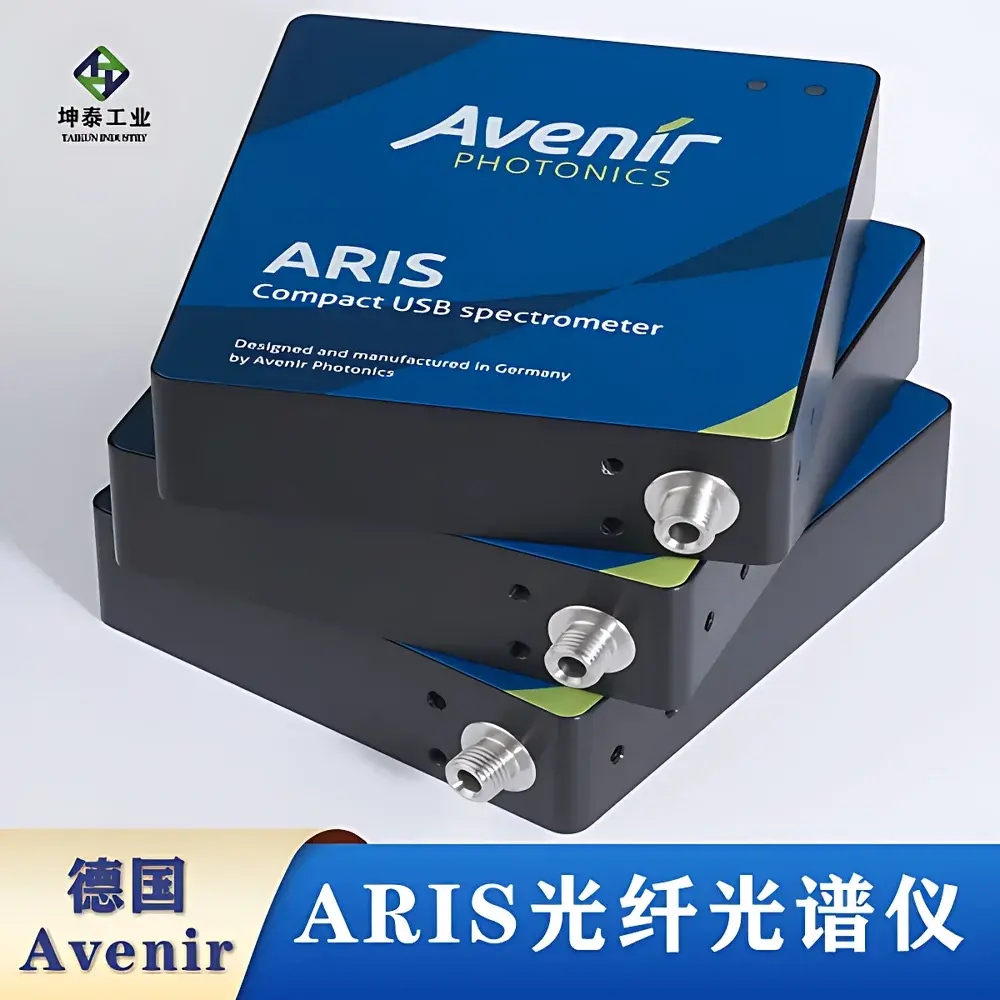
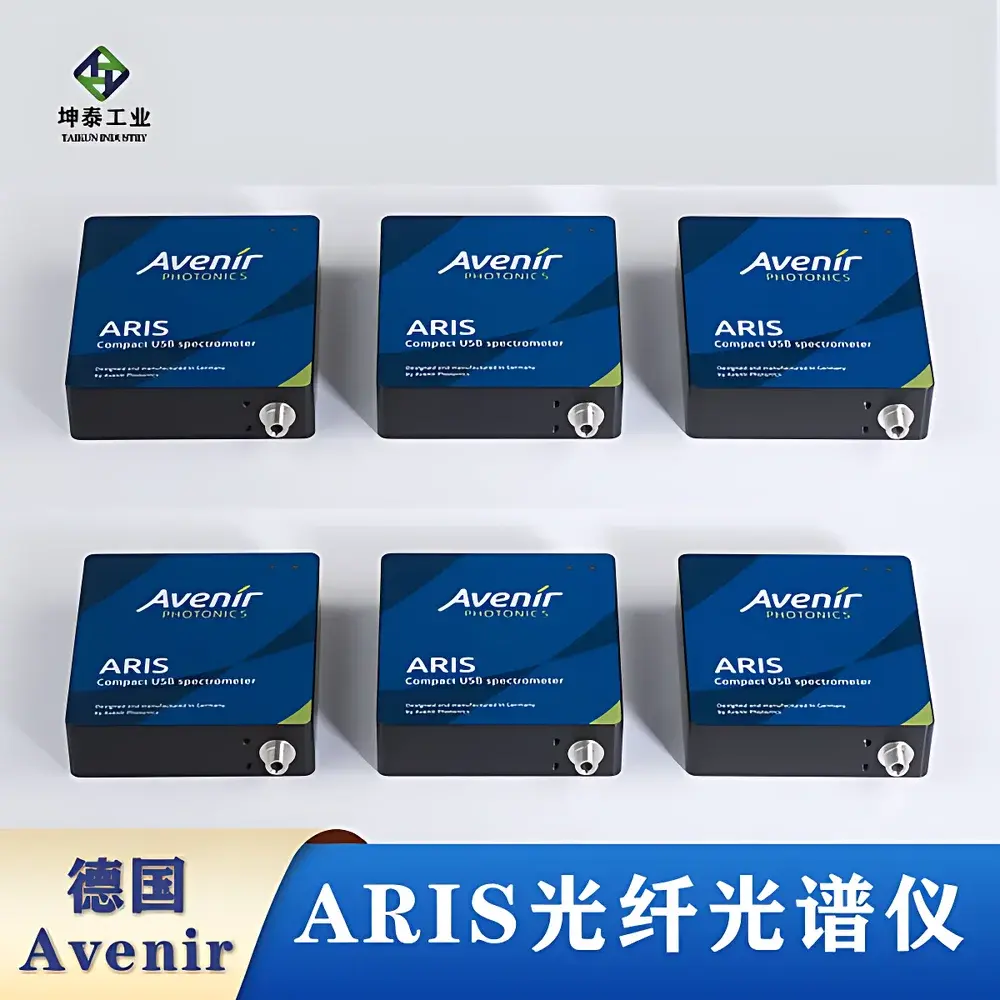
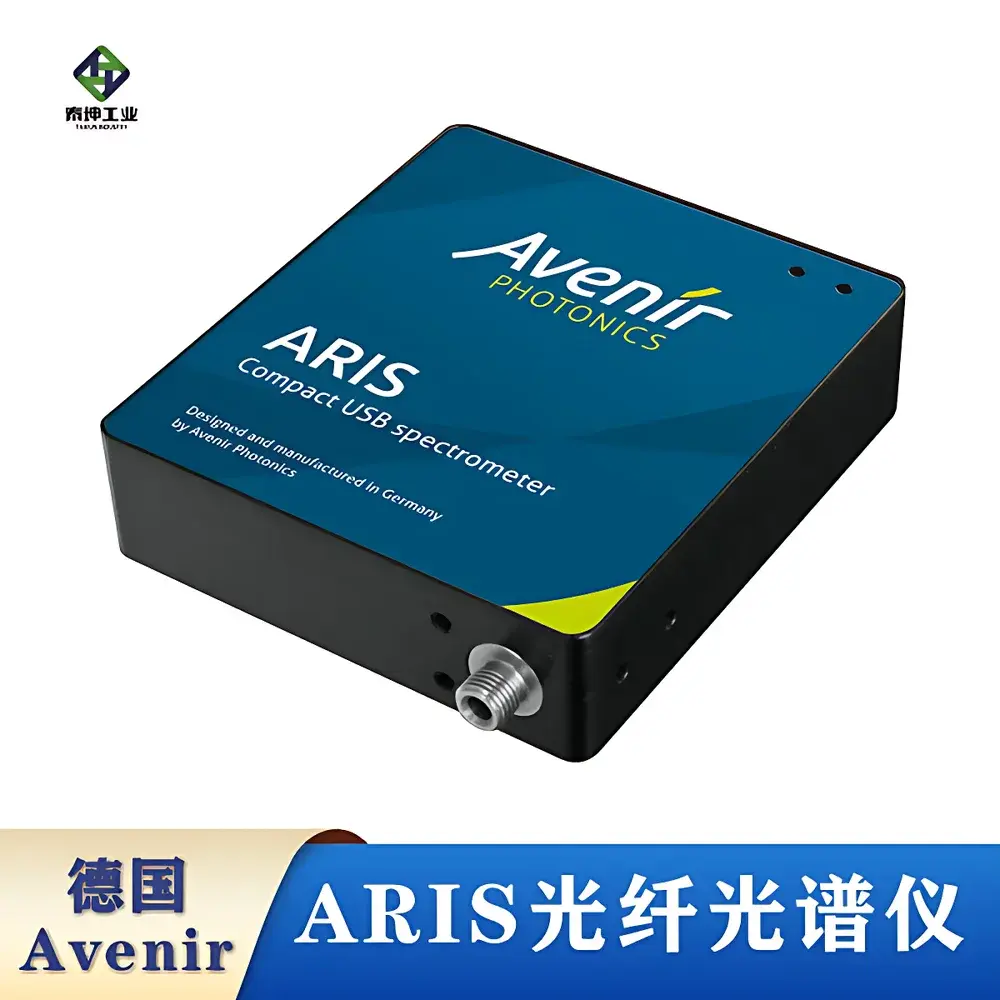
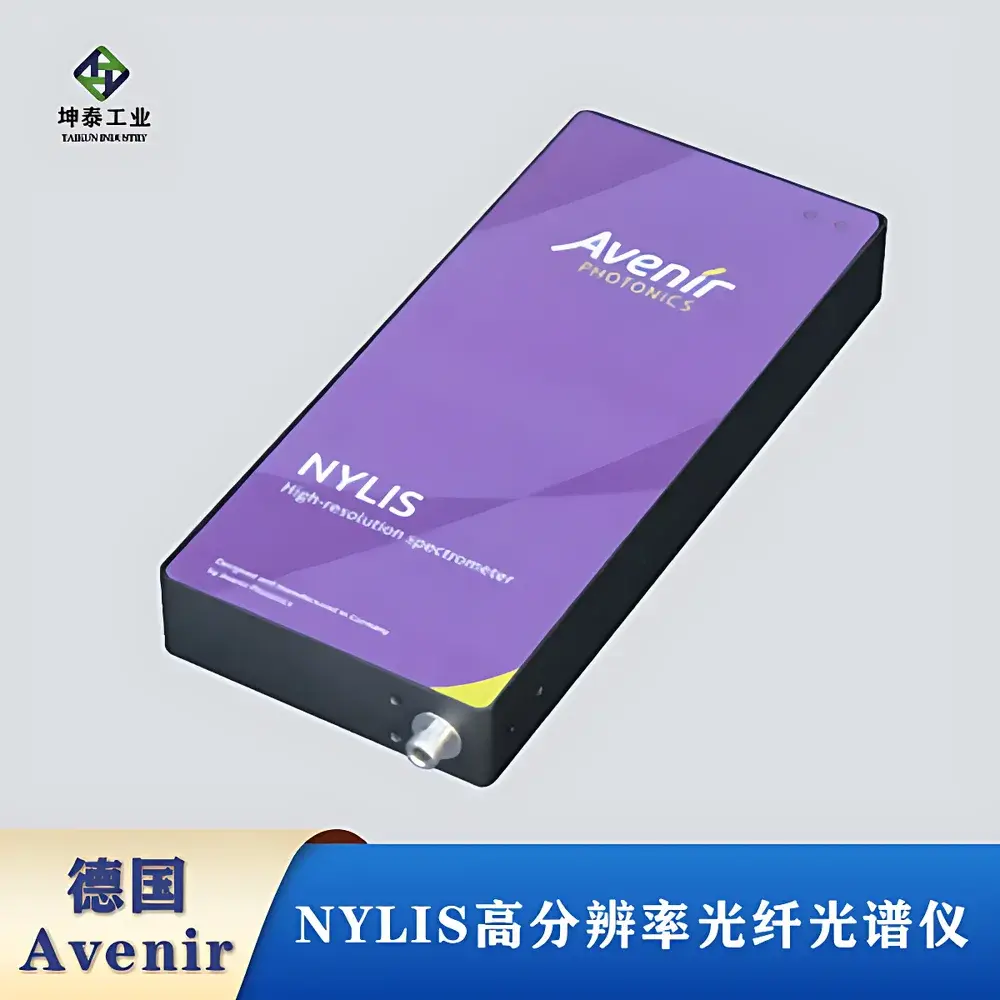
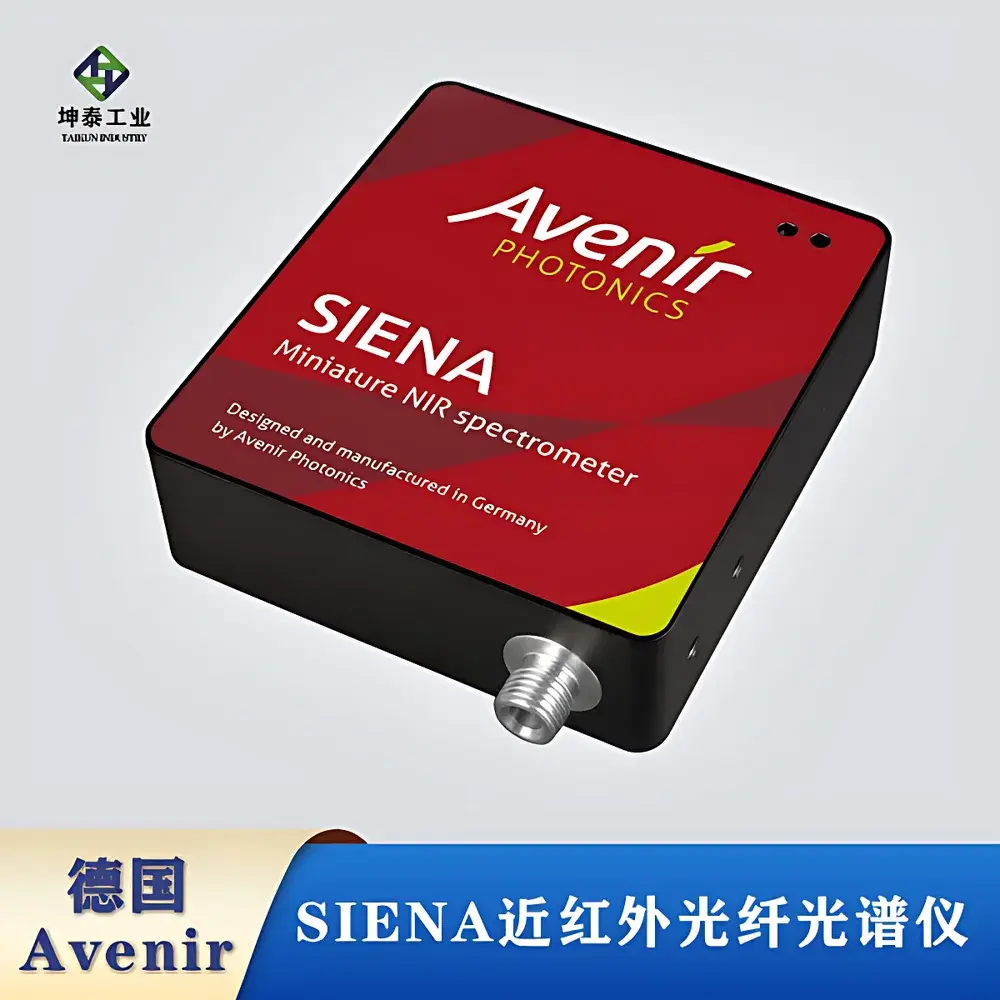
Avenir Siena Uncooled Infrared Fiber Optic Spectrometer
| Brand | Avenir |
|---|---|
| Origin | Germany |
| Manufacturer Type | Authorized Distributor |
| Product Origin | Imported |
| Model | Siena |
| Spectral Range | 900–1700 nm, 800–1900 nm, 900–2100 nm |
| Detector Type | CCD |
| Optical Resolution (FWHM) | 8 nm |
| Signal-to-Noise Ratio | 1000 |
| Dynamic Range | 12,000:1 |
| Stray Light | < 0.08 % |
Overview
The Avenir Siena Uncooled Infrared Fiber Optic Spectrometer is a compact, high-resolution Czerny-Turner imaging spectrometer engineered for demanding near-infrared (NIR) and short-wave infrared (SWIR) spectral analysis in laboratory, industrial, and field-deployable applications. Unlike thermoelectrically cooled detectors commonly used in SWIR systems, the Siena leverages an uncooled CCD array to deliver stable, low-maintenance performance across extended operating temperatures (−20 °C to +60 °C), eliminating power-intensive cooling subsystems while maintaining robust wavelength fidelity and repeatability. Its optical architecture features a 120 mm focal length, symmetric Czerny-Turner design with f/14.3 numerical aperture (NA = 0.07), optimized for minimal aberration and high spatial-spectral mapping accuracy. The instrument operates across three configurable spectral windows—900–1700 nm, 800–1900 nm, and 900–2100 nm—enabling precise characterization of molecular overtones and combination bands in organic compounds, polymers, pharmaceuticals, and agricultural materials. As a fiber-coupled platform, it integrates seamlessly with standard SMA-905 optical interfaces and supports optional order-sorting filters to suppress higher diffraction orders—critical for quantitative NIR reflectance, transmission, and laser line profiling applications.
Key Features
- Uncooled CCD detector enabling zero-drift operation without thermoelectric cooling or vacuum housing
- Symmetric Czerny-Turner optical layout with 120 mm focal length for enhanced spectral dispersion and imaging quality
- Configurable spectral coverage: 900–1700 nm, 800–1900 nm, or 900–2100 nm—each calibrated traceably to NIST-traceable standards
- Optical resolution of ≤8 nm (FWHM) at default 10 µm input slit; resolution scales linearly with slit width (e.g., 20 µm slit yields ~16 nm)
- Stray light suppression <0.08% — achieved via internal baffling, optimized grating blaze, and integrated order-sorting filter support
- 16-bit analog-to-digital conversion with 2 MHz sampling rate, nonlinearity <1%, and on-board spectral processing (dark subtraction, reference correction, pixel non-uniformity compensation)
- USB 2.0 Type-C interface with sub-10 ms spectral transfer latency (16-bit mode); auxiliary 16-pin IDC connector for TTL triggering, analog I/O, and GPIO expansion
- Compact form factor: 67.0 × 150.0 × 19.0 mm; weight: 178 g — suitable for OEM integration into portable analyzers and process monitoring systems
Sample Compatibility & Compliance
The Siena spectrometer is compatible with standard 400–600 µm core multimode silica fibers (SMA-905 terminated), enabling flexible coupling to diffuse reflectance probes, integrating spheres, flow cells, and laser delivery optics. Its uncooled architecture meets IEC 61326-1:2013 requirements for electromagnetic compatibility in laboratory environments and complies with RoHS 2011/65/EU and REACH (EC) No. 1907/2006 directives. While not certified for intrinsic safety, its low-power design (≤70 mW) and absence of active cooling make it suitable for Class I, Division 2 hazardous location integration when housed in appropriate enclosures. All factory calibration reports include wavelength accuracy (±0.1 nm typical), photometric linearity (R² > 0.9999), and stray light validation per ASTM E275-20 Annex A2. Data acquisition workflows support 21 CFR Part 11-compliant audit trails when used with validated third-party software platforms.
Software & Data Management
Avenir provides the Siena SDK (C/C++, Python, LabVIEW, MATLAB) and SpectraView™ desktop application for real-time spectral acquisition, baseline correction, peak integration, and multivariate modeling (PLS, PCA). Raw spectra are stored in HDF5 format with embedded metadata (wavelength array, slit width, integration time, temperature, calibration coefficients). On-device spectral buffering supports up to 31 consecutive acquisitions with automatic exposure control—enabling lock-in detection and kinetic measurements without host dependency. Firmware updates are delivered via signed USB payloads; all calibration parameters are digitally signed and cryptographically verified during boot. Time-stamped spectral logs include hardware ID, firmware version, and environmental sensor readings (internal temperature, supply voltage), facilitating GLP/GMP-compliant record retention.
Applications
- Laser wavelength and linewidth monitoring (e.g., tunable diode lasers, VCSELs, fiber lasers in 1–2 µm range)
- NIR spectroscopy for moisture, protein, and fat quantification in food, feed, and pharmaceutical powders
- Process analytical technology (PAT) for real-time reaction monitoring in continuous manufacturing
- Material identification and sorting using spectral fingerprinting of plastics, textiles, and composites
- Environmental sensing: dissolved organic carbon (DOC), nitrate, and hydrocarbon detection in water via fiber-optic immersion probes
- Academic research in ultrafast spectroscopy, where timing jitter ≤1 µs enables pump-probe synchronization
FAQ
Is the Siena spectrometer suitable for quantitative absorbance measurements?
Yes—when paired with a calibrated reference source and matched fiber geometry, it achieves photometric accuracy ±2% over its operational range. Calibration certificates include linearity and stray light data per ISO 17025-accredited procedures.
Can I change the input slit width in the field?
Yes—user-replaceable slits (10–300 µm) are available as optional accessories. Swapping requires only a precision screwdriver and takes <90 seconds; slit change recalibrates resolution and throughput automatically via firmware lookup tables.
Does the spectrometer support external triggering for synchronized measurements?
Yes—TTL-compatible trigger-in and trigger-out signals enable hardware-level synchronization with lasers, shutters, or motion stages. Jitter is specified ≤1 µs RMS under all operating conditions.
What is the thermal stability of wavelength calibration?
Wavelength drift is ≤0.02 nm/°C across −20 °C to +60 °C, verified by onboard temperature sensors and polynomial correction applied in real time.
Are custom spectral ranges supported beyond the three standard options?
Yes—Avenir offers tailored grating and detector configurations for specialized bands (e.g., 1000–2200 nm) with lead times of 8–12 weeks. Custom calibrations include full uncertainty budgets per GUM (JCGM 100:2008).





